Table of Contents
There's a quiet ritual unfolding in living rooms, home theaters, and late-night laptop screens. Older anime fans—those who first fell in love with the medium in the VHS-swapping ‘90s or the fansub-fueled early 2000s—are circling back to the shows that shaped their adolescence. It’s more than a marathon of Cowboy Bebop or a wistful revisit to Revolutionary Girl Utena. It’s a deliberate act of reconnection: with the person they were when they first pressed play, with a community that still shares those half-remembered opening themes, and with a version of anime that feels increasingly distinct from today’s seasonal deluge.
The texture of older anime—hand-painted cels, warm grain, character designs that refused to sand off every idiosyncrasy—carries a sensory signature. For many, that aesthetic is memory itself. But this isn’t a simple sepia-toned retreat. Rewatching these classics cracks open layers that were invisible twenty years ago. The themes land differently.
The humor feels either sharper or more innocent. And around these rewatches, new conversations are blooming, bonding people across age, geography, and fandom generation. This article explores why older fans are reclaiming nostalgia through deliberate rewatch experiences, what they’re uncovering in the process, and how the act of looking back is quietly reshaping anime culture.
The Roots of Anime Nostalgia
Anime nostalgia doesn’t exist in a vacuum. It was forged in the crucible of early fan culture, when accessing Japanese animation outside Japan required real dedication. Understanding that history explains why certain shows carry such emotional weight.
Early Fandom and the Birth of the Otaku
Japanese fandom coalesced in the 1970s and 80s around science fiction conventions, university circles, and the rising popularity of manga magazines. The term otaku—once a formal second-person pronoun—was reclaimed to describe enthusiasts who immersed themselves obsessively in niche interests. That intensity fueled the amateur animation scene, culminating in the legendary Daicon IV opening film in 1983. Produced by a ragtag team of animation students, the short showcased fluid motion, a playful mashup of pop culture references, and a level of technical skill that stunned audiences. That group would eventually form Gainax, a studio synonymous with deconstructing genres and pushing artistic boundaries.
These early communities valued rarity. A single laserdisc or a bootleg VHS tape could become a treasured artifact. To have witnessed Space Battleship Yamato or Macross as it first aired was to belong to something exclusive. That scarcity created attachment, and that attachment endures.
Gateways That Defined a Generation
Certain titles became cultural anchor points. Akira (1988) smashed Western assumptions about animation with its cyberpunk dystopia and staggering hand-drawn detail—vibrating motorcycle slides and psychic body horror that still feel visceral. Neon Genesis Evangelion (1995) smuggled psychological despair and religious iconography into a mecha shell, challenging viewers to decode its trauma-soaked narrative long after the final credits. Meanwhile, Sailor Moon and Dragon Ball Z proved that afternoon broadcast slots could turn anime into a shared childhood language across continents.
These works weren’t just entertainment. They were identity markers. Liking Evangelion said something about your willingness to sit with ambiguity. Defending Dragon Ball’s filler arcs signaled a particular kind of patience and devotion. The emotional fingerprints of these shows are still visible in today’s online discourse.
Global Spread and the Birth of Anime’s Second Memory
By the late 1990s, anime and manga had leaked into global pop culture through video games like Final Fantasy, fashion collaborations, and the emergent internet. Fans worldwide learned Japanese phrases, debated subtitling ethics, and organized meetups in comic shops. That international, decentralized community gave older anime a second life. A show that had finished its run years earlier could suddenly become a hot topic on a forum in Brazil or a university anime club in London. This cross-pollination cemented the notion that vintage anime wasn’t just a Japanese relic—it was a global lingua franca.
Now, when older fans press play on a classic, they’re tapping into that layered history. They’re not just watching a show; they’re re-entering a cultural moment that shaped how they see stories, art, and fandom itself.
Why Older Fans Keep Coming Back
Returning to a beloved anime is rarely a passive act. It’s an excavation. The motives are complex, blending memory, personal growth, social connection, and even the tactile pleasure of collecting physical media.
Reconnecting with Personal History
Anime you watched as a teenager gets stored alongside the smell of that basement TV room or the feeling of staying up too late on a school night. The synth-heavy soundtrack of Cyber City Oedo 808 or the brassy bombast of Escaflowne can trigger a cascade of autobiographical memory. Neurologically, this is powerful: music and visual cues activate the medial prefrontal cortex, linking the present experience with the sense of self formed in adolescence.
For older fans, rewatching can feel like a reunion with a younger self. The character you idolized at 14 might now seem flawed in ways you appreciate more deeply. That gap—between who you were and who you’ve become—is where much of the rewatch’s value lies. It’s not about pretending you’re still that kid. It’s about honouring the journey.
Shifting Perspectives Through Maturity
A show doesn’t change; you do. A series like Revolutionary Girl Utena, which might have seemed bewilderingly avant-garde at 16, reveals its intricate architecture of gender performance and abuse survival on a rewatch in your thirties. The hot-headed heroes who once seemed aspiringly rebellious now read as emotionally stunted. The comic relief side characters suddenly embody subtle griefs.
This reevaluation isn’t limited to high-art deconstructions. Even straightforward shōnen battle series contain narrative rhythms about sacrifice and mentorship that register differently when you’ve navigated real-world hierarchies. The beauty of a rewatch is that it transforms a static piece of media into a reflective surface for your own growth.
The Social Glue of Community
No fandom exists in solitude—and nostalgia fandom least of all. Platforms like Reddit’s r/anime, Discord servers dedicated to specific studios, and long-running forums like MyAnimeList teem with rewatch parties. Participants agree on an episode-a-day schedule, then flood threads with screen captures, theories, and fond memories. For a month, the calendar rolls back to 1998.
These communal rewatches transform a solitary pastime into a living conversation. You notice details because someone else highlighted them. An inside joke from episode 4 becomes a running meme. The group’s collective insight often illuminates narrative threads you missed entirely. In a media landscape that increasingly prioritizes fragmentation and algorithmic isolation, these shared rituals feel subversively human.
Fan conventions and cosplay add another dimension. Seeing someone walk across a hotel lobby in a painstakingly crafted Guts armour from Berserk (1997) is an instant bond. That recognition doesn’t need translation. The shared vocabulary of classic anime creates community faster than almost any demographic marker.
The Tangible Pleasure of Collecting
For many older fans, rewatching is inseparable from the physicality of media. A boutique Blu-ray box set with rigid art cards and a booklet of interviews offers a ritual that streaming can’t replicate. Hunting down out-of-print laserdiscs or first-print manga volumes becomes a low-stakes archaeology. The weight of the object reinforces the value of the memory.
Restoration and remastering projects—like the recent Memories Blu-ray release or carefully cleaned up versions of Angel’s Egg—make it possible to appreciate the craft in a way that degraded fansubs never allowed. Observing the dense background art in an OVA like Riding Bean or the fluid key animation in a Macross Plus dogfight becomes a new layer of joy. You’re not just rewatching; you’re studying a production culture that operated under constraints and ambitions very different from today’s digital pipelines.
Evolving Representations and the Stereotypes That Persist
Returning to older anime also means confronting its blind spots—and the cultural baggage that still clings to anime fandom.
From Archetypes to Nuance
Classic anime often leaned on broad types: the hot-blooded hero, the mysterious waif, the perverted comic relief. While those archetypes still exist, modern series increasingly push against them. Male protagonists now express vulnerability and uncertainty without it being played exclusively for laughs. Female characters lead shows like The Apothecary Diaries with sharp intellect rather than mere charm. Rewatching older series through this evolved lens can be jarring, but also illuminating.
It reveals how much the medium’s emotional vocabulary has expanded.
Feminist and BL/Yaoi Threads
Retrospective viewing also brings into focus the subversive narratives that existed alongside mainstream tropes. Rose of Versailles (1979) delivered a complex, gender-nonconforming lead who wielded a sword and commanded armies with zero precedent. The yaoi (boys’ love) and shōnen-ai genres, which flourished in doujinshi and OVAs, offered spaces to explore male intimacy and emotional nuance that mainstream shōnen rarely permitted. For older fans who came of age queer or questioning, these works weren’t just fantasy—they were lifelines. Revisiting them now can be an act of reclaiming visibility that earlier discourse often mocked or dismissed.
The Weight of Stereotypes
Anime fans of a certain age have weathered decades of being caricatured as socially stunted, emotionally immature, or dangerously obsessive. The “moral panic” cycles of the early 2000s—where news segments treated any mature anime as a vector for corruption—stung and lingered. Nostalgic rewatch culture can be read, in part, as a response: an assertion that the art form and its community have depth, history, and critical sophistication. When fans analyze the intertextual references in Serial Experiments Lain or the narrative structure of Paranoia Agent, they are quietly disproving the dismissive caricatures. Looking back becomes a statement of legitimacy.
The Unchanging Heart of Classic Anime
Beneath the evolving conversations, certain elements of older anime retain an almost mythic staying power. These are the hooks that keep people watching and rewatching, no matter how tastes have shifted.
Iconic Characters as Cultural Touchstones
Characters like Spike Spiegel, Motoko Kusanagi, Kenshiro, and Lina Inverse function as archetypes in the collective imagination. Their visual designs—Spike’s lanky slouch and cigarette, Motoko’s thermoptic camouflage—are instantly recognizable, even to people who haven’t seen the shows. Rewatching lets fans appreciate how those silhouettes were built: the slow, deliberate pacing of Shichiro Kobayashi’s layouts, the deliberate economy of a character designer’s line. The characters feel fully inhabited in ways that later CG-heavy productions sometimes struggle to evoke.
Science Fiction and the Machinery of Questioning
A persistent thread in classic anime is the uneasy relationship between humanity and technology. From the cybernetic angst of Ghost in the Shell to the bio-mechanical horror of Akira and the existential questions posed by the Magi supercomputers in Evangelion, these stories interrogated what we sacrifice when we merge with machines. They prefigured real-world debates about AI, surveillance, and digital identity. Rewatching now, after decades of technological transformation, turns that speculative fiction into prophecy. The unease feels less theoretical and more immediate, which makes the narratives even more compelling.
Historical Echoes: Meiji, War, and Cultural Memory
Many vintage anime embed historical subtexts directly into their worldbuilding. Rurouni Kenshin set its personal redemption saga against the tumultuous backdrop of the Meiji Restoration. Grave of the Fireflies rendered the human cost of World War II with devastating intimacy. Even the Gundam franchise, with its perpetual cycles of war and colonial oppression, reflects Japan’s complex relationship with militarism and pacifism. Familiarity with these historical contexts deepens each rewatch.
A passing line of dialogue about a character’s grandfather’s wartime experiences can carry an entire theme, and older viewers are more likely to catch it.
How Modern Access is Changing the Nostalgia Equation
Streaming platforms and boutique physical releases have fundamentally altered the rewatch experience. What was once a hunt through secondhand DVD bins is now an on-demand library.
Services like Crunchyroll and RetroCrush curate classic catalogues. Remastered editions in 4K or with restored audio bring out details in cel animation that were never visible on broadcast CRT televisions. The rise of fan-subbing groups turning their attention to long-neglected OVAs means that obscure titles are finally getting proper translations. All of this lowers the barrier to entry, making it easier for fans to slip back into an old favourite without friction—and to discover adjacent works they missed the first time around.
Social media accelerates the rewatch cycle. A single tweet about Perfect Blue’s prescient commentary on parasocial relationships can spark a weekend of collective re-examination. The algorithm, for once, works in favour of curation rather than distraction.
Passing the Torch: Nostalgia as a Bridge Between Generations
One of the most potent aspects of the nostalgia rewatch is its role in intergenerational connection. Older fans are actively introducing their children—or younger colleagues—to the shows that mattered to them. A parent and a teen watching Fullmetal Alchemist: Brotherhood together are engaging in a cross-generational conversation about sacrifice, ethics, and love that feels organic, not forced.
These viewings allow for natural mentorship. The older fan provides context: the cultural moment, the technical constraints, the reception history. The younger viewer brings fresh eyes, often spotting thematic resonances that connect to contemporary issues. It’s a two-way education, and it’s quietly binding families and friendships in ways that pure novelty cannot.
Even in purely peer groups, mixing fan generations enriches the rewatch. Someone who first watched Trigun in 2003 might notice the cowboy-pulp influences; someone encountering it for the first time in 2024 might hear Vash’s pacifism as a poignant response to modern political polarization. The conversation becomes a living document.
The Future of Looking Back
As anime continues to accelerate—more seasons, more simulcasts, more algorithmically tailored recommendations—the nostalgic rewatch stands as a deliberate deceleration. It’s a choice to sit with a limited, known quantity rather than chasing the endless new. That choice feels increasingly radical.
This isn’t a rejection of the present. Many older fans are voracious consumers of new anime. But the cyclical return to classics suggests that fandom isn’t just a linear timeline of consumption; it’s a spiral. You revisit, and each time you climb a little higher, seeing the same path from a different vantage point. The cel-animated mecha you loved as a kid becomes a technical marvel.
The problematic joke you laughed at becomes an opportunity to reflect on the culture of its time. The climactic sacrifice you cheered becomes devastating in its emotional complexity.
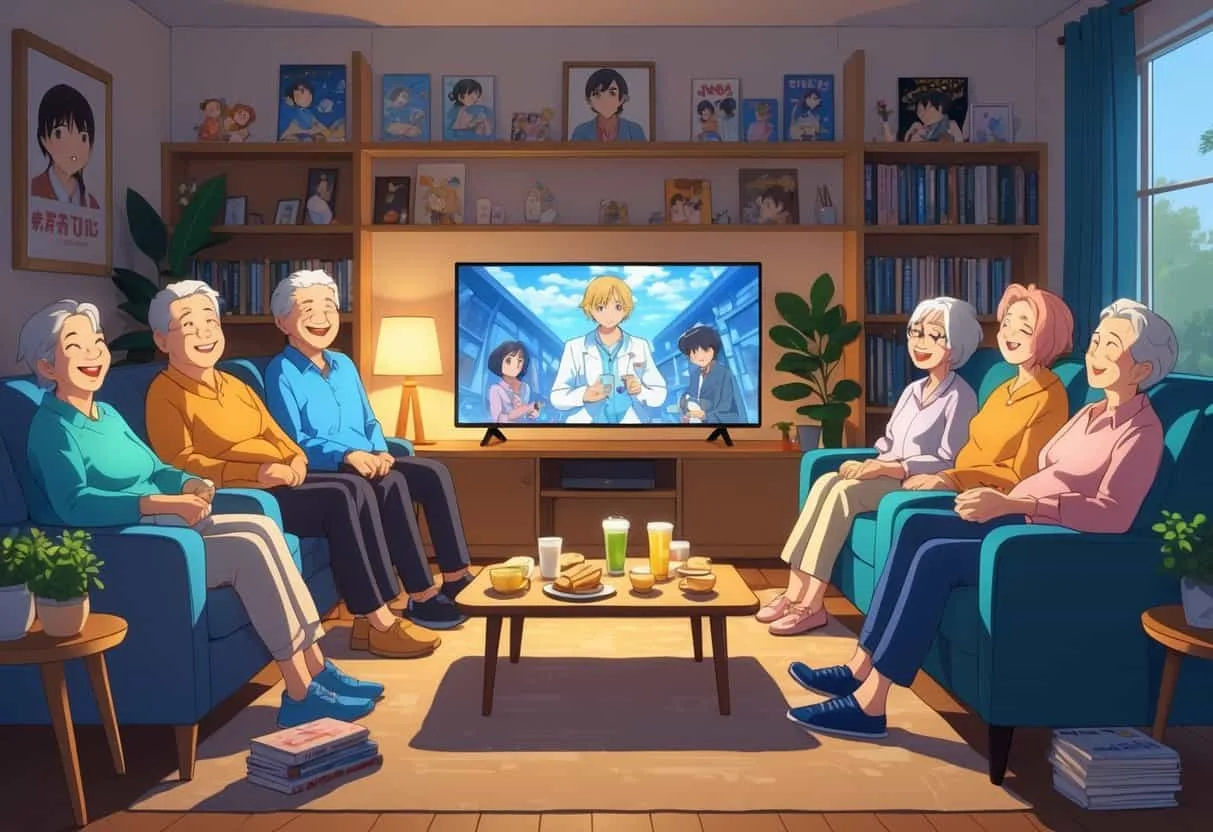
In an era of algorithmic transience and disposable content, the rewatch asserts durability. It says that some stories are worth keeping close, that they can grow alongside you, and that the communities built around them—spread across subreddits, Discord servers, and living-room couches—are themselves a form of legacy. Older anime fans are doing more than reclaiming nostalgia; they’re curating a living archive of feeling, and they’re inviting everyone to revisit it on their own terms.