Table of Contents
The passion of Latin American anime fans is unmistakable. Across forums, social media feeds, and convention halls, their dedication stands apart—marked by deeply emotional connections to characters, intricate fan creations, and a collective pride rarely seen elsewhere. This enthusiasm isn't a recent trend; it's the result of decades of accessible broadcasting, cultural resonance, and a thriving community that continues to evolve in the digital age.
The Historical Foundation: How Anime Became a Staple on Latin American TV
Long before streaming services entered the picture, free-to-air television was the primary gateway to Japanese animation for millions across the region. During the 1980s and 1990s, local broadcasters made a practical decision that would reshape entertainment culture. Anime series were significantly cheaper to license than American cartoons, and they provided hundreds of episodes that could fill daily programming blocks with minimal cost.
Because these shows aired on public and cable channels alike—often in early morning or after-school slots—an entire generation grew up with them as part of their regular routine. There was no need for a premium subscription or special equipment. A television set and an antenna were enough to introduce kids and teens to sprawling universes of martial arts, mythical warriors, and interstellar adventures.
This massive exposure didn't happen in a vacuum. Networks like Canal 5 in Mexico, Magic Kids in Argentina, and Chile's Megavisión became synonymous with anime. They built loyal audiences who would tune in daily, learning the opening songs in Japanese or Spanish versions and discussing episode plots with friends at school the next morning.
Cheaper Imports and Open-Access Television
Distributors quickly realized that Japanese content offered exceptional value. Unlike U.S. cartoons that often came with strict licensing restrictions and higher fees, anime packages could be acquired in bulk. This allowed stations to air not just one or two series, but entire lineups—from Dragon Ball and Sailor Moon to less mainstream titles that might never have found a North American audience on traditional TV.
The open-access model meant that unlike other markets, where anime was siloed on specialized networks or premium channels, Latin American viewers encountered Japanese animation as a normal part of daily life. This lack of gatekeeping built a broad, class-diverse fanbase that crossed all socioeconomic lines.
Iconic Dubs and Voice Actors That Shaped Generations
The region's dubbing industry turned functional translations into cultural phenomena. Voice actors like Mario Castañeda (Goku in Dragon Ball Z) or Laura Torres (Goku as a child) became celebrities in their own right. Their performances added layers of emotion and identity that fans still reference decades later. For many, the Spanish dubs are the definitive version—watched, quoted, and cherished more than the original Japanese audio.
These performances weren't just translations; they were adaptations that captured local speech patterns, humor, and intensity. The dubbing teams often worked with limited budgets, yet their work created an intimate bond with audiences. It's common to see memes and social media posts celebrating a specific scream, catchphrase, or monologue delivered by a beloved voice actor. This connection only deepened the emotional investment fans had in the series.
Cultural Resonance: Why Anime Themes Hit Close to Home
Anime's storytelling frequently centers on themes of friendship, perseverance, sacrifice, and honor—values that sit comfortably within many Latin American cultural frameworks. Protagonists don't win simply because they're talented; they succeed because they never give up, because their friends support them, and because they fight for something larger than themselves. This narrative structure mirrors the communal and family-oriented priorities that shape everyday life across the region.
The emotional depth of these series goes beyond simple hero-versus-villain arcs. Characters face loss, failure, and moral dilemmas. They cry openly and express vulnerability. In societies where machismo can often suppress emotional expression, anime provided a legitimate outlet for boys and girls to engage with complex feelings. It validated sadness, loyalty, and tenderness without judgment.
Friendship, Honor, and the Power of Overcoming Adversity
Series like Saint Seiya (known as Caballeros del Zodiaco in Spanish) placed brotherhood and duty at the forefront. The knights didn't fight for personal glory but for Athena, each other, and the safety of the world. This collectivist framing resonated deeply. It wasn't about the lone hero; it was about a group bound by unwavering loyalty.
In Dragon Ball, Goku's journey from a naive child to a protector of Earth showcased constant self-improvement and resilience. He failed, died, and came back stronger—mirroring the real-world narrative of overcoming economic hardship and personal setbacks that many families understood intimately. The message was clear: no obstacle is insurmountable if you keep training, learning, and relying on those who believe in you.
Fewer Censorship Barriers, More Authentic Storytelling
Unlike some countries where anime was heavily edited for content—removing violence, religious symbolism, or same-sex relationships—Latin American broadcasts often aired series with minimal cuts. Saint Seiya retained its mythological references and bloody battles. Dragon Ball Z showed death and destruction without sanitization. Even later series like Evangelion and Cowboy Bebop reached audiences in versions that stayed true to their mature themes.
This relative lack of censorship meant that fans experienced stories as the creators intended. The emotional weight of a character's death, the tension of a forbidden love, and the philosophical questions raised by science fiction narratives remained intact. This authenticity built trust and deepened the relationship between the audience and the medium.
Community-Driven Expression: Cosplay, Fan Clubs, and Manga Culture
The passion for anime in Latin America is not a passive viewership. It pours into creative, social, and performative expressions that fuel both online and offline ecosystems. Fans transform themselves into living embodiments of their favorite characters, build networks that span countries, and collect manga with the same reverence others might reserve for fine literature.
The Cosplay Phenomenon: Craftsmanship and Performance
Cosplay has grown into a sophisticated art form. At conventions like Anime Friends in Brazil, Expo TNT in Mexico, or Otakon in Chile, the level of craftsmanship rivals any international stage. Participants often hand-sew costumes, craft armor from EVA foam, and learn makeup techniques through online tutorials and community workshops. It's common to see groups coordinating entire ensembles from a single series, complete with props, wigs, and contact lenses that mirror the characters' designs.
Beyond visual accuracy, cosplayers invest in performance. They study the mannerisms, vocal inflections, and signature poses of their characters. At contests, they act out short skits, often to roaring applause from crowds who recognize every reference. This performance culture turns a costume into a living tribute, and for many, it becomes a year-round hobby that combines fashion, theater, and fandom identity.
Online and Offline Otaku Communities
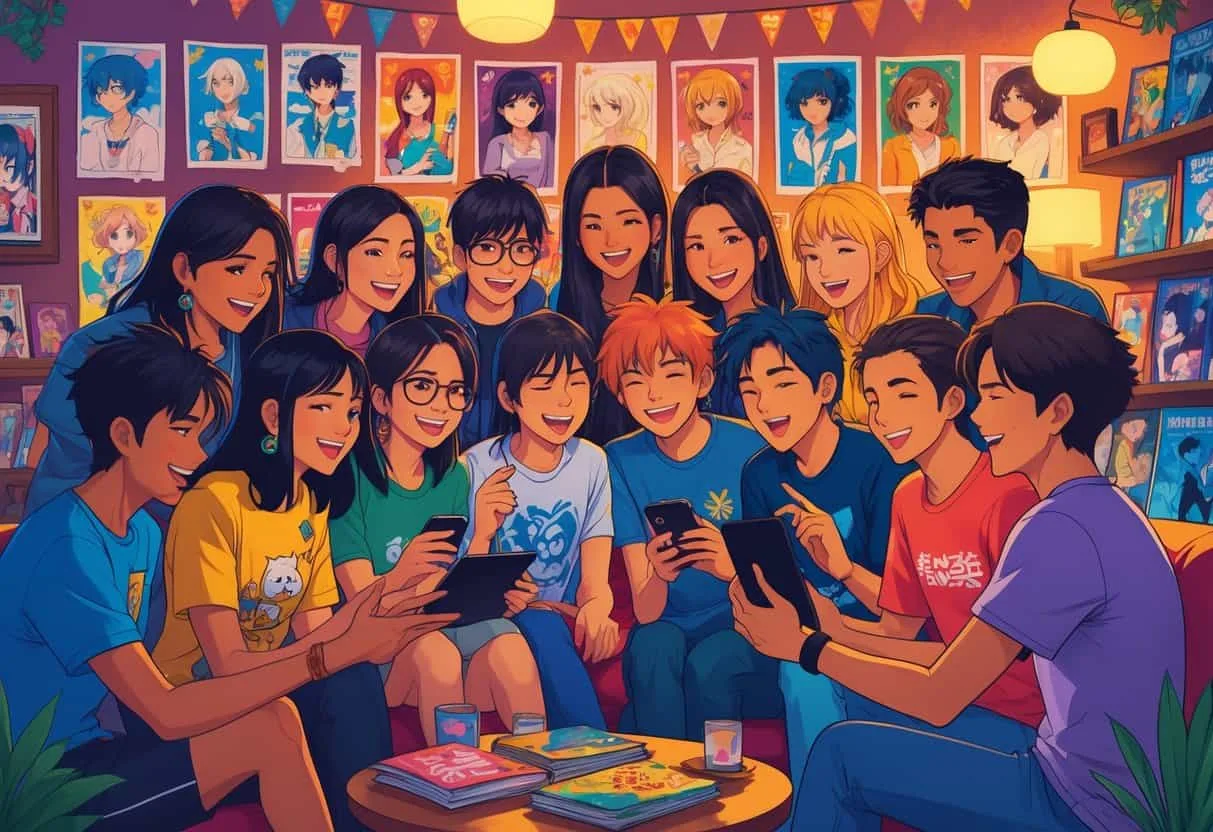
The term otaku in Latin America carries little of the stigma it may have in Japan. Instead, it's worn as a badge of belonging. Facebook groups, Discord servers, and WhatsApp communities serve as constant hubs for sharing fan art, memes, and news about upcoming releases. Fans organize watch parties, dub parody contests, and charity events—all in the name of anime.
In larger cities, physical meeting spots have emerged. Some fans gather weekly in parks or shopping centers dressed in cosplay for casual photoshoots, while others run anime-themed bars and cafes. These spaces blur the line between digital and physical worlds, making fandom a tangible, everyday part of life. Annual conventions can draw over 100,000 attendees, featuring not just merchandise and panels but also karaoke rooms, manga libraries, and cultural exchange sessions with Japanese creators.
Manga as a Deeper Narrative Experience
For dedicated fans, manga offers the original blueprint. Many series are adapted into anime with filler arcs or altered endings, but the manga preserves the author's complete vision. Reading scanlations or officially translated volumes allows fans to delve into character backstories and subplots that never made it to the screen. It adds a layer of intellectual pursuit to the emotional attachment.
Independent comic shops and book fairs now dedicate significant shelf space to manga in Spanish. Publishers like Panini Manga and Editorial Ivrea have expanded their catalogs to include newer hits like Demon Slayer and Jujutsu Kaisen, while also reprinting classics. Manga clubs form in schools and universities, where members debate plot twists and artistic styles with the same intensity as literature students analyzing a novel.
Digital Transformation: Streaming, Localization, and Social Media Engagement
If television built the foundation, the internet exploded the walls. The shift to digital consumption has reshaped how Latin American fans access anime, interact with each other, and influence the industry. Streaming platforms, high-quality translations, and viral social media content have turned casual viewers into an interconnected powerhouse.
Crunchyroll and the Streaming Revolution
Streaming services have replaced appointment viewing with on-demand libraries. Crunchyroll's catalog, for instance, offers simulcasts that let Latin American users watch new episodes just hours after they air in Japan. This immediacy eliminates the years-long wait for dubbed versions and creates a shared global viewing experience. Fans in Buenos Aires, Lima, and Mexico City react simultaneously on Twitter with hashtags that trend within minutes.
The platform's push into local markets includes subtitles and dubs in both Spanish and Brazilian Portuguese, as well as curated recommendations that highlight regional favorites. This level of attention signals to fans that they are not an afterthought but a priority audience. Partnerships with local telecom companies have also bundled streaming subscriptions into mobile data plans, lowering the barrier to entry even further.
The Art of Translation and Cultural Adaptation
Translation is never neutral, and Latin American fans are particularly sensitive to quality. A well-translated subtitle line captures not just the literal meaning but the emotional tone and cultural nuance. Localization teams now work to adapt Japanese honorifics, food references, and wordplay into forms that make sense without erasing the source material. A poorly dubbed series, by contrast, can spark widespread mockery and prompt fans to stick to subtitles or even learn basic Japanese.
This has led to a competitive environment among streaming providers to hire native-speaking translators who understand anime culture. Fans often act as unpaid quality control, comparing subtitles across platforms and sharing side-by-side screenshots. Their vocal feedback has directly influenced improvements, showing that this community wields real consumer power.
Social Media as an Amplifier of Fandom
Platforms like TikTok, Instagram, and X (formerly Twitter) have become petri dishes for viral anime content. A single well-timed meme featuring a Dragon Ball Z frame can rack up millions of views. Cosplay reveal reels, dub voice impressions, and "what if" fan animations circulate rapidly, pulling new audiences into the fold. Hashtags like #AnimeLatino and #DragonBallLatino consistently attract high engagement, sometimes outperforming English-language trends.
This digital energy translates into real-world impact. Online petitions for a specific dub actor to return, or for a movie to be released in local theaters, often hit their targets within days. Fans crowdfund indie projects, organize streaming marathons for charity, and keep decades-old series relevant through constant reinterpretation. The line between consumer and creator blurs, and the community essentially markets the medium to itself.
Economic Impact and Global Standing of the Latin American Anime Market
All of this passion translates into serious economic weight. Latin America is no longer merely a recipient of anime culture; it's a key growth engine for the global industry, driving demand for merchandise, events, and localized content.
Merchandise, Conventions, and Local Entrepreneurship
Walk through any large street market in Mexico City or São Paulo, and you'll find booths overflowing with anime figurines, keychains, t-shirts, and posters. While official licensing has expanded, a robust sector of fan-made artistry thrives as well. Local illustrators sell prints, jewelry, and custom apparel inspired by popular series. Conventions dedicate entire "artist alleys" to these creators, turning fandom into a viable small business.
According to consumer market data from Statista, the Latin American anime merchandise sector has seen steady double-digit growth, driven by both major franchises and breakout hits like Kimetsu no Yaiba. Large event organizers now work with Japanese licensors to bring exclusive merchandise, voice actor appearances, and even first-look premieres to the region. The economic footprint supports not just retailers but also hotels, restaurants, and transport services in host cities.
How Latin America Compares to the Rest of the World
Surveys reveal that Latin America's anime affinity is proportionally among the strongest globally. A 2023 report by Anime News Network noted that about 28% of surveyed consumers in the region named anime as their favorite genre, a figure higher than those recorded in Europe, India, Southeast Asia, and the Middle East. This isn't about population size alone; it's about the depth of attachment and the cultural integration that other regions haven't replicated.
Compared to the United States, the Latin American market exhibits a longer history of television saturation and a more communal viewing culture. While U.S. fandom often centers on individual streaming and convention attendance, Latin America's online chatter and in-person gatherings reflect a more embedded social habit. This has not gone unnoticed by production committees, with several anime now explicitly acknowledging their Latin American fanbase through character designs, setting references, and Spanish-language credits.
The Ongoing Evolution and Lasting Passion
The Latin American anime community continues to evolve, but its core remains constant: a deep emotional bond with the medium that began in childhood living rooms and carried into smartphones. New generations discover classics through streaming recommendations, while long-time fans introduce their own children to the series they grew up watching. This multi-generational transmission secures anime's place in the region's cultural fabric.
Local creators are now producing original Latin American manga and animated shorts inspired by the anime aesthetic, feeding the cycle from consumer to contributor. Industry partnerships and official translations grow more sophisticated each year, and the voice actors who once dubbed over a handful of channels now headline sold-out tours across the continent. The passion that once seemed surprising to outsiders has proven to be a permanent, influential force in global entertainment.