Table of Contents
The Beach Episode as a Narrative Anchor
If you have watched more than a handful of anime series, you have likely stumbled into one of the industry’s most enduring rituals: the beach episode. Ostensibly, these are self-contained stories where the cast trades school uniforms and combat gear for swimsuits and sand. But beneath the surface of watermelon smashing and volleyball games lies a versatile narrative device that has shaped audience expectations and character arcs for decades. Far from being simple filler, the beach episode offers creators a sanctioned space to pause the main plot, recalibrate emotional stakes, and explore interpersonal dynamics that would feel forced in more somber settings.
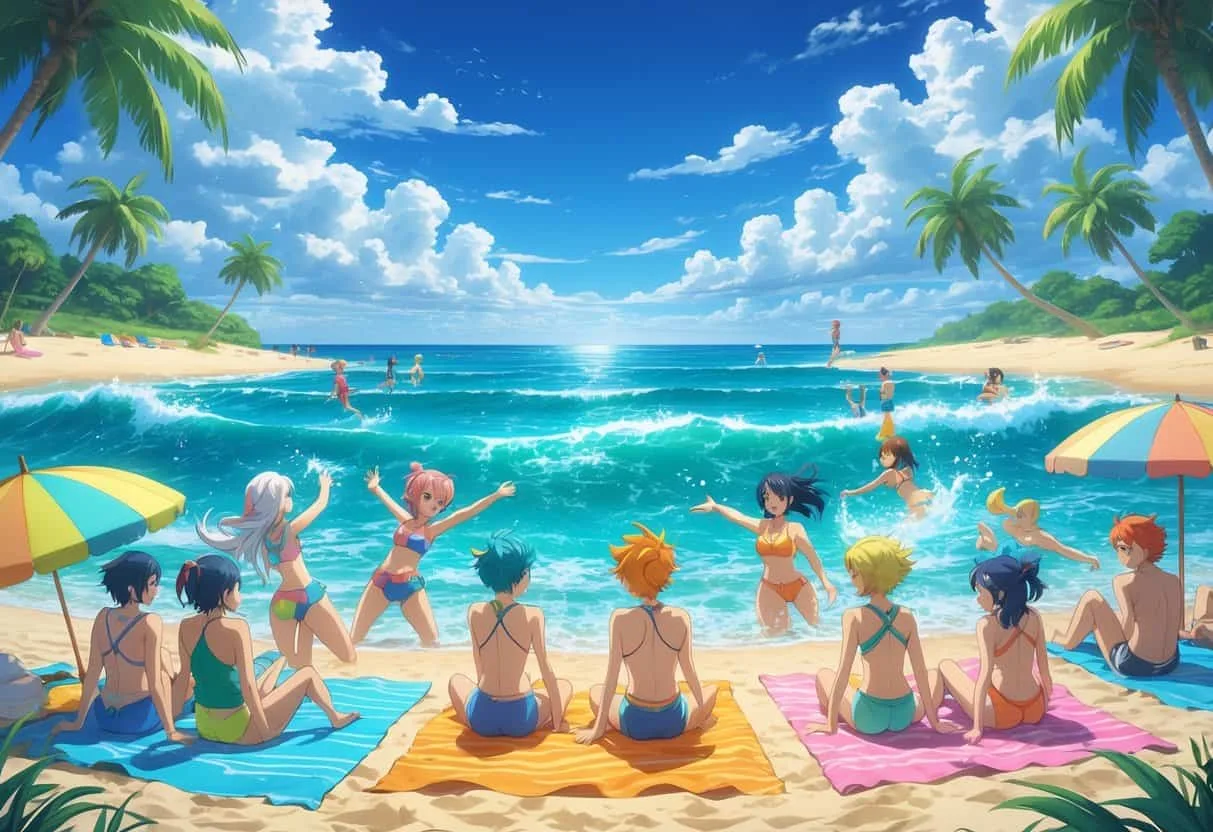
A genuine beach episode is not defined merely by the presence of sand or water. A brief cutaway during a chase sequence or a character staring at the ocean during a moment of crisis does not count. The authentic beach episode is a structural pivot: it occupies an entire installment (or a significant portion of one), deliberately displaces the primary conflict, and resets the series’ emotional temperature. This episodic break has become so ingrained in anime production that studios routinely schedule it as a mid-season fixture, anticipating the fatigue that builds during longer arcs. Understanding why this pattern became so entrenched requires tracing its cultural origins, appreciating its psychological utility, and dissecting the way it services both fans and the broader story.
The beach episode is not a relic of lazy writing; it is a deliberate craft choice that balances tension with release, spectacle with intimacy, and narrative momentum with meaningful stillness.
The Cultural and Historical Imperative
In Japan, visits to the shore have long been associated with leisure, purification, and a temporary escape from social hierarchy. Summer vacations at the beach are a national pastime, and this cultural rhythm bleeds into anime because the medium draws heavily from everyday life. The concept of kaisuiyoku, or sea bathing, carries historical weight as both a physical pleasure and a spiritual practice rooted in Shinto purification rituals. When characters step onto the sand, they are participating in an almost ritualistic break from obligation—a concept that resonates with Japanese viewers as much as a holiday episode might for audiences elsewhere. It is not incidental that many beach episodes coincide with in-universe summer breaks, aligning the fictional world with the real-world calendar and encouraging a sense of seasonal immersion.
This temporal mirroring strengthens the emotional impact: viewers who are themselves enduring hot, humid July afternoons feel a kinship with animated characters sharing the same struggle.
The earliest anime beach scenes were influenced by live-action cinema and even early film experiments. The Lumière brothers captured seaside leisure as far back as 1895, and that documentary impulse carried into animation. However, the trope as we recognize it crystallized in the 1970s and 1980s. Series such as Urusei Yatsura used beach settings not just for gag comedy but to expose character vulnerabilities under the sun. Lum, the alien heroine, became iconic partly because her swimsuit-clad design was so integral to her mischievous, untamed personality.
At a time when hand-drawn animation budgets were tight, a beach backdrop—often requiring fewer moving background elements and a static horizon line—offered a cost-effective way to fill an episode without sacrificing visual appeal. Studios learned that these episodes could deliver high fan engagement with relatively modest production demands. The economic incentive was significant: a beach episode could be produced faster and cheaper than a mecha battle or a complex chase sequence while generating disproportionate fan discussion and merchandise sales.
As the medium matured, the beach episode became a rite of passage. Nearly every long-running series from the 1990s and early 2000s included at least one beach installment, and fans began to anticipate them as a seasonal milestone. Studios responded by polishing the format, turning the beach episode into a showcase for their best character animation and most playful writing. It was no longer an afterthought; it was a scheduled celebration that rewarded viewer loyalty.
Narrative Pacing and the Psychology of Relief
Serialized anime often juggles escalating tension, complex lore, and relentless action. Sustaining that intensity week after week exhausts both writers and viewers. A beach episode functions as a release valve. The sudden shift to an open, airy environment with the sound of waves and cicadas signals to the audience that it is permissible to breathe. Psychologically, this brief emotional decompression can strengthen viewer investment: after witnessing characters at their most relaxed, the audience feels a sharper sting when they later face danger or heartbreak.
The contrast itself deepens the impact of the main storyline. This technique mirrors the classical dramatic principle of comic relief in Shakespearean theater—a moment of levity that makes the tragedy more poignant by reminding the audience of what is at stake.
For creators, this pause also serves a structural purpose. It allows subplots and side relationships to germinate without the pressure of advancing the central mystery or battle. In a mecha anime, a beach episode may show pilots interacting as ordinary teenagers, reminding us what is at stake beyond the cockpit. In a fantasy epic, the shore becomes a neutral ground where enemies might share a fleeting moment of mutual understanding. These quiet interludes make the eventual return to conflict feel earned rather than relentless.
Consider the beach interlude in Neon Genesis Evangelion, where the characters’ vulnerability on the sand heightens the psychological horror that follows. That episode works because the relaxation is genuine enough that the audience lets its guard down—only to be blindsided by the emotional gut-punch of subsequent episodes.
The pacing function also extends to the broader season structure. A well-placed beach episode often lands around the middle of a 12- or 24-episode run, serving as a dividing line between the introduction and the escalation. This narrative architecture gives the audience a clear marker: now we have rested, and now the real stakes begin. Streaming platforms have recognized this rhythm, and many modern series schedule beach episodes as a way to reset viewer engagement before a climactic arc.
Amplifying Character Development Outside the Pressure Cooker
One of the subtler strengths of the beach episode is its ability to accelerate character growth. In the default setting of a series, characters often operate within rigid roles: the stoic leader, the comic relief, the tsundere love interest. The beach strips away some of those external constraints. Without desks, swords, or mission briefings to define behavior, personalities emerge in ways that feel organic. A chronically shy character might need to be coaxed into the water, revealing a fragility that dialogue alone could never convey.
A rivalry that seemed insurmountable might soften over a sandcastle competition. The beach provides a neutral arena where social hierarchies can be temporarily suspended, giving quieter or peripheral characters a chance to shine.
These episodes are also rich territory for exploring group dynamics. The mere act of dividing a large cast into smaller clusters—those who want to swim, those who prefer to grill, those slathering on sunblock under an umbrella—allows for nuanced interactions. Two characters who rarely speak in the main plot can share a casual conversation that lays the groundwork for a future alliance or romantic tension. Because the stakes feel low, the audience absorbs new details about characters without the cognitive load of tracking a grand plot. The best beach episodes leave you feeling that you genuinely know the cast better, not that you have simply been distracted.
In series with large ensemble casts, the beach episode becomes an essential tool for ensemble management. Shows like K-On! and Love Live! use beach outings to give each character a solo moment: one might be photographed awkwardly, another might rescue a drifting beach ball with surprising athleticism, a third might wander off and get lost. These micro-scenes strengthen the emotional bond between viewer and cast while requiring minimal narrative setup. The beach episode functions almost like a character sampler platter, offering tastes of personalities that might otherwise be overshadowed by more dominant plotlines.
Visual Language and Production Freedoms
From a visual storytelling perspective, the beach episode is a playground for animators and character designers. It provides a legitimate reason to showcase summer fashion, hairstyles that would not appear in a standard classroom scene, and a palette dominated by blues, whites, and warm yellows. The reflective quality of water and the translucency of wet fabric offer animators the chance to experiment with lighting and texture in ways that a dimly lit spaceship corridor or a moody dungeon cannot. These episodes often feature distinctly bouncy, expressive character animation because the comedic and romantic slapstick that defines them demands exaggerated motion. A character slipping on seaweed, a sudden splash, or a competitive volleyball spike stretched into slow motion—all of these benefit from the looser, more fluid animation style that beach episodes permit.
The sound design shifts in parallel. Background music frequently swaps orchestral bombast or dark synth for acoustic guitars, steel drums, or chirpy pop tracks. This auditory signal reinforces the episode’s function as a break from tonal heaviness. Additionally, the ambient sounds—crashing waves, seagulls, distant laughter—create an immersive sensory bubble that separates the experience from the anime’s default soundscape. When the soundtrack eventually returns to its standard motifs, the transition feels sharper and more deliberate.
The shift is not just visual but sonic, engaging multiple senses to reinforce the change in mood.
Furthermore, the beach setting allows studios to experiment with camera angles and composition in ways that indoor environments restrict. A long shot of the horizon emphasizes the vastness of the ocean, creating a sense of freedom that contrasts with cramped classroom or corridor scenes. Low-angle shots of characters diving into water or running along the shore add dynamic energy. The absence of walls and ceilings gives the animators literal room to breathe, and that visual expansiveness translates directly to the audience’s emotional experience.
Fan Service and the Delicate Balance
A discussion of beach episodes cannot ignore their most debated element: fan service. The term often carries a dismissive tone, but its role within this trope is more nuanced than simply titillation. Revealing swimsuits and lingering shots of well-defined physiques are indeed a common feature, particularly in series with an ensemble cast of attractive characters. For some viewers, this is a harmless, playful aspect that enhances the escapist fun. For others, it can feel jarring, especially when inserted into a show that otherwise avoids such content.
The key distinction lies in execution. When fan service arises naturally from the setting—characters choosing outfits that suit their personalities, participating in physical activities that showcase their bodies in motion—it can feel like an honest reflection of a day at the beach. When it is gratuitous and disconnected from character behavior, it becomes a distraction that undermines the narrative break the episode was meant to provide.
Writers and directors who handle this well use fan service as a minor ingredient rather than the main course. A competitive volleyball match in a high school comedy series might highlight athletic prowess and team chemistry; the visual appeal of the characters is a secondary byproduct, not the centerpiece. The most rewatchable beach episodes succeed because the humor, character bonding, and gentle emotional beats outshine any fleeting swimsuit shot. Series like Haikyuu!! manage to balance this perfectly: the beach training arcs focus on athletic development and team dynamics, with the setting serving the story rather than the reverse.
The fan service debate also intersects with demographic targeting. Series aimed at older male audiences often lean more heavily into visual titillation, while shonen and shoujo titles tend to balance the attention more evenly. The difference is not accidental—it reflects the market expectations of each demographic. But as anime becomes more globally consumed, studios are increasingly aware that beach episodes can alienate viewers who expect a certain level of seriousness. The best productions navigate this by layering genuine character moments on top of any visual appeal, ensuring that even viewers who skip the swimsuit shots find value in the episode.
Subversion and Reinvention in Modern Anime
As the trope hardened into convention, creators began to play with its boundaries. Contemporary anime increasingly uses beach episodes to subvert expectations. A horror series might set a grisly event on an otherwise idyllic shoreline, weaponizing the audience’s association between the beach and safety to magnify shock. A psychological drama could trap characters in a surreal beachside loop, using the setting as a metaphor for stasis rather than escape. Even comedies have turned the trope inside out by making characters explicitly dread the beach trip, openly complaining about the predictability of it all—a meta acknowledgment that resonates with seasoned viewers.
One Punch Man parodies the trope by having its beach episode be a bizarrely anticlimactic training montage, while Gintama deconstructs the entire format by having characters argue about the episode structure itself.
Another evolution is the gender-balanced beach episode. Historically, many beach episodes focused disproportionately on female characters’ swimsuit reveals to cater to a presumed male audience. Current titles, particularly those embracing wider demographic appeal, spread the attention more equitably, giving male characters equal time in the visual spotlight and crafting humor that relies on everyone’s awkwardness rather than one group’s objectification. This shift reflects broader changes in anime production, where studios are increasingly attentive to diverse audience sensibilities.
Some series have even turned the beach episode into a narrative turning point rather than a pause. Attack on Titan famously used its beach scene as a moment of revelation that recontextualized the entire series, transforming the trope from frivolous escape into emotional confrontation. In Made in Abyss, the beach at the beginning of the series is a gateway to the abyss, imbuing the familiar setting with foreboding. These subversions prove that the beach episode format is not inherently limiting—it is what creators choose to do within the framework that matters.
The Beach Episode as a Litmus Test for Series Quality
There is an emerging consensus among anime critics that a series can be judged, in part, by the quality of its beach episode. A well-constructed beach installment indicates that the creators understand pacing, character dynamics, and tonal balance. Conversely, a beach episode that feels like empty padding or cringe-inducing fan service often signals deeper problems in the writing team’s priorities. This litmus test is not absolute—many great series have weak beach episodes—but it provides a useful heuristic for evaluating how much thought goes into the overall viewer experience.
The best beach episodes demonstrate narrative economy: even while the plot pauses, the episode advances something—character relationships, emotional arcs, or thematic resonance. A beach episode that ends with the characters feeling the same way they started has failed its purpose. The episode must leave a residue, a small but meaningful change that carries into the next arc. Whether it is a romantic confession that finally happens, a rivalry that softens into mutual respect, or a quiet moment of self-acceptance, the successful beach episode adds to the story even while seeming to take a break from it.
This quality metric also extends to production values. Studios that invest in their beach episodes—with strong animation, thoughtful composition, and original music—signal that they respect the audience enough to make even the breather episodes memorable. Fans reward this investment with increased engagement, discussion, and even merchandise sales. The beach episode, then, becomes a cultural touchstone for the series as a whole, a shared memory that unites the fanbase.
International Perceptions and Localization Pitfalls
When anime travels beyond Japan, the beach episode often lands differently. Audiences in North America and Europe may not share the same cultural framework that normalizes the seaside as a collective pause in the narrative. In regions where beach vacations are less ritualized or where fan service triggers stricter ratings, episodes centered on swimsuits can feel alien or gratuitous. Localizers sometimes step in: a playful joke about sunburn might be rephrased entirely, or the episode’s placement in a broadcast order might be shuffled to minimize perceived tonal whiplash. Some streaming platforms have even offered content warnings or skipped these episodes in curated marathon feeds to avoid alienating new viewers.
That mismatch provides a case study in how deeply embedded cultural assumptions shape storytelling. The beach episode’s durability within Japan says as much about domestic viewing habits as it does about narrative utility. For international fans who learn to appreciate the rhythm, the trope becomes a quirk of the medium they would not want to lose. For those who find it off-putting, it remains a barrier that highlights the gap between local and global anime curation.
Interestingly, as global streaming services like Crunchyroll and Netflix expand their anime libraries, they are increasingly including beach episodes in their original productions, signaling that the trope has crossed cultural boundaries. Western audiences have begun to embrace the beach episode as part of the anime experience, even if the cultural context is less familiar. This cross-cultural adaptation suggests that the universal appeal of a well-timed break transcends national boundaries, even if the specific form it takes is uniquely Japanese.
When the Formula Shines Brightest
Ultimately, the beach episode endures not because it is mandated by studio checklists but because, at its best, it provides something no other episode can. It builds camaraderie without plot armor. A well-crafted beach episode can shift a secondary character from comic relief to fan favorite, seed a romance that blossoms for a whole season, or simply give the audience a memory of pure, uncut joy that carries them through darker arcs. Its existence is a promise that even in worlds full of monsters, conspiracies, and exams, there is a patch of sand where the cast can be stupid, sentimental, and human.
The line between relaxation and distraction is thin, and not every anime walks it successfully. Yet the trope persists because the reward of getting it right is immense. When the tide recedes and the characters pack up their umbrellas, the audience should feel a gentle sorrow that the break is over—and a renewed readiness to dive back into the story that brought them there. The beach episode is not an interruption; it is a necessary exhale that gives the rest of the series its rhythmic breath. And for as long as anime continues to test its characters with trials and tribulations, there will be a place for that single day when the biggest concern is whether the sunblock is waterproof and the water is warm enough for swimming.