Table of Contents
Anime shatters the boundaries of entertainment, pulling you into a visual universe where storytelling, identity, and art collide. But its reach goes far beyond the screen. For millions of people worldwide, anime becomes a portal into a broader web of Japanese subcultures—most notably Harajuku street fashion and the dramatic music scene known as Visual Kei. These movements don’t just coexist with anime; they share a common cultural DNA of rebellion, creativity, and unapologetic self-expression. Once you start noticing the connections, the entire landscape of Japanese pop culture opens up, inviting you to explore clothing, music, and communities that extend the experience far beyond your next binge-watch.
The Pathway from Anime to Harajuku Fashion
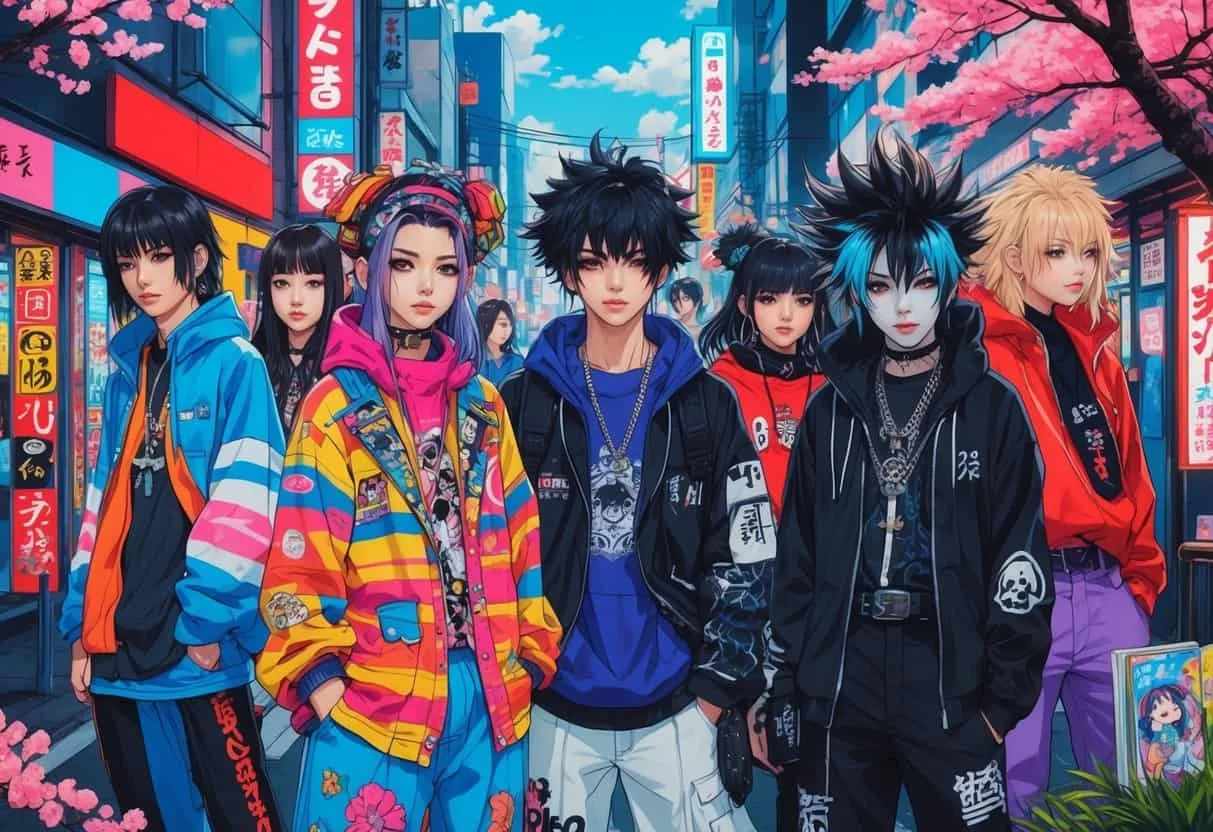
Watch enough anime and you’ll quickly realize that character design is rarely an afterthought. Costumes, hairstyles, and accessories often reflect avant-garde sensibilities that echo the streets of Harajuku. This Tokyo district has long been a laboratory for extreme fashion, where styles like Lolita, Decora, and Fairy Kei bloom in a riot of color, lace, and oversized accessories. Anime acts as a stylized mirror of these trends, translating them into a visual language that feels both fantastical and approachable.
Series such as Sailor Moon and Cardcaptor Sakura popularized the magical girl aesthetic, full of ribbons, petticoats, and pastel palettes that later inspired entire Harajuku sub-styles. More pointedly, Paradise Kiss and Nana—both by Ai Yazawa—directly explore the fashion world, featuring characters who design clothing or embody the punk and glam-rock influences that bleed into real Tokyo streetwear. Even modern hits like JoJo’s Bizarre Adventure introduce poses and silhouettes drawn from high fashion, with creator Hirohiko Araki having collaborated with brands like Gucci. For fans, spotting these references becomes a gateway to researching the designers and shops behind the looks. Soon, scrolling through a Harajuku street style gallery feels like a natural extension of engaging with anime culture.
What makes anime such a powerful connector is that it normalizes extravagance. Characters who wear elaborate costumes without apology teach viewers that clothing can be a canvas for identity. Harajuku’s philosophy of “kawaii” cuteness dovetails with anime’s emotive character expressions, while the neighborhood’s grittier punk undercurrents resonate with more mature, psychological series. This cross-pollination encourages fans to adopt elements of kawaii aesthetics or even full-blown Japanese street looks in their own wardrobes, proving that anime’s influence is not just visual but also deeply participatory.
Visual Kei: Where Music Meets Anime-Inspired Drama
If Harajuku is about wearable art, Visual Kei is about living it. This music movement, which emerged in the 1980s, blends heavy rock, metal, and pop with striking, androgynous visuals. Bands like X Japan, Malice Mizer, and The Gazette constructed personas that looked like they stepped straight out of a gothic anime—and in many cases, they had. Visual Kei musicians openly cite anime and manga as inspirations, pulling from the same well of dramatic makeup, elaborate costumes, and larger-than-life stage presence.
The synergy works both ways. Anime soundtracks frequently feature Visual Kei artists, cementing the relationship in fans’ minds. For example, the iconic band L’Arc~en~Ciel contributed songs to Fullmetal Alchemist and Rurouni Kenshin, while The Gazette provided tracks for Black Butler. These collaborations introduce viewers to a music genre that extends the emotional resonance of the shows they love. A single song can unlock an entire subculture; a fan might first hear a Visual Kei track during an anime ending sequence, then discover the band’s theatrical music videos, and eventually attend concerts or adopt the fashion style themselves.
A deeper look into Visual Kei history and artist profiles reveals just how tightly woven these two worlds have become.
Visual Kei’s appeal lies in its ability to shatter gender norms and celebrate fluid identity, a theme that anime also handles with remarkable nuance. The androgynous characters that populate series like Revolutionary Girl Utena or Ouran High School Host Club feel like kindred spirits to Visual Kei performers. This shared vocabulary of visual rebellion makes the transition from anime fan to Visual Kei enthusiast almost seamless, creating a cultural loop where each medium fuels the other’s growth.
Online Communities: Fostering Global Subculture Connections
The internet has collapsed the distance between Tokyo and the rest of the world, turning niche interests into global movements. Anime fans naturally congregate on platforms like Reddit, Discord, and specialized sites such as MyAnimeList, but these spaces quickly evolved into hubs for related subcultures. A discussion about a character’s outfit can morph into a detailed breakdown of Harajuku substyles; a music recommendation thread might introduce someone to Visual Kei for the first time.
Cosplay communities are particularly instrumental in bridging subcultures. Sewing and crafting advice for an anime convention costume often draws on the same techniques used to build Harajuku Lolita coordinates or Visual Kei stage outfits. Online marketplaces and social media make it possible to source materials from Japanese brands, while influencers and bloggers demystify the process of dressing for everyday life or attending a live show. The result is a participatory culture that transcends passive consumption. Fans don’t just watch—they create, share, and reinterpret, keeping the subcultures alive and evolving far from their geographic origins.
Artistic Roots: From Ukiyo-e to Digital Canvas
To understand why anime resonates so deeply with fashion and music subcultures, it helps to look back at Japan’s visual heritage. Ukiyo-e woodblock prints from the Edo period used bold outlines, flat planes of color, and dynamic compositions to capture fleeting moments of beauty and pleasure—not unlike the vibrant stills of a modern anime. Both forms prioritize expressiveness over strict realism, allowing emotion and style to take center stage. This continuity explains why a Harajuku coordinate or a Visual Kei ensemble can feel like a living, breathing extension of artistic tradition, updated for the present.
Other traditional arts also leave their mark. Calligraphy’s emphasis on fluid lines and negative space informs the clean aesthetic of many anime character designs and fashion photography. Noh theater’s masked, stylized performances influence the way anime conveys emotion through minimal motion, which in turn shapes the stilted, dramatic poses that Visual Kei musicians adopt on stage. A closer reading of ukiyo-e’s impact on modern art shows how these historical currents continue to feed the visual language of contemporary Japanese youth culture.
Rebellion, Cuteness, and Identity: The Youthful Core
At the heart of both anime and the subcultures it inspires is a tension between sweetness and defiance. The concept of kawaii—a pervasive aesthetic of childish cuteness—permeates everything from Pokémon mascots to Harajuku’s Fairy Kei looks. Yet Japanese youth movements also carry a strong rebellious streak that harks back to the bōsōzoku motorcycle gangs of the mid‑20th century and the punk undercurrents of the post‑war era. Visual Kei artists often evoke this duality: they wear angelic makeup on the street but scream raw, aggressive vocals on stage.
Anime itself is a master at balancing these forces. Series like Kill la Kill use clothing as a literal battleground for power and identity, while Tokyo Ghoul explores the monstrous side of what might otherwise be a tragic, emotionally delicate protagonist. This oscillation between vulnerability and rebellion mirrors the lived experience of many young people, making the subcultures that adopt these themes feel both personal and transformative. When a fan puts on a Lolita dress or a Visual Kei corset, they’re not just playing dress‑up; they’re aligning with a wider cultural conversation about freedom, conformity, and the right to be different.
Traditional Foundations in Contemporary Subcultures
Beneath the surface of neon and noise, Japanese subcultures remain tethered to older spiritual and philosophical threads. Shinto’s reverence for nature finds its way into anime backgrounds that treat landscapes as characters, and into the floral motifs common in Harajuku prints. Buddhism’s emphasis on impermanence echoes in the ephemeral beauty of a Visual Kei performance, where makeup runs and costumes are discarded after the final bow. Even the samurai code of bushido—with its values of honor, loyalty, and aesthetic refinement—appears in the stoic warriors of countless anime, whose sleek silhouettes influence everything from streetwear brands to album cover art.
This rootedness gives Japanese subcultures a depth that sets them apart from purely Western countercultures. A Lolita outfit may look like an escape from reality, but its structured silhouettes and attention to detail reflect a disciplined approach to craft that recalls traditional kimono-making. Visual Kei’s dramatic storylines and character archetypes draw from noh and kabuki theater, where masks and stylized movement convey profound emotion. Recognizing these traditional underpinnings enriches the experience of both anime and the fashion and music scenes that orbit it, revealing a culture that constantly reimagines its past rather than discarding it.
Key Anime and Manga That Bridge Subcultures
Certain works have become cultural linchpins, actively shaping the aesthetics and aspirations of both Harajuku and Visual Kei. Akira (1988) not only defined cyberpunk animation but also introduced a dystopian street style that influenced generations of Japanese fashion designers and musicians. The pill‑jacketed jackets and post‑apocalyptic silhouettes still surface in high‑end collections and underground Visual Kei looks. Nana, the manga and anime about two young women navigating love and music, made punk‑inspired Vivienne Westwood accessories symbolic of a whole generation, leading to a real‑world surge in popularity for the brand among Japanese youth. Princess Jellyfish (Kuragehime) uniquely centers on a group of otaku women who design jellyfish‑inspired dresses, directly linking the world of Akihabara fandom with amateur fashion creation.
Less obvious but equally vital is the influence of Neon Genesis Evangelion. Its psychologically fractured characters and religious symbolism informed a darker strain of Visual Kei that emphasizes existential angst. On the lighter side, Love Live! and other idol‑centric series have funneled fans into the idol subculture, which runs parallel to Harajuku and Visual Kei but shares the same values of performance, costume, and communal participation. Each of these titles serves as a node in a network, connecting viewers to a specific facet of Japan’s creative underground.
Publishers and Global Distribution: Carrying Culture Across Borders
The availability of manga and anime outside Japan has been one of the most powerful accelerants for subculture adoption. Companies like Kinokuniya, with bookstores across Asia and the West, ensured that physical manga volumes and lifestyle magazines reached an international audience long before digital streaming became the norm. Today, platforms such as Crunchyroll and Netflix stream anime globally, while digital manga services like BookWalker provide instant access to titles that highlight fashion, music, and art. Shueisha’s Weekly Shōnen Jump and Ribon magazines have inspired local editions and fan translations, creating a grassroots dissemination network that publishers now actively support. Without this vast distribution infrastructure, the stylistic references embedded in anime and manga would remain obscure to most foreign fans.
Publishers also nurture the crossover by licensing merchandise that blurs the line between fiction and fashion. Apparel collaborations between anime franchises and streetwear brands, such as Uniqlo’s UT line of graphic T‑shirts, introduce casual fans to designs that borrow from Harajuku and Visual Kei. The act of wearing a Naruto T‑shirt might seem simple, but it plants the seed for a broader exploration of Japanese style. A visit to Kinokuniya’s online store often yields not just manga but fashion magazines like KERA and music compilations that feature Visual Kei artists, making the leap from page to lived culture effortlessly tangible.
Geographic Hubs of Creativity: More Than Just Tokyo
While Tokyo’s Harajuku, Shibuya, and Akihabara districts are the most iconic breeding grounds for subcultures, other cities contribute their own distinct flavors. Osaka’s Amerika‑mura (American Village) is a hotbed for secondhand fashion and vintage reworkings, attracting a younger crowd that appreciates the thrift‑store aesthetic common in anime like Keep Your Hands Off Eizouken!. Nagoya’s Sakae district nurtures a smaller but fiercely dedicated Visual Kei scene, with live houses that host independent bands blending Japanese rock with theatrical flair. Kyoto, the ancient capital, provides a backdrop where traditional kimono aesthetics intersect with modern streetwear, inspiring hybrid styles that appear in historical fantasy anime and period‑piece J‑dramas.
Hokkaido’s cooler climate and expansive landscapes foster a slower, more nature‑oriented approach to subculture. Art events like the Sapporo International Art Festival often feature installations that merge anime‑inspired visuals with environmental themes. Yokohama, with its cosmopolitan port history, attracts international artists who infuse the local scene with global perspectives. Even Nagasaki and Hiroshima, cities defined by their histories, generate creative responses that filter into subculture narratives about peace, renewal, and identity. This geographic diversity means that the anime‑subculture pipeline is not a single channel but a rich, branching river system feeding a shared cultural sea.
Travel and Tourism: Living the Subculture Experience
For many fans, watching anime eventually transforms into a desire to walk the same streets, wear the same clothes, and hear the same music in its original context. Japan’s efficient Shinkansen network makes pilgrimage‑style tourism feasible: a morning in Harajuku’s Takeshita Dori for costume jewelry, an afternoon in Akihabara for rare doujinshi, and an evening in Shimokitazawa for a live indie Visual Kei show. Iconic landmarks like Tokyo Tower, immortalized in Sailor Moon and other series, serve as gathering points where cosplayers and photographers share their art.
Larger‑scale conventions, such as Tokyo Game Show and Comiket, attract hundreds of thousands of attendees who treat the events as full‑fledged subculture festivals. Here, Lolita fashionistas, Visual Kei enthusiasts, and hardcore otaku converge, swapping tips on makeup and music while celebrating their overlapping passions. Tourism websites like Japan National Tourism Organization increasingly feature guides to anime‑themed neighborhoods and niche fashion shops, acknowledging that this sector of cultural tourism drives significant economic and cultural exchange. For the traveler, it’s a chance to experience the source material of their favorite anime in a three‑dimensional, multisensory way that deepens their appreciation for the art and the people who create it.
The Global Reach: Japanese Subcultures Worldwide
Japanese subcultures no longer remain confined to the archipelago. Anime conventions in cities like Los Angeles, Paris, and São Paulo have become sprawling events where Harajuku fashion shows and Visual Kei concerts are as central as voice‑actor panels. In Chile, an energetic local scene has developed its own interpretations of Harajuku styles, blending Japanese inspiration with Latin American flair—a phenomenon mirrored in Germany, Mexico, and Thailand. Social media platforms like TikTok and Instagram allow trends to leap borders overnight, with visual references from anime and J‑rock shaping youth fashion in ways that even the original creators might not have anticipated.
This global diffusion is not a one‑way street; it re‑injects fresh ideas back into Japan. International cosplayers and fashion influencers who gain followings in Tokyo often end up collaborating with Japanese brands, creating a feedback loop that keeps subcultures innovative. The anime gateway thus proves itself to be a durable, two‑way portal. It doesn’t just export Japanese youth culture; it builds a worldwide community of creators and fans who collectively redefine what these subcultures can be. By following the threads from anime to Harajuku to Visual Kei and beyond, anyone can become part of a living, evolving cultural conversation that honors tradition while constantly pushing the boundaries of identity and art.