Table of Contents
What Is Mecha Anime?
Mecha anime centers on piloted or autonomous robotic machines—often colossal in scale—that serve as the narrative and visual heart of the story. The term “mecha” itself is derived from the English word “mechanical,” and in Japanese pop culture it encompasses everything from powered exoskeletons to city-sized battle stations. Unlike casual science fiction that merely features robots in the background, mecha anime places them at the core of conflict, character development, and thematic exploration. Within the genre, two dominant subcategories have emerged: super robot and real robot. Super robot series lean into fantastical, physics-defying machines piloted by heroic individuals, often battling monsters or alien empires with flashy, signature attacks.
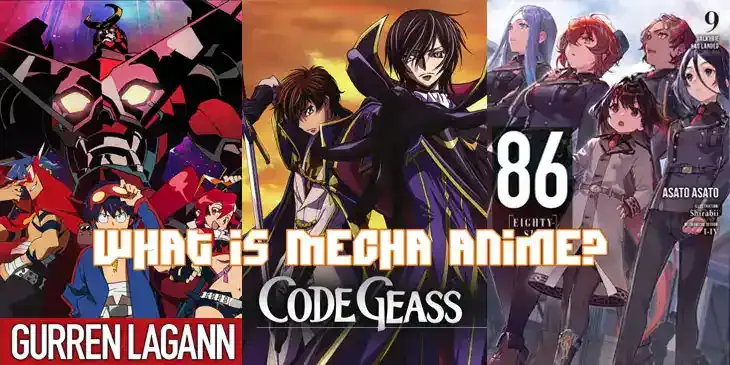
Real robot shows, by contrast, treat mecha as mass-produced military hardware bound by logistics, energy limits, and political intrigue, grounding their stories in shades of gray. A title like Gurren Lagann—where a tiny drill eventually pierces the heavens—exemplifies super robot exuberance, while Mobile Suit Gundam redefined the field by asking what happens when child soldiers are thrust into the cockpit of weapons of war.
The Origins of Mecha Anime
The roots of mecha storytelling stretch back to early 20th-century science fiction illustrations and Japanese kamishibai (paper theater), but the genre’s direct ancestor is a 1940 short manga titled Electric Octopus (デンキダコ, Denki Dako). This work featured a piloted mechanical octopus and planted the seed for the remote-controlled or piloted robot concept. The true spark, however, came from Mitsuteru Yokoyama’s Tetsujin 28-go (1956), later known in the West as Gigantor. Yokoyama, a protégé of Osamu Tezuka, serialized the story in Shonen magazine, introducing a boy detective who remotely commanded a giant steel guardian. Around the same time, Tezuka’s own Astro Boy (1952) captured imaginations with a sentient android boy, helping normalize the idea of mechanical beings as protagonists.
These postwar works reflected Japan’s rapid industrialization and complicated relationship with technology—machines could be saviors or tools of destruction. By the 1960s, anime adaptations began cementing the visual language: towering silhouettes, clashing metal, and human pilots intimately linked to their machines. This foundation enabled the explosion of mecha storytelling that would define entire decades of Japanese animation.
Science Fiction vs. Mecha: Understanding the Relationship
While mecha anime is undeniably a branch of science fiction, collapsing the two genres overlooks the specific focus that makes mecha distinct. Science fiction can encompass time travel, alien civilizations, cyberpunk, dystopian politics, and post-apocalyptic survival without ever showing a single robot. Mecha, by contrast, uses the robot as a narrative engine. The machine becomes a lens through which creators examine human fragility, militarism, identity, and even spirituality. In many cases, the mecha itself functions as an extension of the pilot’s psyche—break the machine, and you break the person.
This tight coupling allows for intense physical and emotional stakes. Classic sci-fi may ask broad questions about humanity’s future; mecha often grounds those questions in the cramped cockpit of a war machine, where every decision has immediate, explosive consequences. Consequently, many of the genre’s greatest works use futuristic technology not as escapism but as a mirror held up to contemporary issues. The line between the two remains porous—almost every mecha story contains sci-fi elements—but the genre’s identity is defined by its unwavering focus on the bond between human and machine.
The Evolution of Mecha Anime Through the Decades
1970s: The Golden Age of Super Robots
The 1970s unleashed a wave of larger-than-life heroes inside even larger machines. This was the era of the super robot, where logic took a backseat to spectacle. Mazinger Z (1972) pioneered the concept of a pilot sitting inside a robot’s head, shouting attack names and turning the tide of battle through willpower alone. Getter Robo (1974) added the gimmick of three vehicles combining into different forms, a motif that would become a staple. These shows targeted children with clear moral universes: brave pilots protected Earth from Dr. Hell’s mechanical beasts or the dinosaur empire’s invasions.
The robot designs were flamboyant, bristling with rocket fists and chest-mounted heat beams. While the storytelling was straightforward, the thematic undercurrents often reflected Japan’s post-war resilience and economic rise—technology, when wielded by pure hearts, could overcome any threat. This decade laid the commercial foundation, spawning a merchandising empire of die-cast toys and model kits that funded ever more ambitious productions.
1980s: Real Robots and Political Depth
In 1979, Mobile Suit Gundam premiered and fundamentally changed the conversation. Though its initial run struggled, the compilation movies and reruns ignited a revolution. Suddenly, mecha were no longer invincible super weapons; they were military assets—mass-produced, running out of ammo, and piloted by unprepared teenagers caught in the gears of war. This approach gave rise to the real robot subgenre, which dominated the 1980s. Super Dimension Fortress Macross (1982) wove together interstellar warfare, transforming fighter jets, and a love triangle anchored by music, proving mecha could support complex human drama.
Armored Trooper Votoms (1983) pushed realism further with gritty ground combat and a psychologically scarred protagonist. Patlabor (1988) imagined a near-future Tokyo where labors (giant construction mechs) were also used in crime, requiring a special police unit. The decade mirrored Cold War anxieties, exploring arms races, the dehumanization of soldiers, and the question of whether peace can ever be achieved through force. This era attracted older audiences and elevated mecha anime to a medium capable of serious philosophical debate.
1990s: Global Breakthroughs and Psychological Complexity
The 1990s brought mecha to international living rooms as distribution improved and shows like Dragon Ball Z and Sailor Moon paved the way for broader anime acceptance. Within Japan, creators pushed the genre’s psychological boundaries. Neon Genesis Evangelion (1995) deconstructed super robot tropes by asking: what kind of child would actually agree to pilot a giant cyborg? The answer was a traumatized, isolated boy named Shinji Ikari, and the series descended into a harrowing exploration of depression, parental neglect, and the human need for connection. Elsewhere, The Vision of Escaflowne (1996) blended mecha with high fantasy, featuring a dragon-powered guymelef and tarot-inspired mysticism.
G Gundam (1994) took the Gundam franchise in a bombastic, tournament-fighting direction that celebrated its super robot heritage. This decade established that mecha could be as introspective and avant-garde as any live-action arthouse film, while still delivering iconic robot designs and merchandise. The international fanbase grew exponentially, and the genre became a gateway for Western viewers into deeper anime storytelling.
2000s: Digital Innovations and Cross-Genre Blending
The turn of the millennium saw the rise of digital coloring and CGI integration, giving mecha battles a sleeker, more dynamic sheen. This era was characterized by a willingness to merge mecha with other genres. Code Geass: Lelouch of the Rebellion (2006) placed a high-stakes political melodrama and tactical mind-game warfare at the forefront, with mecha acting as chess pieces in a rebellion against a global empire. Eureka Seven (2005) married mecha surfing with a coming-of-age romance and environmental commentary, set against a backdrop of sky-surfing counterculture. The Gundam franchise continued to reinvent itself with Gundam SEED (2002), which updated the original’s themes of genetic modification and wartime tragedy for a new generation.
Meanwhile, Full Metal Panic! (2002) alternated between high school comedy and tactical military action, proving the genre’s tonal flexibility. The proliferation of DVD and online streaming helped these titles find dedicated niche audiences abroad, cementing mecha’s place in the global pop culture lexicon. The 2000s demonstrated that mecha could be a vehicle for virtually any story—political thriller, romance, comedy, or philosophical drama—as long as a robot was at the center.
2010s–Present: Reinvention and Modern Themes
In the past decade, mecha anime has become increasingly self-aware, often commenting on its own tropes while responding to contemporary anxieties about artificial intelligence, climate change, and identity. Aldnoah.Zero (2014) used strategic, underdog warfare to critique imperialism, while 86 (2021) tackled systemic racism and the dehumanization of soldiers through drone-like mechs piloted remotely. Mobile Suit Gundam: The Witch from Mercury (2022) broke new ground by introducing the franchise’s first female protagonist in a mainline series, weaving corporate conspiracy, school politics, and LGBTQ+ themes into its narrative. Studio Trigger’s Promare (2019) and the SSSS.Gridman and SSSS.Dynazenon series blended super robot aesthetics with postmodern storytelling, treating mecha as metafictional constructs. International co-productions like Pacific Rim: The Black (2021) further bridged Eastern and Western sensibilities.
The availability of anime on platforms like Crunchyroll and Netflix has allowed modern mecha to find vast audiences, while the genre’s introspective bent ensures it remains a space for exploring what it means to be human in an age of accelerating technological change.
5 Essential Mecha Anime Series to Watch
1. Neon Genesis Evangelion
Few series have reshaped an entire genre the way Neon Genesis Evangelion did. Set in 2015, fifteen years after a cataclysmic event known as Second Impact, the story follows Shinji Ikari, a reticent teenager summoned by his estranged father to pilot Evangelion Unit-01—a biomechanical giant—against mysterious beings called Angels. What begins as a monster-of-the-week formula quickly unravels into a raw psychological examination of its characters. Hideaki Anno’s direction imbues every frame with existential dread, interweaving Judeo-Christian symbolism with deeply personal confessions of loneliness and fear. The series dares to ask what happens when the child soldiers of earlier mecha shows stop functioning and spiral into despair.
Its television conclusion and subsequent films remain fiercely debated, but Evangelion’s legacy as a meditation on depression, agency, and human connection is unquestionable. (Watch on Netflix)
2. Code Geass: Lelouch of the Rebellion
Code Geass offers a masterclass in narrative momentum. Exiled prince Lelouch vi Britannia gains the power of Geass—the ability to command anyone to obey a single order—and dons the persona of Zero to dismantle the Holy Britannian Empire that conquered Japan. The series is a whirlwind of tactical genius, theatrical rebellion, and moral ambiguity, all centered on mecha combat units called Knightmare Frames. Lelouch’s relationship with his childhood friend Suzaku Kururugi, who opposes his methods, forms a tragic spine that questions whether liberation can exist without corruption. Cliffhangers pile upon cliffhangers, and the finale delivers one of anime’s most iconic and conclusive endings.
The show’s intricate plotting and willingness to sacrifice beloved characters elevate it far beyond a simple revenge story, making it essential viewing for anyone who loves strategic thrillers with giant robots. (Watch on Crunchyroll)
3. Mobile Suit Gundam: Iron-Blooded Orphans
This standalone entry in the venerable Gundam franchise strips away the laser beams and Newtype mysticism to focus on child mercenaries fighting for survival on a colonized Mars. Iron-Blooded Orphans follows the members of Tekkadan, a private security company formed by orphans who rose against their abusive adult handlers. Led by the unflinchingly pragmatic Orga Itsuka, they accept a mission to escort a young noblewoman, Kudelia Aina Bernstein, to Earth, hoping to secure a better future. The mecha, called mobile suits, emphasize blunt ballistic weapons and crushing melee combat, reinforcing the brutal, grounded tone. The series draws clear parallels to real-world exploitation of child soldiers and resource-driven colonialism, never shying away from the harsh consequences of its characters’ choices.
Its emotional weight accumulates slowly, culminating in a devastating narrative about the price of family and the false promise of easy justice. (Watch on Crunchyroll)
4. Giant Robo: The Animation – The Day the Earth Stood Still
This seven-episode OVA series from the 1990s is a loving homage to the super robot tradition, wrapped in a noir-tinged, operatic package. In a retro-futuristic world powered by the clean Shizuma Drive, the Experts of Justice battle the shadowy organization Big Fire and its ten superpowered commanders. Young Daisaku Kusama commands Giant Robo, a colossal automaton created by his late father, serving as the linchpin in a globe-spanning conflict. Director Yasuhiro Imagawa infuses every frame with theatrical bombast—brass-heavy scores, sweeping camera moves, and melodramatic declarations of loyalty and betrayal. Beneath the spectacle lies a mournful exploration of generational burden and the corrupt bargains that underpin technological utopias.
The series rewards patient viewers with a devastating final act that recontextualizes its entire world. (Available on Amazon)
5. Darling in the Franxx
A collaborative effort between Studio Trigger and A-1 Pictures, Darling in the Franxx merges coming-of-age drama with high-concept mecha action. In a post-apocalyptic future, children are bred to pilot Franxx—bipedal war machines that require a male-female pair operating in sync to function. The narrative follows Hiro, a former prodigy who lost his ability to pilot, and Zero Two, a mysterious girl with klaxosaur blood and a reputation for killing her co-pilots. Their partnership becomes the emotional core, as the sterile, regimented society of the Plantation confronts the unpredictable messiness of human affection and identity. The mecha designs evoke organic curves and tender poses, deliberately sexualizing the bond between pilots.
While the series’ second half takes wild narrative swings that divided audiences, its ambition in tackling themes of adolescence, conformity, and what it means to be human is undeniable. (Watch on Crunchyroll)
The Lasting Impact of Mecha Anime
Mecha anime endures because it externalizes internal battles. The towering machines are more than metal—they are metaphors for adolescence, trauma, the burden of responsibility, and the human drive to overcome. From the simple heroism of Mazinger Z to the deconstructionist depths of Evangelion and the political chessboard of Code Geass, the genre has proven remarkably adaptable, absorbing the anxieties and aspirations of each generation while still delivering the visceral thrill of giant robots clashing. Its visual language has influenced everything from Hollywood blockbusters like Pacific Rim to video game franchises such as Armored Core and Xenoblade Chronicles. As technology continues to blur the line between human and machine in the real world, mecha anime remains a vital space for imagining what that entanglement might cost us—and what we might gain.
The genre’s future is unwritten, but as long as there are dreamers, rebels, and storytellers, there will be giant robots waiting to be piloted.