Table of Contents
The Visual Bridge Between VTubers and Anime
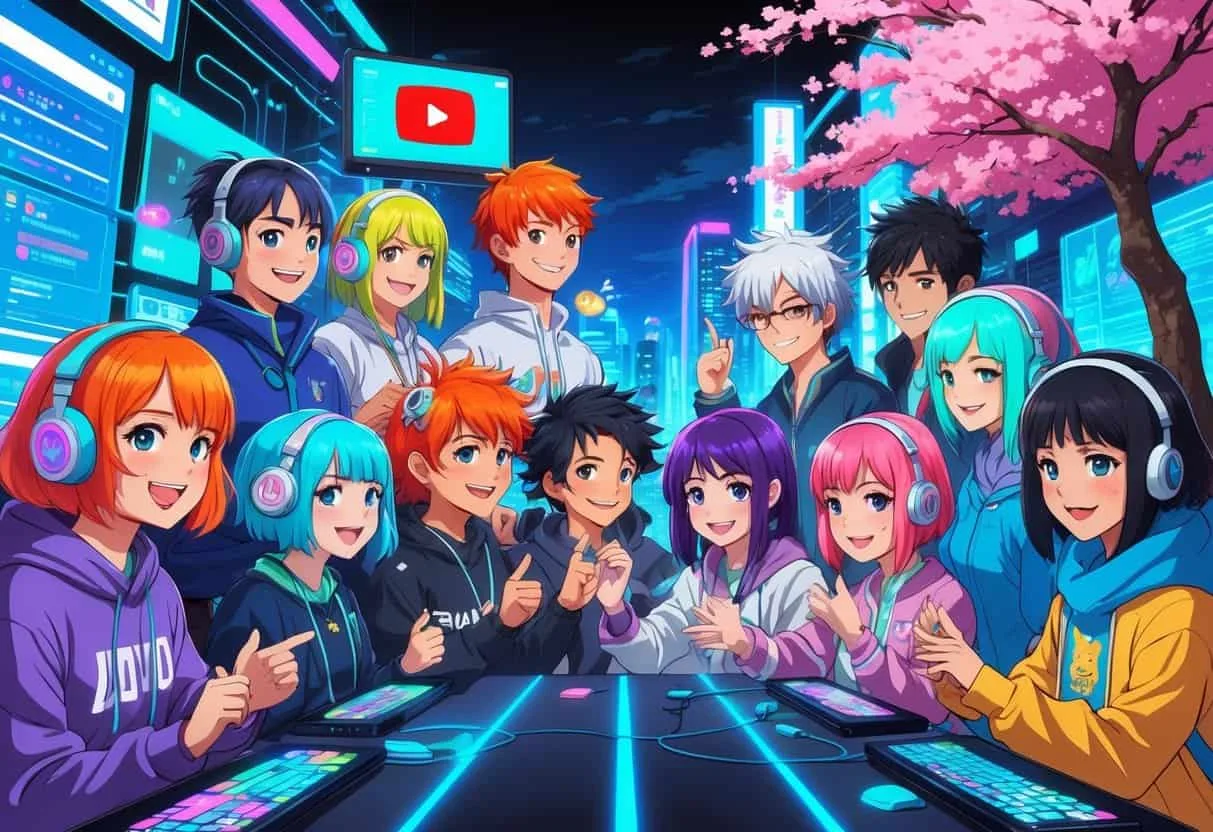
The moment you see a VTuber’s avatar, the anime influence is immediate and unmistakable. Brightly colored hair, oversized expressive eyes, and stylized facial features mirror the character designs found in popular animated series. This deliberate visual tie is not just a surface-level aesthetic choice; it anchors the entire VTubing phenomenon in a pre-existing artistic language that millions of people already adore. Without the need for lengthy introductions, an audience familiar with anime instantly grasps the emotional cues, personality hints, and genre signals embedded in a virtual avatar’s appearance.
Beyond the static design, modern motion capture technology allows these avatars to emote in real time. A subtle tilt of the head, a tearful glisten in the eye, or an exaggerated gasp during a gaming moment all feel lifted directly from an anime frame. Studios and indie creators alike invest significant effort in layering rigs and facial blendshapes that replicate the nuances of hand-drawn animation. This fusion of live performance and animated expression creates a hybrid art form where the boundary between a streamer and an anime character becomes porous. Viewers are not just watching a person behind a cartoon mask; they are participating in a living anime episode that unfolds unpredictably.
Why Anime Avatars Resonate Across Borders
The global appeal of anime aesthetics gives VTubers a natural passport to international audiences. A teenager in Brazil, an office worker in the United States, and a university student in Malaysia can all feel an instant connection to a virtual character whose look references a shared visual culture. That shared visual language lowers the barrier to entry. New viewers don’t need a detailed explanation of why a fox-eared streamer talks about ramen or why a demon queen plays cozy farming sims—the anime-inspired design already primes them for playful contradictions and genre-bending personalities.
This cross-cultural recognition also fuels a rich feedback loop. Anime fans who might never have engaged with live streaming discover VTubers through fanart or recommendation algorithms. Meanwhile, VTuber fans who might have limited exposure to traditional anime start seeking out series that echo their favorite streamers’ themes. The result is a constantly expanding ecosystem where the two forms feed into each other. As Crunchyroll and other streaming platforms extend anime’s global footprint, VTubers ride that same wave, picking up new fans who already feel at home in the aesthetic.
The Idol Heritage and Performance DNA
Never far from the surface of VTuber culture is the deep influence of Japanese idol traditions. From choreographed dance performances to heartfelt fan interactions, many virtual entertainers borrow directly from the idol playbook. Agencies like Hololive and Nijisanji structure their talents into generations and groups reminiscent of real-world idol units. Regular singing streams, 3D concerts, and fan meet-and-greets in virtual spaces mirror the calendar of a traditional idol group, just without the physical venue.
This idol DNA also shapes the emotional contract between VTuber and fan. Loyalty, support through super chats and memberships, and the intimate feel of a personal letter read live on stream all echo the idol-fan relationship. However, VTubers often subvert or twist these expectations. A virtual idol can be self-deprecating, break into an unscripted tangent about fast food, or openly discuss anxiety, creating a blend of polished performance and raw vulnerability that physical idols rarely get to show.
The connection to idol culture draws yet another parallel with anime. Countless anime series have idol themes, from Love Live! to Zombie Land Saga, creating a shared cultural reference pool. A VTuber who performs a cover of an anime opening theme while adopting an idol persona is tapping into multiple layers of meaning at once. Fans who understand both anime and idol customs experience these moments on a deeper, almost nostalgic level. The overlap transforms a simple song cover into a celebration of a broader creative landscape.
Shared Narrative Structures and Storytelling
While anime delivers its stories through seasons and episodes, VTubers build narratives through months and years of content. The lore behind a VTuber—often a fantastical backstory involving being a dragon from another dimension or a reincarnated necromancer—functions much like the premise of an anime series. What makes the VTuber model unique is that the story is never finished. The lore evolves through stream interactions, community inside jokes, and the occasional in-character crisis. This emergent storytelling creates a hyper-engaged fan base that feels like a co-writer rather than a passive spectator.
Viewers can watch a VTuber’s journey from a shy debut to a confident entertainer who tackles difficult topics. This long-term character development mimics the growth arcs of beloved anime protagonists, but it happens in real time and is shaped by community feedback. A sudden twist—like a previously unmentioned sibling appearing or a lore video revealing a tragic past—lands with the weight of a surprise anime season announcement. Fans generate theories, create timeline summaries, and produce speculation videos that extend the narrative in ways even the creator might not have anticipated.
Lore as a Living Production Bible
Many VTubers treat their backstories with the same seriousness that anime studios give to a production bible. Detailed lore videos introduce new viewers to the world, often complete with animated segments and character theme music. Some connect their storylines with other creators, forming shared universes that span multiple channels. This interconnected storytelling echoes the expansive worlds of anime franchises, where spin-offs and crossovers are common.
For fans, diving into VTuber lore scratches the same itch as getting lost in an anime fan wiki. The deeper you go, the more rewarding the meta-narrative becomes. Inside references from streams become treasured knowledge, reinforcing a sense of belonging. When a VTuber finally acknowledges a long-running community theory live on stream, the collective excitement rivals the climax of a multi-season anime arc.
Fan Creativity and the Art Ecosystem
Fanart is the lifeblood of both anime and VTuber communities. A quick search on social media reveals thousands of illustrations, animations, and even 3D renders celebrating virtual personalities. Artists often depict VTubers in alternate outfits, crossover scenarios, or tender emotional states that the official streams only hint at. This outpouring of creativity functions as a parallel creative universe that enriches the core content and gives fans their own stake in the character’s legacy.
Unlike traditional anime, where fanart exists outside the canon, VTuber fanart frequently gets acknowledged and celebrated by the creator during live streams. A VTuber might spend an hour reacting to fan illustrations, praising techniques, and laughing at humorous depictions. This direct loop turns the artist into a participant in the ongoing show rather than a distant admirer. It also encourages even more people to create, knowing their work has a high chance of being seen and appreciated by the personality they admire.
Anime conventions now feature VTuber meet-and-greet panels and artist alleys where fan works blur the line between animated series and virtual entertainers. Cosplayers bring VTuber designs to life, and traditional anime artists take commissions for VTuber originals. The exchange is so fluid that many professional illustrators who work on anime series also design VTuber avatars, further cementing the visual and cultural connection.
Collaborations That Expand the Universe
Crossover events are a staple of anime marketing—character collabs in gacha games, special OVA episodes, or joint merchandise. VTubers have adopted this strategy with immense success. Collaborations between VTubers from different agencies or even with traditional anime franchises generate massive hype and bring communities together. Imagine a popular anime voice actor appearing on a VTuber’s stream in avatar form, or a VTuber group getting an official cameo in a mobile game alongside established anime heroes.
These collaborations do more than attract views; they validate VTubers as legitimate entertainment entities on par with mainstream anime properties. When a VTuber releases an original song that charts on music platforms or gets their character added to a rhythm game, the line between virtual streamer and anime star blurs into irrelevance. Fans of both cultures celebrate these moments as milestones that recognise the artistic merit of VTubing.
The collaborative spirit also extends to charity streams, talk shows, and special event programming. Formats that anime fans know well—like variety shows and “behind the scenes” documentaries—are repurposed for virtual personalities. This institutional borrowing helps VTuber content feel familiar and accessible to those who might otherwise dismiss it as a niche internet oddity. The result is a broadening of the audience and a deepening of the cultural exchange.
Platform Dynamics and Digital Infrastructure
The rise of VTubers coincides with the maturation of live streaming technology. Platforms like YouTube and Twitch provide the stage, but a whole ecosystem of avatar creation tools, motion capture software, and live2D rigging services has sprung up to support the industry. These technical layers are the hidden machinery that makes the anime-styled performance possible. As the tools become more accessible, more creators—including those from traditionally underrepresented backgrounds—can enter the space.
This democratisation mirrors how streaming services expanded anime’s reach. Just as Netflix and Crunchyroll allowed audiences worldwide to discover shows that never received broadcast deals outside Japan, affordable VTuber software lets anyone with a decent PC and an artistic vision become a virtual entertainer. The barrier of physical appearance, often a hurdle for traditional content creators, vanishes. Instead, talent and personality take center stage, dressed in the familiar visual code of anime.
However, the reliance on platform algorithms and terms of service introduces complexities. A VTuber channel’s visibility depends on discoverability features and recommendation systems that can change overnight. Content restrictions can also suddenly erase months of work if automated systems misinterpret a character’s backstory or a passionate discussion. These structural pressures force creators to balance authentic expression with strategic compliance, a tightrope walk that affects mental health and long-term sustainability.
Censorship, Community Norms, and Emotional Labor
VTuber communities operate within a complex web of rules set by platforms and audiences. While guidelines help protect against harassment and hate speech, they can also be applied unevenly. A character designed with a darker aesthetic or a backstory involving mythic violence might trigger automated flags, even when the actual content is lighthearted. The resulting takedowns or demonetizations create anxiety for creators who depend on streaming income.
At the same time, fan expectations can become a form of soft censorship. Vocal segments of a community may pressure VTubers to avoid certain topics, maintain a consistent character, or never express negative emotions. This demand for perpetual positivity conflicts with the human reality behind the avatar. Burnout is a common hidden theme in the VTuber world, and when a beloved streamer takes a sudden hiatus, the community is forced to reckon with the emotional toll of constant performance.
Anime culture is no stranger to these tensions. Debates about content warnings, adaptation fidelity, and creator privacy closely parallel the conversations that swirl around VTuber spaces. Both communities grapple with how to protect vulnerable participants without stifling creative freedom. Those discussions, often messy and heated, shape the evolving social contracts that define what it means to be a respectful fan or a responsible creator in the digital age.
Inclusivity and the Expansion of Representation
The VTuber model has proven remarkably inclusive in its potential. Because the avatar is a construct, creators can present themselves in ways that feel authentic to their identity, regardless of physical body. Non-binary, transgender, and gender-nonconforming VTubers have found the virtual space a haven where they can express themselves without the immediate judgment tied to appearance. This freedom often leads to rich storytelling about identity that resonates deeply with marginalized audiences.
However, the same anonymity that protects can also shield those who spread misinformation or harass others. The challenge lies in building community norms that celebrate diversity while holding bad actors accountable without resorting to doxxing or witch hunts. Anime fandoms have navigated similar struggles, particularly around representation of LGBTQ+ characters and the treatment of female creators. The lessons learned in those spaces—about listening to affected voices and creating transparent moderation systems—are directly applicable to VTuber communities.
Forward-thinking agencies and indie VTubers are taking active steps to champion inclusivity. They host panels on diversity, collaborate with creators from different cultural backgrounds, and openly support social causes. This proactive approach not only makes the community safer but also enriches the creative output. New stories, perspectives, and art styles emerge when people who might have been side-lined in traditional media find a platform where their voice can be heard and their avatar can reflect their truth.
Economic Models and the Creator Economy
The financial infrastructure of VTubing mirrors and sometimes amplifies anime’s merchandise-driven economy. Super chats, memberships, and virtual gift systems allow fans to support creators directly, bypassing traditional entertainment gatekeepers. Meanwhile, VTuber-themed merchandise—acrylic stands, voice packs, clothing collaborations—generates revenue that rivals anime goods. For many fans, owning a piece of their favorite virtual personality’s world feels just as meaningful as collecting a limited-edition figure of an anime protagonist.
The creator economy around VTubing also opens up interesting career paths for artists, riggers, and managers who might have otherwise worked exclusively in the anime industry. A character designer whose style fits a certain agency can build a sustainable freelance business, while a musician might find a steady income composing theme songs for debut streams. This economic symbiosis strengthens the bond between the two cultures at a professional level, ensuring a constant flow of talent and ideas.
Yet the reliance on direct fan funding creates pressure to constantly produce and engage. Unlike a seasonal anime that airs and then takes a break, a VTuber channel’s income can dip sharply during a hiatus. This reality forces many creators to weigh their personal well-being against financial necessity. The discussion around these economic pressures is becoming more open, with successful VTubers advocating for sustainable work practices and encouraging fans to support rest rather than demand non-stop content.
The Future of Anime-VTuber Convergence
Technology is pushing the boundaries of what VTuber performances can achieve. Real-time 3D environments, full-body tracking, and AI-assisted animation suggest a future where a VTuber concert feels indistinguishable from a high-budget anime sequence. Silicon Valley investments, along with research hubs in places like San Diego and Tokyo, are accelerating these developments. As avatars become more expressive and worlds more immersive, the line between watching an animated series and interacting with a beloved character will become impossibly thin.
Anime studios are taking notice. Official VTuber versions of anime characters have started to appear, allowing fans to interact with their heroes in a live format. This trend could expand into serialised live programming where an anime storyline is advanced through VTuber streams, with fan reactions influencing minor plot beats. The concept of a “live anime” is no longer science fiction but an emerging entertainment category that demands new forms of creative direction and community management.
Education and cultural preservation also stand to benefit. Imagine a historically inspired VTuber who teaches Japanese history through the lens of a samurai character, or a folklore-based avatar who shares traditional stories with the interactive energy of a modern streamer. These applications would extend the anime aesthetic beyond pure entertainment, using the familiar visual language to make learning feel like play. The potential is vast, but so are the ethical questions about cultural representation and the boundaries between respectful homage and superficial appropriation.
Nurturing a Healthy Cross-Cultural Community
The strongest communities in both anime and VTubing are those that prioritise empathy, patience, and a willingness to learn. When fans from different parts of the world converge around a shared passion, misunderstandings are inevitable. However, the collaborative nature of fanart, translation projects, and discussion forums often turns those moments into opportunities for growth. A fan translating a Japanese VTuber’s stream into English or a Spanish-speaking anime artist creating a comic about a Korean virtual idol are small but powerful acts of bridge-building.
Harassment and gatekeeping remain persistent issues, but the collective pushback against toxic behaviour is growing more organised. Community leaders, moderators, and even the VTubers themselves set the tone by modelling inclusive language and standing against discrimination. As the overlap between anime and VTuber audiences continues to deepen, the shared norms of respect and creativity become not just nice ideals but essential survival tools for these digital spaces.
Ultimately, the intersection of VTubers and anime is a living, breathing culture experiment. It blends centuries-old artistic traditions with cutting-edge technology, mixes scripted narrative with unscripted humanity, and invites every participant to be part of the story. Your presence as a viewer, an artist, or a chatter is not passive; it actively shapes the experience. Recognising that power, and using it to build rather than tear down, will determine how this crossover culture evolves in the years ahead.