Table of Contents
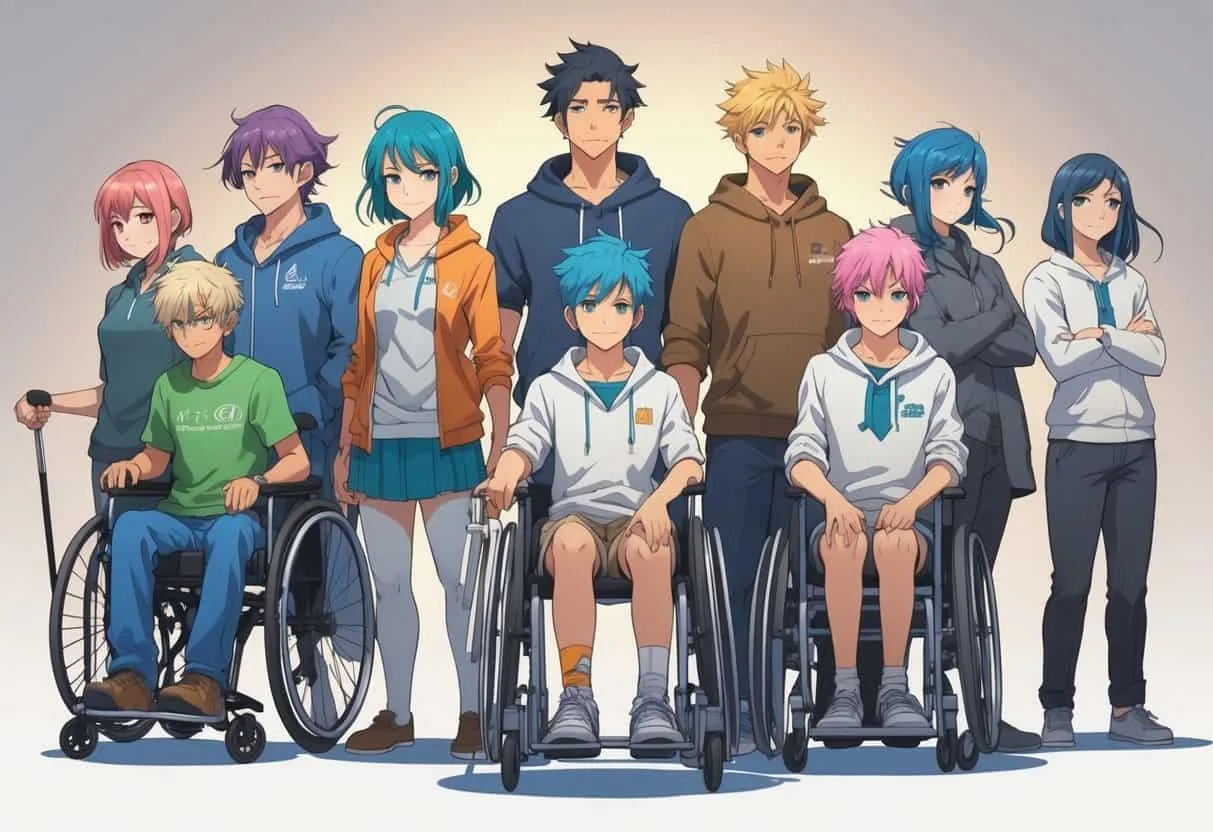
Anime has this knack for featuring characters with disabilities, weaving their stories into something that feels honest and layered. These characters face tough stuff, sure, but they also grow, adapt, and sometimes surprise you with their strength. Disabled characters in anime aren’t just background—they’ve got depth, real emotions, and sometimes a vulnerability that’s genuinely relatable. Think of Nunnally from Code Geass, coping with blindness and paralysis, or Violet from Violet Evergarden, who lost her arms in war. They aren’t just “the disabled character”—they’re full people, with roles that matter and personalities that stick with you.
It’s nice to see anime moving toward a more respectful, nuanced take on disability. There’s a shift you can feel. You start to notice: their struggles and strengths aren’t isolated—they’re part of bigger stories about courage and hope. Across genres and formats, creators are asking sharper questions about identity, community, and what it means to live in a world that doesn’t always accommodate difference. This thoughtful analysis dives into the most memorable disabled characters, how they’re written, and why that representation matters now more than ever.
Key Takeaways
- Disabled characters in anime usually have complex personalities and real roles that go far beyond tokenism.
- Their stories show both the hard parts and the strengths of living with disabilities, often weaving them into broader themes of friendship and survival.
- Representation is definitely getting more thoughtful and realistic, especially in recent works that reject pity-driven narratives.
- Manga, visual novels, and games extend this conversation, offering interactive and deeply personal angles on disability.
- Fantasy, sci-fi, and magical elements can reframe disability without erasing the genuine human experience at the core.
Notable Disabled Characters in Anime
You’ll spot disabled characters everywhere in anime, from wild fantasy worlds to everyday slice-of-life. Sometimes they’re heroes, sometimes allies, sometimes even villains. They each give you a glimpse into how disability shapes a life—and a story. What sets the best portrayals apart is that these characters aren’t reduced to a single trait. They have ambitions, regrets, quirky hobbies, and messy relationships that exist alongside (not because of) their physical or sensory realities.
That depth is exactly why they stick with audiences.
Iconic Figures With Disabilities
Some characters really set the tone for disability in anime. Edward Elric from Fullmetal Alchemist is an obvious starting point. After a disastrous attempt to resurrect his mother, he loses an arm and a leg, receiving intricately designed automail prosthetics. His journey isn’t just about reclaiming his brother’s body—it’s about living with chronic pain, phantom limb sensations, and the mental weight of his mistakes. Yet he barrels through obstacles with a cocky grin, and the series never lets you forget that his physical difference is a constant, not a plot device to be discarded.
Shoko Nishimiya in A Silent Voice is another landmark. Deaf since childhood, Shoko endures bullying, isolation, and the crushing challenge of being misunderstood. The anime movie (and the manga it’s based on) dives into the messy, awkward reality of communication barriers—lip-reading, sign language, written notes—and the emotional toll of forgiveness. Shoko isn’t passive or saintly; she’s stubborn, anxious, and desperately wants to connect. Her presence forces the protagonist, Shoya, to confront his own cruelty, turning the story into a mutual redemption arc.
Then there’s Yukimura Seiichi from Prince of Tennis with his heart condition. That’s a unique take for a sports anime, where physical ability is everything. Seiichi’s illness threatens his identity as a tennis prodigy, but the narrative treats his medical reality with seriousness rather than using it as a temporary setback. He navigates treatments, fear of reinjury, and the delicate balance between passion and physical limits. These iconic figures don’t let their disabilities define them—or stop them.
They’re brave, but not in a “superhero” way—just real.
Lesser-Known But Impactful Characters
Not every character gets the spotlight, but some still leave a mark. Josee from Josee, the Tiger and the Fish deals with limited mobility, using a wheelchair. The film follows her tempestuous relationship with a caretaker, Tsuneo, and refuses to romanticize her condition. She’s prickly, demanding, and unapologetic about her needs. The story explores how disability shapes ambition and desire—Josee dreams of seeing the ocean, not as a bucket-list cliché but as a genuine assertion of freedom.
You feel every frustration and small triumph along the way.
Yuki Yuna is a Hero offers a supernatural twist: characters in a magical girl squad sacrifice bodily functions—sight, hearing, mobility—in exchange for power. The show doesn’t treat these losses lightly. One character, Togo, becomes wheelchair-bound after a battle, and the psychological fallout is as prominent as the magical action. It’s a raw depiction of how disability can feel like a betrayal of one’s own body, even when it’s wrapped in cosmic heroism. These stories aren’t always flashy, but they feel honest.
There’s courage, frustration, and a kind of hope that sneaks up on you.
Another standout is Machi Kakeru from Fruits Basket, whose intense social anxiety and obsessive-compulsive tendencies manifest in ways that border on a psychological disability. While not always classified as such, her inability to function in crowded spaces and her ritualistic behaviors are treated with compassion, not as quirks. The narrative shows how even invisible disabilities can reshape a person’s world, and how patience from those around her becomes a lifeline.
Disabled Villains and Allies
You’ll see disabilities in villains and sidekicks too, which adds some needed complexity. Sometimes a villain’s physical challenge shapes their motives, but it’s never the whole story. Take Dabi from My Hero Academia—his burn scars and damaged skin are a constant, painful reminder of his past, yet his cruelty stems from trauma and ideology, not his body. The story smartly avoids equating disfigurement with evil. Similarly, allies with disabilities might use a wheelchair or have sensory impairments, but they’re still crucial to the plot.
In Gundam: Iron-Blooded Orphans, characters who lose limbs or suffer nerve damage continue fighting in customized mechs, showing adaptation rather than replacement. It’s refreshing, honestly. Disability isn’t a stamp of “good” or “evil”—it’s just another part of being human.
Portrayal and Representation in Anime Narratives
Anime tends to show disabled characters with a surprising amount of care. Their experiences aren’t just tacked on—they’re part of who they are. Their relationships, their day-to-day, their struggles—it all gets woven into the plot. The best series understand that disability isn’t a problem to be solved but a perspective that enriches the entire narrative.
Trends in Narrative Approaches
More and more, anime is ditching the one-note “disabled character” trope. Instead, you get flawed, funny, ambitious people who just happen to have a disability. Recent shows really seem to get that. The struggles are there, but so are the victories. Ranking of Kings centers on Bojji, a prince who is deaf and physically weak, but his story is one of emotional intelligence and strategic growth, not pity.
The anime uses a visual language—sign language animated beautifully—that makes his perspective accessible without explanation. You see it in Ranking of Kings—the lead is deaf, but the story doesn’t fixate on it. It’s just one part of his journey.
Another trend is the rejection of “magical cure” endings. Older shows occasionally restored a character’s ability as a reward, but modern narratives lean into permanence. Violet Evergarden never regrows her arms; she learns to write, type, and fight with prosthetics, and their presence becomes a testament to her survival. This shift mirrors real-world advocacy for disability as identity, not a temporary state to be overcome.
Character Development and Friendship Themes
Friendship’s a big deal in anime, and it’s especially true for disabled characters. Their growth often comes from the bonds they build. You see characters leaning on each other, pushing past obstacles together. It’s not all about independence—sometimes it’s about letting someone in. In A Silent Voice, Shoko and Shoya’s relationship is the engine of the story, but it’s the formation of a wider friend group that ultimately breaks the cycle of loneliness.
Similarly, in Josee, the Tiger and the Fish, Josee’s initial hostility softens as she allows Tsuneo to witness her vulnerable moments, and their connection becomes a two-way street of emotional support.
That’s what makes these stories stick. They show that disability doesn’t mean isolation—it can actually bring people closer. But it’s not always easy. Characters fight, misunderstand, and hurt each other, and that messiness is exactly what feels true. Interdependence, not rugged individualism, emerges as a central value.
Bittersweet and Realistic Storytelling
Some anime go for a bittersweet vibe, mixing joy and hardship. It feels more real that way. You get moments that hurt, and others that feel hopeful. It’s not all tragedy, but it’s not a fairy tale either. Violet Evergarden is a masterclass in this balance: each episode showcases a client grappling with loss, love, or longing, while Violet herself navigates a world she can only partially feel.
Her mechanical arms serve as a constant, quiet metaphor for the distance between her and others.
Movies and shorter series especially seem to nail this balance. They don’t sugarcoat things, but they don’t wallow in misery either. The result is a narrative that respects the audience’s intelligence and the character’s dignity. You leave with a lump in your throat, but also a sense that life, in all its brokenness, is worth living.
Disabled Characters Beyond Anime: Manga, Games, and Visual Novels
It’s not just anime—manga, visual novels, and games are full of disabled characters too. Each medium does its own thing, but there’s a common thread: showing real struggles, not just using disability as a plot device. Sometimes you get realism, sometimes a more symbolic take, and often you get an intimacy that’s harder to achieve in animated format.
Disability Themes in Manga
Manga can go deeper than anime, honestly. You’ll find stories where disabilities don’t just vanish or get “fixed.” Characters deal with blindness, paralysis, prosthetics—whatever life throws at them. The focus is more on daily life, relationships, and figuring out who they are. Real by Takehiko Inoue, centered on wheelchair basketball, follows three young men whose spinal injuries are permanent.
It’s raw, unflinching, and explores masculinity, grief, and the grind of rehabilitation without ever offering easy answers. Perfect World by Rie Aruga tackles a romance between a woman and a man with a spinal cord injury, delving into societal prejudice, bathroom logistics, and sexual intimacy with remarkable honesty.
It’s not usually about magic cures. Instead, it’s about adapting, and maybe even thriving. These manga often reach readers who have never thought deeply about the daily realities of disability, and they do so through compelling, character-driven storytelling.
Visual Novels and Computer Games
Visual novels and games let you step into a disabled character’s shoes—sometimes literally. You get choices, you face obstacles, and you see the world from a new angle. It’s interactive, which makes the experience hit harder. Visual novels in particular love to dig into personal growth and romance, with characters whose disabilities are front and center. In The House in Fata Morgana, several characters grapple with mental illness and bodily trauma, and the branching paths force players to reflect on how they respond to vulnerability.
The medium’s slower pace allows for nuanced emotional unpacking that a 20-minute episode can’t always afford.
The Cultural Impact of Katawa Shoujo
Katawa Shoujo—now there’s a game that really made waves. It’s a visual novel featuring five main characters, each with a different disability: blindness, amputation, severe burns, congenital limb deficiency, and deafness. The game doesn’t go for easy answers or stereotypes. Instead, it leans into the reality of living with amputation, blindness, and more. Each route forces the protagonist, Hisao, to confront his own biases and his recent heart condition diagnosis, making disability a shared rather than otherized experience.
It started on 4chan as a rough concept, but ended up getting genuine respect for how it handled things. Critique magazines and disability advocates noted its willingness to depict the messier sides of disability—resentment, sexual frustration, self-doubt—without reducing characters to their diagnoses. The impact? More creators started including realistic disabled characters in their own stories, from indie games to mainstream visual novels. If you’re curious about disability in media, this one’s worth a look.
Challenges and Positive Shifts in Disability Representation
There are still hurdles—old stereotypes and unrealistic stories pop up. But things are changing. Some series dig deeper, exploring the messy stuff and letting disabled characters be complicated. The broader conversation is moving from visibility to authenticity, from “including” disabled characters to centering their perspectives.
Breaking Stereotypes and Feminist Perspectives
Older anime sometimes painted disabled characters as helpless, tragic figures whose sole purpose was to inspire the able-bodied protagonist. This “inspiration porn” trope is tired and harmful. Lately, though, there’s a pushback. Newer stories let disabled characters be strong, independent, even a little stubborn. They crack jokes, make questionable decisions, and pursue romantic relationships that aren’t framed as miracles.
Relationships shift, too. It’s not about pity—it’s about growth, for everyone involved.
Feminist takes are making a difference, showing disabled women as empowered and complex. Violet Evergarden’s emotional journey isn’t about being saved; it’s about reclaiming agency after being used as a tool. Shoko Nishimiya’s arc isn’t about being fixed but about finding her voice on her terms. These narratives refuse the “damsel in distress” template. Disability isn’t weakness.
It’s just one part of a person, and anime’s finally starting to get that. This shift aligns with broader disability justice movements that emphasize intersectionality—recognizing that gender, race, and class compound the experience of disability.
The Role of Magic, Sci-Fi, and Fantasy Elements
Magic, sci-fi, and fantasy show up a lot in anime with disabled characters. These genres give creators room to get creative with how they handle disability. Sometimes, stories lean on technology or magical powers to help characters deal with physical limits. Automail in Fullmetal Alchemist, for instance, becomes an extension of self, not just a tool. But even with these boosts, the emotional and social struggles don't just disappear.
Edward Elric still gets phantom pains; he still faces stares and awkward questions.
You might spot characters in zombie or mystery series juggling disabilities while dodging danger. In Highschool of the Dead, a character navigates a zombie apocalypse with limited vision, and the tension isn't just about survival but about how society's infrastructure collapses around her. Sci-fi visuals can really drive home how tech changes disability, but they rarely act like it solves everything. Ghost in the Shell’s cybernetic bodies ask profound questions about what counts as a “disability” when the line between human and machine blurs. Speculative elements like these let us see disability as more than just a physical thing.
They pull in questions about identity or power, and honestly, that just makes these stories hit a little deeper.
In fantasy, characters like Bojji show that physical limitation can coexist with immense power of a different sort. His deafness isn’t a deficit to be magicked away but a lens that lets him read people’s intentions in ways others can’t. This reframing—suggesting that disability can cultivate unique strengths—moves away from deficit models toward a more complex, humane portrayal.
The Road Ahead for Disability Representation in Anime
As anime continues to globalize, its portrayal of disability faces new scrutiny from international audiences and advocacy groups. The conversation is no longer just about whether a disabled character appears, but how their story is told, who gets to write it, and what kind of impact it leaves. Studios are slowly hiring more diverse creatives, including disabled consultants, and the results are tangible. Series like Ranking of Kings and Josee, the Tiger and the Fish weren’t just critical darlings; they sparked widespread discussion on social media about the everyday realities they depicted.
There’s still work to be done. Too many shows still treat disability as a temporary plot device or a shortcut to tragedy. But the trend lines are hopeful. As audiences demand more thoughtful, layered characters, anime is rising to meet that expectation. Representation alone isn’t the goal—it’s the starting point.
The real prize is stories that remind us that disability is just one thread in the vast, messy, beautiful tapestry of being alive.