Table of Contents
Introduction: The Battle That Shook the Job-Change Dungeon
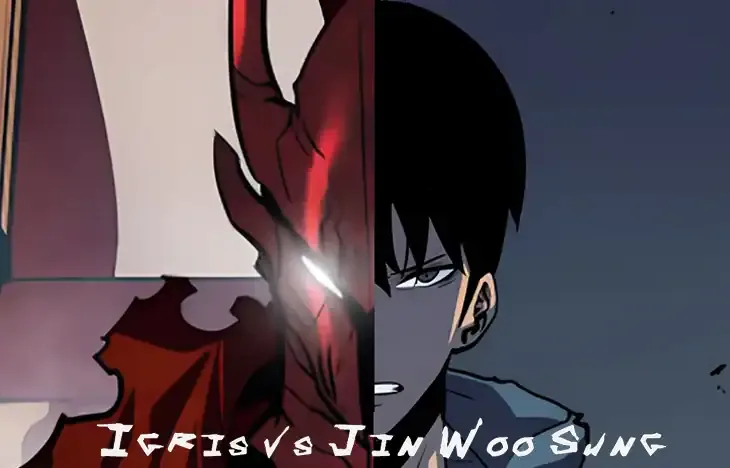
Few confrontations in Solo Leveling carry the raw intensity and narrative weight of Sung Jin Woo’s duel against Igris. This wasn’t merely a clash of blades; it was a rite of passage, a moment that defined the protagonist’s evolution from a mere hunter into the Shadow Monarch. When the E-rank turned S-rank hunter stepped into the job-change dungeon, he didn’t know he would face a knight whose honor and strength would forever reshape his destiny. So, if these two titans were to fight again under equal conditions, who would genuinely emerge victorious? To answer that, we need to unpack the entire encounter, analyze their powers, strategies, and the pivotal turning point that decided the original bout.
The duel between Sung Jin Woo and Igris stands as one of the most defining moments in the Solo Leveling manhwa and light novel. It marks the first time Jin Woo faces an opponent who matches him not only in raw power but also in tactical intelligence. Igris is not a mindless monster; he is a knight forged in centuries of combat, a commander who treats every battle as a conversation between warriors. Meanwhile, Jin Woo arrives as a hunter who has relied on the System’s crutches and his own desperation to survive. The clash becomes a crucible that forges the future Shadow Monarch’s mindset.
Understanding why Jin Woo won, and whether he could win again, requires dissecting every detail of that throne-room showdown.
The Two Combatants
Sung Jin Woo – The Rapidly Evolving Shadow Monarch
Sung Jin Woo begins his journey as the world’s weakest hunter, someone who limps out of low-level gates barely clinging to life. A near-death experience in the Double Dungeon grants him the System, a unique interface that lets him level up infinitely and unlock abilities no ordinary human can comprehend. His growth is explosive: from E-rank to becoming the Shadow Monarch, an entity capable of commanding an army of immortal shadows.
Jin Woo’s fighting style is a blend of lightning-fast daggers, hand-to-hand combat, and later, overwhelming shadow skills. His Agility stat allows him to dodge attacks that should be impossible, while his Strength enables him to shatter stone walls. But his true edge lies in his intellect. He reads opponents mid-fight, exploits openings, and adapts faster than anyone. By the time he confronts Igris, he has already defeated countless foes, yet nothing prepared him for a knight who treats combat as an art form.
What sets Jin Woo apart from other hunters is his willingness to embrace pain as a teacher. Before the Job-Change Dungeon, he had already survived the Double Dungeon, the Red Gate incident, and countless other life-or-death scenarios. Each encounter forced him to refine his instincts, making his decision-making near-supernatural. His arsenal at this point includes skills like Stealth, Shadow Extraction, and the newly acquired Ruler’s Authority—a telekinetic ability that he had only used sparingly. Against Igris, these tools become the keys to victory, but they are still rough around the edges.
Jin Woo is not yet the invincible being he will become; he is a diamond in the rough, and Igris is the hammer that will shape him.
Igris – The Blood-Red Commander and Knight of Unmatched Skill
Igris, the Blood-Red Commander, stands as a paragon of martial excellence and unwavering loyalty. Clad in crimson armor and wielding a longsword with supernatural prowess, Igris is the gatekeeper of the job-change dungeon. His reputation precedes him: a knight who has never known defeat, someone whose swordsmanship is so refined that even the Frost Monarch later acknowledges his skill.
Igris possesses telekinesis, allowing him to fling opponents or objects with a thought, and his Dance of Blades turns a single sword into a whirlwind of lethal motion. His physical strength is monstrous; he can clash with Jin Woo blow for blow and hurl him across a chamber. However, his most formidable trait isn’t raw power—it’s his battle intellect. Igris doesn’t fight recklessly. He tests his opponent, measures their worth, and when he finds a worthy adversary, he fights with a respect that borders on reverence.
This is why his encounter with Jin Woo becomes so significant: it’s a match of equals in spirit, if not yet in raw stats.
In the lore of Solo Leveling, Igris was originally a knight of the Demon King, serving as the commander of the Castle of Demons. After the Demon King’s fall, Igris was sealed within the Job-Change Dungeon, forced to guard the throne until a worthy candidate appeared. His chivalric code dictates that he will not fight dirty or use underhanded tactics; he prefers a clean duel where skill decides the victor. This nobility, while admirable, also becomes his weakness. By adhering to a warrior’s honor, he gives Jin Woo the breathing room to recover and improvise.
Yet it is precisely this code that makes Igris such a treasured ally after his defeat—a knight bound by loyalty to a master who earned his respect.
The Fateful Encounter in the Job-Change Quest
Jin Woo enters the throne room expecting another floor boss. What he finds instead is a silent, armored knight seated atop a dais, surrounded by lesser knights. Without a word, Igris rises and engages, initiating a battle that serves as the first real test of Jin Woo’s limits after his transformation.
Round 1: Initial Skirmish
Igris opens with a blistering assault, his sword cleaving the air where Jin Woo’s head was milliseconds earlier. Jin Woo, accustomed to overwhelming lower-tier enemies, is immediately put on the defensive. Igris’s movements are fluid and precise, leaving no wasted motion. Every parry from the knight rattles Jin Woo’s arms, and every dodge costs him precious stamina. Igris quickly realizes that his opponent is not an ordinary hunter; the man before him possesses agility and instincts far beyond his outward rank.
Jin Woo, for his part, understands that brute force alone won’t win this. The skirmish phase sets the tone: this is a dance of adaptability versus immaculate technique.
A critical element of this first round is the environment. The throne room is wide but littered with stone pillars and raised platforms. Jin Woo uses these for cover, trying to break Igris’s line of sight and land a surprise attack. But Igris’s telekinesis nullifies such tricks; he can sense Jin Woo’s movements through the air pressure changes his body creates. Jin Woo’s Stealth skill is also ineffective because Igris’s instincts are sharper than mere sight.
The knight’s combat senses are honed so finely that he can predict the path of a blade before it is swung. For the first time, Jin Woo faces an enemy who has no exploitable weaknesses—only strengths.
Round 2: Escalation of Power and Strategy
As the fight intensifies, both combatants begin to reveal their trump cards. Igris activates his Dance of Blades, his sword multiplying into a storm of cuts that Jin Woo can scarcely follow. The pressure forces Jin Woo to employ every ounce of his speed and shadow manipulation. He summons his shadow soldiers, using them to create diversions and attack from unexpected angles. Igris responds with telekinetic blasts, sending Jin Woo crashing into stone pillars.
The sound of cracking rock and clashing metal fills the chamber.
Jin Woo adapts mid-combat, a trait that will become his signature. He analyzes Igris’s patterns and notices that the knight’s telekinesis requires brief but perceptible concentration. By keeping up constant aggression, Jin Woo forces Igris to split his attention between physical swordplay and mental control. This strategic insight becomes the foundation for the turning point that follows.
What makes Round 2 particularly desperate is the shadow army’s performance. Jin Woo’s shadows, which had previously decimated orc chieftains and ice elves, are cut down by Igris’s sword as if they were paper. The knight’s blade is imbued with mana that disrupts shadow constructs, making them dissolve with each clean hit. Igris even uses a sweeping telekinetic wave to scatter the remaining shadows, leaving Jin Woo isolated. For a moment, Jin Woo’s greatest strength—his army—becomes a liability, as Igris demonstrates why he is called the Blood-Red Commander.
The Turning Point – How Jin Woo Overcame Igris
After a brutal exchange, Igris lands a powerful kick that sends Jin Woo hurtling against a wall, cracking the stone. The knight, confident that victory is at hand, closes in to deliver a decapitating strike. This is where Jin Woo’s growth bites hardest. Instead of panicking, Jin Woo reads the trajectory of the descending blade and activates one of his earliest but most crucial abilities: Ruler’s Authority. The invisible telekinetic counter freezes Igris’s sword mere inches from Jin Woo’s neck.
For a split second, Igris’s expression betrays surprise. That instant is all Jin Woo needs.
Seizing the opening, Jin Woo wrenches the blade from Igris’s grasp and redirects the tip toward the knight’s own visor. With a resounding crash, he smashes Igris’s head into the wall, then tosses him aside. Igris stumbles, his helmet cracked and his composure broken. It is not a moment of cowardice; it’s a recognition of defeat at the hands of a truly worthy opponent. The knight does not flee.
In the original material, he bows his head, yielding completely. Jin Woo, respecting this warrior’s spirit, uses his Shadow Extraction on Igris, converting the fallen knight into his first and most loyal shadow soldier.
The use of Ruler’s Authority at that exact moment is a testament to Jin Woo’s tactical evolution. Earlier in the fight, he had tried similar tricks, but Igris’s superior speed and counter-awareness shut them down. By waiting until Igris commited fully to the overhead strike, Jin Woo ensured that the knight had no time to adapt. The maneuver also required immense mental fortitude: Jin Woo had to trust that his ability would work at just the right distance, a gamble that an ordinary hunter would never take. This willingness to bet on himself under lethal pressure is what separates Jin Woo from the rest of humanity.
Aftermath – Submission and the Rise of a Shadow Soldier
The aftermath of this duel reverberates throughout the series. Igris, now known simply as “Igris the Shadow,” becomes Jin Woo’s right-hand warrior. Freed from the dungeon’s constraints, he grows alongside his master, regaining his full power and eventually ascending to a Marshal-grade shadow. His loyalty is absolute, and his tactical acumen often fills the gaps in Jin Woo’s raw power. The fight wasn’t just a victory; it was the forging of a bond that would define many of Jin Woo’s future triumphs.
For Jin Woo, defeating Igris marked the moment he stepped into the realm of genuine high-tier hunters. The System had thrown a gatekeeper at him, and he had shattered it. The experience granted him critical insight into how to handle opponents who outclassed him in technique, teaching him that strategy and rapid adaptation could topple even the most polished swordsmanship.
As a shadow, Igris retains all his skills and gains the ability to evolve. By the time of the Jeju Island Raid, Igris is already strong enough to fight S-rank monsters. Later, in the war against the Monarchs, Igris commands entire divisions of shadow soldiers and even duels the Frost Monarch’s lieutenants. His peak Marshal form, achieved after Jin Woo becomes the full Shadow Monarch, places him among the top five shadows in terms of power and leadership. Bellion may be stronger in raw might, but Igris’s tactical mind makes him the more versatile commander.
The decision to spare and recruit Igris is arguably one of the most strategically sound moves Jin Woo ever makes.
Who Would Win in a Rematch?
When comparing Sung Jin Woo and Igris at their peaks, the question becomes lopsided. Jin Woo, at the time of their fight, was still ascending—he had not yet unlocked the full power of the Shadow Monarch. Igris, as a living knight, was a dungeon boss designed to challenge a S-rank hunter. After becoming a shadow, Igris’s power is tied to Jin Woo’s own, growing proportionally. In a hypothetical rematch with Jin Woo at his current, post-Monarch-war level, the outcome would be swift: Jin Woo’s absolute command over shadows, his enhanced stats, and his near-limitless army would overwhelm Igris.
But that would miss the point.
Igris would never truly fight Jin Woo with intent to kill; their relationship is built on mutual respect and vassalage. The more interesting question is whether Igris, in his original living form and without the constraints of loyalty, could push Jin Woo again. The answer: yes, but only for a few minutes. Igris’s telekinesis and flawless swordplay would still make him a nightmare opponent. However, Jin Woo’s ability to learn and counter is now amplified a hundredfold.
He would turn the Dance of Blades into a predictable rhythm and overpower the knight with raw shadow mana. The mismatch is clear—but it’s a testament to Igris that he remains the benchmark against which Jin Woo’s growth is measured.
To put it in power scaling terms: at the time of their fight, Jin Woo was likely around low S-rank, while Igris was a solid mid-to-high S-rank. By the end of the series, Jin Woo is beyond all rank classifications, existing as a being on par with the Outer Gods. Igris, as a Marshal shadow, is roughly at the level of a strong Monarch’s subordinate—far above any ordinary S-rank but still nowhere near the Shadow Monarch. In a rematch, Jin Woo could end the fight with a single thought, commanding all shadows to inhibit Igris’s movements. The only scenario where Igris has a chance is if Jin Woo deliberately holds back to test his own limits, which he often does.
But even then, the outcome is predetermined: Jin Woo’s growth curve has far exceeded Igris’s ceiling.
Conclusion
The Sung Jin Woo vs Igris fight is more than a power scaling debate. It’s a narrative cornerstone that illustrates growth, respect, and the transformation of an adversary into an ally. Jin Woo won not because he was stronger, but because he refused to break, adapted in real time, and seized the critical moment. Igris lost with honor, finding a master worthy of his loyalty. In the grand scope of Solo Leveling, that victory shaped the Shadow Monarch’s army and gave Jin Woo a companion who would stand beside him through every subsequent war.
While Jin Woo is undoubtedly more powerful by the end of the series, the memory of that throne room clash remains one of the most electrifying and impactful moments in the entire saga.
Ultimately, the question “who would win” has a straightforward answer: Jin Woo, easily. But the real treasure of this matchup lies in what it represents—the moment a determined underdog proved that adaptability and courage can topple even the most immaculate warrior. For fans, that lesson is far more valuable than any power scaling chart.
Frequently Asked Questions
How did Sung Jinwoo beat Igris?
Sung Jinwoo defeated Igris by combining his fast thinking, combat adaptation, and the telekinetic ability Ruler’s Authority. After being pinned, he used Ruler’s Authority to stop Igris’s sword mid-swing, then redirected it toward Igris, slamming him into the wall and disarming him. This counterattack broke Igris’s defense and led to his surrender. The key was that Jin Woo waited for the optimal moment—when Igris had fully committed to an attack—ensuring the knight could not dodge or counter.
Who is more powerful than Sung Jinwoo in Solo Leveling?
While Sung Jinwoo becomes the most powerful being in his universe by the novel’s end, characters like his son Sung Suho (who inherits the Shadow Monarch powers) and the Absolute Being (the creator of the universe) are considered more powerful. Among his shadows, Bellion, the Grand Marshal, also initially outranked him in raw strength before Jin Woo’s final power-up. Additionally, the Itarim (Outer Gods) mentioned in the epilogue are likely beyond his reach, though they never directly interfere.
Who is stronger, Beru or Igris?
Beru is generally considered slightly stronger than Igris due to his rapid evolution, poison abilities, and relentless fighting style, which propelled him to the rank of Marshal faster than Igris. However, Igris’s swordsmanship and tactical mind often give him an edge in controlled combat. In a direct fight, Beru’s chaotic power might overwhelm Igris, but Igris’s discipline could earn him a narrow victory under the right conditions. In the Solo Leveling manhwa, both are shown as Marshal-grade, with Beru specializing in offense and pursuit while Igris excels in defense and formation command.
Is Sung Jinwoo stronger than Goku?
In a hypothetical crossover, Goku from Dragon Ball possesses multiversal levels of strength, speed, and hax abilities far beyond the scale of Solo Leveling. Even at his peak, Jin Woo operates on a planetary to possibly universal scale, whereas Goku routinely battles threats that can erase entire timelines. Thus, Goku would hold a significant advantage. These matchups are for fun and cross-fandom discussion; in their respective narratives, each is the apex of their world.
What level was Jin Woo when he fought Igris?
In the light novel, Jin Woo was at around level 100 when he entered the Job-Change Dungeon. His stats at that point were high enough to be considered mid-to-high A-rank. However, the System’s mechanics made him far more versatile than a typical hunter of that rank. After defeating Igris and completing the job-change, he became a Necromancer (later Shadow Monarch class) and gained the ability to permanently control an army of shadows, marking a massive power spike.
Why didn’t Igris use his full strength against Jin Woo?
Igris’s code of honor prevented him from using underhanded tactics, but he did use his full offensive power. The knight held nothing back in terms of speed and strength. However, he did not use his environment to its maximum potential—for example, he could have collapsed the ceiling or used his telekinesis to weaponize debris. His desire for a “pure” duel arguably gave Jin Woo the small window he needed. After becoming a shadow, Igris’s fighting style becomes more pragmatic, suggesting that his original limitations were self-imposed.