Table of Contents
Two Titans of Modern Shonen: A Thorough Comparison
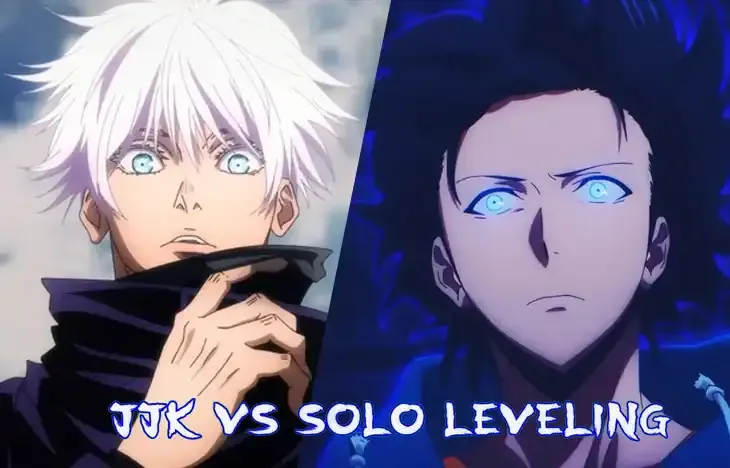
For anime enthusiasts, picking a new series can feel like standing at a fork in a road. Two paths that often dominate the conversation are Solo Leveling and Jujutsu Kaisen. Both have amassed massive global followings, but they deliver vastly different flavors of action, storytelling, and character development. If you’re wondering which one to watch first — or which is “better” — this guide will give you a comprehensive, side‑by‑side look at everything that matters.
World Building and Premise
Solo Leveling: Ranks, Gates, and the Loneliest Grind
Set in a contemporary world shattered by the appearance of mysterious “Gates,” Solo Leveling follows humanity’s uneasy coexistence with mana‑infused monsters. Human hunters are ranked from E to S based on their innate power, and for the protagonist, Sung Jin‑Woo, being E‑rank is a life sentence of humiliation and near‑death escapes. After a catastrophic double‑dungeon incident leaves him the sole survivor, Jin‑Woo is chosen by a hidden “System” that grants him the game‑like ability to level up. What follows is a relentless journey from the weakest hunter to an unstoppable force, all while uncovering the hidden truth behind the dungeons and a war between otherworldly factions.
| Genre: Action, Fantasy, Supernatural |
| Original Language: Korean (manhwa/webtoon) |
| Anime Studio: A‑1 Pictures |
| Director: Shunsuke Nakashige |
| Writer: Noboru Kimura |
| First Aired: January 7, 2024 |
| Streaming on: Crunchyroll |
Jujutsu Kaisen: Curses, Sorcerers, and Existential Dread
Jujutsu Kaisen flips the supernatural coin to the dark side. Negative human emotions coalesce into Curses — monstrous entities that prey on the living. Jujutsu sorcerers harness cursed energy to exorcise them. The story follows Yuji Itadori, a high schooler with extraordinary physical gifts but no knowledge of this hidden war. When he swallows a decayed finger belonging to Ryomen Sukuna, the King of Curses, Yuji becomes both a vessel and a walking execution warrant.
Determined to help others even as his own death sentence is signed, he joins Tokyo Jujutsu High to fight alongside sorcerers like Megumi Fushiguro and Nobara Kugisaki, under the tutelage of the impossibly powerful Satoru Gojo. The series thrives on a bleak but philosophically rich meditation on death, regret, and what it means to live a worthy life.
| Genre: Shonen, Supernatural, Dark Fantasy |
| Original Language: Japanese (manga) |
| Anime Studio: MAPPA |
| Director: Sunghoo Park (Season 1) |
| Writer: Hiroshi Seko |
| First Aired: October 3, 2020 (Season 1) |
| Streaming on: Crunchyroll |
Both premises play with the trope of an underdog rising to meet impossible odds, yet they diverge sharply in tone. Solo Leveling is a power fantasy built on progression and mystery, while Jujutsu Kaisen is a darker, almost philosophical exploration of human weakness and the cost of strength.
Character Depth and Development
Sung Jin‑Woo’s Metamorphosis
The heart of Solo Leveling is Sung Jin‑Woo’s transformation. Initially, he’s pitiable — a helpless hunter barely scraping by in a society that values only power. The System’s intervention turns him into something else entirely: a methodical, calculating monarch of shadows. His growth is numeric and tangible; every new level, skill unlock, and shadow soldier added to his army is a dopamine hit for the viewer. However, this focus on one man’s ascent leaves little room for deep supporting characterization.
Characters like Cha Hae‑In (one of Korea’s few female S‑Rank hunters) and the boisterous American hunter Thomas Andre have compelling backstories, but their roles are largely defined by how they intersect with Jin‑Woo. The series doesn’t pretend to be an ensemble piece; it’s a single‑minded hero’s journey, and that laser focus is both its greatest strength and its most common criticism.
Yuji Itadori and the Weight of Shared Fate
In stark contrast, Jujutsu Kaisen is a kaleidoscope of fractured souls. Yuji Itadori is introduced not as a zero but as a young man who already possesses a superhuman body; his struggle is internal. He must come to terms with being a host for Sukuna — a curse who can take over his body at any moment — and the mandate that he will eventually be executed to permanently destroy the King of Curses. This existential burden forces Yuji to confront what it means to die a “proper death” while causing him to question whether he should even be allowed to exist.
Megumi Fushiguro’s shadow‑based Ten Shadows Technique conceals a simmering self‑loathing; Nobara Kugisaki’s unwavering confidence masks a profound fear of dying in obscurity. And then there is Satoru Gojo, whose overwhelming strength is a double‑edged sword that isolates him from everyone he protects. Even the antagonists — the cursed spirits Mahito, Jogo, and Kenjaku — are given tragic, sometimes grotesquely human motivations. The result is a cast where almost everyone feels like they could carry their own story, making losses hit harder and victories feel communal.
Animation and Visual Storytelling
Studio Pedigree and Visual Identity
Solo Leveling is animated by A‑1 Pictures, a studio known for balancing flashy action with quiet character moments (think Fate/Strange Fake or 86 Eighty‑Six). The anime adaptation faithfully translates the manhwa’s penchant for stylish, high‑contrast imagery. Gate entrances pulse with eerie blue light, and Jin‑Woo’s shadow army moves like a living oil spill. The fight choreography emphasizes scale: Jin‑Woo often fights hordes of enemies, and the camera pulls back to show the sheer scope of his destruction. However, some early episodes have been noted for relying on still frames during non‑combat scenes, a trade‑off to save resources for the set‑piece battles.
Jujutsu Kaisen, from MAPPA, is widely regarded as a modern benchmark for action anime. The studio’s all‑star team of animators — many of whom had previously worked on Attack on Titan: The Final Season — bring a kinetic, almost frenetic energy to every fight. Cursed energy techniques are visualized as splashes of cyan, magenta, and black, twisting the laws of physics in way that feels both brutal and balletic. The famous “Gojo vs. Jogo” confrontation and the Shibuya Incident arc are case studies in how to use speed, impact frames, and 3D‑assisted camera movements to elevate emotional stakes. MAPPA’s handling of slower, dialogue‑driven scenes is equally impressive, often using subtle changes in lighting and facial micro‑expressions to convey dread without a word.
If Solo Leveling excels at the spectacle of overwhelming power, Jujutsu Kaisen marries spectacle with raw physicality and emotional weight. Both are visual feasts, but JJK’s consistency and inventiveness give it a slight edge in pure animation quality.
Fan Reception and Cultural Footprint
Both series have been commercial juggernauts, but their paths to fame differ. Jujutsu Kaisen exploded onto the scene with its 2020 debut, riding a wave of critical acclaim for its animation and mature themes. The 2021 prequel film Jujutsu Kaisen 0 became one of the highest‑grossing anime films worldwide, and the Shibuya Incident arc dominated social media trends for weeks. Its global reach is undeniable, and it has been credited with attracting viewers who previously had little interest in anime.
Solo Leveling built a massive online following through the manhwa years before the anime, and the adaptation only amplified that fervor. The series sparked debates about whether the anime‑original scenes added depth or were superfluous fan service — a sign of just how closely the fanbase scrutinizes every frame. While its international reach doesn’t yet match JJK’s tentpole status, the loyalty of its audience is fierce, and the steady stream of second‑season announcements keeps the conversation alive.
Critical Ratings at a Glance
To quantify the fan and critical consensus, both series score exceptionally well on major anime databases. Here is what the community ratings look like side by side (as of early 2025):


These numbers reflect a broader sentiment: both shows are beloved, but JJK has maintained a slightly higher ceiling across multiple installments. However, ratings alone don’t tell the full story of personal taste.
Soundtrack and Voice Acting
Audiovisual storytelling isn’t complete without acknowledging what you hear. Hiroyuki Sawano’s work on Solo Leveling (alongside other composers) brings a symphonic, almost heroic grandeur to Jin‑Woo’s battles. The opening theme “LEveL” by SawanoHiroyuki[nZk]:TOMORROW X TOGETHER sets a triumphant tone, while the eerie dungeon ambience keeps tension high. Korean‑born Japanese voice actor Taito Ban delivers a subdued, gradually hardening performance as Jin‑Woo, mirroring his descent into the shadow monarch’s stoicism.
Jujutsu Kaisen counters with a soundtrack by Yoshimasa Terui, Hiroaki Tsutsumi, and Arisa Okehazama that fuses hip‑hop, jazz, and orchestral horror. Tracks like “Your Battle is My Battle” and “Kaisen” have become iconic in their own right. The voice cast is a powerhouse: Junya Enoki’s Yuji oscillates between earnest warmth and gut‑wrenching despair; Yuichi Nakamura’s Satoru Gojo is effortlessly charismatic and subtly menacing; and Megumi Ogata’s Yuta Okkotsu imbues the movie with a fragile desperation. The ensemble performances are as layered as the animation, reinforcing the series’ emotional core.
The Verdict: Which One Should You Watch?
Declaring one series definitively “better” is a fool’s errand because they cater to different cravings. If you want a focused, power‑fantasy saga that treats the protagonist’s growth like a reward system you can track in real time, Solo Leveling will hook you instantly. Its strengths lie in the relentless momentum of Jin‑Woo’s climb and the mystery of the System and the Monarchs.
If you crave a more ensemble‑driven narrative where every victory tastes bittersweet and the philosophical questions linger long after the credits roll, Jujutsu Kaisen is the superior choice. It has a richer tapestry of characters, a more inventive magic system, and animation that consistently pushes the envelope. It is, in many ways, the complete package that redefines what a dark shonen can be.
Personal take: I would recommend watching Jujutsu Kaisen first. Its completed seasons and satisfying arcs offer a more cohesive viewing experience, whereas Solo Leveling’s anime is still unfolding. JJK’s emotional depth, philosophical weight, and sheer production quality make it a standout even among the greats. However, if you are already a fan of manhwa or loved the webtoon, Solo Leveling’s adaptation is a fantastic way to witness the story you already love come to life. Ultimately, the best way to decide is to sample a few episodes of each — you’ll quickly know which world you want to inhabit.
Frequently Asked Questions
Is Solo Leveling similar to Jujutsu Kaisen?
They share a foundation of supernatural battles and an underdog protagonist who accepts a dangerous power. However, Solo Leveling leans heavily into the solo grinding mechanic and dungeon‑crawling, while JJK is about teamwork among sorcerers, the ethics of exorcism, and the constant presence of death. The tone is also markedly different: one is a hopeful rise, the other a grim survival.
Can Gojo Satoru defeat Sung Jin‑Woo?
This is a classic “versus” debate that pits two wildly different power systems against each other. End‑of‑series Sung Jin‑Woo commands an army of millions and possesses reality‑warping abilities, while Gojo’s Infinity technique makes him virtually untouchable. Most fan analyses give Jin‑Woo the edge in raw destructive capacity, but Gojo’s hax abilities and strategic genius would make it a battle for the ages. Since they belong to different universes, the answer is purely speculative — but it’s fun to imagine.
Are there any manhwa better than Solo Leveling?
“Better” is subjective, but several manhwa have earned critical and popular acclaim for similar reasons. Omniscient Reader’s Viewpoint offers a metanarrative twist on the survival‑game genre; The Return of the Disaster‑Class Hero blends regression with mythological spectacle; and SSS‑Class Revival Hunter brings emotional depth to a time‑loop framework. If you enjoy Solo Leveling, these titles are excellent next reads.
Could Solo Leveling become the best anime of all time?
Solo Leveling has all the ingredients — a massive built‑in fanbase, stellar production values, and a premise with broad appeal. Whether it achieves “best anime” status will depend on how the story handles the eventual complexity of the Monarch war, the consistency of its animation across multiple seasons, and how well it rounds out its supporting cast. It has a strong chance to be a defining series of the 2020s, but it faces stiff competition from the likes of Jujutsu Kaisen and other long‑running epics. The verdict is still being written — and that’s part of the excitement.