Table of Contents
The Enigma of Majin Buu: A Shifting Threat
Few villains in anime history are as hard to pin down as Majin Buu. Introduced in the final arc of Dragon Ball Z, Buu is a creature of constant flux, cycling through wildly different appearances and temperaments in a single saga. One minute he’s a childlike, pink blob craving candy; the next, he’s a towering, calculating nightmare absorbing the strongest fighters in the universe. This inherent unpredictability turned the Majin Buu Saga into a pressure cooker of alliances, betrayals, and last-ditch fusions. Understanding each form isn’t just about cataloging power levels — it’s about tracing how a primal force of destruction fractured, adapted, and eventually found a strange sort of peace.
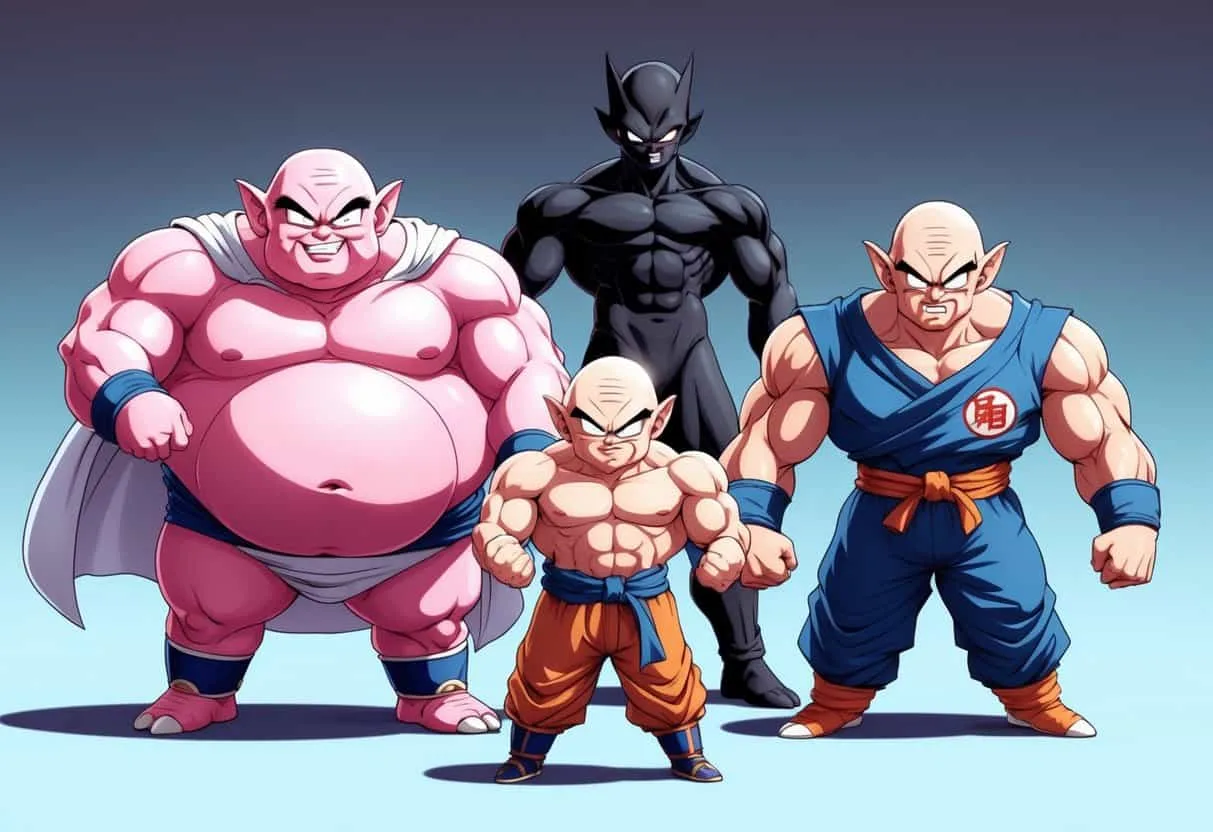
The Origins and Ancient Rampage
Before Buu ever crossed fists with Goku, he was a catastrophic force molded by dark sorcery. The creature’s backstory stretches back millions of years, intertwining with the history of the Kaioshin and a lineage of evil wizards who saw chaos as a tool.
Bibidi’s Forbidden Creation
Buu was not born; he was conjured. The warlock Bibidi, using esoteric incantations and raw demonic energy, manifested the original Majin — Kid Buu — as a living weapon of annihilation. This wasn’t a minion with a will of its own; it was a sentient typhoon, acting on impulse alone. Bibidi sealed the creature inside a magical ball, deploying it against planets and pantheons alike. According to the Dragon Ball lore archives, even Bibidi feared what he had made, frequently resealing Buu between campaigns to avoid being consumed by his own monstrosity.
The Eradication of the Kaioshin
The Supreme Kais — divine guardians tasked with protecting the universe — became Buu’s most notable early targets. In a brutal confrontation, Buu slew the North and West Supreme Kais, then absorbed the massively built South Supreme Kai, ballooning his power further. When he later absorbed the gentle Dai Kaioushin (Grand Supreme Kai), something unexpected happened: the purity of the Dai Kaioushin’s spirit tainted Buu’s chaos, muting his savagery and physically transforming him into the rotund, more agreeable creature that would eventually be known as Fat Buu. This corruption was viewed by Bibidi as a weakness, but it inadvertently laid the groundwork for every subsequent form.
Babidi’s Modern-Day Revival
Millennia later, Bibidi’s son Babidi sought to reclaim his father’s legacy by resurrecting Buu on Earth. Using the energy siphoned from the battles at the World Martial Arts Tournament, Babidi cracked the seal. The entity that emerged was the softer, absorbed-influenced version — a being that could be manipulated, at least initially. Babidi’s influence, however, hinged entirely on intimidation and emotional manipulation, which unraveled the moment Buu’s friendship with Mr. Satan planted the first seeds of doubt. The wizard’s control was fragile at best, and his attempts to command Buu ultimately ignited the very transformations that would consume him.
Breaking Down Every Form
Buu’s evolution isn’t linear; it’s a messy, reactive cascade of splits and absorptions. Each version represents a different balance of purity, malice, and accumulated intelligence. Let’s walk through them in chronological appearance order.
Fat Buu: The Innocent Guile
The form that first stepped out of Babidi’s pod is a pink, childlike behemoth with a deceptively cheerful disposition. Known colloquially as Fat Buu (or Mr. Buu), this incarnation retains the essence of the Dai Kaioushin’s gentle nature. He can heal any wound, transmute matter into sweets, and regenerate from smoke — all with the emotional maturity of a toddler. His bond with Mr. Satan became the emotional anchor of the saga, proving that even a being forged for genocide could choose a different path. Under all that chubby charm, though, lingered the raw Ki that once vaporized planets.
The persona split only when his rage over injustice — and his inability to process it — physically tore him apart.
Evil Buu: The Shadow Splits Off
When Fat Buu was pushed past his moral breaking point, his inner conflict manifested as a literal separation. A lanky, gray-skinned wraith emerged from his body: Evil Buu. This version carries none of the warmth or hesitation. It’s pure, undiluted malevolence, lean and swift. In a cruel twist, Evil Buu immediately turned on his progenitor, engulfing Fat Buu and triggering a horrifying absorption that birthed an even deadlier intelligence.
Evil Buu is a transitional form, but a terrifying one — proof that you can’t simply purge evil from a magical entity without creating something worse.
Super Buu: The Strategic Nightmare
The fusion of Evil Buu and the absorbed Fat Buu produced Super Buu, a far more streamlined and calculating form. Gone was the goofy paunch; in its place stood a towering, almost regal figure with a keen tactical mind. Super Buu understood the concept of leverage. He threatened cities with human extinction attacks to manipulate his foes, and when that failed, he turned to absorption as a deliberate strategy rather than an instinctive reflex. By absorbing Gotenks (Trunks and Goten’s fused form), Piccolo, and later Ultimate Gohan, Super Buu morphed into variations that blended their techniques, knowledge, and signature outfits into his own anatomy.
This version brought the Z-Fighters to their knees not through brute force alone, but through adaptive cruelty.
Kid Buu: The Final Regression
After Vegeta tore the absorbed Fat Buu from Super Buu’s body, the chain of absorptions collapsed. All that remained was the primordial, child-sized Kid Buu — Buu’s original, untainted state. Unlike Super Buu, this version had no patience for speeches or strategies. He laughed during planetary destruction, instantly destroyed the Earth for the sheer amusement of it, and then teleported to the Otherworld to continue the slaughter. Kid Buu is a creature of absolute instinct, unburdened by any influence from the Kaioshin.
His power wasn’t necessarily higher than Super Buu’s peak, but his boundless, irrational viciousness made him the most dangerous opponent Goku and Vegeta had ever faced.
Powers, Regeneration, and the Art of Absorption
Buu’s abilities don’t just scale with his transformations — they fundamentally redefine his fighting style. From sugary transmutation to copying the Kamehameha on sight, he is a walking arsenal.
The Unkillable Anatomy
Regeneration is Buu’s most maddening trait. Every cell of his body possesses independent survival capability, allowing him to reform from smoke, vapor, or even speck-sized remnants. This makes conventional attacks almost pointless. Only sustained, complete atomization — typically via a Spirit Bomb — could eradicate him. His rubber-like physique also absorbs blunt force, while his ability to detach limbs and control them mid-flight makes him a nightmare at any range.
For a deeper analysis of his biological structure, the Kanzenshuu database provides extensive breakdowns of how Ki interacts with his unique cells.
The Absorption Mechanic
Absorption isn’t just consuming a foe; it’s a full integration of their power, techniques, and even clothing. When Super Buu absorbed Ultimate Gohan, his physical form gained Gohan’s gi, and his demeanor became notably more composed. Here’s a quick look at who each transformation absorbed and the resulting form:
- Fat Buu (by Evil Buu): Created Super Buu — leaner, smarter, and more evil.
- Piccolo: Granted Super Buu intuitive combat wisdom and strategic depth.
- Gotenks (Trunks and Goten): Temporarily spiked Super Buu’s speed and gave him the Ghost Kamikaze attack.
- Ultimate Gohan: Pushed Buu to his absolute peak, combining Gohan’s latent might with his own.
Absorbing strong personalities, however, had a critical flaw: the absorbed individuals retained some consciousness, allowing characters like Vegeta to physically sever the cocoons and undo the fusions from within.
Energy Deflection and Magical Tricks
Beyond physical regeneration, Buu demonstrated the ability to reflect energy attacks with his belly, learn techniques after seeing them once (instantly mastering the Kamehameha and Instant Transmission), and transmute living beings into inanimate objects. The “Chocolate Beam” wasn’t a joke — it was a one-shot incapacitator that bypassed durability entirely. Few villains in the franchise have wielded such a wide and whimsical toolkit.
Fusions That Matched the Chaos
The Z-Fighters couldn’t beat Buu alone; they had to merge their strengths in ways never before attempted on Earth or in the Otherworld. The saga birthed the Fusion Dance’s most memorable iteration and the permanent Potara pair that redefined what a warrior could be.
Gotenks: The Overconfident Prodigy
Trunks and Goten’s fusion, Gotenks, was the first real counter to Super Buu. Bursting with creativity and arrogance, Gotenks invented flashy moves like the Galactic Donut and Super Ghost Kamikaze Attack in real time. He possessed enough raw power to push Super Buu around, but his immaturity and time limit made him unreliable. Gotenks proved that sheer strength wasn’t enough — stability mattered just as much when the stakes were universal.
Vegito: The Supreme Fusion
When Goku and Vegeta donned the Potara earrings, they created Vegito, a warrior so overwhelming that he toyed with Buuhan (Super Buu after absorbing Gohan) from start to finish. Vegito’s strength was so immense that he could fight as a candy ball and still pummel his opponent. This fusion wasn’t just about power; it represented a moment of complete ego-sacrifice between two proud Saiyans, setting a precedent for future unions like Gogeta in later continuities. For a detailed timeline of how the Potara compares to the Fusion Dance, the official Dragon Ball wiki remains a solid reference.
Key Battles and Pivotal Moments
Each transformation was accompanied by a shift in the conflict’s momentum. What began as a battle against a singular foe turned into a desperate relay race across dimensions.
The Split and the Reality-Wrenching Scream
Super Buu’s most terrifying display came when he screamed a hole through the dimensional barrier separating the Hyperbolic Time Chamber from Earth. This act, born of frustration after being outsmarted, demonstrated that Buu’s power wasn’t limited to physical destruction — he could tear at the fabric of reality itself. It forced the Z-Fighters to confront him on the open battlefield of Kami’s Lookout, where the stakes became immediate and devastating.
The Sacrifice of Vegeta and the Spirit Bomb
Kid Buu’s final showdown on the Sacred World of the Kais stands as one of the series’ most emotionally charged climaxes. Vegeta, for the first time, set aside his pride to buy Goku time, knowing he’d be sent to Hell and still fighting. The Spirit Bomb that ultimately destroyed Kid Buu wasn’t just Goku’s victory — it was a collective plea from Earth, Namek, and the Otherworld, funneled through the trust Mr. Satan had cultivated with the people. It was a poetic end: a force born of malice destroyed by the positive energy of an entire universe.
A Lasting Legacy Across Universes
The conclusion of the Majin Buu Saga didn’t erase Buu from existence. In fact, the good Fat Buu survived and became a permanent, lovable fixture in the Dragon Ball universe, while other timelines spun the villain into new, often terrifying directions.
Buu in Dragon Ball Super
In Dragon Ball Super, the gentle Buu became a member of the Z-Fighters’ extended family, even fighting in the Tournament of Power. However, a brief flashback revealed that he had once absorbed a Dai Kaioushin who was later reawakened inside him during the Moro arc — proving that the remnants of Buu’s past absorptions were still very much alive and could influence cosmic-level threats. His unique physiology became a critical plot device against Moro’s energy-draining abilities, cementing Buu as more than just a reformed villain; he was a walking repository of divine history.
Alternate Timelines and Fan Works
In Dragon Ball GT and numerous fan-driven stories like Dragon Ball Multiverse, Buu’s potential continues to spin off wildly. The DBM novel chapters, for instance, explore a universe where a Super Buu absorbed Broly, creating a monstrous hybrid that challenges even the most powerful fusions. These what-ifs underscore the character’s enduring appeal: Buu is a template for infinite escalation, a creature whose power is limited only by what — or who — he consumes. Whether in official Super Dragon Bros Z parodies or in-depth webcomics, Buu’s shapeshifting nature makes him the ultimate sandbox for storytellers.
Majin Buu’s metamorphoses did more than escalate the action — they reshaped how Dragon Ball approaches transformation. Unlike Frieza’s restrained states or Cell’s progressive evolutions, Buu’s changes were chaotic, reactionary, and deeply tied to emotion. He remains a reminder that the most terrifying enemies aren’t the ones who meticulously plan, but the ones who can’t be predicted at all. And yet, in the end, even a creature of pure destruction found a way to belong.