Table of Contents
The Two Pillars of Demon Slayer: A Clash of Legends
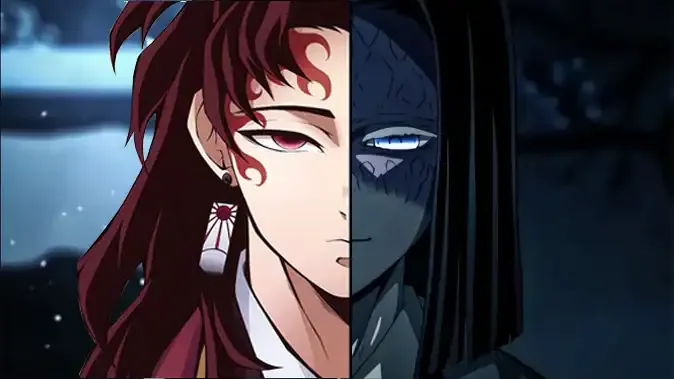
In the rich lore of Demon Slayer: Kimetsu no Yaiba, few comparisons stir as much debate as the hypothetical duel between Kagaya Ubuyashiki, the benevolent leader of the Demon Slayer Corps, and Yoriichi Tsugikuni, the godlike swordsman who first brought Muzan Kibutsuji to his knees. At first glance, pitting them against each other seems almost absurd — one is a terminally ill strategist who never lifted a blade in anger, the other a warrior who transcended the very limits of humanity. Yet examining their strengths side by side reveals a fascinating study of power in all its forms, from raw physical might to the unshakeable force of will and inspiration. This analysis breaks down why Yoriichi would overwhelmingly dominate a physical confrontation, while also exploring the deeper truth that true power in the Demon Slayer world is never just about who swings the sword fastest. The demon slayer fandom has debated this for years, and by the end, you will understand why both characters command such immense respect.
The Indomitable Leader: Kagaya Ubuyashiki
Kagaya Ubuyashiki served as the 97th head of the Ubuyashiki family, a bloodline cursed to die young due to its ancestral connection to Muzan. Despite a body ravaged by illness — blindness, fragility, and constant pain — Kagaya possessed a presence that could calm the fiercest Hashira and a mind that orchestrated a thousand-year war against demons. His power lay not in physical combat but in an almost supernatural empathy, foresight, and the ability to unite the splintered swordsmen of his corps into a single, unbreakable will. He communicated through a serene voice and gentle demeanor that masked an iron resolve, willing to sacrifice himself, his wife, and even his children if it meant a single step toward Muzan’s destruction. Kagaya’s true weapon was the love and loyalty he inspired — a power that, in the series, ultimately proved indispensable.
The Cursed Bloodline of the Ubuyashiki Family
The Ubuyashiki clan’s curse is not merely a biological weakness; it is the result of their founder’s actions centuries ago. When Muzan was first transformed into a demon, the Ubuyashiki ancestor who blessed him inadvertently bound the family to his fate. Every generation since has been born with a degenerating body, a ticking clock that forces each leader to achieve their goals before their physical form fails. Kagaya, as the 97th head, was no exception. He went blind in his youth, his limbs grew weak, and he relied on his wife Amane to guide him.
Yet this fragility never dampened his spirit. Instead, it sharpened his focus on the long game. Understanding the curse helps fans appreciate the sheer mental fortitude required to command the Demon Slayer Corps from a bed, never seeing the faces of the warriors who risked their lives for his cause.
Voice as a Weapon: Kagaya’s Leadership Philosophy
Kagaya’s ability to inspire loyalty borders on the supernatural. In the manga, even the wildest Hashira — like Sanemi Shinazugawa — bowed to his calm guidance. This was not through fear or manipulation but through genuine love. Kagaya treated every slayer as family, remembering their names, their sorrows, and their dreams. He understood that the fight against demons was a war of attrition, and the only way to sustain morale through decades of loss was to make each soldier feel valued.
His final act — detonating a bomb on himself to wound Muzan — was the ultimate expression of this philosophy: he gave everything, including his life, so that others could carry the torch. This selflessness is a form of power that physical strength cannot replicate. It forged the Corps into a family willing to die for each other, creating a synergy that no single warrior, not even Yoriichi, could achieve alone.
The Peerless Swordsman: Yoriichi Tsugikuni
If Kagaya embodied the spiritual core of the Corps, Yoriichi Tsugikuni was its living legend. Born with the Transparent World, the Demon Slayer Mark, and the ability to perform Sun Breathing from the moment he first held a sword, Yoriichi existed as an anomaly — a human who had already reached the pinnacle of what others trained centuries to achieve. His speed was such that not even Upper Moon demons could perceive his movements; his single strike against Muzan nearly annihilated the Demon King, leaving scars that never healed. Even his twin brother, Kokushibo, the strongest Upper Moon, spent an eternity consumed by jealousy of Yoriichi’s god-given gifts. In every measurable aspect of combat, Yoriichi was not just the strongest Demon Slayer — he was an untouchable ideal that no one, before or since, has ever approached.
The Birth of Sun Breathing and the Demon Slayer Mark
Yoriichi’s abilities were not trained; they were innate. He awakened the Demon Slayer Mark minutes after drawing his first sword, a feat that normally requires near-death experiences and immense training. The mark amplified his strength, speed, and endurance, but it came with a price: life expectancy dropped to twenty-five. Yoriichi, however, lived to his early eighties, a testament to his unique biology. The Transparent World allowed him to see the inner workings of his opponents — blood flow, muscle movements, even life force — essentially giving him the ability to predict attacks before they began.
Sun Breathing, the original breathing style, mimicked the sun’s energy, generating heat that burned demons from within. These abilities combined made Yoriichi a perfect demon-slaying machine, capable of feats that defy logic. For instance, in his final encounter with Kokushibo, even as an old man, he moved so fast that Kokushibo could not track him — a demon who could stop thousands of blows per second.
The Tragedy of Being a God Among Men
Yet Yoriichi’s life was marked by profound sorrow. He failed to kill Muzan completely, a failure he could never forgive himself for. He watched his brother become a demon, unable to save him. He married and had a child, only to lose them to a demon attack. In the end, he died alone in a forest, having left no heir to his techniques — the world was not ready for his level of perfection.
This loneliness is a stark contrast to Kagaya’s warmth. While Kagaya surrounded himself with family and comrades, Yoriichi walked a path so elevated that no one could walk beside him. His power, though absolute, came at the cost of human connection. This nuance is often overlooked in "who is stronger" debates, but it is essential to understanding the full picture of power in Demon Slayer.
Comparing Their Combat Capabilities
If this were a fight evaluated purely on physical statistics, the outcome would be decided before it began. Yoriichi’s access to Sun Breathing — the original and most powerful breathing style — gave him speed, endurance, and cutting power that bordered on the supernatural. He could perceive the world in slow motion through the Transparent World, predicting enemy attacks by reading their blood flow and muscle contractions. The Demon Slayer Mark amplified his already superhuman attributes, and his selfless state (the state of Anatta) eliminated all hesitation. Kagaya, by contrast, could not stand unaided in his final years, let alone hold a nichirin blade.
A direct comparison of martial prowess is therefore one-sided to the point of irrelevance. However, that does not strip Kagaya of the title “powerful.” Real battles are rarely won by muscle alone.
The Power of Will and Sacrifice
One area where Kagaya equals — and perhaps surpasses — Yoriichi is the depth of human will. Kagaya’s entire life was a testament to fighting while broken. He lived in constant physical agony, yet his voice never trembled when issuing commands, and his warmth never faded when comforting the grieving. This is not a small trait; it is the foundation of leadership that kept the Corps alive for a millennium. Yoriichi, for all his brilliance, was a man haunted by failure — he could not kill Muzan completely and lived with the guilt of his brother’s demonization.
While his resolve was absolute in battle, his personal tragedy revealed a fragility that Kagaya’s unflagging optimism simply did not possess. In a battle of attrition of the soul, Kagaya’s ability to endure and uplift others stands as a form of strength Yoriichi never needed to cultivate.
What Is True Strength? The Demon Slayer Corps’ Secret Weapon
The series makes it clear that raw strength alone is not enough to defeat Muzan. Tanjiro, Zenitsu, Inosuke, and the Hashira only prevailed because of the trust and bonds they built — bonds that Kagaya actively nurtured. When Yoriichi faced Muzan, he fought alone, and though he came close, he failed. In the final battle, Kagaya’s sacrifice created the opening that allowed the Hashira to corner Muzan. This proves that Kagaya’s power — the power to unite, to inspire, to sacrifice — was the final piece of the puzzle that Yoriichi could not provide.
In the grand scheme, both were necessary, but if we measure power by impact on the ultimate victory, Kagaya’s contribution was arguably more decisive.
Strategic Mind vs. Unmatched Instinct
Kagaya’s genius was strategic. He devised the corps’ structure, chose the Hashira, managed intelligence networks, and planned the final assault on Muzan’s Infinity Castle — a feat of coordination that required anticipating the movements of demons across centuries. In a hypothetical duel, Kagaya would never fight Yoriichi head-on; instead, he would analyze, set traps, and leverage terrain, psychology, and unconventional tools. Yoriichi, conversely, operated on pure instinct honed to a supernatural level. His combat decisions were instantaneous, bypassing conscious thought.
While Kagaya might craft a plan that momentarily offsets Yoriichi’s physical advantage, the speed and unpredictability of the Sun Breathing master would overwhelm any scheme before it could be fully executed.
The Chess Master vs. The Lightning Bolt
Imagine Kagaya setting up a battlefield with pitfalls, hidden weapons, and poisoned gas — things that might slow an ordinary demon or Hashira. Against Yoriichi, these would be meaningless. The Transparent World would let Yoriichi see every trap, and his speed would allow him to avoid or disarm them in milliseconds. Kagaya’s only hope would be to use psychological warfare, perhaps appealing to Yoriichi’s sense of mercy or past regrets. But Yoriichi’s selfless state (Anatta) is a state of pure action without attachment; he would not be swayed by words.
The gap is simply too vast. Strategy is powerful, but it cannot compensate for a factor of one hundred in speed and reaction time. This scenario underscores why pure combat comparisons are often futile — they ignore the context of the Demon Slayer world, where each character plays a unique role.
Legacy and Their Place in History
Yoriichi left behind the breathing techniques that shaped every subsequent generation. His earrings, passed through the Kamado family, became a symbol of the sun’s flame and ultimately guided Tanjiro to perfection of the Hinokami Kagura. In sheer narrative weight, Yoriichi is the mythological root of the entire series. Kagaya’s legacy, however, is more intimate and tragic: the Ubuyashiki family’s final bomb trap that critically wounded Muzan, and the unwavering faith he placed in Tanjiro and the Hashira. Both legacies are monumental, but they serve different purposes — one represents the unattainable ideal, the other the human heart’s capacity to turn sacrifice into victory.
When asking “who is more powerful,” one must ask: do we measure power by what is destroyed, or by what is protected?
The Ripple Effect of Their Lives
Yoriichi’s techniques directly influenced the creation of all other breathing styles, essentially making him the father of modern demon slaying. Every Flame Hashira, every Water Hashira, every Thunder Hashira can trace their lineage back to him. Kagaya’s influence, though less visible, was equally pervasive. Without his leadership, the corps would have crumbled from internal discord long before the Taisho era. He personally recruited or inspired every Hashira of his generation, including Gyomei, Shinobu, and Rengoku.
He also identified Tanjiro’s potential early and protected him from interference. In a sense, Yoriichi gave the slayers their sword, and Kagaya gave them their heart. Together, they form the complete foundation of the Demon Slayer Corps.
If They Actually Fought: A Scenario Analysis
Let’s imagine the impossible. Through some temporal rift, a young, healthy Kagaya — perhaps in his prime before the curse fully manifested — faces Yoriichi in an open field at dusk. Kagaya would have no breathing technique beyond basic Total Concentration Breathing, if any. He might wield a nichirin blade with passable skill, but nothing near a Hashira’s level. Yoriichi would see every muscle twitch, every intention, before Kagaya’s fingers even tightened on the hilt.
The fight would last a fraction of a second. If Kagaya used his voice and charisma to unnerve Yoriichi, it would not matter; Yoriichi’s selfless state renders him immune to emotional manipulation. There is no scenario, no hidden trick, no secret technique within the established lore that allows Kagaya to land a single blow. This is not a mark against Kagaya — it simply confirms that the chess player cannot out-punch the god of war.
The Ultimate Verdict: Two Definitions of Power
To the question “Who would win in a battle?” the answer is unequivocally Yoriichi Tsugikuni. His combat feats — nearly killing Muzan, defeating Kokushibo, and establishing techniques that defined an era — place him on a tier that no other human, demon, or leader can approach in a direct fight. However, if we redefine “powerful” to include influence, sacrifice, and the ability to turn despair into hope, then Kagaya Ubuyashiki stands as an equal giant. The series itself shows that killing Muzan required not just Yoriichi’s sun-bright blade, but also Kagaya’s millennium-long web of sacrifice and faith. They are two halves of the same flame: the sword that cuts the demon, and the hand that guides the sword.
Pitting them against each other is like asking whether the sun or the earth is more vital — both are indispensable, and their true power lies in harmony.
So, while your jaw may drop at the sheer spectacle of imagining Yoriichi effortlessly overcoming any opponent, it should drop just as much for the leader who, with a broken body and a luminous smile, orchestrated the downfall of eternal darkness without ever drawing a blade. In the end, the debate enriches our appreciation of both characters. For those who want to dive deeper into the lore, check out the official Demon Slayer anime website for background on the series.
Frequently Asked Questions
Did Yoriichi and Kagaya ever meet?
No, they lived nearly five centuries apart. Yoriichi’s era was the Sengoku period, while Kagaya led the corps during the Taishō era. Their connection exists only through legacy: Yoriichi’s earrings and breathing forms passed down to Tanjiro, whom Kagaya trusted to finish what the legendary swordsman started.
Could Kagaya have been a Hashira if he wasn’t ill?
Unlikely. The Ubuyashiki family curse was too deeply ingrained; even a healthy Kagaya likely would not have developed superhuman combat abilities. His genius was always in leadership and strategy, not in swordplay. The corps needed a mastermind more than another strong arm, and he filled that role perfectly.
Is Yoriichi truly unbeatable in the Demon Slayer universe?
Within the series’ established lore, no character has surpassed Yoriichi’s raw combat ability. Even Muzan, after centuries of evolution, still feared the ghost of that crimson blade. The narrative treats Yoriichi as an unreachable peak, a standard meant to inspire but never be overtaken. You can read more about his abilities on the Yoriichi Tsugikuni Wiki.
What was Kagaya’s most powerful weapon?
His voice and presence. Kagaya could soothe the rage of Sanemi Shinazugawa, earn the devotion of Gyomei Himejima, and maintain loyalty across the Corps. That ability to unify and inspire turned a scattered group of demon hunters into a family capable of toppling an immortal king.
How does Sun Breathing compare to other breathing styles?
Sun Breathing is the progenitor of all other forms. Its movements are perfectly efficient, generating immense heat and pure destructive force. Every subsequent style — Water, Flame, Thunder, etc. — is a diluted imitation tailored to the user’s limitations. Yoriichi’s mastery of Sun Breathing placed him in a league of his own.
Would the Demon Slayer Mark give Kagaya a chance?
No. Even if Kagaya somehow awakened the mark, it would not bridge the astronomical gap. The mark enhances existing physical attributes, but Yoriichi’s base abilities far exceed what any mark could grant an ordinary human. The mark is a force multiplier, but multiplying near-zero is still near-zero.
Is there any scenario where Kagaya could win?
Only if the battle were redefined as a competition of influence or long-term strategy. In a literal fight, no. But if we imagine Kagaya using his intelligence to manipulate Yoriichi’s environment — for example, leading him into a trap designed by the corps — the outcome might change. However, given Yoriichi’s Transparent World and selfless state, the probability remains near zero.
What can we learn from comparing these two figures?
The exercise reminds us that strength takes many forms. Yoriichi represents the blazing peak of individual might, the fire that incinerates evil in an instant. Kagaya represents the quiet, enduring flame that burns through centuries, nurturing others until the moment of truth. In the end, both are essential to the world of Demon Slayer, and neither’s power should be dismissed.
For a deeper understanding of these characters, explore their detailed histories on the Yoriichi Tsugikuni Wiki and the Kagaya Ubuyashiki Wiki. You can also check out the Sun Breathing technique page for more details on the fighting style that made Yoriichi legendary.