Table of Contents
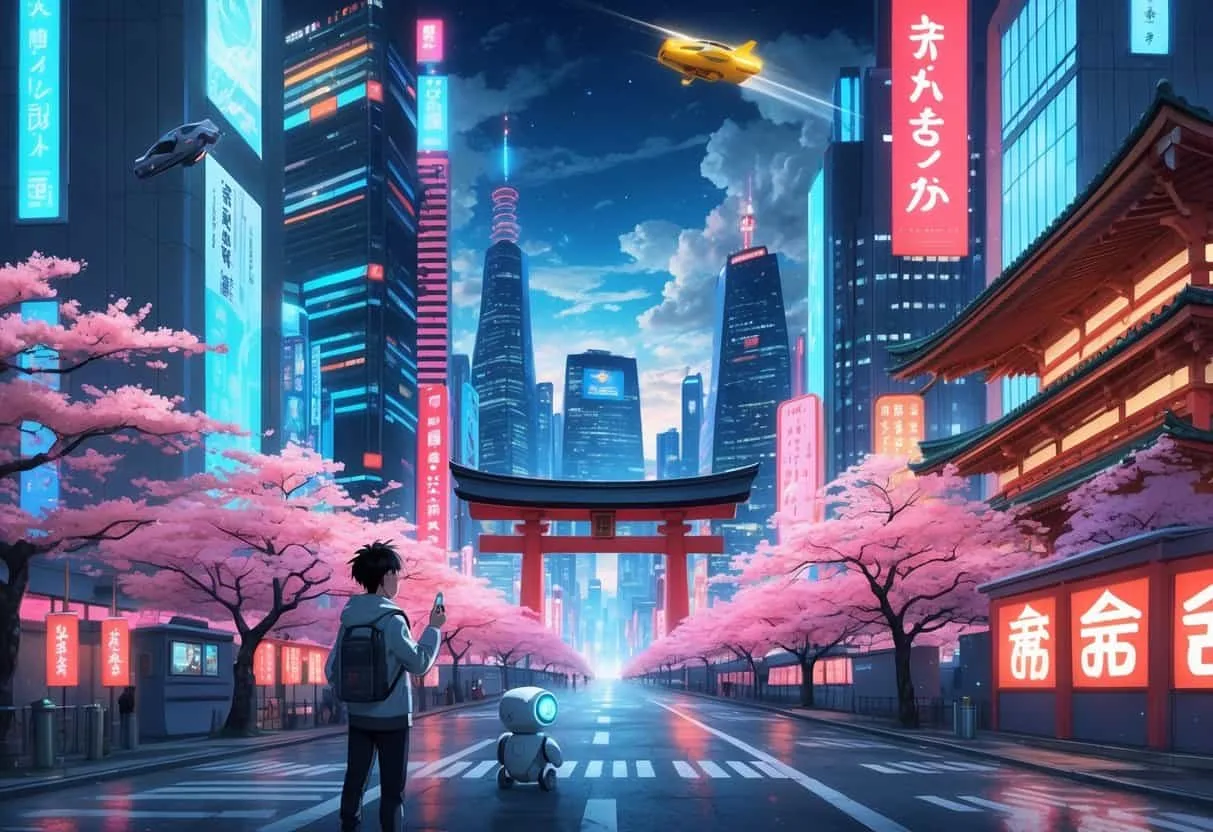
Anime serves as a dynamic lens through which Japan’s ever-evolving relationship with technology comes into sharp focus. From the hopeful android of a post-war era to the dystopian cyberscapes of the 21st century, the medium consistently reflects a nation that treats innovation as both a tool for progress and a harbinger of profound cultural shifts. Watching these stories unfold, you aren’t just witnessing battles between giant robots or explorations of virtual worlds; you’re grasping a deeper, nuanced dialogue about how machines reshape identity, community, and even the concept of reality itself. Anime’s ability to blend cautionary tales with optimism mirrors a society that has, for decades, navigated the tension between tradition and rapid modernization. This article explores the key historical influences, landmark creators, and philosophical threads that reveal how Japanese animation captures the soul of a technologically saturated world.
Historical Roots: Post-War Optimism and Technological Anxiety
Japan’s mid-20th century experience of devastation and reconstruction planted the seeds for anime’s complex tech narratives. The atomic bombings of Hiroshima and Nagasaki, followed by the American occupation, left a deep psychological scar, embedding a collective wariness about the destructive potential of science. Yet the subsequent economic miracle—marked by breakneck industrialization—engendered a parallel sense of hope. This dual consciousness is the bedrock upon which anime’s technological stories are built.
Osamu Tezuka and the Birth of the Robot Hero
Often hailed as the “God of Manga,” Osamu Tezuka not only pioneered modern anime aesthetics but also crystallized Japan’s post-war ambivalence toward technology. His seminal work Astro Boy (Tetsuwan Atomu), first serialized in 1952, introduced a robot boy with a human heart. Astro Boy fought for justice, grappling with acceptance and emotion, effectively transforming the image of the machine from a tool of war into a beacon of empathy. Tezuka, a medical doctor by training, infused the series with a humanism that suggested technology could heal rather than harm—if guided by compassion. You can trace the origin of countless “friendly robot” tropes directly back to this groundbreaking series.
For a deeper look at Tezuka’s legacy, the official Osamu Tezuka website provides extensive archives of his works and philosophy.
The Shadow of War: Technology as a Double-Edged Sword
Even as Tezuka championed a brighter future, the specter of conflict lingered. Early anime often depicted technology as a force that could slip from human control, reflecting wartime traumas. The bombing of cities and the subsequent arms race found metaphorical expression in narratives where scientific hubris led to catastrophe. This foundational tension set the stage for the “mecha” genre, where colossal weapons became vehicles for exploring both national defense and the cyclical horror of war. It is a cultural thread that still runs through modern series, reminding viewers that the tools we build are never morally neutral.
Mecha and the Evolution of Mechanical Storytelling
By the 1970s and 1980s, the giant robot—or “mecha”—became a dominant motif, evolving from simple superhero fantasies into nuanced examinations of politics, identity, and existential dread. Behind the explosive battles, these stories dissected the human condition in an age of overwhelming technological power.
Gundam and the Real Robot Genre
When Mobile Suit Gundam debuted in 1979, it dismantled the black-and-white morality of earlier robot shows. Instead of invincible heroes, it presented machines as military hardware operated by complex, fallible soldiers on both sides of a brutal war. The mecha were mass-produced, repairable, and expendable—much like actual tanks or fighter jets. This “real robot” approach forced audiences to confront the grim logistics of conflict and the ethical compromises inherent in technological superiority. The series’ enduring popularity, spanning decades of sequels and spin-offs, underscores how effectively it mirrored Japan’s own pacifist constitution and post-war identity crisis over military power.
Evangelion: Mecha as Psychological Metaphor
Neon Genesis Evangelion (1995) further subverted the genre by turning its giant “Evangelion” units into organic, screaming extensions of their adolescent pilots’ fractured psyches. Creator Hideaki Anno, wrestling with his own depression, layered the show with religious symbolism and psychoanalytical theory. The mecha are no longer just weapons; they are unstable hybrids of flesh and metal, blurring the line between self and machine. The series captures a distinctly Japanese anxiety about technological integration threatening personal identity—a theme that resonates in a society known for its high-pressure work culture and the erosion of traditional family structures. The resulting narrative isn’t simply about saving the world; it’s a harrowing interior journey that uses technology as a mirror for mental fragility.
Cyberpunk Japan: Blurring Man and Machine
As the internet revolution took hold in the 1990s, anime turned its attention to cyberspace, artificial intelligence, and the dissolving boundary between human consciousness and digital data. This era produced some of the most philosophically ambitious works in the medium, interrogating what it means to be human when memories can be hacked and bodies are optional.
Ghost in the Shell and the Search for Identity
Masamune Shirow’s Ghost in the Shell and its landmark 1995 film adaptation stand as towering achievements in cyberpunk storytelling. Set in a future where cybernetic augmentation is commonplace, the narrative follows Major Motoko Kusanagi, a full-body cyborg who questions whether her “ghost”—her soul—can survive when every physical part has been replaced. The film’s iconic imagery of a city awash in holographic advertisements and its philosophical musings on the self drew heavily on the societal implications of Japan’s own advanced robotics and ubiquitous electronics. To explore the ongoing relevance of these ideas, a thought-provoking article in Psychology Today connects the franchise’s identity crisis with modern digital culture.
Digital Dreams in Paprika and Serial Experiments Lain
The late Satoshi Kon’s Paprika (2006) and the earlier series Serial Experiments Lain (1998) pushed these themes into the surreal. Paprika imagines a device that allows therapists to enter patients’ dreams, only for the boundaries between dream and reality to collapse into a chaotic, hypnotic parade. It’s a prescient warning about the seductive danger of immersive tech and the fragility of shared reality. Serial Experiments Lain, meanwhile, plunges a teenage girl into the “Wired,” a global network that gradually assimilates her consciousness. Lain’s fragmented identity—she exists simultaneously as a quiet schoolgirl, a bold online persona, and a godlike digital entity—echoes the modern anxiety of curating multiple selves across social media.
Together, these works provide a densely layered critique of how digital environments reshape the psyche.
Nature, Tradition, and the Machine: The Ghibli Perspective
Studio Ghibli, co-founded by Hayao Miyazaki, often eschews high-tech futures in favor of pastoral landscapes, yet the tension between nature and industrialization is a recurring, urgent motif. Through myth and fantastical imagery, Ghibli’s films articulate a cultural reverence for the natural world that is under constant siege from human progress.
Princess Mononoke’s Industrial Conflict
In Princess Mononoke (1997), the clash is literal and visceral. Lady Eboshi’s Iron Town represents the promise of technology and social liberation for marginalized groups, but it comes at the cost of deforesting the sacred spirit realm and antagonizing the ancient gods. The film refuses easy answers: Eboshi is not a simple villain, and the forest gods can be terrifyingly vengeful. This nuanced portrait reflects Japan’s own history of industrialization during the Meiji era and beyond, where economic development often surged ahead of environmental stewardship. It mirrors a society that cherishes Shinto animism—the belief that spirits inhabit natural objects—while simultaneously embracing bullet trains and sprawling megacities.
Nausicaä and Ecological Salvation
Miyazaki’s earlier epic Nausicaä of the Valley of the Wind (1984) envisions a post-apocalyptic world consumed by a toxic “Sea of Decay.” The titular princess, a scientist and diplomat, studies the poisonous forest and discovers that beneath the surface, nature is slowly purifying the pollution left by a fallen technological civilization. Her quest emphasizes harmony and understanding over conquest, a perspective woven with the Japanese concept of mono no aware, a bittersweet awareness of impermanence. You can read more about this aesthetic philosophy at Tofugu’s detailed explanation. In the context of technology, it suggests that machines and nature need not be permanently at odds, but that humanity must learn to coexist with a transient, fragile world.
Technology, Romance, and Human Connection
Anime doesn’t limit its technological exploration to grand societal themes; it also zooms in on the most intimate of human experiences—love and friendship—to reveal how gadgets and digital platforms mediate our emotional lives.
Love in the Digital Age
From dating simulators to AI companions, anime is replete with stories that examine the boundaries of romance when technology enters the equation. Series like Sword Art Online blur the line between a game and reality, allowing characters to forge genuine romantic bonds in virtual spaces. Meanwhile, narratives about falling in love with androids or holograms, as seen in Chobits or Plastic Memories, raise uncomfortable questions: Can an algorithm truly reciprocate feeling, and what does it say about a society that increasingly prefers programmable partners? These stories tap into a real-world Japanese phenomenon of “herbivore men” and declining birth rates, where some young people retreat from traditional relationships in favor of simulated affection.
The Loneliness of Wired Communication
Even non-romantic connections are scrutinized. Anime frequently depicts characters who are constantly plugged in yet deeper isolated, using messaging apps and online avatars to hide their true selves. Serial Experiments Lain again provides the starkest example, but even slice-of-life shows like Recovery of an MMO Junkie honestly portray the comfort and the trap of online communities. The persistent theme is one of paradox: technology promises to shrink the world, yet it can amplify the very loneliness it seeks to cure. How anime characters navigate this irony often mirrors a central friction in contemporary Japan, where a deeply ingrained culture of harmony and indirect communication collides with the direct, often anonymous, nature of the internet.
Modern Anime and Contemporary Tech Reflections
Recent decades have seen anime address the technologies that define our own era, from virtual reality and artificial intelligence to pervasive surveillance and social credit systems. These narratives are often darker and more critical, directly engaging with the anxieties of a hyper-connected global society.
Virtual Reality and Escapism
The isekai genre, where characters are transported to or trapped inside video-game worlds, has exploded in popularity. Shows like Log Horizon and Sword Art Online treat the virtual realm not merely as a playground, but as a second reality with its own economies, laws, and life-or-death stakes. They explore themes of escapism in an era where real-world pressures in Japan—rigid education systems, economic stagnation, and social conformity—drive people to seek fulfillment elsewhere. The technology is often a gateway to liberation, but the fantasy invariably tests the protagonist’s resolve to return to the physical world, posing a question that resonates with anyone who has ever lost hours to a screen.
Surveillance and Society in Psycho-Pass
Gen Urobuchi’s Psycho-Pass (2012) presents a chilling vision of a Japan governed by the Sibyl System, a network that scans citizens’ mental states and preemptively judges their criminal potential. This society has largely eliminated violent crime, but at the cost of free will and individual privacy. The series serves as a cautionary tale about the trade-offs of a data-driven, AI-managed society, reflecting global concerns about mass surveillance and algorithmic governance. Its vision of a biometrically optimized populace hits close to home in a country that is both a leader in robotics and increasingly reliant on digital IDs and facial recognition systems. A deeper look at Japan’s real-world push toward a “Society 5.0” model reveals the tangible roots of such dystopias; the Japan Times has covered the nation’s robot revolution and its societal implications extensively.
Insights into Japan’s Real-World Tech Culture
Ultimately, anime’s relationship with technology is not an isolated fantasy; it’s a direct artistic response to the country’s lived experience. Japan was an early adopter of the bullet train, a pioneer in consumer electronics, and remains a global leader in robotics and AI research. Yet it also maintains centuries-old temples, tea ceremonies, and a deep reverence for nature. This coexistence of the ultra-modern and the deeply traditional is not a contradiction but a daily reality. Anime externalizes the internal negotiation every Japanese citizen performs, navigating a world where a robot concierge can greet you at a hotel built next to a historic shrine.
The stories’ frequent return to themes of identity, community, and the sacredness of life suggests a culture continuously recalibrating its moral compass in the face of relentless innovation.
Cultural Tensions Through Key Works
The following table summarizes how seminal anime frame the central tensions between technology and humanity, providing a quick reference to the recurring conflicts explored in this article.
| Central Conflict | Exemplary Anime | Core Exploration |
|---|---|---|
| Machine & Humanity | Astro Boy, Plastic Memories | Empathy, rights, and what defines a soul |
| War & Military Tech | Mobile Suit Gundam | Pacifism, the cost of conflict, political realism |
| Digital Identity | Ghost in the Shell, Lain | Consciousness, embodiment, fragmentation of self |
| Nature vs. Industry | Princess Mononoke, Nausicaä | Ecological balance, tradition, spiritual loss |
| Escapism & VR | Sword Art Online, Log Horizon | Addiction, reality avoidance, digital society |
| Surveillance & Control | Psycho-Pass | Utilitarian justice, privacy, free will |
Anime remains one of the most insightful cultural lenses for understanding Japan’s intricate bond with technology. It transforms societal hopes, fears, and ethical quandaries into compelling narratives that resonate globally. Through the eyes of a robot boy, a giant machine pilot, a cybernetic detective, or a forest princess, we see a reflection of our own collective struggle to balance progress with humanity. As the real world hurtles toward ever-greater technological integration, these animated stories ensure that the essential questions—about identity, connection, and the soul—are never left behind.