Table of Contents
Anime-inspired tattoos have evolved from a niche subculture into a full-blown global movement, reshaping how people commemorate their favorite stories on skin. What was once a small circle of dedicated fans trading reference images in online forums has exploded into a worldwide art form that bridges language, geography, and generation. Today, you’ll find intricate renditions of Ghibli spirits, Dragon Ball energy blasts, and stylized manga panels inked in cities from Tokyo to São Paulo. This isn’t just about fandom—it’s about identity, personal mythology, and the unstoppable spread of Japanese visual storytelling.
Anime’s distinct visual language—bold linework, exaggerated expressions, and emotionally charged color palettes—lends itself stunningly to tattooing. Artists have developed entire careers translating cel-shaded characters into wearable masterpieces, and collectors travel internationally to get work from specialists who understand the nuance of a particular series. The internet has turbocharged this exchange, making it simpler than ever for enthusiasts and artists to share portfolios, techniques, and inspiration across continents.
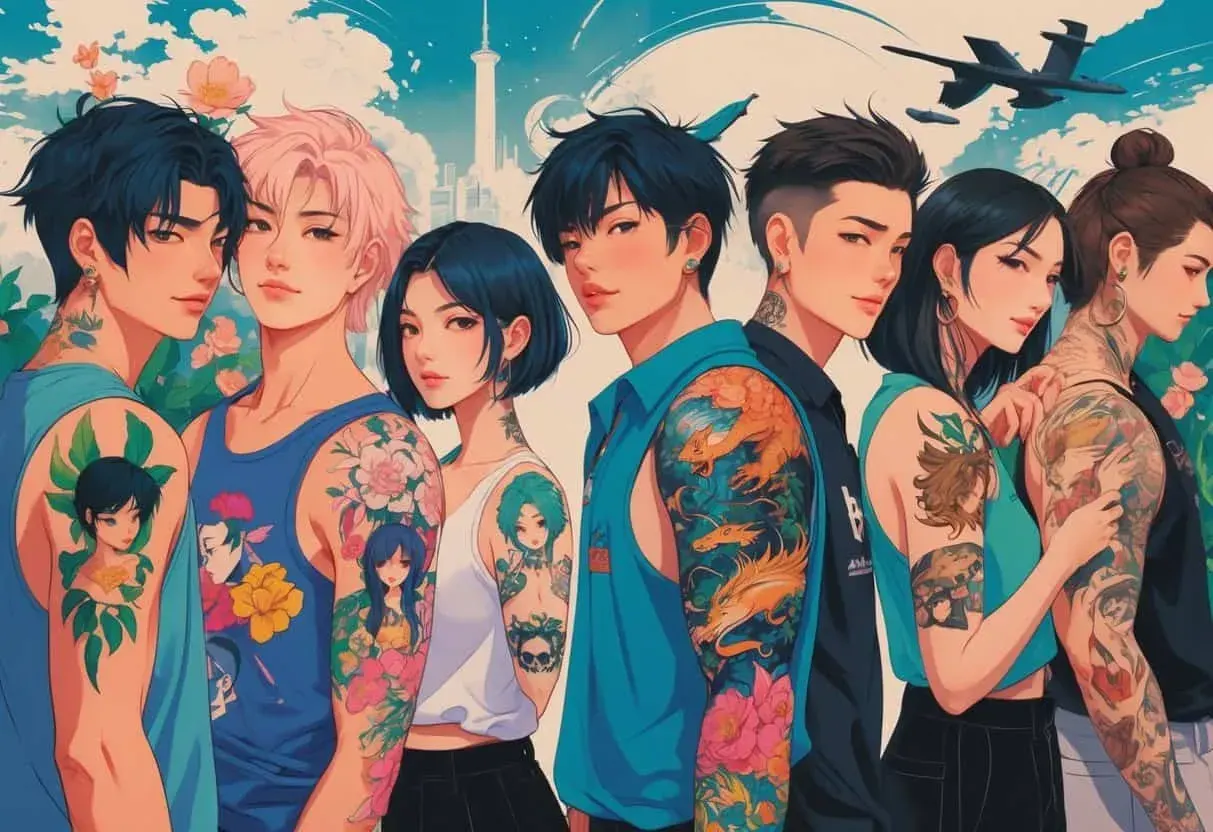
Beyond the sheer visual appeal, anime tattoos carry a cultural weight that continues to grow. Whether it’s a nostalgic nod to a childhood classic or a deeply personal emblem pulled from a recent streaming hit, each piece tells a layered story. Longtime collectors and first-timers alike are drawn to the way these designs fuse pop culture with timeless themes of resilience, friendship, and adventure.
The Global Appeal of Anime Body Art
The reach of anime tattoos today mirrors the staggering expansion of anime itself. According to a Grand View Research analysis, the global anime market size was valued at over $28 billion in 2022 and is projected to keep climbing. With streaming platforms bringing thousands of hours of content to international audiences, shows that once felt obscure are now part of mainstream chatter. That accessibility has fueled demand for tattoo designs that signal membership in a borderless community of fans.
You’ll spot anime-inspired ink in virtually any metropolitan studio. A walk through Los Angeles, London, Berlin, or Seoul reveals sleeves dedicated to Attack on Titan, thigh pieces featuring Sailor Moon transformations, and delicate wrist tattoos of soot sprites. The style has shattered the old stigma that cartoon tattoos are juvenile. In its place stands a reverence for the technical skill required to execute crisp line weights, smooth gradients, and character-accurate proportions on skin.
Social media has been the jet fuel for this movement. Instagram hashtags like #animetattoo and #mangatattoo collectively pull hundreds of millions of views. Platforms like Reddit’s r/Animetattoos serve as digital clubhouses where people post fresh ink, critique composition, and recommend artists. This constant visual conversation pushes the quality bar higher, with artists competing to capture the essence of a character in a design that also works as a standalone piece of art. It’s a feedback loop that has helped anime tattoos become one of the most dynamic categories in contemporary tattooing.
Tracing the Roots: From Manga Pages to Skin
The story of anime-inspired tattooing is inseparable from the international spread of Japanese animation and comics. In the 1980s and 1990s, fans in the West began accessing VHS tapes and bootleg manga, falling hard for series like Akira, Ghost in the Shell, and Ranma ½. The desire to wear imagery from those worlds permanently on the body grew organically as the emotional bond deepened. Early adopters would bring torn-out manga pages or low-resolution printouts to tattoo shops, asking artists who had never seen the source material to replicate what they saw.
Those first tattoos were frequently executed in simple black ink, relying on bold lines and iconic silhouettes to convey the character. A recognizable hairstyle, a signature weapon, or a single kanji could instantly communicate allegiance to a show. As tattoo equipment and pigment technology advanced, artists started layering into the full-color spectrum anime is famous for. The slow shift from rudimentary outlines to saturated, nuanced pieces reflects not only the growth of the craft but also the rising cultural legitimacy of anime itself.
A handful of pioneering artists deserve credit for treating anime tattoos as a serious discipline. In Japan, where tattooing has a complex history of association with organized crime, a new generation of artists began reclaiming the practice as pop art. Overseas, tattooers who grew up on Dragon Ball Z and Studio Ghibli started dedicating their careers almost exclusively to the style. Names like Horisuzu, Jio Tattoo, and Brando Chiesa built international followings by showing that anime characters could be rendered with the same depth and integrity as traditional portraiture. Their work, often documented by tattoo media platforms, opened the door for thousands of artists to specialize without apology.
Defining Styles and Iconic Imagery
Anime tattoos are far from a monolithic genre. The diversity of visual approaches today rivals that of any other major tattoo category. Some collectors want a straight panel replica—a 1:1 transfer of a manga frame with halftone dots and speed lines baked into the skin. Others lean toward a looser, illustrative interpretation that blends anime motifs with watercolor splashes or neo-traditional shading. Understanding the stylistic spectrum helps clarify why certain designs age gracefully and others demand specific artistic expertise.
Miyazaki and Ghibli: A World of Wonder in Ink
Studio Ghibli tattoos occupy a special tier of popularity. Characters like Totoro, Spirited Away’s Chihiro and No-Face, or Princess Mononoke’s forest spirits appear on skin with remarkable frequency. These designs often emphasize softness and emotion—Totoro’s roundness, the delicate line of Kiki’s broom, the haunting simplicity of a mask-wearing kaonashi. The underlying themes of environmentalism, coming-of-age, and quiet bravery give Ghibli tattoos a meaning that extends well beyond visual appeal. A Spirited Away bathhouse scene, for instance, can represent personal transformation, while a soot sprite cluster might stand for embracing the small, overlooked parts of oneself.
Hayao Miyazaki’s entire body of work lends itself to tattoos that feel like storybook illustrations. Artists frequently employ a soft color wash technique to mimic watercolor animation backgrounds, making the piece feel as though it could drift off the skin at any moment. The enduring emotional resonance ensures that Ghibli tattoos will remain a dominant force in anime body art for decades.
The Rise of Realism in Anime Tattoos
Not every collector wants a flat, cel-shaded look. A growing segment seeks hyper-realistic anime tattoos—designs that treat a character as though they were a three-dimensional being existing in our world. This style relies on meticulous light sourcing, soft gradients, and lifelike skin texture while preserving hallmark anime features like oversized eyes and gravity-defying hair. The result is a surreal hybrid that feels both familiar and startling.
Executing this successfully demands a tattoo artist who understands anatomy, light physics, and the idiosyncrasies of anime character design. The wrong approach can lead to an uncanny valley effect where the character looks distorted. However, when handled by a seasoned professional, a realistic anime portrait can read like a movie still pressed directly into the dermis. Collectors in search of this style should closely study portfolios, looking specifically for healed photos of faces and hands.
Themes of Courage, Adventure, and Self-Discovery
Many people choose an anime tattoo because a character’s journey mirrors their own. Anime is dense with protagonists who overcome immense odds, grapple with loss, and discover inner strength. A tattoo of Naruto’s nine-tailed fox seal, for example, isn’t just a fandom marker—it can symbolize the struggle of containing and channeling one’s own demons. Similarly, a silhouette of One Piece’s Straw Hat crew may represent the importance of found family and unwavering loyalty.
These narrative themes translate into ink that serves as daily affirmation. When someone carries a tattoo of a character pushing through a barrier, it becomes a private reminder of resilience. The emotional weight makes the tattoo a kind of exoskeleton. It’s no coincidence that many people get anime ink during periods of transition—after graduations, career shifts, or personal breakthroughs. The art becomes a permanent anchor to the values they want to embody.
The communal aspect reinforces this effect. Attending a convention or visiting a tattoo studio, collectors notice someone with a matching series emblem and an instant connection forms. The shared visual language of adventure and courage builds friendships and even travel plans, as enthusiasts journey to guest spots worldwide. The ink marks not just a past self, but an ongoing commitment to a narrative of growth.
Choosing an Artist and Collaborating on Your Design
Finding the right tattoo artist can make or break an anime piece. Because anime is so visually specific, a generalist tattooer who does not deeply understand the source material may misinterpret proportions, line weight, or color placement. Collectors should start by browsing social media portfolios that focus almost exclusively on anime or manga work. Look for consistency in healed photos, not just fresh shots—colors shift as the skin regenerates, and line work can blur if not properly applied.
Communication is the cornerstone of a successful collaboration. Bring clean reference images directly from the official art, but be prepared to let the artist adapt the design to flow with your body’s contours. A skilled anime tattooer will know how to orient a dynamic action pose so that it moves naturally when you bend your arm or twist your torso. They may suggest scaling down a complicated background or altering a character’s expression to read better on skin. Trust their judgment while clearly stating your non-negotiables.
Consider the long-term demands of the design. Highly detailed small tattoos may lose readability over time, while large-scale back or thigh pieces allow for intricate storytelling. Discuss color saturation with your artist; some palettes hold up better than others under sun exposure and aging. A thoughtful consultation will also cover aftercare specifics, particularly for heavily packed color fields that need extra healing attention.
Technical Mastery: Bringing Anime to Life on Skin
Translating two-dimensional animated art into a three-dimensional living canvas is a genuine technical challenge. The success of an anime tattoo hinges on the artist’s ability to control line weight. Thin, consistent lines define the genre, but those same delicate strokes can blow out if the needle depth isn’t perfect. Experienced anime tattooers often use round liner configurations for crisp outlines and magnum needles for smooth color packing, adjusting their hand speed to the machine’s voltage to maintain precision.
Color theory is another critical dimension. Anime relies on bold, sometimes neon, palettes that can appear dull if mixed incorrectly or if the pigment quality is subpar. Top-tier artists build color intensity through multiple passes and a deep understanding of skin undertones. They know, for example, that yellow and light green tones will fade faster on certain skin tones and may need a white base to pop. Black and grey anime tattoos, while simpler, demand superior contrast control so that the image doesn’t flatten into a muddy silhouette.
Proper healing is the unsung hero of a lasting anime tattoo. Clients should follow a dedicated aftercare regimen that includes gentle washing, fragrance-free moisturizer, and strict sun avoidance. Many artists now provide second-skin bandages to lock in moisture and protect the tattoo during the critical first days. For detailed aftercare guidance backed by dermatologists, reputable online resources can help you maintain the vibrancy of your ink for years. Remember, a healed tattoo is the final product; protect it as fiercely as the meaning it holds.
The Future of Anime Tattoos
As anime continues its mainstream takeover, the tattoo genre will only diversify further. Artists are already blending anime with other styles—geometric patterns, trash polka, and even surrealist collage—creating hybrid designs that defy easy categorization. Technologies like digital templating and AI-assisted mock-ups are helping collectors visualize complex sleeves before a single needle touches skin, reducing the gamble and deepening the collaborative process.
Conventions dedicated to anime and nerd culture now frequently include tattoo pavilions where attendees can book flash or custom sessions on the spot. Major studios in cities like Los Angeles, Tokyo, and Berlin host anime-themed guest residencies that draw international clients. These events further legitimize anime tattoos as a respected art form and push the conversation into galleries and fine art spaces. The future points toward a world where anime ink is as common as script lettering or traditional roses, yet each piece remains intensely personal—a permanent note in the global song of shared imagination.
Frequently Asked Questions
Are anime tattoos more painful than other styles?
Pain levels depend on placement, not subject matter. However, anime tattoos that cover large areas with heavy color saturation may require longer sessions, which can increase discomfort. A professional artist will work with your pain tolerance and schedule breaks as needed.
How do I know if an artist truly understands my chosen anime?
Look through their portfolio for examples of characters from that specific series or studio. If you can’t find any, ask directly about their familiarity. An honest artist will tell you if they can do justice to the style or if they need additional reference material. A respectful conversation before booking is always a good sign.
Will an anime tattoo fade faster because of the bright colors?
All tattoos fade over time, regardless of style. Bright anime colors, particularly pastels and neons, may require more frequent touch-ups to maintain their punch. Proper sun protection and moisturizing dramatically slow the fading process. Your artist can recommend touch-up intervals based on the specific pigments used.
Can I mix anime references from different shows in one sleeve?
Absolutely. Many collectors build cohesive sleeves that weave together characters and symbols from multiple series, often united by a common theme like “the hero’s journey” or “resilience.” A thoughtful artist can create transitions that make a mixed sleeve read as a single, flowing narrative rather than a disjointed collage.