Table of Contents
The Visual Language of Anime and Its Fashion Blueprint
Anime has evolved from a subcultural entertainment medium into a global aesthetic powerhouse, and its influence on fashion is now unmistakable. The striking visuals that define anime—exaggerated silhouettes, hyper-saturated color palettes, intricate accessory design, and an unapologetic blend of fantasy with emotional storytelling—have provided a rich blueprint for designers and style enthusiasts alike. What was once confined to convention halls now walks confidently down high-end runways and populates the feeds of fashion influencers worldwide.
For decades, Japanese animation has constructed entire worlds where clothing is more than costume; it is a narrative device. Characters like Sailor Moon with her instantly recognizable schoolgirl-meets-superhero ensemble, or Spike Spiegel from Cowboy Bebop in his perfectly tailored blue suit, have become enduring style icons. These outfits are not afterthoughts—they are meticulously designed to convey personality, allegiance, and mood. This devotion to visual storytelling through wardrobe has inspired a generation of consumers to seek that same expressiveness in their own closets.
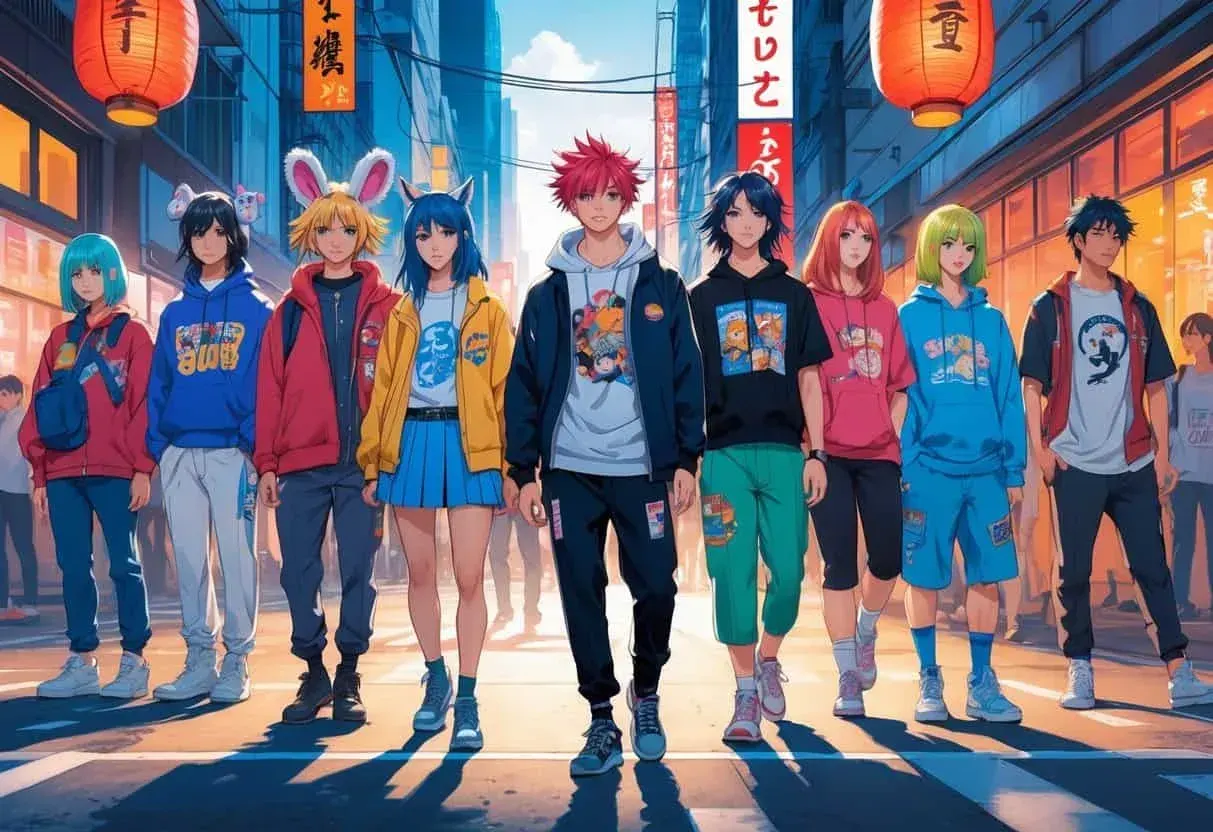
The translation from screen to street is neither accidental nor shallow. It is rooted in Japan’s own street fashion ecosystem, particularly in districts like Harajuku and Shibuya, where young people have long treated personal style as a canvas for fantasy and rebellion. Anime simply provided the characters and the lore. Today, a stroll through Tokyo’s fashion hubs reveals a seamless blend of animated references and everyday wear: a Demon Slayer pattern on a kimono-inspired jacket, or a Neon Genesis Evangelion motif on an oversized hoodie. This convergence has become a powerful export, influencing wardrobes from Seoul to São Paulo.
The Trajectory of Cosplay: From Hobbyist Circles to Mainstream Influence
Cosplay, a portmanteau of “costume play,” is the most direct and performative expression of anime’s sartorial impact. Its roots in Japan during the 1970s and 1980s were humble—small groups of science fiction fans dressing as their favorite characters at local conventions. Yet over the following decades, cosplay has metamorphosed into a sophisticated global phenomenon, with professional cosplayers commanding sponsorship deals and influencing ready-to-wear trends. The craft itself demands high-level skills in sewing, prop fabrication, and character study, elevating it to an applied art form.
From Convention Floors to Couture Ateliers
The leap from fan convention to fashion atelier is not as vast as it might appear. Cosplayers are essentially self-taught designers who interpret two-dimensional drawings into three-dimensional garments, often improving upon the original designs for durability and wearability. This practical innovation has caught the eye of the fashion industry. Nicolas Ghesquière of Louis Vuitton, for instance, has explicitly referenced anime aesthetics in multiple collections, and his Spring/Summer 2016 show featured a digital heroine straight out of Final Fantasy. Similarly, the fluid, armored looks in Balenciaga’s recent collections evoke the battle-ready heroines of mecha anime.
These are not coincidences; they represent a deliberate dialogue between high fashion and animation’s boundless imagination.
In 2023, the Loewe x Howl’s Moving Castle collaboration, which featured bags and ready-to-wear adorned with characters and scenes from the Studio Ghibli classic, sold out almost instantly. The collection was a commercial success and a critical one, praised for its craftsmanship and respect for the source material. This was not a one-off stunt: it was a clear signal that luxury fashion now sees anime not merely as pop culture ephemera but as a repository of artistic capital that resonates with a wealthy, discerning audience.
The Democratizing Role of Social Platforms
The metamorphosis of cosplay into a legitimate fashion influencer would not have been possible without social media. Platforms like Instagram, TikTok, and YouTube have allowed cosplayers to build personal brands that rival traditional fashion influencers. Take the example of professional cosplayer and designer Yaya Han, who has leveraged her online following to launch a line of cosplay fabrics and accessories, effectively bridging the gap between costume construction and mainstream fashion supply. Han’s journey underscores a broader shift: the cosplayer is now a tastemaker whose feed can set trends in real time.
TikTok’s algorithm, in particular, has turbocharged anime fashion cycles. A 15-second video of a layered streetwear look featuring a Chainsaw Man graphic tee or a Jujutsu Kaisen patchwork denim can spark thousands of imitations within days. This immediacy has forced brands to take notice. Fast fashion retailers like Uniqlo have capitalized on this by releasing regular capsule collections with popular anime franchises, making character-driven clothing accessible and affordable. These lines are frequently announced alongside social media campaigns featuring cosplayers and anime influencers, creating a closed loop of inspiration, aspiration, and consumption.
Harajuku and the Birth of Anime Street Aesthetics
To understand anime’s fashion footprint, one must first understand Harajuku. This Tokyo neighborhood became the epicenter of youth-driven style rebellion in the 1990s, giving rise to subcultures that drew heavily from manga and anime imagery. The area’s layered and often chaotic visual landscape—Lolitas, punks, and decora girls posing side-by-side—mirrors the eclectic worlds found in anime series. In fact, many Harajuku styles are direct descendants of character designs from shoujo manga and fantasy anime.
Lolita: Victorian Innocence Meets Anime Fantasy
The Lolita subculture, with its bell-shaped skirts, lace-trimmed blouses, and doll-like accessories, is a quintessential example of anime-informed fashion. Its origins are not in any single anime series but in the broader kawaii (cute) culture that anime helped to globalize. However, many Lolitas cite characters like Celcia from Those Who Hunt Elves or the Gothic flourishes of Vampire Knight as direct inspiration. Over time, this look has spawned an entire ecosystem of independent brands—with Angelic Pretty and Baby, The Stars Shine Bright achieving international cult status. A Vogue feature on the enduring allure of Lolita fashion confirmed its staying power, noting how it has influenced Western designers like Simone Rocha and Molly Goddard.
Today, Lolita is not a static costume but a living fashion language. Coordinators mix authentic Japanese brand pieces with Western vintage finds, and anime-themed printed tights or headpieces frequently tie the look back to its animated roots. This subculture demonstrates how anime-inspired fashion can be both an act of fandom and a legitimate style discipline with its own rules, publications, and runway shows.
Gyaru and the Bold Reclamation of the Gaze
At the opposite end of the spectrum lies Gyaru, a style that emerged in the 2000s as a brash rejection of traditional Japanese beauty standards. Gyaru is characterized by heavily bleached hair, dramatic eye makeup, and skin-revealing outfits, often accessorized with character goods and anime-inspired nail art. The aesthetic shares a kinship with the brash, confident heroines of anime like Nana or Super Gals!. Gyaru’s philosophy of self-assertion and visual excess can be seen echoed in Western streetwear’s embrace of logo-mania and maximalism, and its enduring sub-styles continue to find new adherents through Instagram tutorials and dedicated Gyaru revival meet-ups.
The style’s anime connections run deep. Many Gyaru magazines featured manga-style illustrations and how-to guides for achieving character-inspired makeup, blending fiction with practical application. The subculture’s eventual global spread, particularly in South America and Europe, shows that anime’s fashion influence is not a one-way transmission but a multidirectional exchange that adapts to local identities.
Streetwear, Hype Culture, and the Anime Boom
Anime’s integration into global streetwear is now a permanent fixture rather than a passing phase. The initial wave of anime-branded merchandise was often low-quality fan apparel, but the 2010s saw a paradigm shift as established streetwear labels and luxury houses began treating anime collaborations with the same reverence as artist partnerships. This elevation changed the perception of anime fashion from geek-chic to high-status flex.
The Power of Exclusive Drops and Limited Editions
The hype machine that fuels streetwear is perfectly suited to anime’s episodic and collectible nature. Sneaker culture provides a compelling case: the adidas x Dragon Ball Z collaboration released eight pairs of sneakers, each themed after a different character, with the Shenron pair as the grail item. The drop was a resounding success, merging the storytelling theater of anime with the hunt-driven mechanics of sneaker collecting. Similarly, Nike’s partnerships with One Piece and Gundam have produced sneakers that skyrocket in resale value, proving that anime intellectual property can function as a powerful engine of streetwear commerce.
These collaborations succeed because they understand that anime fans are not just passive viewers but active participants in a narrative universe. Wearing a piece from a limited collection is a performance of fandom and cultural capital. Highsnobiety’s deep dive into the anime-streetwear nexus illustrates how brands are tapping into this emotional loyalty to build markets that transcend geographic and demographic boundaries.
Logomania and the Anime Graphic Tee
The graphic tee remains the most democratic entry point for anime fashion. Brands like BAPE, Supreme, and UNIQLO have each released lines featuring iconic anime imagery, from BAPE’s collaboration with Pokémon to Supreme’s Akira collection. The latter, originally released in 2017, drew from Katsuhiro Otomo’s cyberpunk masterpiece to create pieces that are now grails in the resale market. The Supreme x Akira collection was not just a nod to a cult film; it was a validation of anime as a cornerstone of street culture, mixing neo-Tokyo aesthetics with New York swagger.
For many consumers, an anime graphic tee is an act of identity signaling. It says something about one’s taste in storytelling, art, and even moral philosophy. In an age where personal branding is paramount, anime motifs offer a rich visual shorthand. This has led to a proliferation of independent designers on platforms like Etsy and Grailed who create unofficial anime-inspired pieces, filling the gaps that official merchandise sometimes leaves. The demand shows no signs of abating, as the graphic tee format allows wearers to rotate between series and characters with each seasonal anime calendar.
Haute Couture and the Anime Runway
The arrival of anime at the highest echelons of fashion has been gradual but decisive. What began as a niche interest among avant-garde designers has blossomed into full-throated homage. The late 2010s and early 2020s saw multiple runway shows and editorials that treated anime not as kitsch but as a legitimate reference point for silhouette, texture, and narrative.
Japanese designer Jun Takahashi of Undercover has long incorporated anime and manga references, from the Evangelion-inspired graphics of his early collections to the ethereal, ghost-like figures that seem pulled from a Studio Ghibli frame. His work blurs the line between fashion and animation stills, creating garments that feel as if they might move on their own. Similarly, Rei Kawakubo of Comme des Garçons has explored the distorted proportions and surreal forms that echo the body-horror and mecha designs of anime, challenging Western notions of flattery and comfort.
In 2024, the Gucci x One Piece campaign, while not a full collection, featured high-production short films and limited-edition accessories that placed anime characters within Gucci’s universe. The campaign was a testament to how anime has become a prestige marketing vehicle, capable of attracting a younger, digitally native consumer base that luxury brands desperately crave. Business of Fashion has analyzed how these partnerships are reshaping brand strategies, showing that anime’s cultural prestige now translates into concrete economic gains.
Digital Fashion, VTubers, and the Metaverse Frontier
Anime’s influence on fashion now extends into the purely digital realm, where the boundaries of physics and material cost do not apply. The rise of virtual influencers and VTubers—YouTubers who stream using anime-styled avatars—has created an entirely new market for digital garments. Companies like The Fabricant and DressX have released anime-inspired digital clothing that users can “wear” in augmented reality posts. This market thrives on the aesthetic vocabulary established by decades of anime: impossible silhouettes, glowing materials, and gravity-defying hair are not bugs but features.
Video game crossovers further amplify this trend. The Fortnite x Naruto collaboration allowed millions of players to deck out their in-game avatars with costumes from the Hidden Leaf Village, while Genshin Impact has become a fashion reference in its own right, with its detailed character outfits inspiring real-world seamstresses and designers. This is a new kind of fashion cycle: a digital garment designed for an anime-styled character gains such popularity that it inspires a physical cosplay, which in turn trends on social media and is eventually picked up by a ready-to-wear label. The loop is faster and more international than ever before.
Sustainability and the Virtual-Physical Crossover
An unexpected consequence of this digital anime fashion boom is its potential contribution to sustainability. A generation of consumers increasingly conscious of fast fashion’s environmental toll is turning to digital clothing as a guilt-free way to engage with trends. Posting an anime-inspired virtual outfit on Instagram satisfies the desire for novelty without creating textile waste. Meanwhile, the physical cosplay community has long embraced thrifting, upcycling, and custom tailoring—practices that align with circular fashion principles. A BBC article on virtual fashion’s growth highlighted the anime subculture as a key driver, noting that a deep-rooted familiarity with non-physical aesthetics makes anime fans natural early adopters of digital couture.
The Global Spread and Regional Adaptations
Anime fashion is not a monolith; its global spread has resulted in fascinating regional reinterpretations. In Brazil, for example, anime cosplay and street style intersect at massive events such as Anime Friends, where attendees blend character-inspired pieces with Rio street fashion. In Paris, you might see a tailored blazer adorned with a subtle Death Note embroidery pin, worn with the kind of understated elegance that characterizes French minimalism. In Lagos, Nigerian designers are incorporating anime-inspired prints into traditional Ankara fabrics, creating a fusion that honors both heritage and fandom.
This diversity is underpinned by the universal themes anime often explores—identity, transformation, resilience—that resonate regardless of cultural background. Clothing becomes a way to externalize these internal narratives. A New York Times piece on the globalization of anime style noted that the key to its fashion appeal is its ability to make the wearer feel like the protagonist of their own story. That psychological hook is far more potent than any fleeting trend.
Future Trajectories and the Next Wave
As anime continues to dominate streaming platforms—with global viewership numbers in the hundreds of millions—its fashion influence will only intensify. The next frontier likely includes more sophisticated wearable technology that incorporates anime-like elements: think color-changing fabrics that mimic a character’s power-up sequence, or augmented reality accessories that display animated overlays visible only through a smartphone. Collaborations will move beyond simple branding and into co-created universes, where fashion designers help design the characters themselves, ensuring that the garments are conceived as fashion from the start rather than as afterthoughts.
We are also likely to see a blurring of the line between cosplay and everyday wear that goes even further, as post-pandemic comfort culture and the rise of expressive individualism make elaborate, character-driven dressing more socially acceptable. The office-appropriate anime jacket may become as common as the graphic tee. Already, brands like Uniqlo’s UT line have demonstrated that a tasteful Spirited Away print can integrate seamlessly into a business-casual rotation.
Ultimately, the relationship between anime and fashion is a symbiotic loop. Anime provides the imagination, the emotional resonance, and the visual drama; fashion provides the material form, the cultural validation, and the economic engine. Together, they have created a global language of dress that is playful, narrative-driven, and entirely modern. The journey from the convention hall to the high street and the haute couture salon is complete, and the boundary between fantasy and reality is now as thin as a well-stitched seam.