Table of Contents
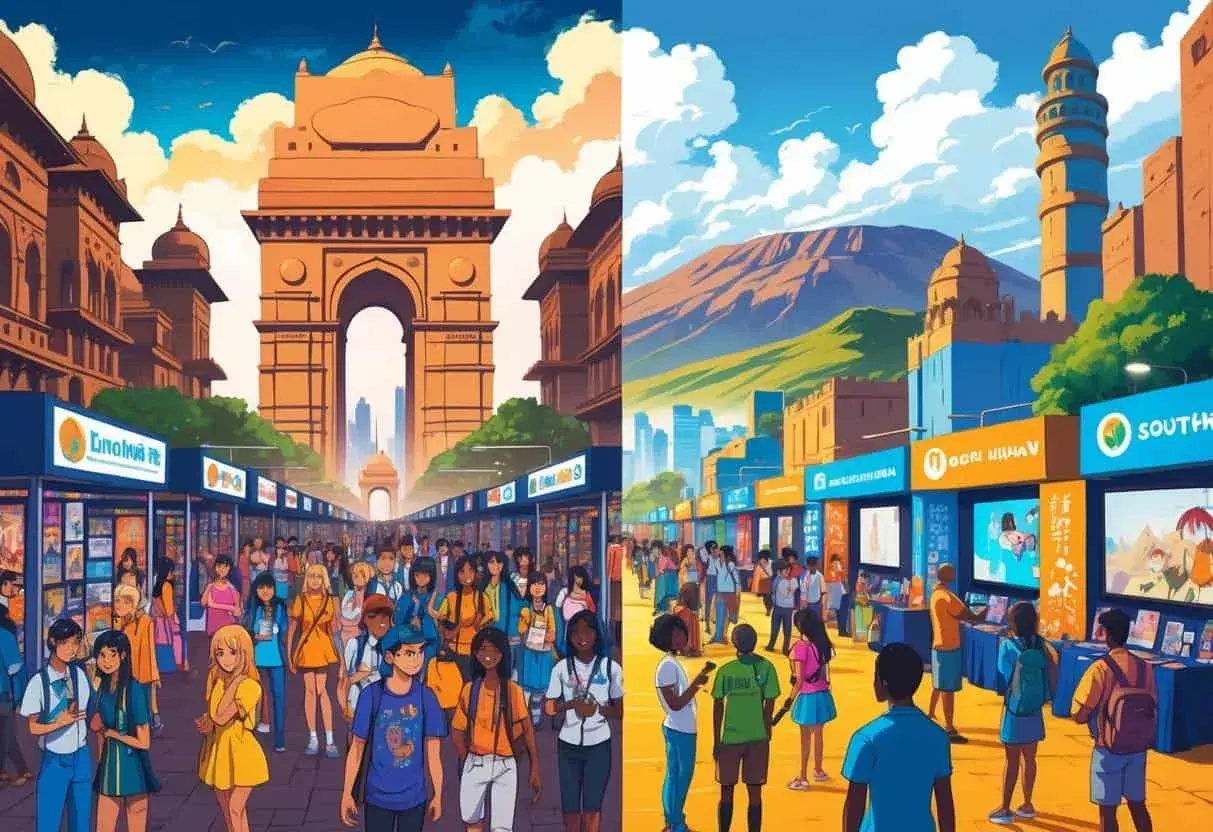
The hum of excited chatter, the flash of vibrant costumes, and the shared rhythm of thousands of fans celebrating their favourite series—anime conventions have become some of the most anticipated cultural events in India and South Africa. A decade ago, these gatherings were small, almost secret meetups in community halls or comic book shops. Today, they fill convention centres across Mumbai, Delhi, Johannesburg, and Cape Town, attracting tens of thousands of attendees and drawing the attention of major international studios and streaming services. The growth is not accidental. It is built on a wave of digital access, passionate fan communities, and local organisers who understand that anime is no longer a niche import but a mainstream cultural force.
Overview of Anime Conventions in India and South Africa
Anime conventions in the two regions have followed distinct paths, yet they share a common trajectory: from scattered fan gatherings to professionally produced festivals that rival the energy of long-established events in Japan, Europe, and North America. The increasing sophistication of these conventions reflects the deepening roots of anime in local entertainment landscapes.
Historical Development in India
India’s relationship with anime began in the 1990s through television broadcasts of dubbed series such as Dragon Ball Z, Pokémon, and Shin Chan on Cartoon Network and Animax. These shows imprinted themselves on an entire generation, but it wasn’t until broadband internet and affordable smartphones arrived that the fandom exploded. Early anime fan groups in cities like Mumbai, Chennai, and Kolkata organised screenings in cafés and small auditoriums, often piggybacking onto the larger Indian Comic Con events that started in 2011. Cosplay competitions, though initially modest, began attracting dozens of participants who stitched costumes by hand and shared tutorials on early YouTube channels.
By the mid-2010s, dedicated anime events started appearing. The Kolkata-based Anime POP convention, for example, grew from a 200-person meetup to an annual fixture with artist alleys, dedicated screening rooms, and panels. Similarly, Delhi’s Otaku Zone and Mumbai’s Anime High brought structure to the community. The entry of Crunchyroll as a sponsor and partner for several of these events beginning around 2019 added a layer of legitimacy and exclusive content, such as early episode premieres and merchandise giveaways. India’s first large-scale anime, manga, and cosplay festival—AniMela—debuted in 2024 in Mumbai, marking a watershed moment.
Backed by international collaborations with the Japanese government and media companies, AniMela demonstrated that the country had the appetite and infrastructure for a signature anime convention of its own.
Historical Development in South Africa
South Africa’s anime subculture emerged in the early 2000s when satellite television and imported DVDs introduced series like Naruto, Bleach, and One Piece to young viewers. The country’s first fan-driven anime clubs formed in Johannesburg and Pretoria, often linked to university gaming societies. Conventions grew out of the broader “geek culture” wave that also encompassed comic books, sci-fi, and gaming. The annual rAge (really Awesome gaming expo) in Johannesburg, launched in 2002, quickly became a hub for anime screenings and cosplay, though it was not exclusively anime-focused. Over time, dedicated tracks and halls were carved out for Japanese pop culture.
ICON (the IConvention), held in both Johannesburg and Cape Town, became the nation’s flagship event for anime, manga, and cosplay enthusiasts. Organisers like the South African Anime Society and local fan collectives began curating workshops on Japanese language, sword fighting demonstrations, and meet-and-greet sessions with local webcomic artists who blended anime aesthetics with African storytelling. Cape Town’s FanCon, originally a comic and collectibles convention, also integrated significant anime programming, including cosplay masquerades judged by international guests. The result is a network of events that, while smaller in scale than India’s, are tightly knit and creatively driven, often collaborating with South African animation studios and illustrators.
Market Size and Growth Metrics
The global anime market was valued at approximately USD 34 billion in 2024 and is projected to expand at a compound annual growth rate of nearly 10% through 2030, according to industry analyses from Grand View Research. India and South Africa, representing the Asia-Pacific and Middle East/Africa segments respectively, are registering some of the highest growth rates in fan acquisition. In India, more than 800 million internet users and a median age of 28 provide a demographic tailwind that few other markets can match. Convention attendance figures bear this out: a single multi-city Comic Con India season now draws several hundred thousand visitors, a significant share of whom attend specifically for anime programming.
South Africa’s anime fanbase, while numerically smaller, is growing at an equally passionate pace. ICON Johannesburg reported over 15,000 attendees in 2023, while Cape Town events saw a 30% year-on-year increase in cosplay registrations. Merchandise sales through both on-site stalls and online platforms have surged, with official licensed goods from Funko, Bandai, and local artisans moving in large volumes. As streaming penetration deepens and disposable incomes among young urban populations rise, the economics of convention hosting become ever more favourable for organisers and sponsors.
Drivers Fueling Popularity of Anime Culture
The engine of this expansion is twofold: unprecedented access to content through digital platforms and the organic, community-driven energy of social media. Both factors have transformed former passive viewers into active participants who shape the culture around them.
Streaming Platforms and Language Localisation
You can now open an app on your phone and instantly choose from thousands of anime titles, a reality that was unimaginable when fans relied on bootleg DVDs or erratic television schedules. Services such as Crunchyroll, Netflix, Amazon Prime Video, and Disney+ Hotstar have built enormous libraries that include everything from timeless classics to the latest simulcasts. In India, Crunchyroll alone added over 50 million registered users from the subcontinent by early 2025, fuelled by aggressive pricing and partnerships with local telecom providers. The platform also expanded its subtitle offerings into Hindi, Tamil, and Telugu, while Netflix India introduced dubs in these languages for blockbuster films like Demon Slayer: Mugen Train.
South Africa, though served primarily with English subtitles and dubs, benefits from the same global content pipelines. The country’s growing fibre-to-home network and affordable mobile data bundles have made streaming the default way to consume entertainment. Crucially, the availability of local language options in both markets removes the intimidation factor for first-time viewers. When a young fan in Lucknow can watch Jujutsu Kaisen in Hindi, the medium becomes as accessible as any Bollywood blockbuster. This normalisation transforms anime from a foreign curiosity into an everyday leisure activity, and by extension, makes the prospect of attending a convention feel natural and exciting.
Social Media’s Role in Fan Communities
Social platforms are the lifeblood of anime fandom in the 2020s. Instagram reels of cosplay transformations, TikTok trends set to anime opening themes, and X (formerly Twitter) threads analysing the latest episode generate millions of impressions daily. In India, Facebook groups like “Indian Anime Army” and Discord servers with tens of thousands of members serve as permanent virtual convention halls where fans discuss lore, share fan art, and coordinate meetups. South African fans cluster around WhatsApp communities and Instagram pages that spotlight local cosplayers and promote upcoming events. This constant digital presence turns passive viewing into active identity-building.
The visual nature of anime also meshes seamlessly with the influencer economy. South African cosplayer and content creator Kayla Adams, for instance, has used her detailed portrayals of Attack on Titan characters to land brand deals and panel spots at ICON. In India, creators like The Anime Boi and Cosplay India have built full-time careers out of convention appearances and sponsored content. Their success sends a powerful signal to younger fans: anime culture is not just a hobby—it can be a creative and professional outlet. This aspirational pull drives ticket sales and merchandise demand, creating a virtuous cycle that feeds back into the convention ecosystem.
Merchandising, Fan Engagement, and Industry Collaboration
Behind every successful convention is a robust commercial framework that allows fans to express their fandom tangibly. From artist alley prints to exclusive pop-up stores, the merchandise experience has become a central pillar of the convention value proposition.
Merchandise and Emerging Sales Channels
Walk through any major anime convention in Mumbai or Johannesburg, and you will encounter a marketplace bursting with variety. Independent artists sell hand-painted keychains, enamel pins, and limited-edition prints featuring their own interpretations of beloved characters. Alongside them, official distributors showcase action figures from Good Smile Company, apparel from Uniqlo’s UT line, and collectible cards. In India, local e-commerce platforms like Redwolf and The Souled Store have capitalised on the trend by releasing officially licensed anime clothing, bringing merch to fans who might never set foot in a convention hall. The secondary market for rare figures and doujinshi thrives on Instagram and WhatsApp, creating an always-on sales channel that builds anticipation for the next physical event.
South Africa’s merchandise scene follows a similar hybrid model. Online retailers such as Animeworx and Raru serve as year-round hubs, while conventions provide the tactile delight of discovering a one-of-a-kind cosplay prop or a vintage VHS tape. The presence of international payment gateways and improved shipping logistics means that a limited-edition figure released in Tokyo can find its way to a collector in Durban within weeks. This access was unthinkable a decade ago and has elevated the material culture of fandom in both countries to a level on par with more mature markets.
Cosplay Culture and Live Entertainment
Cosplay is often the face of any anime convention. The hours of labour invested in sewing, armour-crafting, and wig-styling transform attendees into walking works of art. Competitions in India, such as the Indian Championship of Cosplay held at Comic Con, now feature stringent judging criteria that consider craftsmanship, performance, and faithfulness to source material. Winners often receive sponsored trips to international events, raising the stakes and encouraging ever more ambitious creations. In South Africa, the Cosplay Masquerade at ICON similarly draws top talent, and workshops on foam-smithing and LED integration are staples of the programming schedule.
Beyond cosplay, live entertainment deepens the emotional connection fans have with the medium. Voice actors from Hindi dubs of popular shows are increasingly invited for panel discussions and autograph sessions. At AniMela 2024, fans got the chance to meet Japanese seiyuu for the first time on Indian soil, an encounter that underscored the country’s growing clout. South African events have featured local animation directors and comic artists who bridge the gap between African storytelling and anime aesthetics. Concerts by bands performing anime opening themes, J-pop dance showcases, and late-night karaoke rooms turn a day-long visit into a full weekend immersion.
This layered experience is what converts a curious newcomer into a loyal repeat attendee.
Brand Collaborations and Licensing
The shift from bootleg stalls to official licensing partnerships is one of the most telling signs of market maturity. Bandai Namco, Toei Animation, and Aniplex now work with local distributors to ensure that conventions are stocked with authorised products. These collaborations protect intellectual property but also raise the quality ceiling for merchandise. In 2024, Crunchyroll partnered with Indian multiplex chain PVR INOX to screen anime films in multiple languages, with tie-in pop-up shops in cinema lobbies. Such brand activations extend the convention atmosphere into everyday life.
In South Africa, gaming and anime crossovers are increasingly common. The rAge expo, for example, hosts Bandai Namco Entertainment’s playable demos of anime-based video games, while ReedPop-affiliated events bring in sponsorship from global brands like Funimation. These partnerships go beyond transactional sponsorship. They involve co-curation of content, exclusive trailer reveals, and even limited-run merchandise that becomes a collector’s item. For the fan, it means a richer, more diversified event.
For the industry, it is a laboratory for understanding what products and experiences resonate in fast-growing frontier markets.
Challenges Confronting the Anime Convention Ecosystem
Even as the momentum builds, significant obstacles threaten to limit the scale and sustainability of anime conventions in India and South Africa. Piracy, economic constraints, and a lack of formal institutional support are realities that organisers must navigate.
Piracy and Economic Pressures
Digital piracy remains one of the most persistent drains on the anime economy. In India, hundreds of websites and mobile apps offer free, unauthorised access to entire catalogues of anime with fan-made subtitles in regional languages. While some of this activity springs from a genuine lack of affordable access, it deprives studios and local licensees of revenue that could be reinvested into events and localisation. South Africa faces a similar problem, with pirate streaming sites frequently drawing traffic from young viewers who may not yet have the means to pay for multiple subscription services.
Economic barriers compound the issue. The cost of a convention ticket in either country—often between INR 800 and INR 2,500 in India or ZAR 250 to ZAR 600 in South Africa—is still a significant outlay for many students. Add to that the expense of crafting a cosplay, purchasing merchandise, and travelling to event cities, and the financial hurdle becomes real. In a price-sensitive market, this can cap attendance growth and skew participation toward the more affluent demographic segments. Bridging this gap will require creative solutions such as tiered ticketing, scholarship programmes for cosplayers, and more sponsors willing to subsidise entry fees.
Competition, Local Animation, and Industry Structure
Internationally, anime conventions compete not only with each other but with a universe of entertainment options—gaming tournaments, music festivals, and streaming marathons. The key players—Studio Ghibli, Kyoto Animation, Madhouse, Bones, Ufotable, and Bandai Namco Filmworks—have global recognition, but their intellectual property must be locally activated through partnerships. In India, the animation industry itself is vast but largely focused on service work; original anime-influenced Indian IP remains nascent. Studios like Green Gold Animation and Graphic India have experimented with anime-style series, but a breakout hit that can anchor a convention is still missing. South Africa’s animation sector is similarly positioned, with talented studios like Triggerfish producing internationally acclaimed work; yet a direct pipeline from local creation to anime convention content is only beginning to emerge.
Local organisers must therefore compete for scarce resources: international guests, exclusive screening rights, and sponsor budgets. The most successful events are those that differentiate themselves through hyper-local flavour—panel discussions on Indian mythology in anime, or a showcase of African comic artists who draw in a manga style. Building these unique identities takes time, and smaller conventions often struggle to survive against larger, multi-genre expos that can afford to subsume anime programming under a broader pop culture umbrella.
Future Outlook and Emerging Trends
Despite these challenges, the trajectory for anime conventions in India and South Africa points firmly upward. Several emerging trends are likely to accelerate growth, broaden participation, and strengthen the cultural impact of these events.
Hybrid Formats and the Phygital Experience
The COVID-19 pandemic forced a temporary halt to physical gatherings, but it also sparked innovation. Organisers in both countries experimented with virtual conventions, live-streamed cosplay contests, and digital artist alleys. The lesson was clear: online components extend the reach of an event far beyond its physical walls. Hybrid models are now becoming standard. A fan in a tier-2 Indian city like Nagpur can purchase a digital pass to watch a voice actor panel from Mumbai, while a South African cosplayer can participate in an Instagram-based contest judged by international guests without buying a plane ticket.
This blending of physical and digital—sometimes called the “phygital” approach—opens up new revenue streams and makes fandom more inclusive. Expect to see conventions investing heavily in high-quality streams, virtual meet-and-greets, and persistent online community platforms that keep the buzz alive all year round.
Niche Programming and Localised Content
As mainstream anime titles attract broad audiences, a hunger for niche sub-genres grows. Mecha, isekai, shoujo-ai, and psychological thriller panels are drawing dedicated crowds who crave deeper cuts. Programming that reflects local tastes is also gaining traction. Indian conventions now host sessions on the influence of anime on Bollywood music videos, while South African events feature discussions about Afrofuturism and its parallels with anime storytelling. This localisation of content not only distinguishes one convention from another but also strengthens the cultural resonance of the medium.
It signals to attendees that their own experiences and creative traditions are valid lenses through which to interpret Japanese pop culture.
Institutional Support and the Road Ahead
Government and institutional backing, though currently limited, is beginning to materialise. The Japanese embassy in India actively supports cultural festivals like AniMela, recognising them as tools of soft power. In South Africa, cultural exchange programmes with Japan have funded manga drawing workshops and film screenings in townships, broadening the fanbase. If these efforts mature into sustained funding, conventions could afford larger venues, better security, and more ambitious guest line-ups. Combined with the unstoppable rise of streaming and the boundless creativity of fan communities, the next decade is poised to see India and South Africa become not just consumers of anime culture, but exporters of a unique, locally flavoured convention experience that the world will watch with interest.
India’s first dedicated anime, manga, and cosplay festival AniMela shows what is possible when local passion meets international support. In South Africa, events like ICON and rAge continue to set new attendance records each season. As more fans discover the joy of shared fandom, the convention floor will remain the beating heart of anime culture on two fast-growing continents.