Table of Contents
When Japanese animation first arrived on television screens across the UAE and the broader Middle East, local audiences had little idea of how profoundly it would reshape youth entertainment. In the 1970s and 1980s, dedicated children's programming was scarce, and regional broadcasters were eager to fill airtime with content that could captivate young viewers. Arabic-dubbed anime series offered exactly that—colorful, dramatic, and emotionally rich stories that stood apart from the few Western cartoons available. Channels such as SpaceToon quickly became household names, and a generation of kids from Dubai to Riyadh grew up with heroes like Grendizer, Captain Majid, and Adnan wa Lina as formative companions.
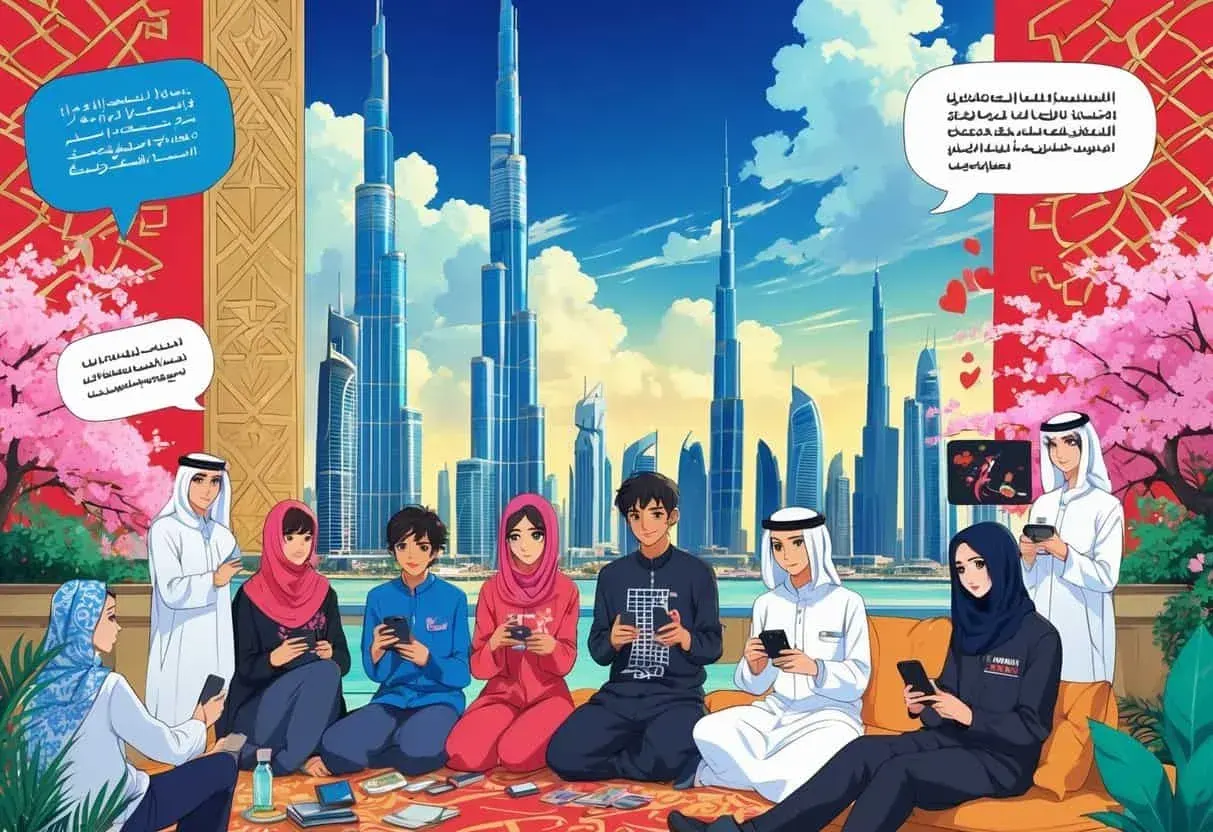
That early exposure planted seeds that would grow far beyond weekly TV habits. Decades later, the anime fandom in the Gulf Cooperation Council (GCC) countries and beyond is not a nostalgic memory—it is a dynamic, commercially significant subculture. Fan clubs, streaming metrics, merchandise sales, convention attendance, and even local production activity all point to anime's lasting grip on the region's imagination. What began as a scheduling solution for television networks has matured into a complex cultural and market ecosystem, one that continues to adapt to new technologies, shifting social attitudes, and the ambitions of a young, digitally native population.
How a Niche Import Became Mainstream Entertainment
Anime's journey across the Middle East was never a straight line. It rode on shifting currents of broadcast policy, cultural curiosity, and eventually, digital disruption. By the early 2000s, what had been a childhood staple for many had sustained a loyal fan base, but still hovered on the periphery of mainstream entertainment. That changed as internet penetration accelerated, satellite broadcasting expanded, and the first dedicated anime blocks found a home on channels like MBC 3 and Cartoon Network Arabic. Dedicated broadcasters, in turn, began to license not only the classic mecha and sports titles but also longer-running, character-driven series that appealed to teenagers and families alike.
What Makes Anime Resonate So Deeply
Several cultural and structural factors explain why anime stuck around when other imported formats faded. First, the storytelling conventions in many anime series—serialized plots, moral dilemmas, emotional highs and lows—mirror the narrative richness of Arabic oral traditions and dramas. The protagonists often struggle with identity, family duty, and personal growth, themes that feel immediate to young people navigating conservative societies. Second, the aesthetic of anime, with its expressive character designs and detailed backgrounds, offered a visual language that felt completely fresh compared to the flat, gag-driven cartoons that dominated other channels.
Equally important is genre diversity. Anime is not a single format but an entire spectrum: action, romance, science fiction, horror, slice-of-life, historical epics, and sports competitions. Parents in the UAE and Saudi Arabia have noted that their children are as likely to gravitate toward a cooking-themed anime as a battle series. That breadth makes anime a family affair; it is not uncommon for siblings and parents to find something they can watch together. Streaming platforms have only amplified this effect, serving personalized recommendations that nudge viewers toward niche titles they might never have discovered through a linear TV schedule.
The Pull of Japanese Aesthetics and Philosophy
Beyond plot and character, anime acts as an ambassador for Japanese culture at large. In the UAE, a country with rising culinary tourism and a fascination with global design trends, Japanese food, fashion, and architecture have become aspirational markers. Anime opens that door early. Series set in Tokyo high schools, rural hot-spring towns, or historical Edo periods give regional viewers a textured sense of everyday Japanese life, from school festivals and seasonal traditions to minimalist home interiors. This cultural window, reinforced by Japanese pop music openings and credit sequences, has inspired travel itineraries, language learning, and a thriving market for authentic Japanese goods.
Manga, Japanese comics that often serve as source material for anime, deepens the connection further. In bookshops across Dubai and Abu Dhabi, manga sections have grown from a few rotated titles to permanent fixtures stocked with both English and Japanese editions. Fans who start with a television adaptation often find their way back to the printed page, where the pacing and visual style offer a different, more intimate reading experience. The two-way relationship between anime and manga sustains interest across long product cycles and helps communities cohere around shared canon.
Streaming, Smartphones, and the End of Appointment Viewing
If broadcast television ignited anime fandom in the Middle East, digital platforms turned it into a lifestyle. The shift away from waiting for scheduled episodes was seismic. By the mid-2010s, services like Crunchyroll and later Netflix started to offer substantial catalogs of subtitled and dubbed content accessible on phones, tablets, and smart TVs. For the first time, fans could watch entire seasons in one sitting, follow simulcasts that aired only hours after Japan, and choose between Arabic subtitles, English dubs, or the original Japanese voice tracks. This flexibility drastically lowered the barrier to entry for newcomers who had heard buzz but didn't want to hunt for DVDs or schedule their evenings around TV.
Local telecom providers and device manufacturers indirectly helped the trend. High mobile penetration rates, affordable data plans, and the widespread adoption of streaming devices meant that a teenager in Sharjah or a university student in Doha had virtually the same access to a global library as someone in Tokyo or Los Angeles. The pandemic years accelerated this further, as lockdowns and remote learning drove screen time toward entertainment that could be consumed socially via watch parties and livestream reactions on YouTube and Discord.
Streaming platforms also recognized the commercial opportunity in the region and began commissioning Arabic subtitling and, in some cases, full Arabic dubbing for new simulcasts. This investment signaled that the Middle East was no longer a peripheral afterthought but a growth market in its own right. The availability of high-quality Arabic localization removed the last significant friction for viewers who preferred to enjoy anime in their native language, dramatically broadening the potential audience beyond English-proficient youth.
Community, Cosplay, and the Convention Circuit
Anime fandom in the UAE and neighboring countries has always had a strong social dimension, and that aspect has only intensified as the community has matured. Informal meetups in malls and cafes, which were common in the 2000s, have evolved into organized clubs, charity drives, and large-scale events. The Middle East Film & Comic Con in Dubai, now a fixture on the regional calendar, dedicates significant floor space and programming to anime, bringing in voice actors, illustrators, and cosplay competitions that attract thousands. These conventions function as cultural crossroads, blending Japanese pop culture with Arab hospitality and a cosmopolitan, multilingual crowd.
Cosplay as Creative Expression
Cosplay—the practice of dressing as characters from anime, manga, or games—has become one of the most visible expressions of fandom. In a part of the world where public dress codes and modesty norms can vary widely by country and emirate, cosplay provides a structured, event-based avenue for self-expression. Participants spend months crafting costumes, studying sewing and prop-making tutorials, and collaborating online with fellow enthusiasts across the region. At conventions, elaborate cosplay walks and judged competitions showcase not only character accuracy but also the ingenuity of local makers working with limited specialty supply chains.
Workshops on costume design, wig styling, and makeup have sprung up alongside conventions, often led by experienced cosplayers who have turned their hobby into a small business. These educational side events give newcomers a supportive on-ramp, reinforcing the idea that anime fandom is a creative discipline rather than passive consumption. The visually stunning results—shared widely on Instagram and TikTok—attract mainstream media attention and help normalize anime culture among older generations and the broader public.
Blending with Arab Identity and Everyday Life
One of the more interesting developments in the region is the degree to which anime has been absorbed and reinterpreted through local lenses. While the source material is undeniably Japanese, the translation and community layers often add an unmistakably Arab accent. Arabic dubbing studios for decades have adapted scripts to fit local humor, idioms, and even religious sensitivities, resulting in versions of series that can feel culturally hybrid. Dialogue writers for the classic SpaceToon dubs became celebrities in their own right among fans, celebrated for crafting catchphrases that outlived the shows.
Street fashion in cities like Dubai and Jeddah now incorporates anime-inspired prints, oversized hoodies, and accessories that blend Japanese kawaii aesthetics with regional modesty preferences. Young designers and artists sell merchandise such as phone cases, stickers, and apparel at pop-up markets that combine anime iconography with Arabic calligraphy. This fusion is more than novelty— it signals a generation confidently mixing global pop culture with local heritage, treating neither as incompatible.
Even language is shifting. Arabic slang peppered with anime references—terms like "otaku" to describe a hardcore fan, or character names used as playful nicknames—has entered the texting and gaming vernacular. Social media accounts dedicated to Arabic anime memes rack up hundreds of thousands of followers, generating a shared cultural shorthand that instantly signals belonging. These digital spaces operate almost entirely in Arabic, creating a localized version of the global anime conversation that outsiders rarely see.
Navigating Values and Content Expectations
No cultural import arrives without friction, and anime in the Middle East has had to navigate a complex landscape of community standards, parental oversight, and censorship. Broadcasters historically edited scenes that depicted excessive violence, romantic intimacy, or religiously suggestive imagery, a practice that sparked endless debates among fans who sought out uncut versions on the internet. Streaming platforms have partially resolved this tension by allowing viewers to choose between edited dubs and original subtitled versions, but the conversation continues around what should be freely accessible to younger audiences.
Parents and religious figures have at times voiced concern about certain thematic elements in anime, such as occult references or morally ambiguous characters. Yet many families have also found that anime can be a catalyst for thoughtful discussions. Series that tackle friendship, perseverance, grief, or environmental stewardship align easily with values that are widely endorsed. The nuanced, empathetic approach to mental health seen in several popular titles has even been praised by educators and counselors in the region as a useful tool for talking to adolescents about their feelings.
The balance between openness and tradition is unlikely to be resolved once and for all, but the prevailing trend leans toward greater acceptance as the anime generation itself moves into adulthood and assumes positions of influence in media, education, and policy.
The Expanding Role of Local Animation and Gaming
Anime's popularity has not just been a story of import and consumption; it has had a tangible effect on creative industries within the UAE and the wider Middle East. Homegrown animation studios, game developers, and online content creators increasingly cite Japanese animation as a primary inspiration. Government-backed media zones in Abu Dhabi and Dubai have nurtured a small but growing cohort of animators who blend 2D hand-drawn techniques with 3D software, often applying an anime-influenced visual grammar to stories anchored in Gulf folklore and contemporary life.
Lessons from Japanese Studios
The reputations of studios like Toei Animation, Studio Ghibli, and Gainax resonate powerfully in the Arab world. Their series were the ones that originally aired on Gulf TV, and their signature styles—expressive eyes, dynamic action lines, delicate background art—are still referenced in classroom portfolios. Some of the more ambitious UAE-based animation projects now openly acknowledge this lineage while pushing it in new directions. For example, locally produced serials have experimented with character rigging and visual effects that blend anime aesthetics with the geometry of Islamic art, resulting in a look that could only come from this part of the world.
International collaborations have also emerged. Producers in the UAE have co-funded animation ventures with studios in Japan and South Korea, brokering creative partnerships that give regional talent exposure to overseas pipelines. These co-productions, while still relatively rare, hint at a future where the flow of influence may become bidirectional—where the Middle East not only consumes anime but contributes to its global evolution.
Esports, Gaming, and the Anime Connection
The gaming and esports boom in the Gulf has been well documented, with Saudi Arabia and the UAE investing heavily in tournaments, infrastructure, and talent development. Less discussed is the symbiotic relationship between gaming and anime culture. Many of the most popular competitive titles, from Genshin Impact to League of Legends and Valorant, feature anime-inspired art styles or narrative cutscenes. Esports performers routinely adopt anime character personas, display fan art on their streams, and use anime soundtracks in their highlight reels, creating a seamless crossfade that reinforces fandom across both media.
Animation studios in the region have benefited from this crossover by providing motion graphics and animated sequences for e-tournaments and game launch events. The demand for high-quality visual content in the gaming industry gives animators a commercial outlet, making it economically viable for them to refine their skills while maintaining artistic links to anime traditions. As virtual and augmented reality experiences become more common, the intersection of interactive media and cinematic animation is set to produce formats we are only beginning to imagine.
Market Size, Consumer Spending, and the Manga Pipeline
Quantifying anime's economic footprint in the Middle East is challenging due to the fragmented nature of data collection, but available figures are striking. The formal anime market in the region—spanning merchandising, streaming subscriptions, event tickets, and licensed goods—was estimated at roughly USD 0.86 billion in 2023. While this remains smaller than the markets in North America or Asia-Pacific, its growth rate has been among the highest globally, driven by favorable demographics (a median age under 30 across much of the GCC), rising disposable income, and a cultural environment that increasingly views geek culture as desirable rather than fringe.
Collectibles are a particularly fast-moving segment. Figures, statues, apparel, and limited-edition collaborations with brands sell out rapidly both online and at temporary pop-up stores. Shops in Dubai’s malls that once focused on Western comic book merchandise now allocate prime shelf space to anime series like Demon Slayer, Jujutsu Kaisen, and Attack on Titan. The collector’s mindset, fed by unboxing videos and community reviews, is creating a secondary market that extends into trading groups and online auction platforms managed by local fans.
Manga’s Quiet Hold on the Region
Manga remains the backbone of the anime economy, and its presence in the UAE is growing steadily. Book retailers such as Kinokuniya in The Dubai Mall have become pilgrimage sites for fans, who hunt for the latest volumes of ongoing series or discover older classics. University libraries and public libraries in the region have begun to incorporate manga, recognizing its role in encouraging reading among teens and young adults. The simultaneous release of English-translated volumes, and in some cases direct Arabic translations, reduces the wait time that once made following a series frustrating.
Manga also supports literacy and language acquisition. Educators have noted that manga’s combination of visuals and text helps struggling readers engage with stories, and many bilingual fans learn Japanese incrementally by comparing translations with the original text. The manga pipeline thus sustains the anime industry not only commercially but by cultivating the very audience that will demand future seasons and vote with their wallets at the convention hall.
Obstacles and the Shape of What Comes Next
For all its momentum, anime’s journey in the Middle East is not without headwinds. Censorship remains a patchwork affair, with different countries and even different media outlets applying inconsistent standards. A series that streams uncut on one platform may be available only in heavily edited form on another, frustrating fans who seek a consistent experience. Intellectual property enforcement, while improving, still sees a thriving underbelly of pirated streaming sites and counterfeit merch that drain revenue from official channels.
Cultural sensitivities around certain themes will probably continue to limit the catalog available to younger audiences through traditional broadcasters, and some high-profile titles may simply never get a regional release. Yet these constraints have historically fueled creativity rather than stifling it—fans have become adept at navigating between platforms, using VPNs, and curating viewing groups that respect shared boundaries. The energy that has built up over decades suggests that anime in the UAE and Middle East is not a passing trend but a permanent cultural fixture, one that will keep reshaping itself alongside the societies that have embraced it.
Industry watchers expect that future growth will come from deeper localization efforts, including Arabic voice acting for more simulcasts, investment in regional original animation that wears its anime influences proudly, and tighter integration with the tourism and education sectors. An anime-themed café in downtown Dubai, a cosplay design course at a local university, or a joint venture between a Saudi gaming company and a Japanese studio—all of these are imaginable within the next few years. The anime wave that crashed onto Middle Eastern shores decades ago has receded only enough to reveal the sturdy cultural architecture it has already built.