Table of Contents
The Epic Duel: Upper Moon Four vs Mist Hashira
Few clashes in Demon Slayer carry the same layered intensity as the confrontation between Hantengu, Upper Moon Four, and Muichiro Tokito, the Mist Hashira. Taking place during the Swordsmith Village Arc, the battle is not only a spectacle of swordsmanship and demonic blood arts, but also a collision of trauma, legacy, and the sheer will to protect the innocent. Fans who enjoy deep shounen anime know that Demon Slayer thrives on emotionally charged combat, and this fight delivers on every front. Hantengu’s centuries-old hatred meets Muichiro’s prodigious talent, and the outcome shapes the trajectory of the entire Corps.
This in-depth analysis will break down eight pivotal reasons why this bout is a cornerstone of the series, dissecting the combatants’ strengths, weaknesses, and match-deciding factors. By the end, we’ll have a definitive answer to the ultimate question: in a straight fight between Hantengu and Muichiro Tokito, who would truly emerge victorious?
8. Hantengu Is Upper Moon Four—a Demon of Ancient Malice
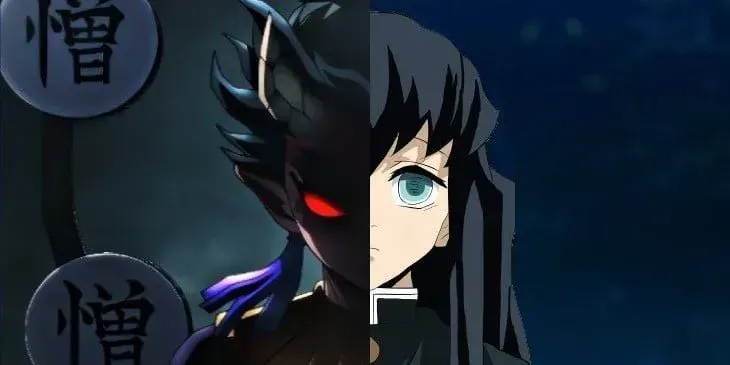
Hantengu’s rank alone speaks volumes. As the fourth highest demon in Muzan Kibutsuji’s Twelve Kizuki, he has survived for over a century, accumulating a kill count that would make even seasoned Hashira shudder. Upper Moon demons are not simply strong; they are battle-hardened, cunning, and often possess Blood Demon Arts that defy conventional tactics. Hantengu’s reputation among the demon hierarchy is built on his unnerving ability to fragment his own body and psyche into multiple fully autonomous forms—each wielding elemental powers.
His physical prowess, even in his base, diminutive form, is deceptive. He can regenerate from nearly any wound almost instantly, and his cowardly, self-pitying exterior hides a deeply manipulative survival instinct. This adaptability made him a persistent threat during the Swordsmith Village attack, forcing the Demon Slayers to spread their attention thin. In terms of raw demonic power and longevity, Hantengu stands as a wall that only the most exceptional slayers can hope to scale.
7. Muichiro Tokito Is the Mist Hashira—a Prodigy Without Equal
Muichiro’s rise to the rank of Hashira at a staggeringly young age is a testament to his superhuman talent. He mastered Mist Breathing, an offshoot of Wind Breathing that specializes in misdirection, speed, and wide-area control. His swordsmanship is so refined that he can switch between blindingly fast offense and absolute stillness in a heartbeat, confusing enemies who rely on tracking movement. As a descendant of the original Mist Breathing users—the Tokito line—his techniques are ingrained in his very blood.
But what truly sets Muichiro apart is his mental state. Initially aloof and detached due to repressed memories, the events of the Swordsmith Village Arc unlock the full scope of his past. This emotional awakening, combined with his innate genius, allows him to tap into the Transparent World and activate his Demon Slayer Mark mid-battle—elevating his physical attributes to a level that even Upper Moons find frightening. His growth curve during the fight is almost vertical, making him an unpredictable variable that Hantengu could not fully account for.
6. Hantengu’s Seven Emotion Clones: A One-Man Army
Hantengu’s Blood Demon Art, Emotional Manifestation, is the core of his lethality. Whenever his frail main body feels threatened, it splits off a clone embodying a particular emotion. Each clone has a distinct appearance, temperament, and elemental command. They can fight independently, coordinate complex attacks, and even fuse into a being of catastrophic power.
- Sekido (Anger): The unofficial leader, wielding a khakkhara that controls devastating lightning. His aggressive mindset drives the group’s offense.
- Karaku (Joy): A carefree sadist who generates powerful gusts and leaf-like projectiles using a war fan. He revels in toying with opponents.
- Aizetsu (Sorrow): Quiet and morose, his halberd unleashes piercing, far-reaching spear strikes that catch slayers off-guard.
- Urogi (Pleasure): A winged harpy-like clone whose sonic screeches can rupture eardrums and disorient even Hashira.
- Zohakuten (Hatred): The fusion of the above four, manifesting as a young boy riding a wooden dragon. He commands all four elements simultaneously and possesses an unbreakable protective shell. He is arguably the most dangerous form Hantengu can field.
- Urami (Resentment): Born from a deeper part of Hantengu’s psyche, this clone unleashes unavoidable eye-contact based paralysis, turning the tables instantly if the slayer is not prepared.
- Hantengu (Fear/Regret): The tiny, perpetually terrified main body that scurries and hides, constantly splitting off new clones to save itself.
Facing even two of these clones would challenge most slayers. Muichiro had to contend with all of them, often simultaneously, while also protecting the village.
5. Muichiro’s Mist Breathing: Six Forms of Unpredictable Carnage
Mist Breathing is a style built on obfuscation. Its techniques are not only meant to cut, but to disorient. Muichiro’s mastery allows him to manifest thick banks of mist that swallow the battlefield, robbing his enemies of depth perception, direction, and even the ability to sense bloodlust. His forms are:
- First Form: Low Clouds, Distant Haze – A straightforward thrust or slash that extends far beyond the physical blade length, catching foes who believe they are safe.
- Second Form: Eight-Layered Mist – Unleashes eight rapid slashes layered so densely that the resulting mist completely obscures vision, perfect for creating openings against multiple clones.
- Third Form: Scattering Mist Splash – A circular deflecting sweep that disperses incoming projectiles and elemental attacks, essential when facing Karaku’s gusts or Sekido’s lightning.
- Fourth Form: Shifting Flow Slash – A unpredictable slash that changes trajectory mid-swing, bending around guards and exploiting the clone’s individual blind spots.
- Fifth Form: Sea of Clouds and Haze – A massive frontal attack that launches the user forward inside a rolling cloud bank, crashing into the enemy with incredible momentum.
- Sixth Form: Lunar Dispersing Mist – A vanishing strike that seems to erase the user from sight, allowing Muichiro to reappear behind or above his target for a decisive beheading.
Against an army of clones who rely on coordinated attacks, the disorienting nature of Mist Breathing was the perfect equalizer. It turned Hantengu’s numerical advantage into chaos, forcing his emotions to clash with one another.
4. A Bloodline Vendetta: The Tokito Family Massacre
The battle transcended duty the moment Hantengu recognized Muichiro’s lineage. Centuries earlier, Hantengu had slaughtered the Tokito family, the very bloodline that preserved and passed down the original Mist Breathing. Muichiro’s existence was a living reminder of Hantengu’s failure to completely annihilate that sword-smithing clan. This realisation ignited a personal hatred in Hantengu, one that clouded his judgment and made him fixate on killing the young Hashira.
For Muichiro, the encounter triggered the return of his repressed memories. He had lost his parents and his twin brother Yuichiro to a demon attack, and had buried those traumatic events deep within. Confronting Hantengu—the demon indirectly responsible for the ruin of his ancestors—awakened a fierce, protective anger. The fight transformed from a mission into a reckoning. This emotional undercurrent gave Muichiro the fortitude to push past his physical limits, unlocking the Demon Slayer Mark and turning his inherited techniques into weapons of retribution.
3. Contrasting Motivations: Survival vs. Sacrifice
Hantengu’s entire existence is defined by cowardice and self-preservation. He fights not out of loyalty to Muzan, but out of abject terror of death. His clones lash out because his core self is screaming to be saved. There is no honour, no ambition, only a desperate, writhing fear. This makes him incredibly dangerous—he will lie, flee, beg, and split apart endlessly—but it also makes him predictable at his core.
Every action is aimed at protecting the tiny main body, and once that location is discovered, the whole house of cards collapses.
Muichiro, conversely, fights to protect. As a Hashira, his life is pledged to the Corps and to humanity. After regaining his memories, he adds a personal stake: to avenge his family and ensure no other child suffers the same loss. This selfless drive allows him to remain calm under pressure, to strategize rationally, and to make the split-second decisions that ultimately corner Hantengu. When a demon fights to live and a slayer fights for others, the emotional weight tips the scale in favour of the one with something to lose beyond their own skin.
2. Obstacles on Both Sides: A Battlefield of Chaos
The Swordsmith Village became a crucible of overlapping dangers. Hantengu had to contend not just with Muichiro, but with Tanjiro Kamado, Nezuko Kamado, Genya Shinazugawa, and later Mitsuri Kanroji. Each new arrival disrupted his clone coordination, forcing splits and retreats. His arrogance was continually punished by the slayers’ teamwork.
Muichiro, on the other hand, faced the punishing task of decimating an army of clones while protecting civilians and his injured comrades. The poison from Urami’s snakes sapped his stamina, and every use of the Mist Breathing’s higher forms drew on a body already pushed past its limits. He also battled his own mind—flashes of memory threatened to destabilize his focus, yet overcoming that mental fog became his greatest weapon. The environment itself was a double-edged sword: the dense forest and smithy structures offered cover for Hantengu’s hidden main body, but also allowed Muichiro to vanish into the mist at will.
The biggest obstacle, however, was locating the real Hantengu. The main body, tiny and perpetually hiding inside a wooden doll, was virtually impossible to find amid the sensory chaos of battle. Until Muichiro’s Transparent World ability allowed him to see through the decoys, the fight seemed endlessly stacked against him.
1. The Climactic Decapitation: Visions and Final Words
The battle’s emotional peak arrives when Muichiro, pushing through poison and exhaustion, uses the Shifting Flow Slash in conjunction with his awakened Mark to breach Zohakuten’s wooden dragon and corner the real Hantengu. In a desperate scramble, Hantengu tries to flee, scurrying into a hollow tree trunk. Muichiro summons his final reserves and unleashes the Lunar Dispersing Mist, cleanly beheading the demon before he can split again.
In his dying moments, Hantengu shrieks curses at Muichiro and the Tokito blood, still incapable of accepting responsibility for his own demise. His fear of death—the very emotion that spawned his power—consumes him. Muichiro, slumped and mortally wounded, does not answer with triumph. Instead, he experiences a fleeting vision of his parents and his brother Yuichiro. They smile, tell him he did well, and welcome him.
The vision embodies his emotional arc: from an empty shell of a prodigy to a Hashira who died with a full heart, connected to his family and his duty. The victory belongs to Muichiro not just in the physical sense, but in the spiritual closure he achieves.
So, Hantengu vs Muichiro: Who Would Win in a One-on-One Duel?
If we strip away the additional allies and focus purely on the matchup, the scales tip decisively toward Muichiro. Hantengu’s greatest asset—his army of emotion clones—becomes a liability against a Mist Breathing master who thrives on confusion. The mist clouds Muichiro generates obscure lines of sight, making coordinated elemental attacks nearly impossible. The Transparent World, once unlocked, lets him identify the true body amid a sea of fakes. And his prodigious speed, amplified by the Demon Slayer Mark, closes the gap before the clones can reform into Zohakuten.
Hantengu’s only chance would be to avoid direct confrontation entirely, perpetually spawning new clones while hiding. But Muichiro’s relentless pursuit and strategic mind would eventually corner him. Hantengu’s fear-based fighting style can carry him through battles of attrition, but against a Hashira who evolves mid-fight and strikes with surgical precision, every second of delay works against the demon. The emotional weight of the Tokito vendetta further tilts the battlefield in Muichiro’s favor, sharpening his resolve to a razor’s edge.
Ultimately, Muichiro Tokito is the clear winner of this battle. His victory is not just a testament to his talent, but to the growth he undergoes in the heat of combat—a growth that no amount of Hantengu’s centuries-old malice could withstand.
Frequently Asked Questions
Does Muichiro fight Hantengu alone?
No. While Muichiro engages the emotion clones directly and delivers the final killing blow, the battle is a team effort. Tanjiro, Nezuko, and Genya provide crucial support by fending off clones, forcing Hantengu to split his attention. Mitsuri Kanroji also arrives to hold back Zohakuten, giving Muichiro the window he needs to locate and behead the main body.
Who defeated Hantengu in the manga?
Muichiro Tokito is the one who decapitates Hantengu’s true form. After the head is severed, the demon disintegrates. However, in the Infinity Castle Arc, it is revealed that Kokushibo, Upper Moon One, later consumes Hantengu’s remains as part of a plot development, but the immediate defeat is entirely at Muichiro’s hands.
Which form of Hantengu is the strongest?
Zohakuten, the fusion of Sekido, Karaku, Aizetsu, and Urogi, is the most combat-oriented and destructive form. He wields all four elemental Blood Demon Arts simultaneously and shields himself inside a near-impenetrable wooden dragon. However, the main Hantengu body is the most resilient in terms of survival, as it can infinitely produce more clones as long as it remains hidden and undamaged.
Could Sanemi Shinazugawa defeat Hantengu?
Sanemi, the Wind Hashira, certainly has the physical strength and bloodlust to pressure Hantengu. His aggressive, wide-area wind attacks could disrupt clone formations. However, Hantengu’s ability to multiply and his reliance on deception might present a challenge for Sanemi’s straightforward style. The fight would be gruelling, but Sanemi’s tenacity and experience would likely give him a narrow, hard-fought victory.
Can Muichiro defeat Yoriichi Tsugikuni?
Yoriichi is the pinnacle of Demon Slayer power, the original user of Sun Breathing, and the only individual to drive Muzan to absolute despair. Even a fully realized Muichiro with a Demon Slayer Mark and Transparent World would be hopelessly outmatched by Yoriichi’s transcendent speed, breathing precision, and combat instinct. No Hashira of any generation can match the original prodigy.
Who kills Muichiro?
Muichiro meets his end during the Infinity Castle Arc at the hands of Kokushibo, the Upper Moon One and the demonic counterpart of Yoriichi. In a heartbreaking twist, Kokushibo is the ancestor who originally massacred the Tokito family, completing the tragic circle of the Tokito bloodline. Muichiro fights with everything he has, but is ultimately overwhelmed by Kokushibo’s relentless Moon Breathing.