Table of Contents
Gaara’s character arc in the Naruto series stands as one of the most dramatic and emotionally resonant transformations in modern anime. Few characters begin their journey so thoroughly broken, and fewer still earn a redemption that feels both genuine and complete. Gaara’s full character arc traces a path from isolated jinchūriki and brutal killer to the beloved Fifth Kazekage and a symbol of peace.
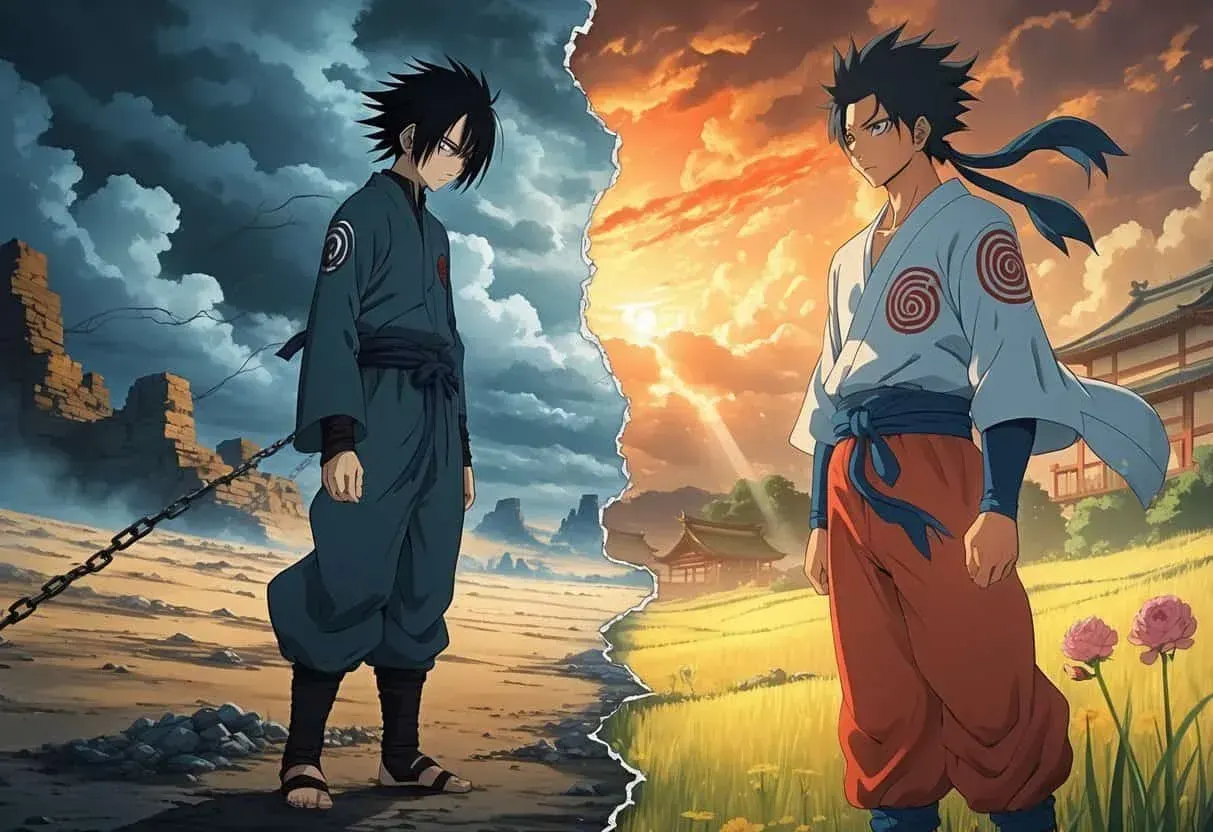
This evolution doesn’t happen overnight — it’s built on years of pain, a handful of transformative encounters, and a slow, deliberate rebuilding of identity. By examining each stage of his life, you’ll understand how Masashi Kishimoto used Gaara to explore themes of isolation, the weight of being a jinchūriki, and the possibility of change even after the darkest deeds. In this deep dive, we’ll unpack the key moments that define Gaara’s journey from a child weaponized by his own village to a leader who protects his people with his life.
Key Takeaways
- Gaara’s early life was defined by isolation, fear, and being treated as a weapon rather than a child.
- His violent actions were a direct result of deep emotional pain and an utter lack of meaningful bonds.
- A transformative encounter with Naruto Uzumaki became the catalyst for his redemption.
- He ultimately earned the trust of Sunagakure, becoming a wise and self-sacrificing Kazekage.
- His legacy extends far beyond his village, shaping how jinchūriki are perceived across the shinobi world.
Gaara’s Tragic Origins
To understand the person Gaara becomes, you have to start with the childhood that nearly destroyed him. Long before he was a threat to anyone, he was a frightened child saddled with a burden no one should carry. His early years are a study in systemic failure — by his family, his village, and the very system that created him.
Isolation and Loneliness
From the moment Gaara was able to perceive the world around him, he was utterly alone. As the vessel for the One-Tailed Beast, Shukaku, he was feared and avoided by virtually everyone in Sunagakure. Children were forbidden to play with him; adults crossed the street when he approached. This wasn’t casual ostracism — it was a complete severing from human connection.
You have to imagine a child who has never experienced a kind touch that wasn’t followed by fear or violence. Gaara’s loneliness wasn’t just sadness — it became his entire identity. He internalized the village’s fear and interpreted it as proof that he was fundamentally unlovable. The sand that protected him without his will — the very manifestation of Shukaku’s power — became another barrier, reminding him constantly that he was different, dangerous, and unwanted. This unrelenting isolation forged the self-loathing and rage that would later explode outward.
A Family That Saw a Weapon, Not a Son
If the village rejected Gaara, his family’s betrayal cut even deeper and cemented his belief that love was a lie. His father, Rasa, the Fourth Kazekage, viewed Gaara exclusively as a military asset — a living weapon designed to bolster Sunagakure’s waning power. Rasa’s decisions were always coldly strategic: Gaara’s mother, Karura, was sacrificed to seal Shukaku inside her unborn son, and Gaara himself was subjected to brutal training and evaluation from infancy.
The one flicker of warmth came from Yashamaru, Gaara’s uncle and caretaker. Yashamaru acted as a surrogate parent, offering affection and trying to teach Gaara that love existed. But even this bond was shattered when Rasa ordered Yashamaru to test Gaara’s emotional stability and, if necessary, assassinate him. Yashamaru’s attack and his dying words — that he had never loved Gaara, that he blamed him for his sister’s death — are the final blow. Gaara’s desperate attempt to feel love was met with the worst possible confirmation: that love was a delusion, and that his only purpose was to be feared.
This betrayal carved the phrase “I live only for myself” into his psyche, and it became the justification for all the violence to come.
Becoming the Jinchūriki of Shukaku
Gaara’s status as a jinchūriki is the engine of his entire tragedy. The sealing of Shukaku was not a gift; it was an act of human sacrifice designed by the Kazekage. Unlike other villages that sometimes treated their tailed beast containers as honored deterrents, Sunagakure treated Gaara as a dangerous experiment. The seal was imperfect, forcing Gaara into a constant war for control over his own body. Shukaku’s malicious voice whispered in his mind day and night, feeding his paranoia and bloodlust.
Sleep became impossible because surrendering to unconsciousness risked letting Shukaku take over. The resulting sleep deprivation further destabilized Gaara’s mental state, making his emotions even more volatile. Every waking moment was a battle not just against external threats, but against the monster inside him. When you consider that this is the reality of a toddler, it’s not surprising that Gaara’s concept of self merged with Shukaku’s destructive instincts. He wasn’t simply a boy with a beast — he became the beast, because the world gave him no other way to exist.
The Village that Nurtured a Monster
Sunagakure as a whole is complicit in Gaara’s descent. The village’s leadership engineered his creation, and its citizens affirmed his inhumanity every day. Instead of offering support or attempting to integrate the jinchūriki into the community, they reinforced his isolation. You can see the systemic failure clearly: even when Gaara’s violence was a direct consequence of their treatment, the village responded only with more fear and assassination attempts.
This environment taught Gaara that survival meant preemptive cruelty. The village’s rejection created a self-fulfilling prophecy: they feared the monster, and their fear created exactly the monster they dreaded. Understanding this context is essential, because Gaara’s later redemption isn’t just personal — it’s a repudiation of the entire philosophy that created him.
Descent into Darkness and Violence
By the time Gaara enters the Chuunin Exams, his worldview is fully formed around hate, strength, and existential loneliness. This is the Gaara the audience first meets: a quiet, unnerving boy with sand dripping from his gourd, ready to kill without the slightest hesitation. His actions during this arc aren’t random cruelty — they’re the logical endpoint of his childhood.
Hate as a Shield, Power as Meaning
Gaara learned early that the only constant in his life was strength. Love was unreliable, affection a trap, but overwhelming power could keep others at a distance and silence Shukaku’s demands for blood. He turned his self-loathing outward, adopting a creed that people exist only to be killed so that he could feel alive. His famous line — “I fight only for myself and love only myself” — is not arrogance; it’s a survival mantra born from absolute despair.
You can trace his every violent act to this internal logic. If life has no inherent meaning, Gaara decided, then meaning must be created through the act of destroying others. It’s a philosophy that mirrors the worst aspects of the shinobi system, and Kishimoto uses Gaara to expose that darkness. His sand-based attacks — the Sand Coffin, the Sand Burial — are horrifyingly clinical, reflecting his dissociation from empathy. The more he killed, the more he believed he was fulfilling his raison d’être.
Assassination Plots and Casual Violence
The assassination attempts on Gaara’s life weren’t limited to Yashamaru’s betrayal. Sunagakure’s leadership, seeing his instability, repeatedly sent assassins — yet each one was effortlessly butchered by his automatic sand defense. These attempts only reinforced his worldview: the world wants him dead, and he must destroy it first. He didn’t just kill; he did so with contempt, using his sand to crush opponents slowly and let their fear feed his sick sense of control.
During the Chunin Exams, Gaara’s casual violence shocks even hardened ninja. He massacres a team from Amegakure without breaking a sweat, and his bloodlust frequently spills over, forcing his siblings, Temari and Kankuro, to act as handlers rather than family. At this stage, Gaara isn’t just a threat — he’s a natural disaster, and his only emotional register is rage.
Encounters with Konoha and the Seeds of Change
Gaara’s entry into the Konoha-hosted Chunin Exams brings him into contact with ninja who will later define his transformation. Initially, however, these encounters are purely antagonistic. Team 7 — Naruto, Sasuke, and Sakura — see Gaara as a terrifying wild card, and his menacing presence in the Forest of Death establishes him as the arc’s most unpredictable threat.
What’s subtle is that even in these early interactions, cracks begin to appear. When Gaara observes Naruto, he senses something familiar: a fellow jinchūriki who has also endured isolation. Yet Naruto doesn’t behave as Gaara expects. Naruto has friends, fights for others, and laughs despite his pain. Gaara’s confusion is palpable, and it’s this cognitive dissonance that primes him for the eventual breakthrough.
The darkness hasn’t lifted, but the light is beginning to intrude.
Iconic Rivalries: Rock Lee and Sasuke Uchiha
Two battles during the Exams are pivotal in illustrating Gaara’s warped mentality. His fight against Rock Lee is legendary for its brutality and speed. Lee’s sheer determination and refusal to give up, even when his limbs are shattered, confuses Gaara. Lee fights for something beyond himself — his dream of being a splendid ninja despite his limitations. Gaara can’t comprehend this; to him, Lee’s sacrifice is irrational and, therefore, threatening to his worldview.
Similarly, his clash with Sasuke later in the arc showcases a cold, calculated rivalry. Sasuke’s resolve to kill his own brother resonates with Gaara’s fixation on killing to validate existence. Yet Sasuke is driven by a personal vendetta, a connection Gaara has never allowed himself. These rivalries don’t immediately change Gaara, but they plant questions: what is strength really for? And can a bond be a source of power rather than a vulnerability?
The Path to Redemption and Leadership
Gaara’s redemption arc doesn’t start with a single conversation; it begins with the shattering of his entire philosophical framework. And the person who delivers that blow is the one person as broken as he is — Naruto Uzumaki.
The Fight That Changed Everything
During the Konoha Crush, Gaara engages Naruto in a desperate, all-out battle. Here, Naruto, the Nine-Tails jinchūriki, mirrors Gaara’s own existence — lonely, feared, and used — but arrives at a completely different conclusion. Naruto screams that he fights for his precious people, that bonds are his true strength, and that he will never give up. When Naruto, battered and exhausted, drags himself forward to protect Sakura, Gaara freezes. He’s witnessing something he believed impossible: a person who gained strength not despite love, but because of it.
This confrontation is the crux of Gaara’s transformation. In that moment, Gaara realizes that his entire identity — the killing, the isolation, the rage — was a choice born from pain, not an unchangeable truth. Naruto’s refusal to become a monster despite identical circumstances provides Gaara with an alternative path. For the first time, Gaara feels shame and regret, not just emptiness. It’s the beginning of a slow, painful metamorphosis.
Naruto Uzumaki’s Enduring Influence
Naruto’s impact on Gaara cannot be overstated. Their bond becomes one of the most important in the series, not as rivals but as kindred spirits. Naruto treats Gaara with unwavering respect, seeing him as a person rather than a threat. This consistent friendship gives Gaara a model to emulate. You can track Gaara’s evolution in his subsequent appearances: he’s calmer, more introspective, and begins to express genuine care for his siblings and village.
Later, during the Fourth Great Ninja War, Gaara’s iconic speech to the Allied Shinobi Forces — urging them to set aside grudges and unite because they all share the same pain — is essentially Naruto’s philosophy channeled through Gaara’s own hard-won understanding. Naruto taught Gaara that suffering can create empathy, not just hate. This lesson would define Gaara’s leadership.
Building Bridges: Friendship and Trust
Gaara’s redemption is solidified through relationships beyond Naruto. His interactions with other Konoha shinobi, such as Kakashi and Shikamaru, show him gradually learning to rely on others. During missions and shared crises, Gaara begins to act as a protector, not a destroyer. The trust he builds isn’t forced; it’s earned through consistent action.
This period is marked by Gaara actively working against his old instincts. When the Akatsuki hunts him down to extract Shukaku, Gaara’s first thought is for the safety of Sunagakure, not his own survival. He holds off Deidara long enough to minimize village casualties, even at the cost of his own life. This act of self-sacrifice is the ultimate evidence that the boy who lived only for himself now places his people above everything.
Becoming the Fifth Kazekage
Gaara’s ascent to the position of Kazekage is the tangible proof of his redemption. Sunagakure, the very village that tried to destroy him, now accepts him as its leader. This is no mere political appointment — it’s a radical shift in the village’s consciousness, reflecting Gaara’s ability to forgive and to inspire change in others. As Kazekage, Gaara’s leadership style is defined by empathy and decisiveness. He treats the jinchūriki in other villages not as weapons but as fellow human beings, and he advocates for alliances built on mutual understanding.
His governance transforms Sunagakure from a struggling, paranoid village into a respected member of the new shinobi alliance. Gaara’s maturity shines during the Five Kage Summit, where he speaks of the necessity of cooperation and the foolishness of vengeance, often mediating between hardened leaders like the Tsuchikage. You realize that the boy who once knew only hate has become the voice of reason and reconciliation.
Legacy and Lasting Impact
Gaara’s story doesn’t end with his crowning as Kazekage. His legacy echoes through the shinobi world and among fans, proving that true character arcs resonate far beyond the final chapter.
Mature Leadership and the Weight of Responsibility
As a leader, Gaara embodies the principle that trauma can inform better governance rather than perpetuate cycles of harm. His policies emphasize rehabilitative justice for outcasts, and he expands Sunagakure’s educational systems to prevent another child from suffering as he did. He remains calm under pressure, whether facing an Akatsuki invasion or navigating delicate international negotiations. His iconic line — “When did you all forsake yourselves?” during the war is a call to self-awareness that only someone who has crawled out of the abyss could deliver with such authority.
His leadership isn’t just about power; it’s about modeling a different kind of strength — one that admits past failures and seeks collective healing. By the end of Naruto Shippuden, Gaara’s presence is synonymous with stability and wisdom, a far cry from the trembling child he once was.
Redefining What It Means to Be a Jinchūriki
Gaara’s transformation directly influences how the shinobi world views jinchūriki. Before him, tailed beast containers were almost universally reviled. After he becomes Kazekage, and especially after the war, the jinchūriki are seen more as individuals with tragic pasts than as ticking time bombs. Gaara’s alliance with Naruto, Killer B, and others fosters a new collective identity, shifting perception from fear to cautious respect.
His relationship with Shukaku also evolves remarkably. Once a parasitic nightmare, Shukaku eventually stands with Gaara during the war, acknowledging his host’s strength of character. This internal reconciliation is the final piece of Gaara’s peace — no more voices in his head urging destruction, only a silent understanding.
Significance in the Naruto Fandom
Gaara’s redemption arc is consistently ranked among the best in anime, and it’s easy to see why. Fans connect with his journey because it’s messy, prolonged, and grounded in recognizable human psychology. His story validates the idea that change is possible even when you’ve hit rock bottom, and that identity is a construct you can rebuild. In fan communities, Gaara is celebrated not just for his cool sand techniques but for his emotional depth. His speeches are widely quoted, his battles analyzed, and his growth often used as a benchmark for well-executed character development.
Art, fanfiction, and cosplay frequently explore his dual identity — the kind-eyed Kazekage and the sad, silent child he used to be. This lasting presence is a testament to the emotional truth of his narrative.
| Aspect | What You Should Know |
|---|---|
| Character Growth | From a self-loathing, isolated killer to a wise, compassionate Kazekage who embodies self-sacrifice |
| Key Relationships | Profound bond with Naruto; mentor-like respect for Kakashi; rebuilt family ties with Temari and Kankuro |
| Core Philosophy Shift | Moved from "I love only myself" to a leader who fights to protect those who cannot protect themselves |
| Fan and Cultural Impact | Universally praised redemption arc; frequently cited as a top anime character due to emotional realism |
Gaara’s full arc is a masterclass in narrative redemption. It teaches that the cycle of hatred can be broken not by ignoring pain, but by daring to trust, to connect, and to take responsibility for a better future. From the desert storm to the seat of the Kazekage, his journey remains a beacon for anyone who believes change is possible.