Table of Contents
You’ve probably caught yourself thinking, “If I just watch enough anime, I’ll eventually pick up Japanese.” That idea is tantalizing, and you’re far from alone. Anime’s massive global popularity has turned it into a sort of informal classroom for millions. But the truth is more layered than a simple yes or no. Anime can absolutely be a springboard for learning Japanese, but it works best when you treat it as one ingredient in a much larger recipe.
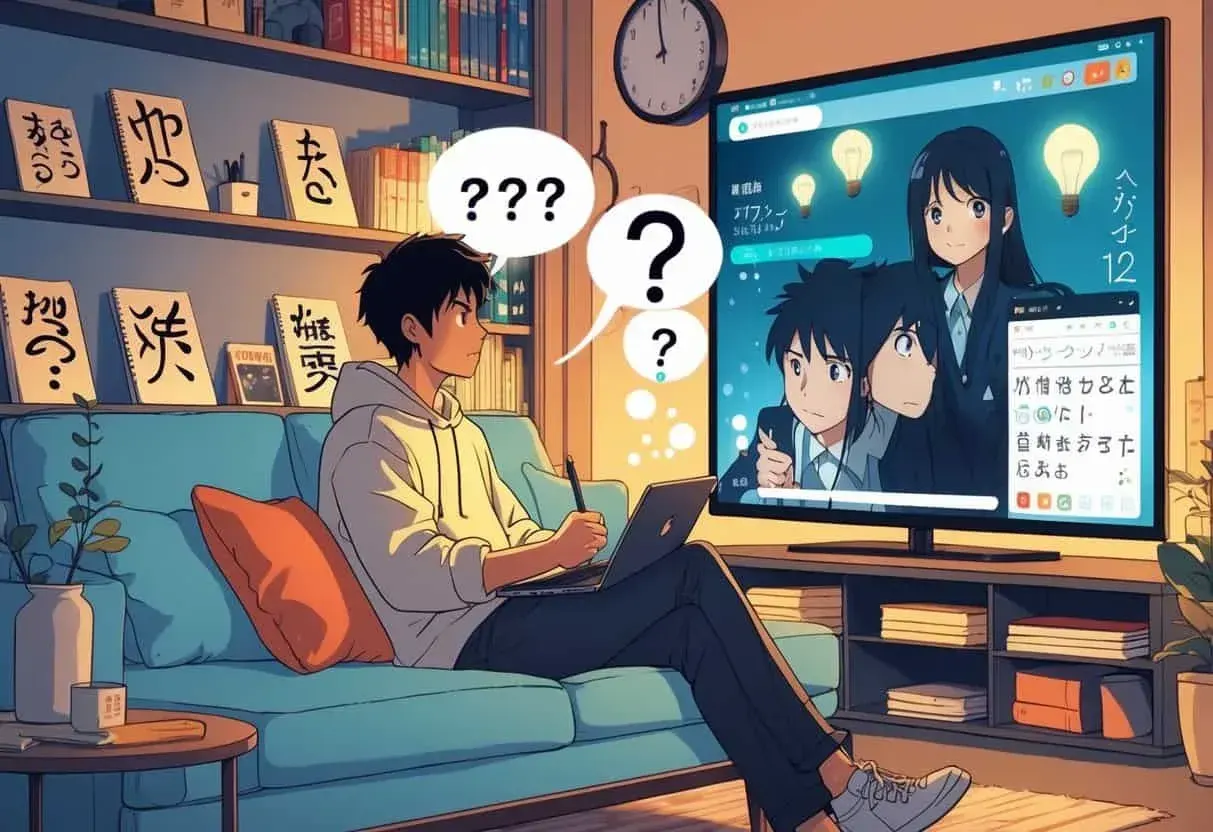
Anime drenches you in authentic speech rhythms, casual slang, and emotional intonation that no textbook can replicate. Yet it often leaves out the polite forms, business Japanese, and day-to-day transactional language you’ll need in real life. If you rely on anime alone, you risk developing a vocabulary that sounds like a character from a shonen battle series—fun, but not exactly practical at a konbini. The key is to use anime as a motivational side dish while building your core skills through deliberate study.
Beyond language mechanics, anime opens a cultural window that can deepen your understanding of why people speak the way they do. But like any window, it frames only part of the view. You’ll see one version of Japan, often filtered through dramatic storytelling. To get the full picture, you’ll want to cross-reference what you see with real cultural and linguistic resources. When you blend anime with structured learning, you turn a passive activity into an active, enriching tool.
Key Takeaways
- Anime improves listening comprehension and pronunciation, but it can’t teach you grammar on its own.
- It offers valuable cultural context, including etiquette, spiritual traditions, and folklore.
- Relying solely on anime leads to an unbalanced, often unnatural version of spoken Japanese.
- The most effective learners use anime alongside textbooks, speaking practice, and formal study.
- Active engagement—like shadowing, note-taking, and combining anime with other media—transforms entertainment into real progress.
Understanding the Japanese Language Through Anime

Anime throws you into a sea of spoken Japanese in countless tones, registers, and emotional states. From the rapid-fire banter of a high school comedy to the formal declarations of a period drama, you hear how the language flexes and breathes in different situations. That exposure alone is valuable, but only if you learn to dissect what you’re hearing.
Listening Skills and Pronunciation
Anime lets you eavesdrop on native speakers moving at full conversational speed—complete with natural rhythm, pitch accent, and regional quirks. This is a massive advantage for training your ear. You start to recognize where words begin and end, how particles get swallowed, and how intonation shifts depending on mood.
Slice-of-life shows like Shirokuma Cafe or Non Non Biyori often feature clear, moderate-paced speech, making them ideal for early listening practice. Fantasy and action series, on the other hand, can throw in exaggerated shouting, period-specific phrasing, and voices that bear little resemblance to everyday conversation. While that still builds your ability to parse fast speech, it won’t necessarily prepare you for a quiet chat at a café. Balance anime with NHK Easy Japanese audio lessons or news clips to cover the spectrum of real-world speech.
Vocabulary Context and Speech Patterns
Words in anime don’t appear in isolation; they come wrapped in situational context. You’ll see how a character switches from casual da-style speech with friends to the polite desu/masu form when facing a teacher, or how honorific and humble language (keigo) can convey respect, distance, or even sarcasm. That kind of contextual mapping is hard to get from a flashcard deck.
You’ll also pick up contractions and colloquial shortenings that textbooks rarely touch: ~てる instead of ~ている, ~ちゃった for ~てしまった, or the ubiquitous wakannai for “I don’t know.” But not everything you hear is safe to repeat. Characters in edgy or historical anime might use outdated samurai speech (de gozaru) or deliberately rough language that would sound bizarre in modern Tokyo. A quick check with a dictionary or a native speaker before adopting new phrases can save you from some awkward moments.
Limitations of Subtitles and Dubbing
Subtitles act like training wheels. They help you understand the story but can also keep you from truly listening. Many English subtitles simplify or even rewrite dialogue to match the timing and cultural expectations of a Western audience. Idioms get swapped, and nuance evaporates. If you’re relying on them, you’re often practicing reading, not listening.
Dubbed audio is an even bigger roadblock. When you swap out the original voices, you lose the connection between sounds and meaning in Japanese. Your brain gets zero native input. If you’re serious about learning, switch on Japanese subtitles (for reading and listening simultaneously) or, when you’re ready, turn them off entirely. The discomfort of not understanding every word is exactly what pushes your brain to adapt.
This method aligns with research on incidental vocabulary acquisition, which suggests that active engagement with authentic L2 audio leads to better retention than passive viewing with L1 subtitles.
Cultural Insights: What Anime Teaches About Japan
Language and culture are inseparable, and anime offers a vivid, if sometimes dramatized, introduction to the values, rituals, and stories that shape Japanese communication. Understanding these cultural layers helps you not only decode what people say but also why they say it.
Japanese Traditions and Etiquette
Watch a few episodes of any school-life anime, and you’ll notice a rhythm to social interactions that might feel formal to an outsider. Bowing isn’t just a casual nod; the depth and duration of a bow communicates everything from a quick greeting to a deep apology. Characters often remove their shoes at the entrance of a home, and you’ll spot details like the correct way to wear slippers—and when to take them off again.
Food-related phrases offer another layer. Saying itadakimasu before a meal and gochisousama after isn’t just polite; it reflects gratitude toward everyone involved in bringing the food to the table. You’ll also see seasonal traditions like hanami (cherry blossom viewing) or matsuri (festivals), where specific language and behaviors come into play. These visual cues build a mental map that makes the language feel more grounded when you encounter it. For a deeper dive into the reasoning behind these customs, the Japan Foundation’s cultural resources are a great companion.
Representation of Shintoism and Buddhism in Anime
Shinto shrines, vermilion torii gates, and Buddhist temples appear so frequently in anime that you might start to take them for granted. In Shinto, kami (spirits) inhabit everything from ancient trees to rivers, and anime often personifies these spirits as supernatural characters. Spirited Away is a masterclass in Shinto imagery, but even lighter shows like Natsume’s Book of Friends weave yokai and spiritual concepts into everyday life.
Buddhist themes surface in stories about reincarnation, impermanence, and karma. A character visiting a family grave during Obon isn’t just a plot device; it’s a reflection of how deeply Buddhism influences attitudes toward ancestors and the afterlife. Recognizing these motifs helps you understand the emotional weight behind certain phrases or ceremonial speech that might otherwise seem out of place.
Depictions of Mythology and Folklore
Japanese mythology is a treasure trove of colorful characters that pop up across genres. Kitsune (foxes with shape-shifting powers), tengu (bird-like goblins), and the mischievous tanuki aren’t just fantasy creatures—they come with centuries of folklore that inform their personalities and speech patterns in anime. A character referred to as a kitsune might be sly and eloquent, while a tengu might speak with arrogance, reflecting their folkloric nature.
Historical series often weave samurai codes of honor, loyalty, and tragic fate (hakanai) directly into the dialogue. When a character speaks of bushido or uses archaic phrasing, they’re not just being dramatic; they’re tapping into a narrative tradition that still resonates in modern Japanese identity. Having even a surface-level understanding of these myths makes the language feel richer and helps you pick up on subtle references that would otherwise fly under the radar.
Common Myths and Truths About Learning Japanese with Anime
A lot of well-meaning advice suggests that anime alone can carry you to fluency. That assumption crumbles the moment you step into a real conversation. Let’s separate the wishful thinking from what anime actually provides.
Misconceptions About Fluency and Training
“I’m going to become fluent just by watching anime.” That statement sounds attractive because it promises results without the grind. The reality is that anime dialogue is a curated performance—scripted, stylized, and designed to entertain, not to teach. It’s full of one-liners, exaggerated reactions, and vocabulary that even native speakers rarely use outside of specific subcultures.
If anime were enough, you’d expect passive viewers to develop the ability to form original sentences, hold a polite conversation, or read a simple article. Most can’t, because watching isn’t producing. Fluency demands that you actively build grammar, write, produce speech, and receive feedback. Anime can support that process, but it won’t drive it. A study on incidental learning from video showed that without intentional focus on language features, viewers tend to remember only a handful of high-frequency words and phrases.
That’s a far cry from functional fluency.
Differences Between Anime and Real-life Communication
Characters in anime communicate in ways that serve the story’s emotional arc, not real-world pragmatics. You’ll hear battle cries, dramatic monologues, and lines designed to crystallize a character’s personality in a single phrase. That’s entertaining, but it’s not how you’d ask for directions or make a reservation.
Real Japanese conversation is often more indirect, padded with hedging phrases like chotto… or sumimasen ga…, and heavily relies on reading the air (kuuki wo yomu). Anime often skips these subtleties for the sake of pacing. If you model your speech purely on anime, you risk sounding strangely blunt, overly casual, or even rude without meaning to. Mixing in authentic listening materials—like NHK World’s daily programs or YouTube channels by native Japanese speakers—will help you tune your ear to how people actually talk.
The Role of Serious Study and Responsibility
Treating anime as a reward rather than your primary lesson plan keeps motivation high while ensuring you don’t build a house on sand. Set a routine where anime viewing comes after, or is integrated with, structured study. For example, watch an episode, then look up five unfamiliar phrases, and plug them into a spaced repetition system like Anki.
Responsibility in learning means acknowledging that you’ll have to do things that aren’t as entertaining as watching a new episode. Grammar drills, kanji practice, and speaking with language partners are non-negotiable if you want real progress. Anime can fuel your enthusiasm, but it’s your deliberate practice that builds lasting skills.
How to Make Anime a Useful Learning Tool
When you stop treating anime as a passive escape and start using it as an active learning tool, the gains can be substantial. The trick lies in choosing the right content, combining it with other methods, and tapping into related hobbies to reinforce what you learn.
Choosing the Right Anime Genres and Settings
Not all anime are created equal for language learning. If you’re a beginner, focus on series grounded in everyday life. Slice-of-life titles like K-On!, Barakamon, or Yuru Camp overflow with natural dialogue about cooking, school, and social plans. The vocabulary is practical, and the speech pace is usually manageable.
Avoid anything set in a highly stylized world—mecha anime with made-up technical jargon, historical dramas with archaic speech, or comedies that rely on rapid-fire puns. Those can be fun later, but they’ll flood you with low-frequency words. Modern-setting romance or workplace anime also tend to feature realistic interactions. Keep a notebook handy while watching. Jot down phrases that grab you, note the context, and review them later.
Active viewing turns a passive habit into a mini-lesson.
Combining Anime with Other Study Methods
Anime shines brightest when paired with complementary resources. Use a textbook like Genki or Minna no Nihongo to build your grammatical foundation, then watch anime to spot those patterns in action. When you hear a character use the ~te iru form you just studied, the connection cements in your brain.
Shadowing—repeating dialogue out loud right after you hear it—is a powerful technique to improve pronunciation and fluency. Try it with short, clear lines from a character you find easy to imitate. Apps like Language Reactor (formerly LLN) let you display dual subtitles and pause on every line, turning Netflix or YouTube anime into an interactive study session. For writing practice, summarize an episode in your own words, then ask a native speaker on a platform like HelloTalk to correct it. The key is to never let anime be your sole input channel.
Diversify with podcasts, news articles, and conversations, and your brain will start making richer connections.
Fun With Cosplay, J-Pop, and Manga for Learning
Cosplay isn’t just about sewing skills and striking poses—it’s a gateway into deep cultural and linguistic engagement. When you embody a character, you naturally want to understand their speech patterns, catchphrases, and emotional range. That drives you to research the historical or fantasy context behind their lines, which often leads to discovering folklore, regional dialects, or archaic grammar you’d never find in a beginner’s textbook.
J-pop offers a more melodic entry point. Songs like those by Official Hige Dandism or Aimyon use colloquial language and emotional storytelling, making them excellent for picking up natural phrasing and intonation. Reading song lyrics while listening sharpens your kana and kanji recognition simultaneously. Manga, meanwhile, provides visual context that makes deciphering script easier, and many editions include furigana above kanji, so you can read without needing to know every character. Together, these hobbies create a low-pressure ecosystem where Japanese becomes a part of your daily joy rather than a chore.
For a structured guide on turning these interests into study material, check out Tofugu’s extensive learning resources.
Final Thoughts: Balancing Entertainment and Education
Anime can be a fantastic companion on your Japanese learning journey, but it’s a crutch if you lean on it too hard. The thrill of understanding a line without subtitles or recognizing a cultural reference is genuinely motivating—use that momentum to fuel your more disciplined study sessions. Let anime inspire you to dig deeper into grammar books, conversation practice, and kanji drills, not replace them.
Think of it like climbing a mountain: anime gives you a breathtaking view and reminds you why you started, but the boots, maps, and steady steps come from other tools. When you blend entertainment with intentional, structured learning, you build a sustainable routine that actually leads to fluency. So queue up that next episode, but keep your notebook, dictionary, and study plan within arm’s reach.