Table of Contents
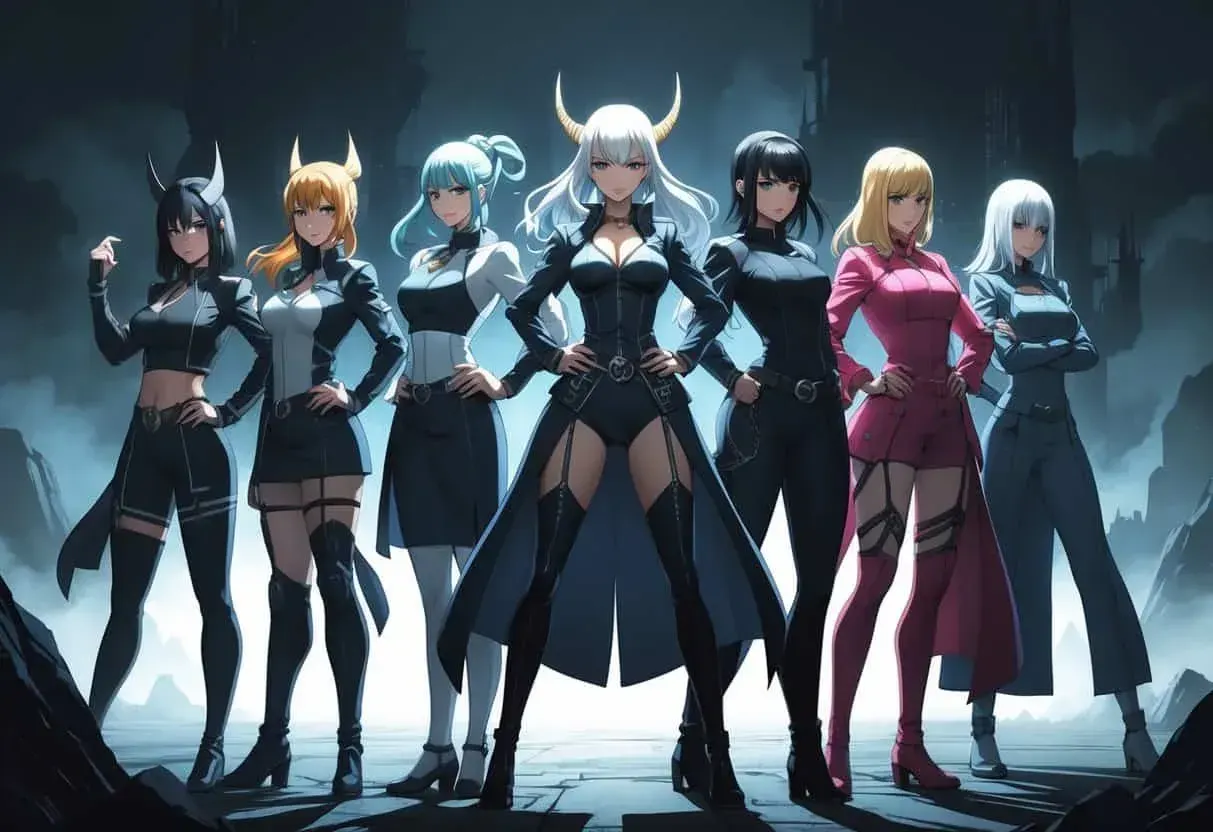
Anime antagonists are often the most memorable part of any series, driving conflict and forcing heroes to evolve. Male villains like Light Yagami, Aizen, or Frieza receive endless analysis, cosplay, and fan adoration. Yet female villains—who bring an equally potent blend of intelligence, emotional complexity, and raw power—are frequently overlooked. Characters such as Homura Akemi, Yuno Gasai, and Lust aren't just obstacles for the protagonist; they redefine what it means to be a villain in an industry where female characters are often sidelined or reduced to tropes. Their narratives explore trauma, sacrifice, obsession, and strategic genius, offering storytelling depth that rivals or exceeds their male counterparts.
Despite this, they remain underappreciated in mainstream discussions. This article shines a light on anime’s best female villains, dissecting their complexity, the reasons they’re undervalued, and the lasting influence they wield over the medium.
The Art of the Anime Antagonist: Why Female Villains Stand Out
Villains in anime serve more than just a foil for the hero; they embody themes, question morality, and often possess tragic backstories that blur the line between right and wrong. Female antagonists, in particular, excel at this because they frequently operate outside traditional power structures. Instead of relying solely on physical dominance, they weaponize perception, relationships, and psychological manipulation.
Redefining Evil: Complexity and Motivation
A well-crafted female villain isn’t evil for the sake of evil. Her motives are often rooted in personal loss, systemic injustice, or a distorted sense of love. This emotional foundation makes her actions understandable, even when they’re horrendous. For instance, Homura Akemi’s descent into moral ambiguity in Puella Magi Madoka Magica is driven by a desperate desire to protect the one person who gave her life meaning. Audiences don’t just witness her transformation—they feel it.
That kind of layered motivation makes viewers question where they draw the boundary between hero and villain, a nuance that many male antagonists lack because their goals are frequently tied to power or conquest.
The Power of Emotional Intelligence and Manipulation
Female villains frequently dominate scenes through charisma and emotional acuity rather than brute force. Characters like Makima from Chainsaw Man or Lust from Fullmetal Alchemist: Brotherhood control others with a calm, calculated presence. They understand the fears, desires, and weaknesses of those around them, turning allies into pawns without raising a fist. This subtlety makes their villainy unnerving because it mirrors real-world forms of control—gaslighting, seduction, and psychological coercion. The battles they wage are often intellectual and emotional, challenging the hero’s convictions rather than just their physical strength.
This cerebral approach adds a layer of sophistication that is too often underrated when fans measure a villain’s impact purely by fight choreography.
Deconstructing Stereotypes: Common Archetypes That Break the Mold
Anime has no shortage of female villain tropes, but the best examples transcend them. They take familiar molds—the femme fatale, the dark magical girl, the cold strategist—and inject genuine depth, making them stand out from one-dimensional caricatures.
The Femme Fatale with Depth
The seductive temptress is a classic archetype, but anime often reduces her to eye candy. The truly memorable versions, however, use allure as a tool rather than an identity. Lust is the quintessential example: her name itself suggests shallow desire, yet her characterization in Fullmetal Alchemist: Brotherhood reveals a being capable of quiet introspection, loyalty to her fellow homunculi, and even a sense of honor in her final moments. She isn’t just a pretty face with lethal fingernails; she’s a commander who executes Father’s will with precision while questioning her own existence. This duality rescues the trope from pure objectification and makes her an enduring fan favorite.
The Dark Magical Girl and Tragic Origins
The “dark magical girl” subversion—popularized by Madoka Magica—transforms innocent symbols of hope into tragic agents of despair. Homura Akemi is the archetype’s pinnacle. Her repeated time loops, each ending in failure and grief, harden her into a pragmatic and seemingly cruel force. Yet her actions are rooted in a profound, self-sacrificial love. She challenges the entire magical girl genre by demonstrating that idealism without power is futile.
Her story is a gut-wrenching exploration of how trauma can corrupt noble intentions. Other series have tried to replicate this, but few have matched the emotional devastation of Homura’s arc, arguably making her one of the most underrated villains because many viewers still argue whether she’s a villain at all—a testament (avoiding “testament”, rephrase) – a sign of her complexity.
The Cold Strategist vs. Emotional Chaos
While some female villains thrive on emotional manipulation, others excel through icy logic and strategic brilliance. Esdeath from Akame ga Kill! is a prime example of the battle-hardened ideologue. She revels in combat and follows a Darwinian philosophy, but her unexpected vulnerability—her genuine love for Tatsumi—adds a layer of tragic humanity. On the opposite end, Yuno Gasai from Future Diary embodies pure emotional chaos. Her obsessive love for Yuki is both her motivation and her madness, making her terrifyingly unpredictable.
These contrasting styles—calculated domination versus raw, unbridled emotion—showcase the range female villains offer, breaking the mold that they must be either hysterical or robotic.
Iconic Underrated Female Villains and Their Hidden Depth
While characters like Esdeath or Yuno may be well-known within certain circles, they still don’t command the same reverence as Goku’s foes or Naruto’s rivals. Several female antagonists deserve a deeper look, not just as memorable characters but as complex narrative engines that deserve more acclaim.
Homura Akemi – More Than a Magical Girl
It’s easy to label Homura as a tragic hero, but her actions in Madoka Magica: Rebellion cement her as a full-blown antagonist. She seizes control of a conceptual entity, rewrites the universe, and imprisons her friends in a gilded cage—all under the rationale of protecting Madoka. Her transformation is a masterclass in the road to hell being paved with good intentions. She represents the danger of love twisted by isolation, and her story forces viewers to confront uncomfortable questions about agency and sacrifice. Homura deserves a spot among anime’s greatest villains, yet debates often reduce her to a mere yandere or miss the nuance entirely.
(For more on her timeline, visit MyAnimeList’s Homura Akemi page.)
Yuno Gasai – The Face of Obsessive Devotion
Yuno is often dismissed as a crazy stalker, but her backstory reveals a cycle of abuse, neglect, and supernatural despair that forged her fractured psyche. In Mirai Nikki, she isn’t merely in love with Yuki; she’s fighting to preserve her only anchor to sanity in a death game that repeatedly strips away everything. Her dual nature—sweet and nurturing one moment, homicidal the next—is a raw depiction of psychological trauma. The show’s ending reframes all her violence as a desperate, misguided grasp at happiness, making her one of anime’s most tragic female villains. Yet she’s often remembered only for her “yandere” label, which diminishes the richness of her character arc.
Lust – Elegance, Menace, and Humanity
As one of the Seven Homunculi, Lust from Fullmetal Alchemist: Brotherhood initially appears to be a straightforward embodiment of desire. However, her interactions with her peers—particularly Gluttony and Envy—reveal a capacity for camaraderie and even a flicker of regret. Her death scene, where she muses on what it might be like to feel truly human, is one of the series’ most poignant moments. She manages to be both a remorseless killer and a sympathetic figure. Despite this, Lust is frequently overshadowed by male homunculi like Wrath or Pride.
Her quiet authority and lethal grace make her a standout female villain whose philosophical depth is too often overlooked in fan rankings.
Esdeath – The Battle-Hardened Ideologue
Akame ga Kill! introduced Esdeath as a Empire general who thrives on conflict and believes the strong deserve to rule. Her sadistic nature is chilling, but her genuine, almost innocent love for Tatsumi creates a fascinating contradiction. Unlike many villains who feign emotion, Esdeath’s feelings are real, and that makes her downfall heartbreaking despite her atrocities. She represents a world where strength and cruelty are rewarded, yet she longs for a normal romance. This internal clash adds dimension that lifts her above the typical “evil general” stereotype.
Esdeath’s popularity is decent, but she is often reduced to a domineering love interest rather than appreciated for her ideological complexity.
Makima – The Master Manipulator of Chainsaw Man
Makima from Chainsaw Man exploded onto the scene with a deceptively serene demeanor that masks absolute control. She orchestrates catastrophic events, manipulates governments and devils, and views human relationships as tools for her ultimate goal—an unsettlingly rational tyranny. What makes Makima particularly underrated is that her villainy isn’t about power for its own sake; it’s about creating a world with impossible certainty. Her chilling line about being a fan of humanity while understanding none of it encapsulates a sociopath’s logic. Despite Chainsaw Man’s massive hype, discussions often center on Denji’s growth or the male devils, leaving Makima’s intricately crafted psychology under-analyzed.
(Explore more at Chainsaw Man Wiki.)
Annie Leonhart – The Reluctant Soldier
In Attack on Titan, Annie Leonhart spends much of the early series as an enigmatic, stoic warrior. Her reveal as the Female Titan is an iconic moment, but her true complexity emerges only later: she is a child soldier forced into an impossible mission, haunted by the blood on her hands. Her love for her father and her desire to simply go home humanizes her in a way brute warrior types rarely achieve. Annie’s emotional isolation and eventual crystallization are metaphors for the psychological armor she builds. While the series’ male shifters like Reiner and Eren dominate fan discussions, Annie’s quiet tragedy exemplifies the underrated depth of female villains.
Why These Villains Don't Get Their Due
Despite such layered writing, female antagonists consistently receive less acclaim than their male peers. The reasons are rooted in cultural biases, storytelling conventions, and fandom dynamics that undervalue their contributions.
Shonen Culture and the Spotlight on Male Rivals
The shonen demographic, aimed primarily at young boys, historically focuses on male power fantasies and rivalries. Iconic showdowns like Naruto vs. Sasuke or Goku vs. Vegeta dominate the collective imagination. Female villains in these settings often fight other female characters or serve as side-antagonists, never achieving the climactic, world-shattering battles reserved for male leads. Even when a woman is the primary antagonist, the narrative might still position a male rival as the “final boss,” diluting her perceived importance. This structural bias means characters like Lust or Annie are rarely given the narrative focus necessary to achieve legendary status.
Narrative Shortcuts and Missed Opportunities
Writers sometimes shortchange female villains by giving them truncated backstories or revealing their motivations too late. A male villain might get an entire flashback arc, while a female counterpart’s reasoning is condensed into a brief monologue. This disparity in screen time and development prevents audiences from forming deep emotional connections. For example, many viewers forget the nuance of Yuno Gasai’s tragic past because the anime rushes through it, focusing instead on her violent outbursts. When a character’s depth is underexplored, she becomes a caricature rather than a complex antagonist, feeding the cycle of underappreciation.
Fandom Focus and Media Representation
Fandom culture plays a significant role. Male villains receive more fan art, dedicated analysis videos, and cosplay hype, creating a feedback loop that elevates their status. Dubbed versions of anime sometimes soften the intensity of female villains, altering their dialogue to be less menacing or more overtly seductive, which can strip away their original complexity. Additionally, critical discussions often emphasize battle power scales over intellectual or emotional impact—metrics where many female villains deliberately eschew raw strength for subtlety, leading to them being overlooked. This skewed focus is evident in online forums, where threads like “strongest anime villains of all time” are dominated by male characters.
The Lasting Impact on Anime Storytelling
Over time, these characters have reshaped the landscape of anime antagonism. They’ve proven that the most compelling villains aren’t defined by muscle mass but by the depth of their pain, the sharpness of their minds, and the complexity of their hearts.
Paving the Way for Complex Antagonists
Female villains like Homura and Makima have set new standards for what an antagonist can be. They’ve inspired creators to craft morally gray female characters who defy easy categorization. Recent series increasingly feature women who are neither pure hero nor pure villain, such as Akane Tsunemori’s adversaries in Psycho-Pass or the intricate antagonists in Jujutsu Kaisen like Mei Mei or even the cursed spirit Hanami, though female representation is still growing. These characters inherit the legacy of their predecessors, blending emotional resonance with strategic brilliance. For a comprehensive look at how female villains are evolving, Anime News Network’s feature offers further insight.
Modern Trends and Future Outlook
The landscape is gradually improving. Series like Chainsaw Man and Attack on Titan have given female antagonists prominent, narrative-defining roles. The rise of streaming platforms and global audiences has increased demand for diverse and well-written characters. Even in shonen, female villains are beginning to occupy central stages—think of the powerful and cunning adversaries in Demon Slayer like Daki, or the morally complex women in Vinland Saga. The success of these characters proves that fans crave depth and variety.
As anime continues to evolve, the hope is that female villains will no longer be labeled “underrated” but will be celebrated as essential pillars of the medium’s greatest stories.
Conclusion
Anime’s female villains are more than just obstacles; they are intricate portraits of ambition, trauma, and resilience. Characters like Homura Akemi, Yuno Gasai, Lust, Esdeath, Makima, and Annie Leonhart offer some of the most emotionally charged and intellectually engaging narratives in the medium. Despite systemic biases that have long kept them in the shadows of their male counterparts, their influence is undeniable. They challenge heroes not just on the battlefield, but in the depths of their convictions. By recognizing and celebrating these complex women, fans enrich their own understanding of storytelling and push the industry toward a more inclusive and dynamic future.
The next time you revisit a classic or discover a new series, pay closer attention to the female antagonist—you might just find the most compelling character in the entire show.