Table of Contents
Many anime revolve around a single protagonist whose journey defines the entire narrative. Yet some of the most compelling series succeed because they distribute the spotlight across a large, intricately connected cast. When done right, an ensemble approach doesn’t dilute the story—it enriches it with multiple viewpoints, layered relationships, and a constant sense that everyone has something meaningful to contribute. The best anime with ensemble casts give each character room to breathe, grow, and influence the direction of the plot, making the viewer feel they are watching a living, evolving community rather than just one hero’s path.
These series prove that character dynamics are not just a backdrop; they are the engine that drives conflict, triumph, and emotional payoff.
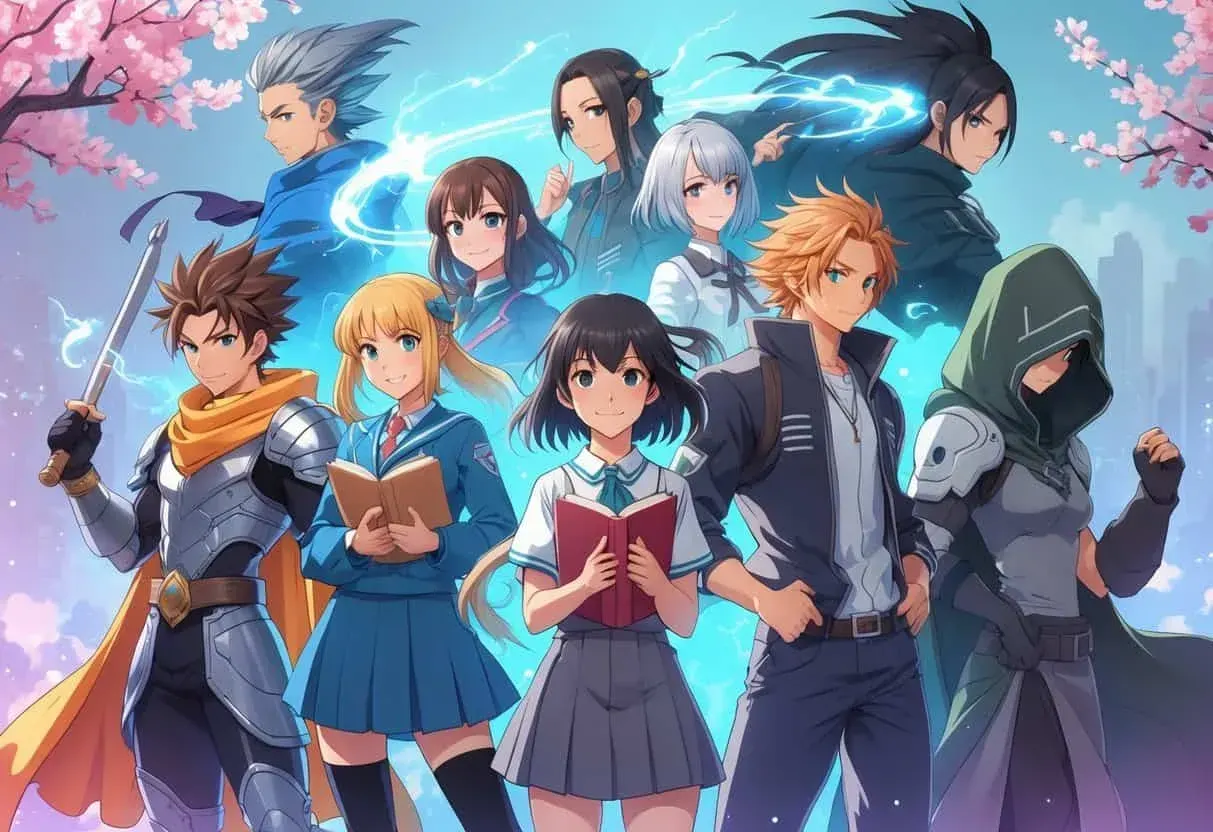
Think of long-running adventures like One Piece or sprawling battle shonen like My Hero Academia. The reason they maintain momentum across hundreds of episodes is not just plot twists or power-ups, but the sheer depth of their character rosters. A great ensemble keeps the story from growing stale because you’re invested in a whole network of hopes, fears, and personal quests. Teamwork becomes a genuine challenge, not a given. Conflicts arise from clashing motivations, not just external threats.
When you care about multiple characters, even a small conversation can carry enormous weight.
What Defines an Ensemble Cast in Anime?
An ensemble cast is not simply a large group of side characters. It’s a deliberate narrative structure where several characters share comparable prominence, screen time, and narrative influence. Instead of a single protagonist driving the action while others react, each member of the ensemble pushes the story forward through their decisions, relationships, and personal arcs. This results in a more intricate, decentralized form of storytelling that rewards viewers who pay attention to the interplay between personalities.
Beyond the Lone Protagonist
In a conventional single-lead story, secondary characters often exist to support the hero’s development or fill a specific role. An ensemble flips that model. The narrative custody passes from one character to another, allowing the audience to experience events from radically different angles. This means no single worldview dominates. You might see a battle through the eyes of a strategist, a pacifist, and a reckless brawler, each interpreting the same event in a way that reshapes your understanding of what’s really at stake.
This shared ownership of the story fosters a sense of collective responsibility. When something goes wrong, you can’t simply blame the hero’s mistake—it might be the result of a teammate’s hidden agenda, a breakdown in trust, or a failure to communicate. That complexity makes the narrative feel more unpredictable and human.
Narrative Complexity and Emotional Stakes
When multiple characters carry equal weight, the emotional landscape expands. Joy, grief, and tension are multiplied because you’re invested in several fates simultaneously. A victory for one character might come at a cost to another, forcing you to sit with morally ambiguous outcomes. This layered approach also allows series to explore themes that a single-protagonist story might only touch on: loyalty versus independence, the burden of collective expectation, or how group identity forms under pressure.
Subplots can branch off naturally, following a character’s personal history or a relationship that needs mending. Far from feeling like filler, these digressions enrich the main conflict by revealing how the group’s cohesion is constantly being tested and reforged. The best ensemble anime make you feel that the story is alive—no single thread is too thin to unravel if you pull on it.
Core Qualities of Unforgettable Ensemble Casts
A large cast alone doesn’t guarantee quality. What separates a forgettable group from a legendary one is a careful balance of individuality, chemistry, and narrative function. The following qualities consistently show up in the most beloved ensemble-driven series.
Distinct Personalities and Memorable Traits
In a crowded narrative, characters must instantly register as unique. This goes beyond visual design—it’s about voice, mannerisms, core motivations, and the contradictions that make them feel real. A stoic warrior who secretly loves cute things, a genius who crumbles under social pressure, a loudmouth whose bravado masks deep insecurity—these sharp outlines help the audience track multiple arcs without confusion. When every character has a recognizable internal hook, switching between their perspectives feels seamless rather than disorienting.
Deep Interpersonal Bonds and Dynamics
Memorable ensembles thrive on relationships that evolve over time. Friendship, rivalry, mentorship, resentment, and reconciliation form a web that catches the viewer’s empathy. The best series show characters not just fighting together, but learning to understand one another’s limits and strengths. Loyalty isn’t stated; it’s earned through shared trauma, small kindnesses, and moments of mutual vulnerability. When a break occurs—a betrayal, a separation—it stings precisely because the bond had been built so carefully.
Watch for scenes where two characters simply talk without advancing the plot directly. Those quiet exchanges often do more to cement an ensemble’s chemistry than any action sequence. They remind you that these people genuinely exist to each other, not just to the audience.
Balanced Contributions and Team Synergy
Nothing kills an ensemble faster than one character solving every problem alone. The most satisfying casts distribute competencies so that the group’s effectiveness depends on genuine collaboration. A strategist might devise the plan, a medic keeps everyone on their feet, a brawler holds the line, and a diplomat sways potential allies. Everyone has a clear domain where they shine, but no one is omnipotent. This interdependence makes every victory feel earned and every loss a consequence of the group’s collective limits.
The synergy often extends beyond combat. Emotional support, comic relief, moral grounding—these softer roles are just as important. A well-constructed ensemble recognizes that a team is more than a collection of fighters; it’s a fragile ecosystem that needs tending.
Iconic Anime Series with Masterful Ensemble Casts
Several anime have set the standard for what an ensemble can achieve, using large casts not as decoration but as the very substance of the story. The following series exemplify how distinct character dynamics create unforgettable viewing experiences.
One Piece: A Crew United by Adventure
Eiichiro Oda’s One Piece remains the gold standard for ensemble-driven long-form storytelling. The Straw Hat Pirates are a family of misfits, each carrying a private dream that aligns with the larger quest for the titular treasure. Luffy, Zoro, Nami, Sanji, and the rest each receive dedicated arcs that peel back their pasts and push them toward growth. The brilliance of the cast lies in how their individual goals never feel subordinated to Luffy’s ambition; instead, the crew’s bond is strengthened because they actively help each other chase disparate goals.
Oda constantly rotates character focus, so no one fades into the background for too long. The series also introduces temporary ensemble members—allies in various arcs—who add fresh dynamics without diluting the core group’s chemistry. After over two decades, the emotional investment in the Straw Hats remains incredibly high because their relationships feel lived-in and deeply reciprocal.
My Hero Academia: A Classroom Full of Heroes
In My Hero Academia, Kohei Horikoshi uses the structure of U.A. High School to assemble a sprawling cast of aspiring heroes. Class 1-A alone contains twenty students, each with a distinct Quirk and personality. The series distinguishes itself by systematically giving nearly every student a moment to prove their worth—whether through combat, rescue missions, or personal crises. Characters like Bakugo, Todoroki, and Uraraka don’t exist merely to support Deku; their arcs run parallel and intersect in ways that constantly reshape the group dynamic.
The rivalries and friendships within the class mirror real adolescent social structures, making the stakes feel emotionally immediate. By placing the ensemble in a school setting, the series gains a natural framework for growth, testing, and shifting alliances, all while maintaining a cohesive narrative about what it means to be a hero collectively.
Fullmetal Alchemist: Brotherhood: Bonds Forged by Sacrifice
Hiromu Arakawa’s Fullmetal Alchemist: Brotherhood is often praised for its tight plot, but its ensemble is equally masterful. Edward and Alphonse Elric may be the entry points, but the supporting cast—Roy Mustang, Riza Hawkeye, Winry Rockbell, Scar, the homunculi—all operate with their own agendas and moral codes. The series weaves these threads into a narrative where military politics, personal revenge, and philosophical questions about sacrifice collide.
What makes this ensemble remarkable is the moral ambiguity that permeates every faction. Allies can become obstacles; enemies can become sympathetic. The series never allows you to settle into a simple “good vs. evil” framework because each character’s motivations are grounded in understandable pain or conviction. This moral complexity elevates group interactions into something far more thoughtful than standard battle alliances.
Fruits Basket: Emotional Resonance in the Sohma Family
Natsuki Takaya’s Fruits Basket presents an ensemble whose drama is almost entirely emotional and psychological. Tohru Honda enters the enigmatic Sohma family, whose members are cursed to transform into zodiac animals. What follows is a delicate, slow-burn exploration of trauma, forgiveness, and the desperate need for acceptance. Each Sohma carries a distinct wound—abandonment, self-loathing, fear of intimacy—and Tohru’s presence acts as a catalyst for them to confront these demons.
The series excels because it treats every family member as a lead in their own right. Episodes shift focus to Yuki, Kyo, Hatori, Rin, and others, giving their pain full narrative weight. The ensemble’s strength lies in its patience; healing is never rushed, and the quietest conversations often shatter the most walls. This approach creates an intimate, deeply moving portrait of how broken people can slowly rebuild themselves together.
Attack on Titan: Fractured Alliances in a Brutal World
Hajime Isayama’s Attack on Titan begins with a tight trio—Eren, Mikasa, and Armin—but rapidly expands into a brutal ensemble drama. The military ranks swarm with distinct personalities: Levi, Hange, Erwin, Jean, Sasha, and many more. The series’ genius is how it then shatters expectations by revealing that some of these familiar faces are not who they claimed to be. Allies become antagonists, enemies become tragic figures, and the entire concept of a united front crumbles.
Isayama uses the ensemble to explore the corrosive effects of ideology, nationalism, and historical trauma. No bond is safe; no group identity survives unscathed. The constant churn of loyalties and betrayals keeps the narrative relentlessly tense, forcing you to question every character’s motives. In such a landscape, the rare moments of genuine connection feel almost radical—earned through immense suffering and costly choices.
Haikyuu!!: Volleyball as a Unifying Force
Sports anime often thrive on ensemble energy, and Haruichi Furudate’s Haikyuu!! is a prime example. Karasuno High’s volleyball team is a collection of wildly different players—Hinata’s explosive enthusiasm, Kageyama’s demanding genius, Tsukishima’s cool cynicism, and the reliable leadership of Daichi and Sugawara. The story never reduces anyone to a trope; each player struggles with their own insecurities, whether it’s physical limitations, past failures, or fear of being surpassed.
The beauty of the ensemble is how the team’s sync evolves through practice and matches. A single receive, a perfectly timed toss, a block that finally connects—these small moments accumulate into profound trust. The series shows that a team is not a machine but a living, breathing organism that needs emotional maintenance as much as physical training. Opposing teams also receive substantial development, making every match feel like a clash of equally complex microcosms.
The Evolution of Ensemble Storytelling in Modern Anime
Recent years have brought fresh approaches to ensemble casting, influenced by streaming platforms, changing audience expectations, and a willingness to experiment with narrative form. The definition of “ensemble” has expanded, sometimes in unexpected directions.
Streaming Services and Global Access
Services like Netflix, Crunchyroll, and Hulu have lowered barriers to entry for ensemble-heavy series, allowing audiences to binge entire seasons and absorb character arcs in concentrated doses. This distribution model rewards series that invest heavily in side characters, because viewers can follow intricate interpersonal threads without the gaps of weekly broadcast schedules. It also encourages creators to build wider, more diverse casts, knowing that the global market has an appetite for multifaceted stories.
Shows like Dorohedoro and Ranking of Kings have gained international followings largely due to their offbeat ensemble dynamics, proving that a strong group can anchor even the most unconventional premises. The ability to stream complete seasons means that character-designed subplots feel less like distractions and more like essential textures of a world you can inhabit at your own pace.
Deconstructing Traditional Team Structures
Modern anime often subverts the classic “heroes unite against a common foe” template. Some series assemble their casts from former enemies, rivals, or individuals with irreconcilable values, forcing cooperation under extreme duress. This churn creates an atmosphere of constant uncertainty. Alliances are temporary, and a team’s composition might shift multiple times within a single season.
This trend can be seen in works like Jujutsu Kaisen, where sorcerers and cursed spirits share the spotlight, and Chainsaw Man, where the lines between public safety operatives and the monsters they hunt blur. By refusing to settle into a stable group, these narratives keep the tension high and make every interaction feel volatile. The audience learns to appreciate fleeting connections because nothing is guaranteed to last.
The Anti-Ensemble: When Small Casts Deliver Big Drama
Not every impactful ensemble needs a dozen members. Death Note demonstrates how a concentrated cast can generate immense ensemble energy through sheer intellectual intensity. The duel between Light Yagami and L is a masterclass in psychological interplay. While the main cast remains small, the supporting figures—Misa, Ryuk, Near, Mello—add layers of unpredictability and moral commentary without overcrowding the narrative.
The series thrives on exclusion: by keeping the inner circle tight, every gesture and line of dialogue is loaded with meaning. The dynamic between Light and L feels like a chess match in which each move ripples through the entire cast, altering everyone’s position. This approach proves that ensemble storytelling is not about headcount; it’s about the density and quality of relationships, no matter how few the players.
An ensemble cast, when crafted with care, transforms an anime from a simple sequence of events into a rich tapestry of human connection. It allows stories to breathe in multiple directions, encourages empathy for a range of perspectives, and provides a steady supply of emotional surprises. Whether it’s the sprawling adventure of One Piece or the intimate pressure cooker of Death Note, the principle remains the same: invest in your characters, give them genuine conflicts with one another, and trust the audience to follow. The result is a narrative that feels perpetually alive, where every relationship matters and no one is ever truly disposable.