Table of Contents
When anime and food brands collide, the result is a feast for the senses—and the shelf. Unlike traditional merch, these collaborations don’t just give you a figurine to dust; they invite you to eat, drink, and live the fandom. Over the past five years, limited-edition snack packagings, themed restaurant pop-ups, and instant noodle cups featuring beloved characters have surged in popularity, turning everyday pantry items into collector’s must-haves. From Cup Noodles x Naruto to One Piece chip bags, these partnerships go beyond a logo slap; they weave storytelling, nostalgia, and culinary culture into something fans queue up for—both in-store and online.
The beauty of anime food collabs is how they bridge fantasy and daily life. When you peel open a ramen cup designed with the Hidden Leaf Village crest or bite into a cookie stamped with the Survey Corps emblem, you’re not just consuming a snack—you’re tasting a piece of the world you love. This emotional connection, coupled with genuine scarcity, makes these products irresistible to casual viewers and hardcore otaku alike. And as brands realize the global pulling power of anime, the pace of these partnerships is only accelerating.
The Magic Behind Anime Food Collabs
Anime itself is deeply tied to food culture. Naruto’s obsession with ramen, Food Wars!’s over-the-top cooking sequences, and the ubiquitous onigiri in slice-of-life shows have turned Japanese cuisine into a character of its own. Food brands tap into this built-in appetite by aligning their products with iconic moments. For instance, Cup Noodles didn’t just pick Naruto randomly; the protagonist’s love for ichiraku ramen made the collaboration feel organic, not forced. Similarly, Demon Slayer x KitKat released red bean paste-flavored bars, a nod to traditional wagashi that fits the Taisho-era setting of the series.
These collabs also thrive on exclusivity. Runs are intentionally small, often tied to seasonal events, movie premieres, or anniversaries. The scarcity drives FOMO (fear of missing out) and turns a simple snack into a coveted trophy. Social media amplifies this, with unboxing videos and haul photos spreading awareness faster than any ad campaign. A Japanese food industry report noted that anime tie-ins can boost sales of a participating snack by up to 30% during the promotion period, a figure that makes marketing teams sit up and listen.
Iconic Partnerships That Redefined Anime Merch
Cup Noodles x Naruto: The Ramen Collab That Started It All
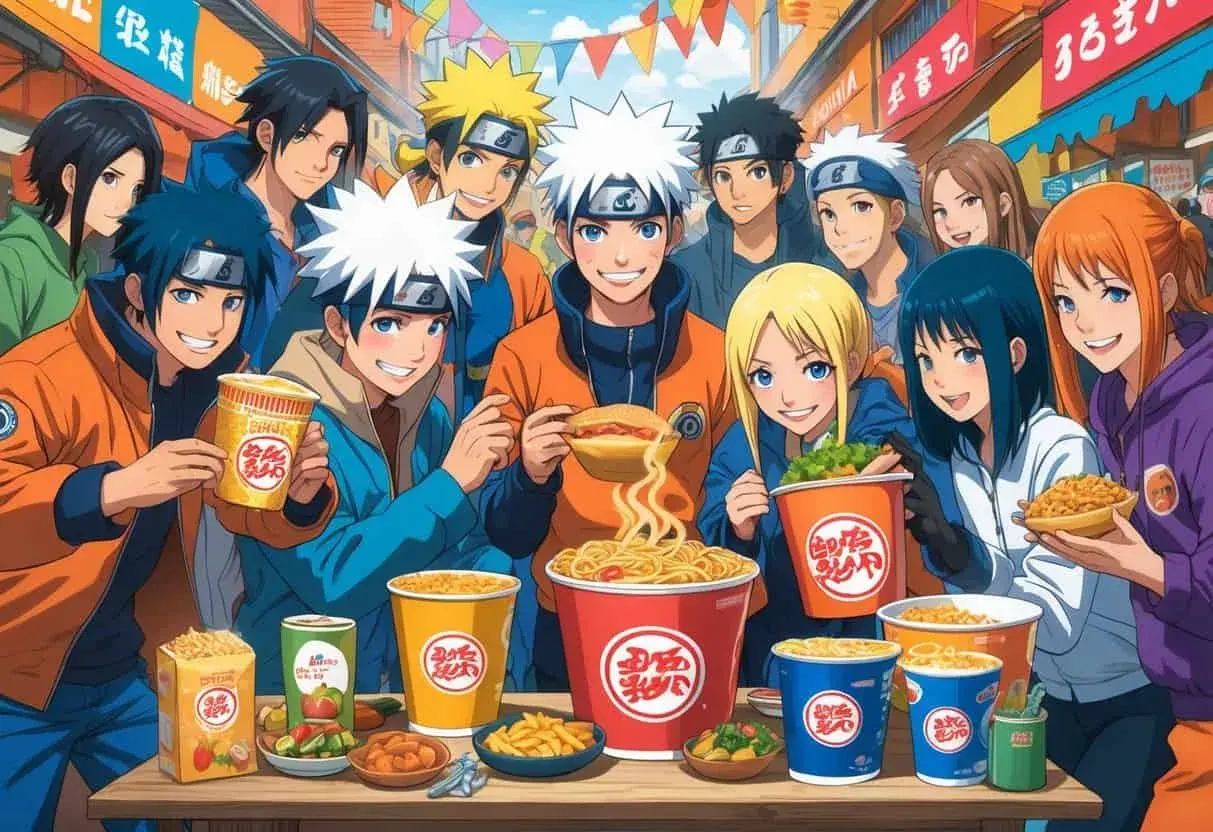
Few pairings feel as predestined as Cup Noodles x Naruto. The series’ hero, Naruto Uzumaki, declares ramen as his favorite food from episode one, often seen slurping bowls at Ichiraku Ramen. In 2020, Nissin Foods launched a special line of “Naruto Shippuden Cup Noodles” that captured both the character’s spirit and the practicality of instant ramen. The cups came in flavors like soy sauce and miso, but the real draw was the packaging: each container featured dynamic artwork of Naruto, Sasuke, Sakura, and Kakashi, often with action poses and the iconic Konoha forehead protector.
Later waves introduced holographic lids, collectible spoons shaped like kunai, and limited-time bundles that included a ramen bowl replica from the Ichiraku shop. These weren’t just thrown in; they were faithful reproductions that made fans feel like they were sitting at the counter beside Team 7. As Anime News Network reported, the sellout happened within days, and secondhand prices for the empty cups shot up on Mercari. This collab proved that a food container could be genuine anime merch. The Nissin x Naruto campaign became a blueprint for countless sequels, including recent Demon Slayer and Jujutsu Kaisen tie-ins.
One Piece x Lotte and Calbee: Snacking With the Straw Hats
One Piece has crewed up with nearly every major Japanese snack manufacturer. Lotte’s “Koala’s March” cookies released limited tins featuring Luffy and Chopper, while Calbee’s potato chips came in bags printed with Wanted posters. In 2023, a collaboration with Glico produced Pocky boxes that mimicked the Going Merry’s flag. Each box contained a random holographic sticker of the Straw Hat pirates, triggering a collector frenzy.
The flavors, while standard (grilled seaweed, chicken consomme), became secondary to the packaging artistry. Fans often preserved the empty bags in protective sleeves, treating them like posters. On resale platforms, a complete set of all nine crew-member Pocky boxes could fetch over ¥15,000. This collecting behavior highlights how these collaborations transform ephemeral consumables into permanent keepsakes. Crunchyroll’s coverage of the Glico event detailed the long lines at Tokyo’s Shibuya pop-up, where staff dressed as pirates distributed samples.
The experience became a destination, not just a purchase.
Attack on Titan Confections: Dark and Dramatic Treats
With its grim tone and colossal stakes, Attack on Titan might seem ill-matched for lighthearted snacks, yet the collaborations proved that contrast sells. Bandai’s “Shingeki no Kyojin Choco Snack” came in narrow boxes resembling the Vertical Maneuvering Equipment blades, each containing bite-sized chocolate pieces embossed with the Wings of Freedom. Another release, a collaboration with Meiji, offered hexagonal chocolate boxes styled like Titan faces. The grimaces of the Colossal Titan and the armored visage of the Armored Titan adorned the wrappers, making the sweets feel daring and collectible.
Limited flavors like black cacao and smoked salt echoed the show’s bleak atmosphere. On the merch side, purchases over a certain amount at participating convenience stores unlocked exclusive AoT keychains shaped like blades. These partnerships demonstrated that even a horror-tinged anime could blend with food, as long as the packaging reflected the series’ aesthetic integrity. The fan response on Twitter and Instagram showed how crucial atmosphere is—fans praised the way the snacks “looked like something from inside the Walls.”
Demon Slayer x KitKat: Regional Sweets With Japanese Soul
KitKat Japan has long used its chocolates as a canvas for local flavors and pop culture. The Demon Slayer collaboration raised the bar by releasing not just one, but an entire series of bars tied to the characters’ elemental breathing techniques. The “Water Breathing” bar was mint-flavored, “Flame” was spicy chili, and “Thunder” was a citrusy lemon. Each box featured art of the corresponding Hashira, transforming a convenience store staple into a mini art piece.
In a particularly thoughtful move, the KitKat x Demon Slayer set was bundled with a fold-out paper diorama of the Mugen Train, reinforcing the movie tie-in. Fans could collect all bars to build a complete scene—a tactic that combined food, craft, and fandom. The campaign was so successful that Nestlé Japan expanded it globally, cementing KitKat’s reputation as the king of anime edible merch. As noted in SoraNews24’s taste test, the flavors were surprisingly authentic, and the reusable boxes became desk ornaments.
Hello Kitty’s Global Snack Empire
While not strictly an anime in the narrative sense, Hello Kitty’s omnipresence in Japanese pop culture makes her food collabs foundational to this trend. Sanrio has partnered with everything from McDonald’s Happy Meal toys to high-end Godiva chocolates. The 2021 Hello Kitty x Pocky collaboration released biscuit sticks dipped in strawberry cream, packaged in boxes that could be folded into a Kitty-shaped stand. In Europe, McVitie’s Hello Kitty biscuits appeared with edible character prints, appealing to kids and nostalgic adults alike.
The genius of Hello Kitty collaborations lies in their broad appeal. A mother might buy a Kitty-themed cake mix because her child loves the character, only to discover the cake tin is a limited edition with a bow-shaped handle worth keeping. This “purchase for consumption, keep for collection” mentality underlies the entire anime food merch ecosystem. Hello Kitty normalized crossover culture for food brands worldwide, paving the way for more niche anime to enter the grocery aisle.
Beyond Packaging: The Collectibles Inside
Limited Edition Packaging as Functional Art
Walk through any Akihabara specialty store and you’ll see empty snack bags framed on walls, priced like comic books. The packaging design in anime food collabs is so meticulous that it doubles as memorabilia. Cup noodle lids that form a panoramic battle scene when collected, chip bags with metallic foil highlights, or ramen bowls printed with invisible ink that reveals a character when hot water is added—these features transform disposable containers into treasures. Fans often wash, flatten, and archive them in trading card sleeves.
The value of empty packaging can skyrocket. After the Jujutsu Kaisen x Fanta collaboration ended, an unopened can of the specially designed “Cursed Energy Soda” sold for $40 on eBay, not for the drink but for the holographic Gojo design. This secondary market feeds the hype cycle: people who missed the initial release will pay a premium, ensuring that even those who don’t drink soda want a can. Brands are aware of this; they intentionally commission high-profile illustrators to create the art, making the packaging an extension of the anime’s original visual identity.
Tableware and Utensils That Tell a Story
Physical dinnerware adds a tactile layer that pure packaging can’t match. Ramen shops that run Naruto events often serve noodles in bowls shaped like the toads from Mount Myoboku, complete with spoon rests in the form of a miniature Gamabunta. Themed chopsticks—whether they’re red and black like Tanjiro’s earrings or feature a tiny crow motif for Haikyuu!!—become functional tools and display items. A notable 2022 Spy x Family collaboration with a curry chain gave out Anya-designed spoons that fans proudly posted alongside their plushies.
These utensils are usually made from durable melamine or bamboo, not flimsy plastic, signaling that they’re built to last as everyday items. A set of Your Name branded chopsticks from a café collaboration in Gifu prefecture is still regularly used by fans years later, merging daily ritual with fandom. The longevity of such items contrasts sharply with edible goods, creating a hybrid model where the meal might be fleeting, but the cutlery stays.
Manga-Inspired Extras and Mini-Artworks
Some of the most delightful surprise bonuses are paper goods—mini manga chapters, exclusive keyframes, or postcard sets hidden inside food packages. In 2021, a My Hero Academia rice cracker bag included a random “hero license” card printed with original manga-style artwork. Similarly, Tokyo Revengers snack packs contained tiny wanted posters for characters, encouraging fans to trade and complete the collection.
These inclusions do double duty: they make the snack feel like a lucky bag, and they tie directly into the series’ narrative cues. A Fullmetal Alchemist chocolate bar once came with a circular “transmutation circle” medallion that, when assembled with four others, formed a 3D symbol. This kind of iterative collecting leverages the same psychology as gacha machines, but with the added selling point that the food inside is often delicious. A consumer might buy five bags not just for the chocolate, but to finally get the rare Alphonse icon card. The sustained repeat purchase is a marketer’s dream.
How Social Media Multiplies the Frenzy
Unboxing and the Birth of Food Merch Influencers
Platforms like TikTok and YouTube Shorts have turned snack opening into performance art. Influencers dedicated to Japanese snack boxes regularly unbox limited collabs, showcasing every detail from the crackle of the wrapper to the faint print on the inner foil. When the Chainsaw Man x Burger King campaign launched in Tokyo, a single unboxing video of the “Devil Burger” combo meal garnered 2.3 million views in a week, sparking global demand for the Pochita-shaped nugget containers.
Hashtags like #AnimeFoodMerch and #CollabCupNoodle aggregate tens of thousands of posts, creating a searchable archive of what’s available and what’s sold out. This organic reach is priceless for brands, who no longer need to blanket TV with ads; a well-timed tweet from the official anime account sets the world on fire. The social landscape also allows niche partnerships—such as Laid-Back Camp with a regional miso producer—to find their exact audience without massive overhead.
Fan Reviews and Community-Driven Hype
On Reddit communities like r/AnimeFigures and r/AnimeSnacks, users post brutally honest reviews. They dissect the texture of a One Piece biscuit, the chemical aftertaste of a limited soda, or the sturdiness of a Demon Slayer printed bento box. This grass-roots critique shapes purchasing decisions far more than a polished press release. If a particular collab’s food is inedible but the packaging gorgeous, the community will say so—and that honesty actually enhances trust. People buy for the collectible anyway.
Furthermore, the conversation extends to modding and repurposing. Users share tutorials on how to turn an emptied Dragon Ball ramen bowl into a planter, or how to frame a flattened snack bag without damaging the foil. This maker culture adds a creative layer that sustains interest long after the food is gone. The collaborative spirit of fandom turns a commercial product into a shared craft project, reinforcing brand loyalty in ways traditional merch cannot.
Why the Crossover Works: Emotional Beats and Cultural Roots
At its core, anime food merch thrives because it connects with something elemental: the love of a good story and the comfort of eating. Many series anchor emotional turning points around meals—a near-death experience followed by a bowl of rice, a festival scene brimming with fried octopus, a simple family dinner. By purchasing a themed snack, fans symbolically partake in those narratives.
Moreover, Japanese food culture places a high premium on presentation and seasonality. Limited-time sakura-flavored KitKats or autumn chestnut ramen cups align with shun, the celebration of seasonal ingredients, giving the collaboration an added layer of cultural authenticity. International fans, too, are drawn to this aesthetic, often saving the packaging not just for the character but for the elegant calligraphy or seasonal motifs. The success of these partnerships outside Japan—think of the Naruto ramen kits sold at Walmart in the U.S.—proves that the appeal is global.
What Comes Next for Anime Food Collabs
The trend shows no sign of slowing. Augmented reality is beginning to enter the scene: a recent Cyberpunk: Edgerunners energy drink can, when scanned with a phone, played a short animation. Digital tie-ins like redeemable codes for in-game items in a gacha game alongside a physical snack are becoming standard. Meanwhile, sustainability is a growing concern; some brands are shifting to reusable containers or packaging that can be folded into a display stand, reducing waste while adding value.
As anime continues its march into the mainstream, expect more unexpected duos—imagine a Studio Ghibli tea line or a Sailor Moon crystal-shaped candy jar. The boundary between nourishment and nostalgia will keep blurring, and fans will happily clear the shelves. The next time you visit a Japanese supermarket or browse an import site, your favorite character might be sitting right there in the snack aisle, ready to join your daily routine and your collection.