Table of Contents
Introduction
Anime and Western cartoons both sit under the umbrella of animated entertainment, but the experiences they deliver are shaped by distinct artistic philosophies, production methods, and cultural expectations. Anime typically emphasizes serialized storytelling, emotional depth, and meticulously crafted artwork, while Western cartoons have historically leaned toward episodic comedy, fluid motion, and stylized simplicity. These differences are not arbitrary; they arise from over a century of separate evolution in Japan, North America, and Europe. Recognizing them helps viewers appreciate why a Studio Ghibli film feels entirely different from a classic Disney feature or a primetime Cartoon Network series, even though both are fundamentally collections of drawings given life.
When you watch an anime series, you are likely encountering a medium capable of handling complex social commentary, philosophical themes, and a deliberate narrative pace that unfolds over multiple seasons. In contrast, many Western cartoons were built around the constraints of television scheduling and toyetic commercial goals, leading to self-contained episodes and broad physical humor. Today those boundaries are blurring—streaming platforms have pushed Western animation toward richer continuity, and many anime productions target global audiences directly. Still, the core distinctions in visual language, sound design, and narrative ambition remain informative guideposts for anyone trying to understand why these two animation traditions feel so different.
Origins and Cultural Influences
Historical Development in Japan
Anime’s roots trace back to early 20th-century experiments with short animated films in Japan, but the medium as we know it solidified after World War II under the profound influence of Osamu Tezuka. Often called the “god of manga,” Tezuka borrowed cinematic techniques from Western animation studios such as Disney, but adapted them to Japan’s economic constraints. His pioneering television series Astro Boy (1963) introduced a production model based on limited animation—fewer drawings per second—combined with strong storyboarding and emotionally expressive character design. This cost-saving strategy became the industry standard, enabling studios to produce long-running, narrative-driven series that would have been impossible with full animation budgets.
The symbiotic relationship between anime and manga (Japanese comics) is another foundational pillar. Many of the most celebrated anime are direct adaptations of serialized manga, which often run for years and gather dedicated fan communities before a single frame is drawn. This pipeline gives anime a reservoir of detailed, long-form stories spanning every genre imaginable, from gritty crime thrillers and meditative slice-of-life dramas to sprawling space operas. As a result, Japanese animation never became pigeonholed as “children’s entertainment”; it naturally developed demographic categories such as shonen (young boys), shojo (young girls), seinen (adult men), and josei (adult women), each with its own narrative expectations and visual codes.
Historical Development in the West
Western animation’s trajectory was shaped by the theatrical short and, later, by television. The early Disney and Warner Bros. studios invested in full animation techniques that prioritized smooth, fluid motion and expressive squash-and-stretch principles. Characters like Mickey Mouse and Bugs Bunny became global icons built on visual comedy and broad appeal. As television rose in the 1950s, studios such as Hanna-Barbera developed cost-saving limited animation methods for TV, but the cultural mindset remained largely oriented toward creating entertainment for children—Saturday morning cartoons, after-school blocks, and toy tie-ins.
In North America and Europe, cartoons were predominantly seen as a kids’ medium until late into the 20th century. The rare exceptions, such as Ralph Bakshi’s countercultural films or the satirical edge of The Simpsons, began to crack that perception. Even so, the infrastructure and funding models—driven by advertising, merchandise, and strict broadcasting standards—encouraged episodic formats where a status quo could be reset every week. This business logic rewarded shows that could be watched in any order, unlike the serialized sagas that became anime’s trademark.
Cultural Themes and Societal Reflections
Because anime emerged from a culture with deep-rooted traditions of subtle expression, mono no aware (the awareness of impermanence), and collective identity, its stories often dwell on internal conflict, moral ambiguity, and the passage of time. Works directed by Hayao Miyazaki and Studio Ghibli frequently explore environmentalism, pacifism, and the loss of innocence without offering easy resolutions. Even mainstream shonen titles like Naruto or Attack on Titan thread themes of loneliness, systemic corruption, and generational trauma through their action-packed premises.
Western cartoons, by contrast, have historically channeled American and European values of individualism, optimism, and clear moral dichotomies. The hero’s journey is often external: a problem appears, the protagonist overcomes obstacles through plucky determination, and a lesson is learned by the end of 22 minutes. Satirical adult shows later inverted this formula, yet the hallmark of Western animation remains a kind of energetic levity. Even when tackling serious issues—like the allegorical racism in Zootopia or the puberty metaphors in Turning Red—the packaging remains accessible, fun, and carefully calibrated for a family-friendly rating. These cultural priorities seep into every aspect of design and pacing.
Artistic and Technical Differences
Character Design and Visual Aesthetics
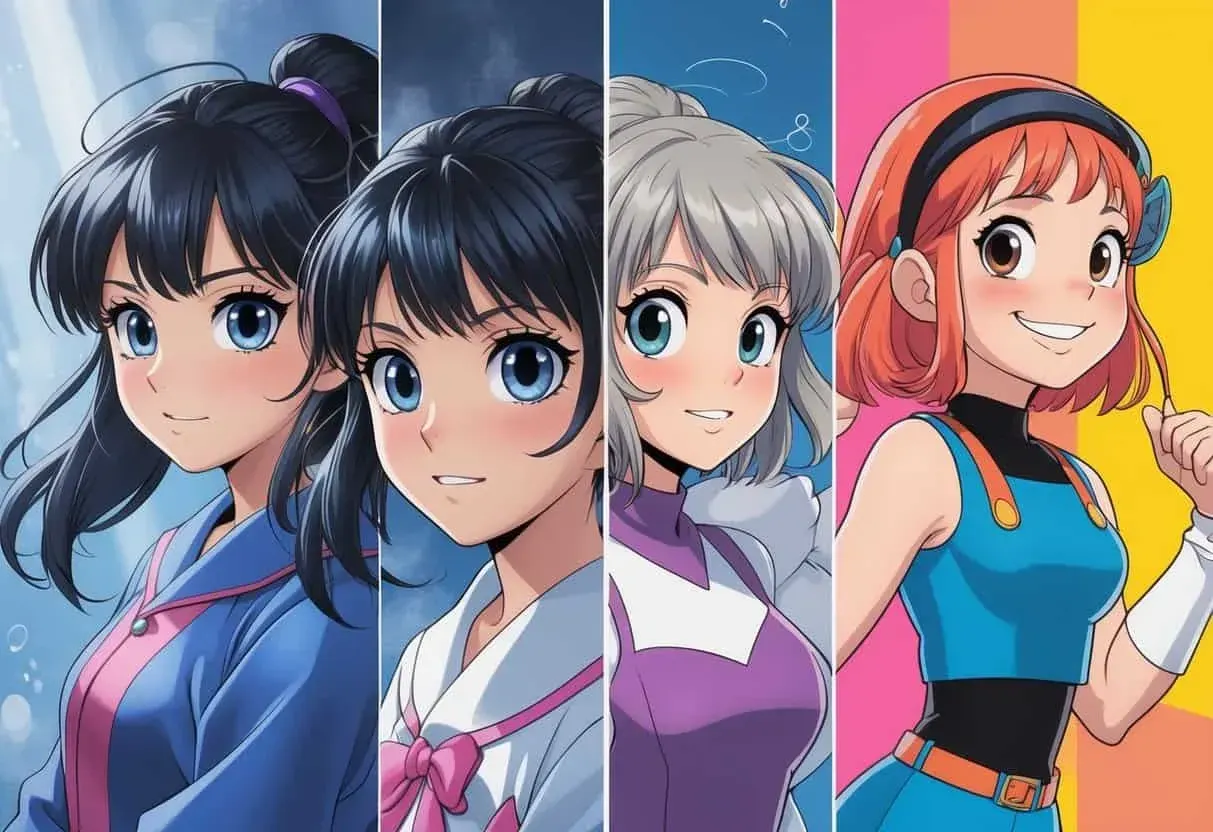
Perhaps the most immediate contrast you will notice is in character design. Anime characters often feature large, expressive eyes—a stylistic choice inherited from Tezuka’s admiration of Disney’s Bambi but amplified to convey an extraordinary range of emotion. Hair colors span the rainbow, and clothing can be intricately detailed, sometimes defying physics. This approach allows for visually distinct characters even in black-and-white manga adaptations, while simultaneously signaling personality traits through design motifs.
Western cartoons typically favor more anatomical exaggeration and bold geometric shapes. Characters like SpongeBob SquarePants, Steven Universe, or the cast of Adventure Time are instantly recognizable not just by their faces but by their silhouettes. The designs lean into caricature and often serve the needs of fluid squash-and-stretch animation, where limbs elongate and faces contort for comedic effect. Background characters in Western shows tend to be heavily stylized as well, whereas anime often lavishes the same level of detail on all on-screen elements to maintain a consistent sense of depth.
Animation Principles and Frame Rates
Anime’s use of limited animation is a defining technical characteristic. While a full-animation feature like Disney’s The Lion King might use 24 unique drawings per second, a television anime commonly runs on 8 to 12 frames per second, held on “threes” or even “fours.” This technique reduces the number of frames but channels the available budget into meticulously composed key poses and impact frames. Pans over highly detailed stills, dynamic camera angles, and stylized action lines make the economy of motion feel intentional rather than cheap. The practice also gave rise to the culture of sakuga—moments where animators break the pattern and pour exceptional detail into a single sequence, creating climactic scenes that fans celebrate and dissect online.
Western TV animation has historically aimed for smoother, more consistent motion, especially in shows that employ digital rigging (puppet-based animation as seen in many modern Cartoon Network and Nickelodeon productions). Even limited-animation classics like Scooby-Doo strove for a uniform visual rhythm. Feature films, of course, push this further with fluid, frame-by-frame craftsmanship. The result is a different viewing rhythm: anime often feels like a series of dramatic paintings brought to intermittent motion, while Western cartoons feel like continuous, bouncy performances.
Background Art and Cinematography
Background art in anime frequently aspires to a painterly realism that grounds even the most fantastical stories. Films by Makoto Shinkai (Your Name, Weathering with You) and Studio Ghibli are renowned for meticulously rendered landscapes that use light, shadow, and color to evoke mood. Digital compositing allows seamless integration of 2D characters into these rich environments, and cinematic techniques such as rack focus, Dutch angles, and extended static shots are common. This approach borrows directly from live-action cinematography to heighten emotional beats.
Western cartoons often take a more graphic approach, where backgrounds function as vivid stage sets that reinforce tone but rarely distract from the foreground action. Shows like Samurai Jack broke from this pattern by employing highly stylized, almost abstract backdrops, but even then the aesthetic remained more illustrative than realistic. The goal is typically to enhance readability and support the storytelling without overwhelming the character animation.
Voice Acting and Music Direction
Voice acting in anime—known as seiyu work—is treated as a highly esteemed performance discipline. Actors deliver emotionally charged lines that can shift from whispers to shouts within a scene, often using distinctive speech patterns to match the character’s archetype (the tsundere, the senpai, the stoic rival). This stylized acting contributes significantly to anime’s dramatic intensity and is part of the reason many fans prefer original Japanese audio even when dubs are available.
Western cartoons historically rely on more naturalistic or comedic voice performances, with many actors coming from stand-up or improv backgrounds. The delivery often matches the rhythm of joke writing, and emotional moments are typically less over-the-top. Music direction follows a similar divide: anime soundtracks, composed by the likes of Yuki Kajiura or Joe Hisaishi, function almost like film scores, using orchestral swells and leitmotifs to shape narrative arcs. Western cartoons lean toward catchy, episodic musical cues, though prestige projects like Avatar: The Last Airbender have demonstrated that rich scoring is hardly exclusive to Japan.
Storytelling and Audience Focus
Narrative Depth and Genre Diversity
Anime’s narrative landscape is strikingly broad. A single season can house historical dramas (Vinland Saga), psychological thrillers (Death Note), culinary slice-of-life (Food Wars!), and romantic comedies that actually reach a definitive conclusion (Kaguya-sama: Love Is War). The willingness to tell a complete story over 12, 24, or hundreds of episodes allows for gradual character development that often feels more novelistic than cinematic. It is common for seemingly episodic arcs to accumulate thematic weight, transforming light-hearted introductions into gut-wrenching finales.
Western cartoons, constrained by traditional scheduling and the assumption that audiences must be able to jump in at any point, have long favored stand-alone plots. The paradigm is shifting: Adventure Time, Steven Universe, and Infinity Train demonstrated that Western viewers crave overarching lore and emotional continuity. Still, the default mode remains episodic, and the available genres are narrower—predominantly comedy, action-adventure, and superhero fare. A Western animated horror series aimed at adults, for instance, is still a rarity, whereas anime has entire catalogs dedicated to that genre.
Emotional Range and Humor
Anime does not shy away from abruptly shifting emotional registers. A high-stakes battle might be punctuated by chibi-style comedic inserts, and a side-splitting gag can be followed by a character’s tragic backstory reveal. This tonal whiplash, when handled skillfully, creates a kind of empathetic vulnerability that many fans find uniquely engaging. Cry-worthy moments are a staple: Clannad: After Story, Anohana, and Violet Evergarden are practically engineered to evoke tears. Humor in anime is often referential, character-driven, or absurdist—sometimes relying on facial expression memes that have become their own global language.
Western cartoon humor traditionally rests on wit, timing, and physical comedy. From the fast-paced banter of Animaniacs to the deadpan irony of Regular Show, the laughs are crafted to land quickly and cleanly. Emotional moments, when they occur, are often treated as special episodes—the “very special episode” trope—rather than as an organic undercurrent. This is changing, but the baseline expectation remains that a cartoon will keep the mood predominantly light. Mature emotional arcs tend to be reserved for feature films or streaming-exclusive productions where content ratings are more flexible.
Target Demographics and Worldwide Appeal
Anime’s domestic market is stratified by explicit age and gender demographics, which has fostered a global catalog where almost anyone can find content suited to their tastes. The international rise of streaming services like Crunchyroll has made it possible to access seasonal anime within hours of Japanese broadcast, fueling a worldwide fandom that is as diverse as the medium itself. Conventions, fan art, and cosplay communities thrive because the product is not treated as exclusively childish—teens and adults alike celebrate series with mature themes without stigma.
Western cartoons, while enjoying enormous global penetration through brands like Disney, Pixar, and Cartoon Network, have historically been marketed with a narrower definition of the target viewer. Even adult-oriented shows are categorized as “adult animation,” a label that often signals a heavy reliance on raunchy humor or satire. This segmentation creates a cultural perception gap: it is still unusual for a Western adult to list an animated series as their favorite drama, whereas in anime fandom that is entirely ordinary. The success of cross-demographic hits like Avatar: The Last Airbender and Arcane suggests that Western viewers are hungry for the very thing anime has been offering for decades: animation treated as a serious storytelling vehicle for all ages.
Industry Impact and Iconic Works
Defining Anime Landmarks
Certain anime titles serve as cultural touchstones that explain the medium’s prestige. Spirited Away (2001), directed by Hayao Miyazaki and produced by Studio Ghibli, won the Academy Award for Best Animated Feature and remains an international symbol of anime’s artistic potential. The film blends Shinto folklore, a coming-of-age journey, and a critique of consumerism in a hand-drawn aesthetic that still looks breathtaking. Meanwhile, series like Dragon Ball Z and Sailor Moon became global phenomena in the 1990s, introducing entire generations to serialized shonen and shojo storytelling, while Neon Genesis Evangelion deconstructed the mecha genre and infused it with psychological depth that would influence countless later works.
More recently, Demon Slayer: Mugen Train shattered box office records by demonstrating that anime films could rival live-action blockbusters, and Attack on Titan completed its decade-long run as a worldwide streaming event. These milestones are not merely commercial; they highlight anime’s unique ability to build long-term audience investment and reward that investment with complex, emotionally resonant conclusions.
Western Animation Milestones
Western animation’s iconic titles likewise shaped a global entertainment landscape. Walt Disney’s Snow White and the Seven Dwarfs proved that feature-length animation could be a major artistic and commercial endeavor. The Cartoon Network era of the 1990s and 2000s—with shows like Dexter’s Laboratory, The Powerpuff Girls, and Samurai Jack—pushed visual style and genre pastiche in new directions. The Simpsons, now the longest-running American sitcom, demonstrated that animated prime-time programming could deliver sophisticated satire to adult audiences week after week.
Contemporary touchstones such as Adventure Time, Steven Universe, and BoJack Horseman blurred the line between children’s and adult content, proving that Western audiences would embrace deep continuity, emotional vulnerability, and philosophical themes when given the chance. The Netflix series Arcane, based on League of Legends lore, raised the bar for cinematic animation in television, showcasing a hybrid 2D/3D style that felt more akin to a high-budget film than a TV show. These innovations signal that Western animation is increasingly borrowing storytelling rhythms and production ambitions from its Japanese counterpart.
Cross-pollination and Global Influence
The cultural exchange between the two industries is now impossible to ignore. Anime directors such as Shinichiro Watanabe (Cowboy Bebop) have openly cited Western music and noir cinema as inspirations, while Western shows like Teen Titans and The Boondocks incorporate anime-style “chibi” reactions and dynamic action sequences. French-Japanese co-productions like Oban Star-Racers and the enduring popularity of franchises like Pokémon—a Japanese creation that became a global multimedia juggernaut—demonstrate that the flow of ideas runs in multiple directions.
Production studios have also collaborated directly. Toei Animation, the powerhouse behind One Piece and Dragon Ball, has co-produced content with international partners, and streaming giants like Netflix invest heavily in both original anime and anime-inspired Western projects. This cross-pollination is gradually erasing the simplistic notion that one style is inherently superior to the other; instead, it reveals two robust traditions that bring different strengths to the table.
Production Pipelines and Globalization
The way these shows get made further illuminates the gap. In Japan, anime production is typically organized around a production committee—a consortium of publishers, TV stations, toy manufacturers, and record labels who pool resources and share risk. The studio itself often holds relatively little financial power, which can lead to notoriously tight schedules and thin profit margins for animators. Yet this system also allows for niche projects to receive greenlights because the financial burden is spread thinly across multiple stakeholders.
Western animation, especially at major studios, is frequently financed through large media conglomerates with integrated merchandise and broadcasting arms. A Cartoon Network show might be pitched and developed internally with the full weight of Warner Bros. Discovery behind it, while a Netflix original is funded by a subscriber-based model. This centralization can lead to safer, franchise-driven choices, but it also enables high per-episode budgets and generous production timelines for flagship series. The streaming era has begun to change this dynamic, however, as platforms compete for original animated content that can attract both kids and nostalgic adults.
Digitization has also narrowed some technical gaps. Most anime studios now rely on digital compositing and assistive CG tools, while Western studios adopted Toon Boom Harmony and similar pipelines that mimic hand-drawn fluidity. Still, the fundamental production philosophies diverge: anime focuses on saving frames but making each keyframe count, while Western TV animation favors re-usable puppets and cycles that keep characters in constant motion. Understanding these constraints helps explain why a 13-episode anime can feel like a cinematic experience on a modest budget, whereas a Western cartoon’s energy often derives from sheer visual momentum.
Conclusion
Anime and Western cartoons are not competing versions of the same product; they are two distinct languages of animation shaped by separate histories, business models, and cultural values. Anime’s strength lies in its narrative ambition, its capacity for raw emotional expression, and an art style that privileges dramatic still beauty over continuous motion. Western cartoons excel at comedic timing, universal accessibility, and the kinetic joy of movement that springs from a different animation philosophy. As global distribution makes both traditions more visible and more hybrid, the viewer benefits from a wider spectrum of stories than ever before. By understanding the clear, objective differences outlined here, you can better appreciate the craftsmanship behind each frame—no matter where it was drawn.