Table of Contents
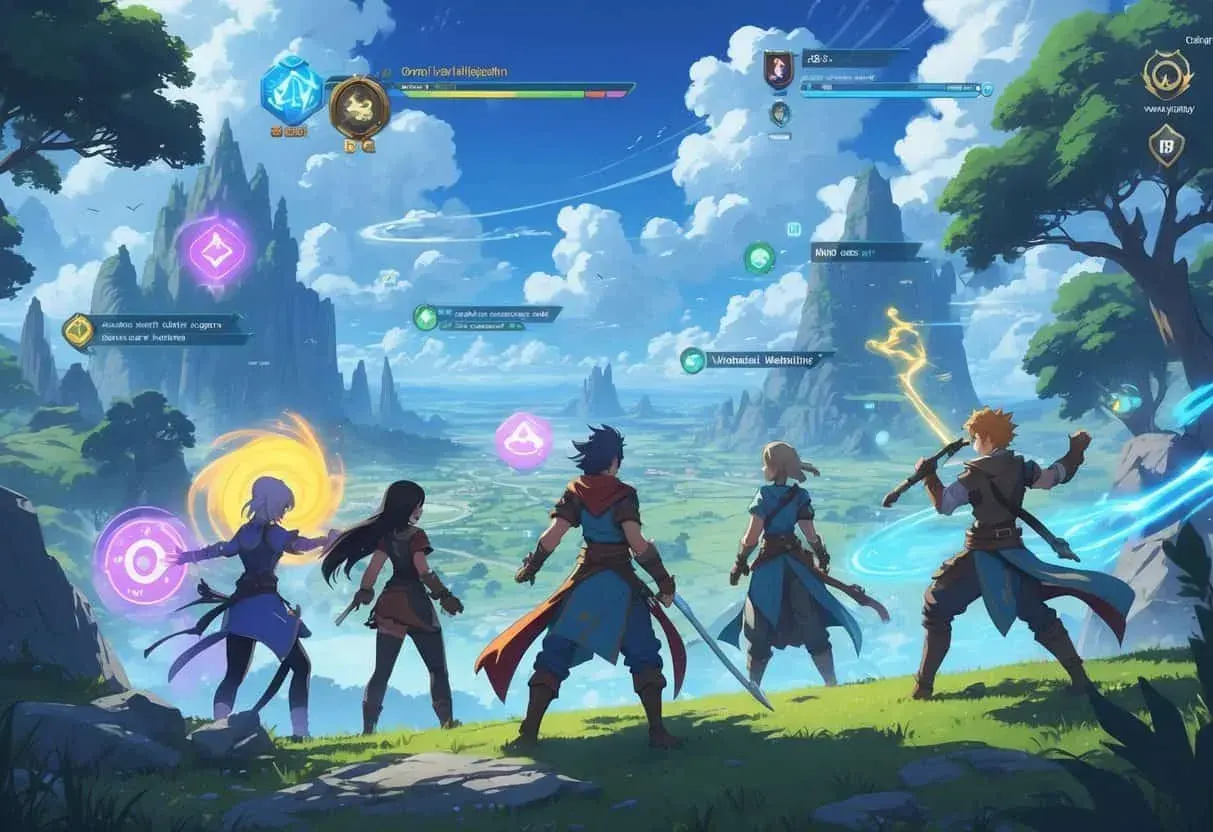
Over the last two decades, anime has discovered a fertile storytelling tool that blurs the line between passive viewing and interactive entertainment: video game mechanics. What began as a niche gimmick in early isekai and fantasy series has evolved into a full-blown narrative language. Leveling systems, skill trees, health bars, quest logs, and even save points now define entire fictional universes, dictating not just how characters fight but how they grow, form relationships, and understand their own worlds. This approach gives creators a coherent rulebook—one that makes power scaling intuitive, stakes quantifiable, and worldbuilding instantly recognizable to anyone who has ever picked up a controller.
Today, the gamification of anime settings goes far beyond mere backdrop. In the best examples, the mechanics become the story. They shape social hierarchies, inject tension into every encounter, and allow for layered commentary on everything from economics to identity. Understanding how these mechanics work helps viewers appreciate the craft behind their favorite series and reveals why the blend of gaming and animation continues to capture global audiences.
How Anime Builds Worlds Around Game Systems
At their core, video game mechanics in anime function as a set of in-universe rules that everyone—characters and viewers alike—can observe and understand. These aren’t just visual flourishes; they’re structural pillars that define reality. Whether a character is trapped inside an MMORPG or lives in a fantasy kingdom that inexplicably operates on RPG logic, the mechanics provide a consistent framework for cause and effect.
This consistency is what makes gamified worlds feel so immersive. When a hero’s strength stat rises after training, you see the tangible results. When a boss monster requires a raid party to defeat, you understand the scale. The mechanics remove ambiguity, offering a kind of narrative engineering that appeals to both anime fans and gamers. In many ways, these shows function like a playable story, inviting the audience to mentally track progress and strategize alongside the characters.
Levels, Stats, and Character Progression
The most immediately recognizable game mechanic is the leveling system. Characters might start at Level 1 with minimal skills and gradually unlock abilities, gain higher damage output, or evolve into new classes. This creates a visible path of growth that mirrors traditional Shonen training arcs but adds a layer of systematic precision. In The Rising of the Shield Hero, for instance, Naofumi’s party members gain specific stat boosts that correlate with their in-world experiences—and those numbers directly affect their chances of survival.
Stat-based progression also allows for creative storytelling. A character with a high luck stat might miraculously survive impossible odds, while one with low agility struggles against faster foes. The mechanics become a shorthand for fairness, letting the audience believe that triumphs are earned rather than handed out by plot convenience. This sense of fairness is crucial to maintaining engagement; when a fight is decided by strategy and stat synergy, the payoff feels more authentic.
Quests, Objectives, and Structured Narratives
Many gamified anime adopt quest structures as a way to deliver episodic goals and long-term arcs. A mysterious NPC might offer a world-shaking bounty, or the system itself might issue a server-wide event. These quests keep the story moving and provide natural checkpoints for character development. In Log Horizon, the “Elder Tale” universe functions as a living world precisely because everything from resource gathering to political negotiations is framed through game-like objectives and cooldowns.
Quests also allow writers to explore worldbuilding from multiple angles. A fetch quest can turn into a deep dive into local economics, while a raid mission tests the cohesion of an entire guild. By embedding the narrative inside recognizable game loops, the shows maintain a sense of urgency without the need for a traditional villain.
Health, Mana, and Status Effects
Beyond progression, anime often visualizes health points (HP) and mana gauges as diegetic elements. Characters might check their own status screens mid-battle or feel a buff spell physically surge through them. Bofuri: I Don’t Want to Get Hurt, so I’ll Max Out My Defense ingeniously uses this mechanic for comedy and action—watching Maple choose all defense points and become an immovable tank is both hilarious and logically consistent within the game’s rules.
Status effects like poison, paralysis, or debuffs add tactical layers. A fight might hinge on whether a support character can cleanse a party-wide debuff before the enemy’s next turn. These elements push the plot in directions that non-gamified stories can’t easily replicate, because the rules of engagement are literally spelled out on the screen.
Pioneering Anime That Redefined the Gamified World
While the concept of a game-like reality dates back to earlier works, a handful of series crystallized the formula and inspired an entire generation of creators. Each brought a unique flavor to the table, proving that video game mechanics could fuel everything from high-stakes drama to laugh-out-loud parody.
Sword Art Online: The Death Game That Captured the World
No conversation about gamified anime is complete without Sword Art Online. The premise—players trapped in a full-dive VR MMORPG where death in the game means death in real life—struck a chord that still reverberates. What made the Aincrad arc so compelling was its ruthless adherence to game logic: floor bosses, sword skills, guild formations, and a ticking clock to clear 100 levels. Kirito’s journey from solo player to front-line clearer felt like an actual gameplay experience, and the constant threat of a true game-over lent every skirmish a palpable weight. The series’ lasting impact on the isekai boom cannot be overstated.
Later arcs expanded the scope, exploring different virtual worlds with their own mechanics—ALfheim Online’s flight system, Gun Gale Online’s firearms and bullet lines—but the core remained the same: the rules of the game dictate the reality of the characters.
Log Horizon: Where Game Mechanics Build Civilization
If Sword Art Online is about survival, Log Horizon is about construction. Trapped inside the MMORPG Elder Tale, thousands of players must figure out how to live in a world governed by class abilities, cooldowns, and a bewildering menu interface. Shiroe, the protagonist, approaches this not as a warrior but as a strategist and economist. The series dedicates entire arcs to how crafting professions shape trade, how respawn mechanics affect politics, and how NPCs with newfound sentience change the social contract.
The anime’s intricate worldbuilding treats the video game mechanics as the foundation of a new society, not just a backdrop for combat. Watching a guild negotiate tax treaties or exploit crafting cooldowns is oddly riveting because the stakes are grounded in the very systems viewers understand from their own gaming experiences.
Konosuba and the Art of Comedic Deconstruction
Not every gamified world takes itself seriously. Konosuba: God’s Blessing on This Wonderful World! uses RPG mechanics as a setup for relentless comedy. Kazuma, a shut-in reincarnated into a fantasy world, assembles a party where the mage casts one spell per day and passes out, the crusader can’t hit anything, and the goddess is useless beyond healing. The humor arises directly from the mismatch between ideal game stats and the characters’ personalities. Skill trees, quest rewards, and party roles are all subverted to highlight how absurd the tropes can be.
By leaning into the failures and frustrations that gamers know all too well—bad luck, wasted skill points, and unbalanced classes—Konosuba builds its world on the same mechanics it lampoons, making the parody feel affectionate rather than mean-spirited.
The Vision of Escaflowne and Hybrid Worldbuilding
Long before the current trend, The Vision of Escaflowne blended mecha, fantasy, and subtle game-like elements to craft a unique world. Guymelefs, the giant armored suits, have stats and abilities that pilots must master. Fate manipulation, tarot-inspired divination, and crystalline armor upgrades echo the feel of equipping legendary items. The world of Gaea doesn’t run on an explicit game interface, but its logic—collecting artifacts, upgrading gear, and forming parties—resonates strongly with RPG conventions. This early example shows that game mechanics can enrich a world without shattering its naturalism, paving the way for more overtly gamified settings later.
Emerging Titles That Build on the Foundation
Newer series continue to innovate within the paradigm. Overlord explores what happens when a player’s max-level guild base is transported to another world, where the protagonist must navigate politics while roleplaying as an all-powerful overlord—and the NPCs he created become living beings. Bofuri flips the script by focusing on a casual player who stumbles into absurdly overpowered builds, turning the game into a playground of unintended consequences. No Game No Life takes things in a different direction by making game theory and digital logic the literal laws of a fantasy realm, where everything from territory disputes to personal arguments is settled through high-stakes games.
Each of these series demonstrates that the gamified format is not a limitation but a launchpad for wildly divergent stories.
How Game Mechanics Shape Character Arcs and Stakes
One of the greatest narrative strengths of these shows is the way they tie character growth directly to tangible, in-world systems. This creates a feedback loop that deepens emotional investment.
From Zero to Hero: Progression That Feels Earned
In traditional storytelling, a character’s power increase can sometimes feel arbitrary. Gamified anime sidestep this by making effort quantifiable. When Bell Cranel in Is It Wrong to Try to Pick Up Girls in a Dungeon? gains stats after a harrowing dungeon dive, the audience sees the numbers rise and understands the correlation. Likewise, when Naofumi in The Rising of the Shield Hero unlocks new shield forms through specific in-game actions, it rewards his perseverance with a visible payoff. This transparency turns viewers into analysts, debating optimal builds and anticipating future upgrades—a level of engagement rarely found in non-gamified series.
System-Based Conflict and Strategic Depth
Fights in these anime are rarely brute-force affairs. Instead, combat becomes a puzzle where winning means understanding enemy attack patterns, exploiting elemental weaknesses, or chaining skills in the right order. Log Horizon’s raid battles involve entire guilds timing their abilities to the millisecond, mirroring actual MMO coordination. The system imposes limitations—spell cooldowns, mana drain, debuff resistances—that force creativity. In Sword Art Online, Kirito’s dual-wielding skill isn’t just a flashy move; it’s a hidden game ability with specific unlock conditions, making its revelation a major plot point grounded in the world’s internal logic.
When Mechanics Become a Narrative Limitation
Of course, over-reliance on game mechanics can backfire. Some series introduce so many systems that the plot grinds to a halt under endless menu screens and stat explanations. The line between immersive and tedious is thin, and the best shows know when to let character emotion overtake the numbers. Log Horizon occasionally stumbles into dense economic monologues, and some isekai fall into the trap of using video game logic as a crutch to avoid meaningful character development. The most successful gamified anime balance the mechanical with the human, using stats and quests to enrich the story rather than replace it.
Why Audiences Stay Hooked on Gamified Worlds
The appeal of these series stretches beyond the core gamer demographic. By blending genres, they offer something for almost everyone—and high production values seal the deal.
Blending Genres to Expand the Audience
Anime that incorporate game mechanics rarely stay in a single lane. Sword Art Online is equal parts romance, action, and sci-fi. Overlord functions as a dark political fantasy with comedic undertones. No Game No Life is a psychedelic mix of puzzle-solving, ecchi, and sibling bonding. This genre fluidity means that viewers who might never watch a pure fantasy series can find a comfortable entry point.
The gaming framework acts as a universal translator, making complex plots accessible through familiar concepts like party composition and gear tiers.
The Role of Soundtrack and Visual Production
Immersion in a gamified anime hinges heavily on how the mechanics are presented visually and sonically. Status screens, skill activation auras, and HP bars need to feel organic to the art style. When a buff activates, the accompanying sound effect and particle animation can make the difference between a cheesy overlay and a genuinely cool moment. Shows like Sword Art Online and Log Horizon invest heavily in their user interface design and music queues, ensuring that system notifications feel like a natural extension of the world rather than a distraction.
A powerful soundtrack elevates the stakes further. The soaring orchestra during a boss raid or the tense electronic beat of a PvP duel can make even a spreadsheet of stats feel cinematic. The production team’s attention to detail in sound design—the low thrum of a full mana bar, the sharp ping of a quest completion—keeps viewers emotionally tethered to the action.
Where Gamified Worlds Go from Here
The future of anime that uses video game mechanics looks more expansive than ever. As actual gaming technology evolves, so will the concepts that inspire new series. Augmented reality, roguelike elements, and player-driven economies are already beginning to surface in manga and light novels awaiting adaptation. Meanwhile, creators are finding ways to deconstruct and remix the formula, examining the psychological toll of living in a gamified reality or questioning whether stats can ever truly define a person’s worth.
At its best, this storytelling mode doesn’t just borrow from video games—it elevates animation by marrying narrative consequence with interactive logic. The result is a body of work that feels both fantastical and rigorously consistent, inviting audiences to lose themselves in worlds where every action has a defined cost and every victory is backed by a point of data. As long as people love games and stories, the two will continue to converge in ever more surprising ways.