Table of Contents
Stepping Through the Screen: What Fourth Wall Breaking Really Means
Anime has a long history of making you forget you’re watching a story. But there are moments when the illusion shatters in the best way possible—when a character looks directly at the camera, cracks a joke about the episode’s budget, or complains that their own voice actor is being weird today. These aren't just gags. They are carefully crafted narrative tools that dissolve the invisible barrier between the fictional world and your living room, and when they’re done right, they make you feel like you’re in on something special.
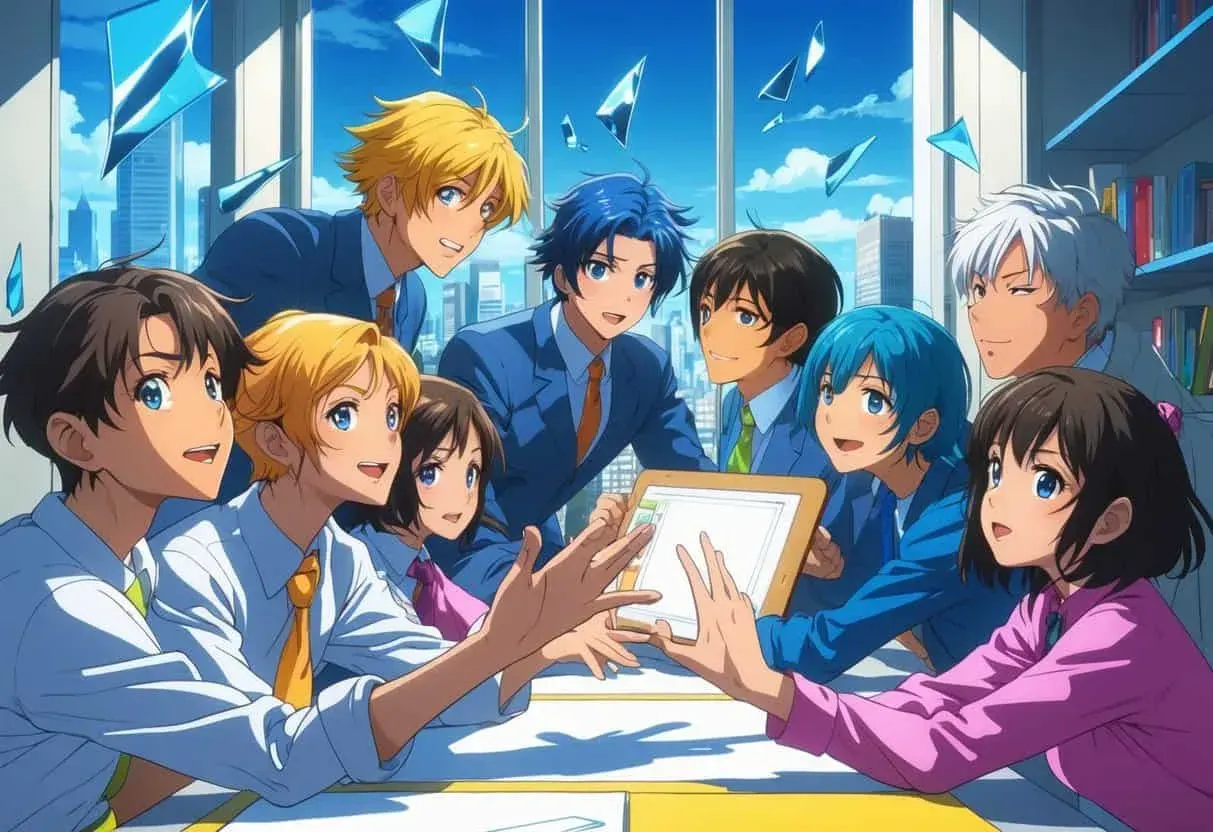
In theater, the “fourth wall” is the imaginary plane at the front of the stage that separates performers from the audience. In animation, that wall is just as real, even if we’re staring at a flat screen. When an anime character acts as if they are aware of the viewer—or the fact that they’re inside a narrative—the wall comes down. Suddenly the story isn’t just being told to you; it’s engaging with you. That shift can generate explosive laughter, unexpected intimacy, or even disorienting psychological depth.
Over the years, certain series have turned this trick into an art form, building self-aware worlds where nothing is off-limits.
Building a Tradition: How Meta Humor Evolved in Japanese Animation
Fourth wall breaks didn’t appear overnight. Early manga and anime experimented with the technique long before it became a staple of comedy. Osamu Tezuka, often called the father of manga, would occasionally have his characters acknowledge the reader in subtle ways. The real boom, however, arrived in the 1980s and 1990s, when anime began to play more aggressively with its own conventions. Dr. Slump, a sci-fi comedy by Akira Toriyama, frequently let its characters pause the story to chat with the audience, and even the narrator became a gag himself.
That spirit of self-mockery took root and flourished in the decades that followed.
By the time Neon Genesis Evangelion aired in 1995, fourth wall breaks had moved from pure comedy into something more unsettling. The series’ final episodes tore apart narrative convention, using sketch-like animation, voiceovers over real-world photographs, and characters who questioned not only their own identities but the very nature of the anime they inhabited. Later, Gintama would push the envelope so far that the fourth wall effectively stopped existing. Any topic—ratings, timeslot changes, the health of the animation staff—became fair game. What started as a playful wink evolved into a full-blown language of meta-storytelling that now spans dozens of genres.
Techniques That Let You In on the Secret
Anime creators have a tool chest of visual and narrative tricks to pull you across the fourth wall. The most direct approach is the “aside” glance or spoken line aimed at the viewer. A character freezes mid-action, turns to face the screen, and delivers a comment about the absurdity of the plot. Another popular method is calling out anime tropes as they happen: pointing out that the protagonist just delivered a cliché speech, or that a sudden power-up came out of nowhere because the writers needed a dramatic turn. Some shows take it further by altering the animation style for a single frame—shifting to chibi forms, sketchy line art, or on-screen text boxes that mimic manga panels.
Recently, anime like the Monogatari series have used flashy typography and rapid-fire cuts to simulate a character stepping outside the story to speak to you personally. Senjougahara Hitagi, for instance, will hold up cards with text that seem to address your own thoughts, not just those of the protagonist. These moments aren’t always about comedy; sometimes they underline a thematic point or create an unnerving sense of closeness. The common thread is that the audience becomes a participant rather than a passive observer, and the animators treat the screen not as a window but as a playful boundary to be crossed.
Shows That Make the Fourth Wall Their Playground
While many anime dabble in meta remarks, a select few have built their identities around it. Whether through relentless parody, surreal design, or psychological deconstruction, these series treat the fourth wall as more of an open doorway than a barrier.
Gintama: The Undisputed Champion
No discussion of meta-anime is complete without Gintama. This long-running oddity set in an alternate-history Edo invaded by aliens never misses a chance to dismantle the fourth wall. Its characters—led by the perpetually broke samurai Gintoki Sakata—constantly acknowledge that they’re in a shounen anime. They argue about their own screen time, complain about the animators’ budget, and even whip out official merchandise to sell during filler arcs. Gintoki has been known to stare into the camera and protest a lack of character development, while the cast repeatedly reminds the audience about the show’s precarious timeslot.
Watch Gintama on Crunchyroll and you’ll quickly see why it has earned a reputation as the meta-comedy benchmark.
What makes Gintama special isn’t just the frequency of its fourth wall breaks but the warmth beneath them. When the show jokes about its own cancellation threats, it’s also sending a heartfelt message to fans who’ve supported it through years of messy production. That blend of irreverence and sincerity turns the audience relationship into something almost familial.
The Monogatari Series: Direct Address With Style
If Gintama uses the fourth wall for chaos, the Monogatari series uses it for intimacy. Based on Nisio Isin’s light novels, the anime is a rapid-fire tapestry of wordplay, abstract visuals, and characters who frequently step out of the narrative to confide in the viewer. Senjougahara Hitagi is the most blatant example, often turning to face the camera while discussing her past or admitting uncomfortable truths. Text cards flash on screen for fractions of a second, mimicking her inner thoughts being shared directly with you. For an in-depth look at how the series crafts these moments, Anime News Network’s analysis explores how the show’s avant-garde style reinforces its meta-narrative.
This approach makes the viewer a confidant. You aren’t simply watching a conversation between characters; you’re being let into private headspaces. The fourth wall dissolves not for laughs but for raw, sometimes uncomfortable honesty, which deepens the emotional stakes considerably.
Bobobo-bo Bo-bobo: Surrealism Unleashed
For sheer absurdity, Bobobo-bo Bo-bobo has no rival. The protagonist fights using his nose hairs and leads a rebellion against hair-stealing tyrants, but that’s the least strange thing about the show. Characters routinely address the audience, argue with the narrator, and point out when the animation quality plummets. Bobobo-bo himself will pause a battle to discuss whether the manga artist forgot to draw a background, and entire episodes dissolve into nonsensical skits that mock the very concept of scripted storytelling. The fourth wall here is treated like a revolving door, constantly spinning and ignoring any sense of continuity.
The result is a comedy that feels completely unbound. Watching Bobobo-bo Bo-bobo is like joining a madcap improv session where the performers keep winking at the audience to remind them that nothing is serious. It’s an acquired taste, but its unapologetic meta-humor has kept it a cult favorite.
Neon Genesis Evangelion: When Meta Goes Psychological
Hideaki Anno’s Neon Genesis Evangelion flipped the script by using fourth wall techniques not for laughter but for existential dread. The infamous final two episodes dissolve into a stream-of-consciousness that directly questions the viewer’s expectations. Shinji and the other pilots sit in folding chairs, text cards flash questions about self-worth, and the frame itself cracks open to show doodles, real-world photography, and internal studio notes. The show famously pokes at the audience’s desire for a clean, satisfying ending—an act of narrative rebellion that still sparks debate decades later. A Vulture explainer on the series finale details how these creative choices blur the line between fiction and the viewers’ own psyche.
Here, breaking the fourth wall isn’t playful. It’s confrontational. Evangelion forces you to examine why you seek escapism and what you want from these characters. By turning the screen into a mirror, it achieves a level of meta-storytelling that few anime have matched.
Other Shows That Play With the Formula
Several other series deserve a nod. The Disastrous Life of Saiki K. uses its psychic protagonist’s telepathy to directly comment on the absurd world around him, often bemoaning anime tropes with deadpan delivery. Excel Saga opens by killing off its own author and spends twenty-six episodes demolishing genre conventions one by one. Osomatsu-san rebooted a classic manga and turned it into a self-referential comedy that mocks its own legacy. Even battle shounen like One Piece and Naruto have occasional self-aware moments, such as when characters react to episode titles or break character in preview segments.
These examples show that the fourth wall isn’t a locked door—it’s a tool that even mainstream anime occasionally borrow to keep things lively.
Why These Moments Make the Experience Unforgettable
A well-executed fourth wall break does more than generate a quick laugh. It rewires your relationship with the show, injecting a fresh layer of engagement that lingers long after the credits roll.
Deepening Character Connections
When a character admits they know you’re watching, an invisible switch flips. Suddenly you’re not just observing them; you’re sharing a private joke. In Bakemonogatari, Senjougahara’s direct gaze feels like a confession whispered in your ear. In Gintama, Gintoki’s grumbling about the show’s budget makes him feel less like a cartoon and more like a weary co-worker venting during a long shift. This intimacy can transform a tropey character into someone you genuinely root for because you’ve glimpsed a self-awareness that ordinary protagonists lack.
The fourth wall becomes a shortcut to empathy, letting writers reveal hidden layers of personality without the drag of exposition.
Upending Expectations and Plot Structures
Narrative rules melt away when characters acknowledge the script. A tense showdown can suddenly pause while the hero asks why the villain always monologues. A tragic backstory might be interrupted by the narrator complaining that the flashback is eating up too much runtime. These jolts keep the experience unpredictable. They also allow anime to critique their own genre, shining a light on tired formulas while simultaneously subverting them.
For the audience, this unpredictability is addictive. You stop looking for what comes next according to the rules and start wondering what can’t happen next—a feeling that makes even filler episodes feel alive.
Visual and Aesthetic Playfulness
The art itself gets in on the act. When a fourth wall break hits, the animation often shifts: colors invert, characters go off-model, or hand-drawn storyboards replace finished scenes. The Monogatari series’ text overlays feel like a direct visual whisper. In Bobobo-bo Bo-bobo, the screen might literally crack or crumble. These aesthetic tricks signal that the normal rules are suspended.
They grab your attention and signal that something important—or wonderfully stupid—is about to happen. For animators, it’s a chance to flex creative muscles outside the constraints of a consistent style, and for viewers, it’s a jolt of sensory novelty that makes an episode stick in memory.
Making Meta Anime Part of Your Collection
With so many fourth wall-breaking series out there, finding and enjoying them has never been easier. Whether you’re streaming on a lazy Sunday or hunting down physical editions, these shows reward repeat viewings with layers of jokes you might miss the first time.
Streaming Platforms That Carry the Weird and Wonderful
Most major services boast strong catalogues of meta-heavy anime. Crunchyroll remains the go-to for Gintama, and it also hosts classics like The Disastrous Life of Saiki K. and the entire Monogatari series. Funimation (now merged into Crunchyroll) previously streamed many of the same shows, and their library included hysterical dubs that often added extra meta jokes of their own. Netflix features Bobobo-bo Bo-bobo in some regions and carries Neon Genesis Evangelion in multiple languages. A quick search will also uncover smaller platforms like HiDive, which occasionally carry hidden gems from catalogue rescues.
If you prefer physical media, box sets for older meta comedies like Excel Saga and Sayonara Zetsubou Sensei are still floating around, though some have become collector’s items.
Collecting Box Sets and Merchandise With a Wink
Collectors will appreciate that the packaging often mirrors the shows’ playful nature. Gintama limited edition artbooks include fake interviews with the characters where they complain about the publisher’s decisions. Bobobo-bo Bo-bobo figurines exaggerate the already lunatic character designs, practically inviting you to display them with a knowing smirk. Even Evangelion merch sometimes nods at its own notoriety—like Rei Ayanami figurines packaged with speech bubbles that read “I must not run away” but placed in absurd contexts. For the dedicated fan, these items are more than collectibles; they’re physical extensions of the meta experience.
The artwork, the liner notes, and even the disc menus become part of the joke.
Fandom and the Culture of In-Jokes
Shows that break the fourth wall naturally energize their fan communities. When the series itself is in on the gag, the distance between creator and viewer shrinks, and fandom becomes a shared playground. Memes referencing specific fourth wall moments circulate endlessly: Gintoki holding a “Budget Warning” sign during a fight, or Senjougahara threatening the viewer with a stapler while talking straight to the camera. Fan artists love recreating these breaks, often adding their own commentary. Online forums dissect the most obscure references and rejoice when a show like Osomatsu-san lampoons its own reboot status.
Participating in this culture feels like being part of an extended inside joke—one that the anime itself invited you to join. It transforms passive watching into active celebration, and that’s exactly what the best fourth wall breaks are meant to do.
From psychological masterpieces to ridiculous comedies, anime that shatter the fourth wall remind us that stories can be both immersive and self-aware. They trust the audience to keep up and reward attention with layers of humor and heart. Whether you’re here for Gintoki’s budget complaints, Senjougahara’s intimate asides, or Evangelion’s existential dismantling, one thing is certain: you’ll never look at your screen the same way again.