Table of Contents
Anime Meets Streetwear: A Cultural Intersection
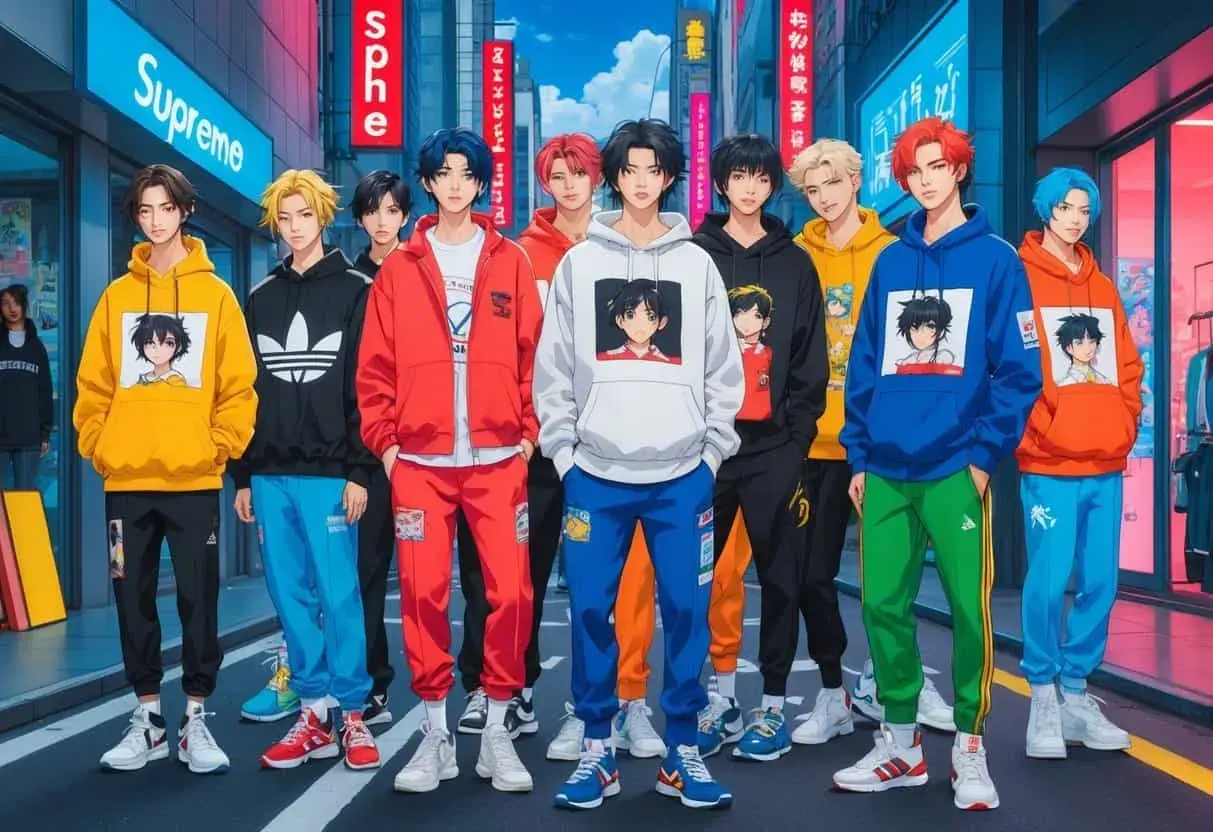
Anime-inspired fashion collaborations have moved far beyond niche convention halls and into the mainstream wardrobes of millions. Brands like Uniqlo, Adidas, and Supreme are driving this shift, releasing collections that turn iconic manga panels, character silhouettes, and narrative energy into wearable garments. These aren’t simply graphic tees; they’re carefully curated capsules that reflect a deep understanding of both anime’s visual language and contemporary streetwear’s rule-breaking ethos. As the lines between entertainment, art, and apparel blur, these partnerships are reshaping what it means to dress with intent.
What makes these collaborations so potent is their ability to fuse nostalgia with forward-looking design. A vintage Akira poster printed on the back of a boxy work jacket, or Dragon Ball Z energy blasts woven into a pair of sneakers, does more than reference a show. It signals membership in a global community that values creativity, storytelling, and individuality. At the same time, these pieces function as legitimate fashion items—crafted with careful attention to cut, fabric, and detailing—so they hold their own even outside of fandom circles.

The Major Players and Their Design Signatures
While countless labels have dabbled in anime themes, three brands stand out for consistently delivering collections that influence the wider apparel market: Uniqlo, Adidas, and Supreme. Each approaches the crossover with a fundamentally different philosophy, ensuring that the anime-streetwear ecosystem stays unpredictable and rich.
Uniqlo: Democratizing Otaku Style
Uniqlo’s UT (Uniqlo T-shirt) line has become a global canvas for anime franchises. Through partnerships with properties like One Piece, Demon Slayer, Jujutsu Kaisen, and Spy x Family, the Japanese retailer strips away exclusivity without sacrificing design integrity. The shirts are affordable, widely available, and produced in an array of fits—from classic crew neck to oversized silhouettes. What sets Uniqlo apart is its licensing approach: the brand often works directly with manga artists and animation studios, commissioning original artwork or adapting key visuals that feel authentic rather than mass-manufactured.
Beyond graphic tees, Uniqlo sometimes expands collaborations into light outerwear, tote bags, and even UTme! custom print services. You can walk into a store in Tokyo, New York, or London and find the same Chainsaw Man hoodie, creating a sense of shared culture across continents. Despite the high volume, Uniqlo maintains a surprising level of quality; the cotton is substantial, prints are sharp, and colors remain vibrant after repeated washing. This durability makes the pieces practical for everyday wear, not just collector’s display.
Adidas: Sportswear Meets Shonen Energy
Adidas has carved its own lane by blending anime’s kinetic visual style with performance-minded sportswear. The Adidas x Dragon Ball Z collection, launched as a series of collaborative sneakers, mapped character colorways onto iconic silhouettes like the ZX 500 RM and the Yung-1. Goku’s orange and blue accented the ZX 500, while Frieza’s purple and white gave a frosty edge to the Yung-1. The campaign was a masterclass in narrative branding: each release built anticipation like an anime episode, and fans scrambled to complete the set.
More recent collaborations have included Adidas x Pokémon and ties with Naruto, where the design language leans into street-ready boldness rather than literal cosplay. Reflective overlays, embroidered crests, and subtle kanji characters replace loud all-over prints, making the apparel wearable for a casual gym session or a day out. Adidas often pairs these drops with behind-the-scenes content and athlete endorsements, reinforcing the idea that anime culture belongs on the track, the court, and the sidewalk.
See the brand’s official collaboration archive for an evolving roster: Adidas Anime-Inspired Collections
Supreme: Scarcity, Subversion, and High-Resale Hype
Supreme’s relationship with anime is defined by its legendary scarcity model and its affinity for underground and cult-classic titles. The Supreme x Akira collection remains a benchmark, with commemorative jackets, hoodies, and skate decks featuring Otomo’s dystopian artwork. The pieces were absurdly difficult to get at retail and now command astronomical prices on secondary markets. For Supreme, the collaboration was about more than selling clothes; it was a statement that anime counts among the visual subcultures—next to punk, hip-hop, and skateboarding—that the brand has long championed.
Later drops, such as Supreme’s work with Neon Genesis Evangelion and Death Note, continued the pattern of limited runs, cryptic teasers, and instant sellouts. The garments themselves often feature all-over graphic prints, premium embroidery, and unconventional fabric choices like satin lining or heavyweight fleece. Supreme’s approach turns each item into a cultural artifact. Wearing an Evangelion x Supreme jacket doesn’t just show you like the series; it signals that you were sharp enough—or lucky enough—to be part of a very specific moment in streetwear history.
Signature Pieces That Define the Movement
Across these collaborations, certain categories of items have emerged as staples that define the aesthetic and functional appeal of anime-infused streetwear.
Graphic Hoodies and Crewnecks
The heavyweight hoodie is perhaps the most quintessential canvas. Brands load the back with sprawling, panel-style artwork—often a full-blown battle scene or a character in mid-transformation—while the chest receives a subtle logo hit. The juxtaposition between the casual, almost anonymous nature of a hoodie and the explosive graphic on its reverse mirrors the duality many fans live: outwardly low-key, but inwardly passionate.
Statement Outerwear
Bomber jackets, coaches jackets, and parkas have become vehicles for more ambitious design. Uniqlo’s collaboration with Attack on Titan produced a coach jacket with Survey Corps emblems and symbolic motifs integrated into the lining. Supreme’s Akira work jacket is a grail piece precisely because it functions as outerwear first and a poster second. These pieces are built to withstand daily use, with durable nylon shells, quilted linings, and robust zippers, proving that anime merch can match the quality of dedicated outdoor brands.
Sneakers and Footwear
The sneaker industry has embraced anime with open arms, and collaborations often result in some of the most technically impressive items. Adidas’s Dragon Ball Z pack, Nike’s Gundam Unicorn-inspired Dunk High, and Vans’s Sailor Moon Old Skool releases all demonstrate how color blocking, material switches, and hidden details can narrate an anime’s story on a shoe. The footwear often becomes the centerpiece of an outfit, pulling together a simple tee and jeans look with a striking graphic or iridescent accent.
Explore community-driven resale marketplaces for these elusive kicks: Anime Sneakers on StockX
Marketing Hype and Cultural Resonance
The success of anime fashion collabs is inseparable from the marketing machinery that amplifies them. Brands leverage drop culture—announcing a specific release date and time, often with no restocks—to create urgency. Social media platforms like Instagram and Twitter become flooded with leaked images, countdown posts, and influencers showing off early pairs. The result is a digital watercooler effect, where fans across the world simultaneously experience the excitement of trying to secure a piece.
Lookbooks and campaign imagery often mimic anime’s own visual style: high-contrast lighting, distorted perspectives, and saturated colors. Campaigns might feature animated clips instead of standard video ads, blurring the boundary between the commercial and the creative. When Naruto collaborates with a brand, it’s not unusual to see ninja-run photography or chakra-inspired lighting, all of which deepen the customer’s emotional connection to the clothing.
Limited drops also fuel a robust resale economy, where collectors, bots, and dedicated fans engage in a secondary market that can rival any sneaker release. The scarcity not only drives immediate sellouts but also turns pieces into long-term investment items. This speculative aspect, while controversial, adds another layer of engagement: forums and Discord servers dedicated to analyzing upcoming collabs, predicting value, and sharing checkout tips have sprung up, further cementing the community around these garments.
Celebrity Influence and Pop Culture Amplification
When a musician or actor steps out in an anime collaboration piece, the cultural impact multiplies. Billie Eilish wearing a Sailor Moon tee, or Michael B. Jordan in a Naruto hoodie, transforms a niche item into a mainstream must-have. Celebrities often choose these items not because of a paid partnership but because they genuinely grew up with the shows. This authenticity rings true with audiences and adds a layer of credibility that money can’t buy.
Red carpet events and late-night talk shows have become unexpected showcases for anime fashion, with designers creating custom pieces that reference specific arcs or characters. The phenomenon trickles down: when a high-profile figure wears a collaboration, it’s immediately catalogued on fan accounts, dissected for meaning, and linked to purchase options. The cycle feeds itself, pushing brands to pursue ever more high-profile ambassadors and exclusive capsule designs.
Navigating the Market: Where and How to Buy
For those looking to build a wardrobe around anime-influenced streetwear, understanding the buying landscape is essential. First-party channels like Uniqlo’s website and physical stores remain the easiest route for widely released collections. However, for Supreme, Adidas limited editions, and exclusive regional drops, you’ll need to stay agile.
- First-Party Retail Sites: Uniqlo.com, Adidas.com, Supreme.com (releases Thursdays at 11 AM ET). Bookmark them and create accounts in advance to save shipping and payment details.
- Authorized Retailers: Stores like Dover Street Market and END. Clothing sometimes receive collaborative stock, often with less bot competition.
- Resale Platforms: StockX, GOAT, Grailed, and eBay are the go-to sources for sold-out items. Condition, authenticity verification, and seller ratings are crucial. On Depop and Poshmark, you can sometimes find secondhand pieces at lower prices, though authentication is less guaranteed.
- Community Marketplaces: Discord servers and subreddit B/S/T (Buy/Sell/Trade) threads offer peer-to-peer deals but require trust.
Given how quickly items can disappear from digital shelves, using monitoring services or following restock accounts on social media is a common tactic. Many successful buyers set calendar reminders and have multiple tabs open across devices. It’s a high-effort, high-reward game.
The Secondhand Economy and Sustainability
Anime fashion collabs sit at an interesting intersection of fast fashion and collectible culture. On one hand, the relentless drop schedule can encourage overconsumption; on the other, the rarity and emotional value of pieces make them prime candidates for the secondhand market, extending their lifecycle beyond a single season. Thrifting and resale keep garments out of landfills and allow fans who missed the initial release to still own a piece of the story.
Some brands are starting to address the environmental footprint directly. Uniqlo, for instance, has expanded its sustainability initiatives to include recycled polyester in certain collaborative pieces and a garment collection program. While not specifically an anime collab effort, the wider practice influences how the collaborations are perceived. Other labels are exploring organic cotton, water-based inks for screen printing, and biodegradable packaging for limited drops—small steps that signal a shift toward more responsible production.
From a buyer’s perspective, choosing quality over quantity makes a tangible difference. A well-made Supreme jacket from five years ago remains wearable today, reducing the need for constant replacement. This durability argument aligns with the collector’s mindset: if you’re acquiring a piece to cherish, it makes sense to invest in something built to last. Secondhand apps and vintage stores are now full of anime collabs from the early 2000s, many of which have aged beautifully because they were constructed with care.
Trend Forecasting and What’s Next
Fashion forecasting agencies and trend analysts have taken note of the anime x streetwear boom, and data points suggest it’s not a passing fad. Google Trends shows consistent year-on-year growth in searches for “anime hoodie,” “anime sneakers,” and specific franchise collaborations. Fashion trade shows like ComplexCon and Agenda have introduced dedicated zones for anime-inspired brands, and runway presentations are increasingly referencing anime silhouettes and styling.
Looking ahead, several developments seem likely:
- Deeper Collaborative Narratives: Rather than simple logo swaps, upcoming collaborations will likely tell stories across multiple product categories—a matching jacket, pants, bag, and sneaker that together represent an arc.
- Virtual and Digital Fashion: As digital identities become more prominent, brands will create anime collab pieces for avatars in games and metaverse spaces, potentially bundled with physical counterparts.
- Sustainable Tech Integration: Bio-based leathers, recycled ocean plastics, and plant-dyed textiles could become the materials of choice, aligning the sustainability demands of Gen Z with anime’s environmental storytelling (think Princess Mononoke or Nausicaä).
- Regional Exclusives with Global Reach: Brands will continue to release hyper-regional pieces—say, a Tokyo Revengers capsule only in Japan—but global resale networks and social media will ensure worldwide access, albeit at a markup.
Runway shows during Paris Fashion Week and Milan Fashion Week have already seen luxury houses like Gucci and Loewe incorporating anime-adjacent prints and proportions. This trickle-down effect means that the motifs and design strategies pioneered by streetwear collabs are now influencing high fashion, not the other way around.
Ethical Production and Consumer Responsibility
Behind every graphic tee is a supply chain that consumers are increasingly scrutinizing. Questions about factory conditions, fair wages, and chemical runoff from dyeing processes are becoming as important as the design itself. While fast fashion retailers often provide opaque answers, a number of anime collab participants have started publishing supplier lists and partnering with certification bodies.
You can look for certifications like Fair Trade, OEKO-TEX, and Global Organic Textile Standard (GOTS) when evaluating a piece. Even if a collaboration doesn’t carry these labels, you can check whether the parent company has made meaningful commitments to ethical practices. Adidas, for example, has been working toward using only recycled polyester by 2024 across its entire product line—an initiative that extends to its anime-themed releases.
As a consumer, you hold significant power. By supporting brands that prioritize ethical manufacturing and transparent communication, you help shift the industry standard. It’s also worth considering the lifecycle of your clothing: washing in cold water, air-drying, and repairing minor damages can dramatically extend the useful life of any garment. In the context of limited-edition anime collabs, where emotional value already encourages preservation, these small habits complement the collector’s instinct.
For a deeper dive into sustainable materials and brand ratings, consult resources like Good On You, which evaluates fashion brands on environmental and labor criteria.
The Community and Identity Angle
Wearing an anime-inspired outfit isn’t just a fashion statement; it’s a form of self-expression that connects you to a broader community. When you walk down the street in a Hunter x Hunter bomber, you’ll likely receive nods of recognition from strangers who share your taste. That spontaneous camaraderie is part of what makes the subculture so vibrant. Conventions, local meetups, and online forums provide spaces to share styling ideas, trade pieces, and discuss upcoming releases in detail.
For many, these collaborations serve as a bridge between childhood passions and adult identity. The clothes allow fans to carry a piece of the stories that shaped them into their professional lives, whether that’s a subtle lapel pin or an all-over print button-up. As the stigma around “geek” culture continues to fade, anime fashion stands as a testament to the idea that fandom and sophistication can coexist. The best collaborations honor the source material while pushing design boundaries, giving you garments that feel as meaningful as they look.
Anime-inspired fashion collaborations have grown from niche capsule collections into a formidable force in global apparel, and the momentum shows no signs of slowing. By understanding the key players, the signature pieces, and the market dynamics, you can make informed choices that align with your personal style, ethical values, and passion for the art form. Whether you’re snagging a Uniqlo UT at your local mall or battling bots for a Supreme drop, you’re participating in a cultural exchange that redefines how we wear our stories.