Table of Contents
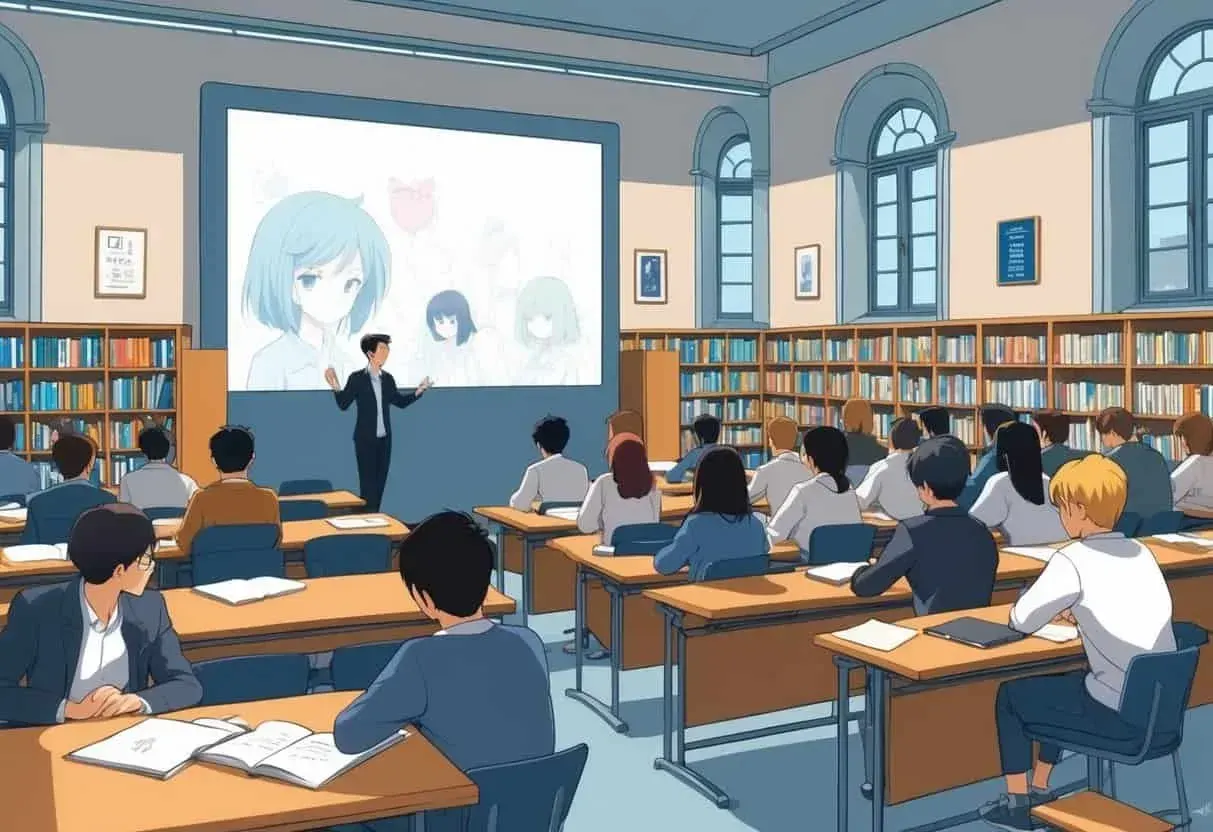
Anime has transcended its once-niche status to become a significant cultural force across Europe, embedding itself in both academic classrooms and informal school communities. From scholarly seminars dissecting the socio-political themes of Ghost in the Shell to lively student club screenings of the latest Jujutsu Kaisen episodes, the Japanese animation medium offers a unique dual pathway for engagement. This article explores how European educational institutions embrace anime as a serious field of study while simultaneously nurturing vibrant fandom cultures, examining the tensions and synergies between these two worlds.
Key Takeaways
- Anime has established itself as a legitimate academic subject in European universities, with dedicated courses and research programs.
- Student fandoms foster creative expression, social bonding, and informal learning through clubs and conventions.
- Academic study and fan culture highlight complementary aspects of anime's influence, though their methodologies and goals often differ.
- Understanding the balance between critical analysis and passionate engagement is key to appreciating anime's role in education.
The Emergence of Anime and Manga in European Academia
The integration of anime into European academia didn't happen overnight. It was a gradual process driven by globalization, technological advances, and a generational shift in cultural tastes. As Japanese pop culture gained traction through television broadcasts and early internet forums during the 1990s and 2000s, universities began to take notice. Today, anime and manga are studied not merely as entertainment but as complex cultural artifacts that offer insights into Japanese society, global media flows, and contemporary visual storytelling.
Historical Context and Globalization
The seeds of anime's academic presence were planted in the late 20th century, when globalization accelerated the spread of media across borders. In Western Europe, the fall of the Berlin Wall and the subsequent opening of Eastern European markets in the 1990s created new avenues for cultural exchange. Channels like France's Club Dorothée and Italy's Rete 4 introduced a wide array of anime series to young audiences, from Captain Tsubasa to Dragon Ball. Meanwhile, the arrival of affordable VHS tapes and later DVDs allowed fans to collect and share titles that weren't televised, building a underground network of enthusiasts. This grassroots demand eventually caught the attention of higher education institutions, as students who had grown up with these shows began to push for formal coursework.
Scholars started examining how anime served as a gateway to Japanese language and culture, leading to interdisciplinary programs that combined media studies with area studies. For instance, institutions like the School of Oriental and African Studies (SOAS) at the University of London began offering modules that included Japanese pop culture, reflecting a broader trend toward recognizing non-Western media in curricula. This historical shift also coincided with the rise of digital streaming platforms, making anime more accessible than ever and prompting academic departments to explore its pedagogical value.
Anime and Manga as Fields of Academic Study
In contemporary universities, anime and manga are analyzed through diverse academic lenses. Media and communication departments might explore how streaming platforms have transformed distribution models, while literature departments examine narrative structures in series like Neon Genesis Evangelion. Cultural studies scholars often focus on representation, dissecting how anime addresses issues such as gender, identity, and environmentalism. This academic interest has led to the development of specialized courses across Europe. For example, the University of Edinburgh's Department of Asian Studies offers a course titled "Anime and Contemporary Japan," which delves into the historical and cultural contexts of popular titles.
Similarly, Leiden University in the Netherlands has hosted conferences on manga as a global phenomenon, attracting researchers from around the world. These programs don't just teach students about anime—they train them to use analytical frameworks that can be applied to other media forms. By studying anime, you learn to deconstruct visual symbolism, understand intertextuality, and evaluate the impact of digital technologies on storytelling. The field has also grown to include doctoral research, with dissertations examining everything from the economics of the anime industry to the philosophy of posthumanism in cyberpunk anime. This scholarly work is often published in journals like Mechademia and The Journal of Japanese Studies, solidifying academia's role in validating anime as a serious subject of inquiry.
Moreover, student-led research groups at places like the University of Vienna are exploring niche topics such as fan translation ethics and the evolution of anime soundtracks, bridging academic rigor with fandom enthusiasm.
Japanese Popular Culture and Curricular Integration
Anime's academic journey is closely tied to the broader incorporation of Japanese popular culture into school curricula. Language programs in universities often use anime and manga as teaching tools, leveraging their engaging narratives to introduce vocabulary and grammar in context. At the University of Warsaw, for instance, Japanese language courses sometimes feature manga excerpts to help students grasp colloquial expressions and cultural nuances. Beyond language learning, anime is integrated into subjects like history, art, and sociology. A history class might use Grave of the Fireflies to discuss World War II from a Japanese perspective, while an art course could analyze Hayao Miyazaki's unique use of color and composition.
This interdisciplinary approach helps students see the connections between global pop culture trends and deeper societal issues. Some high schools in Europe are starting to include anime in their cultural studies modules, too; in France, the Baccalauréat program has occasionally featured anime-related topics in philosophy or art history exams, prompting greater resource allocation to Japanese media. This integration not only enriches the curriculum but also acknowledges the cultural capital that anime holds for today's youth. By formally studying anime, you're not just consuming entertainment—you're engaging with a medium that reflects complex global dialogues about technology, tradition, and the future. Additionally, projects like 'Manga in Education' workshops in Belgian schools have demonstrated how anime adaptations of literary classics can spark interest in reading among reluctant students, showing practical applications beyond traditional academia.
Anime Fandom in European Schools and Universities
While academia treats anime as an object of study, fandom turns it into a lived experience. In European schools and universities, anime fans form tight-knit communities where passion, creativity, and social connection thrive. These groups operate largely outside formal academic structures, yet they contribute significantly to the educational ecosystem by fostering skills such as collaboration, event planning, and digital literacy.
Formation and Dynamics of Anime Fandom
Anime fandom typically emerges organically among students who share a common interest. In a university cafeteria, you might overhear a conversation about Attack on Titan that leads to a group chat, which then blossoms into a regular meet-up. These communities are often decentralized, relying on digital platforms like Discord and TikTok to coordinate activities. The dynamic is heavily participatory—fans are "prosumers" who both consume and produce content. This includes creating fan art, writing fan fiction, and even crafting elaborate cosplay costumes.
In countries like Germany and Poland, fandom is particularly robust, with student networks spanning multiple cities. Research has found that anime fans in Europe often use these communities to navigate cultural differences and build social capital. Unlike academic settings, where hierarchy and grading can create barriers, fandom spaces prioritize mutual support and shared enthusiasm. This informal environment allows you to explore your identity freely, whether through identifying with a favorite character or expressing yourself through artistic mediums. The peer-driven learning that happens here—whether it's mastering a new drawing technique or understanding Japanese honorifics through subtitles—complements formal education in unexpected ways, often inspiring career paths in illustration, animation, or translation.
Student-Led Clubs and Participatory Culture
At many European universities, student-led anime clubs are the heart of fandom activity. These clubs are often registered with student unions, granting them access to meeting spaces and funding for events. Activities range from weekly screenings and manga lending libraries to workshops on voice acting or kimono dressing. At King's College London, the Anime Society hosts "Maid Café" events that blend cosplay with Japanese culinary culture, drawing hundreds of attendees. What sets these clubs apart is their emphasis on active participation.
You're not just a passive viewer; you're encouraged to contribute. This might mean presenting a panel on the evolution of magical girl anime, organizing a charity fundraiser through cosplay, or collaborating on a fanzine. Such projects teach practical skills like project management and teamwork, which are highly valued in professional contexts. Furthermore, clubs often serve as safe spaces for students who might feel marginalized elsewhere. LGBTQ+ fans, for instance, may find representation and community through anime genres like yaoi or yuri, which explore non-normative relationships.
By participating, you become part of a living culture that celebrates creativity over consumption. These clubs also host intercultural exchange events; for example, Japanese exchange students might lead discussions on cultural authenticity in anime, enriching everyone's understanding while building cross-border friendships.
Fan Events and Conventions
Anime conventions are the pinnacle of fandom engagement in Europe, and they're deeply intertwined with student life. Events like Japan Expo in Paris, MCM London Comic Con, and AnimagiC in Germany attract thousands of fans, many of whom are university students. These gatherings offer a sensory overload of panels, screenings, cosplay contests, and artist alleys where independent creators sell their work. For students, conventions are more than just entertainment—they're networking hubs and learning opportunities. You might attend a session on the cultural significance of Your Name, meet industry professionals, or discover career paths in illustration or translation.
Many conventions also include academic tracks, partnering with universities to host lectures on anime history or digital media. This blurs the line between fandom and academia, as researchers and fans share the same space. The economic impact is also significant; student volunteers often help run these conventions, gaining experience in hospitality and event management. Ultimately, through events like these, fans connect with a wider European scene that supports both individual expression and collective identity. Smaller, student-organized conventions like 'Animefest' at Czech universities further demonstrate this, offering affordable access and a focus on grassroots creativity.
Academic Approaches vs Fandom Perspectives
Although anime brings academics and fans together, their approaches differ in fundamental ways. Academia values critical distance, theory, and evidenced arguments, while fandom thrives on emotional connection, immediacy, and collective joy. Reconciling these perspectives can be challenging, but it also opens up rich dialogues about the meaning of cultural participation.
Curricular Inclusion and Critical Analysis
In the classroom, anime is treated as a text to be analyzed, often using frameworks from cultural theory, semiotics, or political economy. You might be asked to write an essay comparing the representation of technology in Steins;Gate and Western science fiction, or to explore how Sailor Moon challenges gender norms. This process encourages you to think critically about the media you consume, questioning underlying assumptions and evaluating artistic choices. For example, film studies courses at the University of Copenhagen have examined how anime directors like Satoshi Kon use editing to blur reality and fantasy. Such analysis can be eye-opening, revealing layers of meaning that casual viewing misses.
However, this academic lens can sometimes feel detached from the visceral enjoyment that first drew you to anime. Professors must balance rigorous inquiry with respect for student enthusiasm, ensuring that analysis doesn't deaden the appreciation of artistry. When done well, curricular integration can deepen your understanding without diminishing your fandom. It turns anime into a tool for developing transferable skills, from writing coherent arguments to engaging with complex ethical questions, preparing you for careers in media criticism, education, or cultural diplomacy.
Informal Learning and Community Activities
Outside the lecture hall, anime fans engage in a different kind of learning. Fan communities operate as informal education networks where knowledge is shared freely and enthusiastically. You might learn about Japanese mythology through a discussion of Mushishi, or pick up video editing skills while creating fan trailers. This learning is intrinsically motivated—you do it because you love it, not because it's graded. Conventions and club meetings become spaces for skill-building, whether it's mastering costume design for cosplay or learning event organization by managing a fan gathering.
Research published in fan studies journals has shown that these activities can enhance digital literacy, problem-solving, and cross-cultural communication. Moreover, fan communities provide emotional support and a sense of belonging that formal education sometimes lacks. They celebrate failures as part of the creative process, fostering resilience and experimentation. While academia emphasizes individual achievement, fandom celebrates collective effort, making it a powerful supplement to university life. For many students, these communities are where they discover their passions and build lifelong friendships, often continuing their involvement long after graduation through alumni networks or local meetups.
Copyright and Legal Considerations
One area where academia and fandom often clash is copyright. In universities, you learn about intellectual property law as it applies to media industries, understanding the rationale behind protections for creators and studios. Courses may cover landmark cases or discuss the implications of region-locking for global distribution. In contrast, fan communities frequently operate in legal gray areas. Fan translations, or "fansubs," have historically been crucial for accessing anime that hasn't been officially released in Europe, but they often violate copyright agreements.
Similarly, fan art and fan fiction, while generally tolerated by rights holders, can technically infringe on intellectual property. European universities have started addressing these tensions in their media ethics classes, exploring how fandom can coexist with legal frameworks. For you as a fan, it's important to be aware of these boundaries. Supporting official releases through platforms like Crunchyroll ensures that creators are compensated, while also recognizing that fandom activities often serve as a promotional ecosystem. Navigating this landscape requires a nuanced understanding that academic study can provide, helping you enjoy anime responsibly and ethically.
Some institutions now host workshops on fair use and fan works, offering legal guidance to student creators.
Iconic Anime and Cultural Impact in Europe
Certain anime titles have become cultural touchstones in Europe, shaping not just entertainment habits but also fashion, language, and social behaviors. From the action-packed adventures of Dragon Ball to the aesthetic innovation of Studio Ghibli, these works have left an indelible mark on multiple generations.
Influential Titles and Characters
The anime that first broke through to European audiences often defined the medium for a generation. In the 1980s and 1990s, series like Dragon Ball and Sailor Moon became afternoon staples on television, introducing viewers to serialized storytelling and distinctively Japanese visual styles. Characters such as Goku and Usagi Tsukino transcended their shows to become icons of courage and resilience. Pokémon, with its synergistic blend of anime, games, and trading cards, became a global phenomenon that fundamentally shaped childhoods across Europe. More recently, films like Spirited Away (which won an Academy Award) and Your Name have elevated anime's artistic prestige, drawing in audiences who might never have watched a "cartoon."
These works are now regularly screened in art-house cinemas and studied in film courses from Barcelona to Berlin. Their impact extends beyond entertainment; they've influenced European artists, musicians, and designers, who incorporate anime aesthetics into their own creations. For example, British band 'Cvrches' has cited anime visual styles in their music videos, and French fashion designers often reference Neon Genesis Evangelion in avant-garde collections. By following these titles, you see how anime has evolved from a subcultural interest to a mainstream cultural force, one that continues to inspire and resonate.
Trends in Kawaii and Japanese Animation
The "kawaii" aesthetic—characterized by softness, bright colors, and exaggerated cuteness—has become pervasive in European youth culture, thanks largely to anime. Characters like Hello Kitty, though not strictly anime, paved the way for an aesthetic that series like Cardcaptor Sakura and K-On! have amplified. Today, you'll see kawaii influences in fashion lines at stores like Primark, in the designs of snack packaging, and across social media platforms where filters and emojis mimic anime expressions. In universities, student-led fashion shows and design projects often explore kawaii as a cross-cultural phenomenon, examining how it represents a feminized response to consumer goods. Art history modules have analyzed how kawaii challenges traditional Western notions of high art, incorporating it into discussions of pop art and postmodernism.
Conventions like Hyper Japan in the UK feature dedicated "Kawaii" zones where attendees can purchase merchandise, attend themed cafés, and participate in fashion parades. This trend isn't just superficial—it reflects a deeper cultural exchange where Japanese aesthetics offer alternatives to European minimalism, emphasizing joy and playfulness in everyday life. Streetwear brands in cities like Berlin now collaborate with anime franchises, demonstrating how kawaii influences economic trends and youth identity formation.
Influence on Youth and Pop Culture
Anime's influence on European youth extends into identity formation and social interaction. Cosplay allows you to step into the shoes of your favorite characters, exploring aspects of personality and gender expression in a supportive environment. At conventions, you'll see meticulous recreations of outfits from Demon Slayer or My Hero Academia, crafted over hundreds of hours. This dedication has spurred a growing industry of cosplay tutorials and materials, with many universities hosting cosplay competitions as part of their student life. Beyond fashion, anime has shaped musical tastes, with J-pop and anison (anime songs) finding devoted audiences at live concerts and club nights.
The visual storytelling techniques of anime have also influenced European animation and graphic novels, as seen in works by studios in France's Angoulême scene. Language is another frontier: phrases like "senpai" and "kawaii" have entered slang lexicons, and fans often learn basic Japanese to better appreciate untranslated media. In educational settings, these cultural overlaps provide rich material for sociology and media studies projects, allowing you to document and analyze a living culture. Ultimately, anime serves as a lens through which to view the complexities of globalized identity, where being a European fan means participating in a transnational community that is both local and borderless, shaping everything from career aspirations to political views on media censorship.
Balancing Academia and Fandom: A Symbiotic Future
The relationship between academic study and fandom culture is not inherently oppositional. In fact, Europe is witnessing emerging models where both spheres enrich each other. Some universities now employ fan scholars—individuals who bridge the gap by incorporating community insights into their research. Organizations like the European Association of Japanese Studies have sections dedicated to pop culture that encourage collaboration with fan networks. Student-led initiatives are at the forefront of this symbiosis.
At the University of Leiden, students have organized symposia where academics and fans share panels, discussing topics like the ethics of fan labor and the future of anime distribution. These events democratize knowledge production, validating fan expertise while introducing academic rigor to community discussions. Such collaborations can also address ethical challenges, such as ensuring that research on fandom respects the privacy and agency of community members. By fostering dialogue, European schools and universities can create educational environments where critical analysis and enthusiastic engagement coexist productively. This balanced approach not only enhances your learning experience but also recognizes anime as a multifaceted cultural form that deserves both scholarly attention and passionate celebration.
Looking ahead, digital humanities projects are beginning to map anime fan networks across Europe, using data analytics to understand how these communities influence regional youth culture and educational outcomes.