Table of Contents
The Hidden Engine of Anime Conflict: Cognitive Dissonance
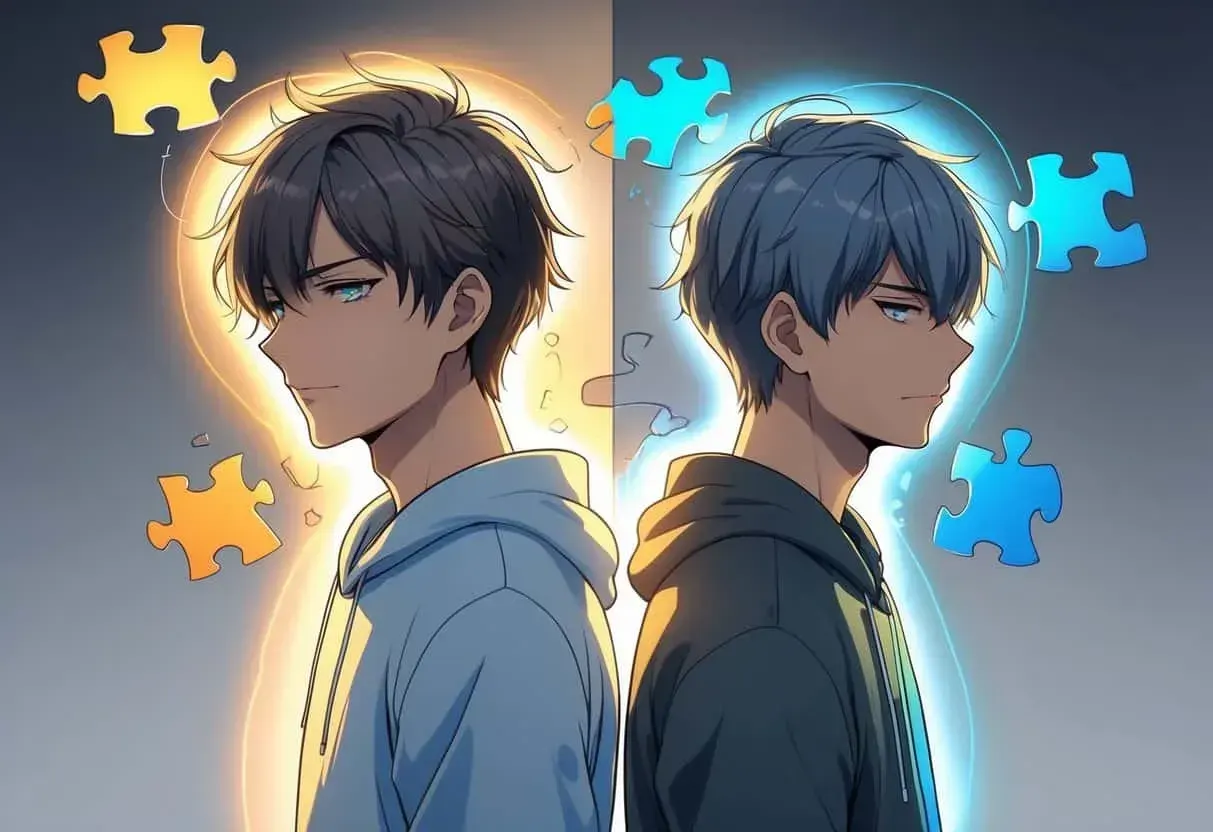
Cognitive dissonance shapes some of the most memorable moments in anime. It occurs when a character holds two contradictory beliefs or acts in ways that betray their core values, generating mental friction that demands resolution. This psychological quirk does not belong solely to textbooks; it fuels character arcs, transforms villains into tragic figures, and turns simple plots into layered investigations of human nature.
Spotting these moments enriches your viewing because you begin to understand why characters sabotage themselves, lie to themselves, or flip their moral codes entirely. It moves the story beyond right versus wrong and into the messier terrain of justification, denial, and gradual self-awareness. The tension between what a character believes and what they do becomes the narrative's beating heart, pulling audiences into a deeper emotional investment.
Series such as Death Note, Psycho-Pass, and Vinland Saga all depend on cognitive dissonance to make you question every decision the protagonist makes. You watch a character convince themselves that atrocity is kindness, or that cowardice is strategy, and the tension builds until something breaks. Whether the character ultimately shifts their beliefs or doubles down on a lie, that internal war defines the narrative. This psychological mechanism is not merely a storytelling gimmick; it is a mirror held up to the viewer's own mind, forcing reflection on how we reconcile our ideals with our actions.
What Is Cognitive Dissonance? A Psychological Foundation
The term originates from social psychology. Leon Festinger first articulated the theory in the 1950s, proposing that when people experience inconsistencies between attitudes, beliefs, and actions, they feel a psychological sting that motivates them to restore consistency. People will alter their beliefs, change their behavior, or rationalize the discrepancy to eliminate the discomfort. This discomfort is not mild; it drives real changes in perception and memory, making it one of the most powerful forces in human psychology.
In anime, this is not just academic. A character who believes they are compassionate yet lets someone die to achieve a higher goal will face that dissonance head-on. They might insist the death was unavoidable, recategorize the victim as "deserving," or bury the memory entirely. The audience watches the rationalization in real time, often hearing the character's internal monologue as they reconstruct their moral logic. This process feels authentic because it mirrors what we do in daily life when our actions clash with our self-image.
We have all made excuses for a bad decision or justified a compromise of principles. Anime dramatizes this universal experience, making it visible and visceral.
According to the American Psychological Association, cognitive dissonance can drive attitude change, selective memory, and even the creation of new beliefs. In a tightly written anime script, these shifts are not random; they are deliberate turning points. The psychological framework gives writers a toolkit for crafting realistic character transformation, moving from static archetypes to dynamic, flawed individuals.
How Cognitive Dissonance Manifests in Anime Characters
Anime creators embed dissonance through several recurring patterns. Recognizing these makes it easier to see how a character's internal conflict is designed rather than accidental. Each pattern taps into a different aspect of human psychology, from pride and loyalty to trauma and identity.
Actions That Contradict Self-Image
A classic trigger is the gap between self-perception and behavior. A warrior who defines themselves as honorable may flee from a fight and then spend the next three episodes inventing reasons why that retreat was tactical, not cowardly. The discomfort is palpable, and you watch them wrestle with evidence that challenges their identity. This dissonance can escalate: the more the character clings to their self-image, the more elaborate their rationalizations become, creating a dangerous spiral of self-deception.
Dual Loyalties and Value Conflicts
Many characters serve two masters. A spy who befriends their target experiences loyalty to both their mission and the person they have grown to care for. Every act of kindness feels like a betrayal of duty, and every act of obedience feels like a betrayal of friendship. This push-pull generates constant cognitive strain, making every scene crackle with unspoken tension. The character must choose, and either choice costs them a piece of their soul.
This pattern is especially powerful in anime because it places personal relationships at the center of moral dilemmas.
Forced Exposure to Contradictory Information
Sometimes dissonance arrives externally. A character raised to believe a certain group is subhuman meets a member of that group who shows them compassion. The new information collides with indoctrination, and the mental scrambling that follows often becomes the spine of the entire arc. The character may reject the new evidence at first, clinging to their old beliefs, but reality eventually forces a reckoning. This pattern mirrors real-world encounters with prejudice and is a powerful tool for social commentary in anime.
Moral Trade-Offs and Unavoidable Harm
When a character must choose between two bad outcomes, dissonance arises from the act of choosing itself. A leader who sacrifices a few to save the many must live with the knowledge that they personally authorized harm. They may downplay the victims' humanity or inflate the threat to justify the decision. This is not just regret; it is a frantic search for meaning in an unforgivable act.
Classic Examples of Cognitive Dissonance in Anime
Several iconic characters owe their depth to well-depicted internal conflicts. Examining their choices shows exactly how dissonance shapes a story and why these characters remain unforgettable.
Light Yagami: Righteousness as a Mask for Hubris
Light Yagami of Death Note believes he is delivering justice. He kills criminals and pictures himself as a god of a new, peaceful world. Yet his method—murder—directly contradicts his stated ideal of justice. He handles this by redefining justice so that his actions fit. He strips humanity from his victims, calling them "rotten" or "evil," and he refuses to see his own corruption.
Every time a new moral boundary gets crossed, the viewer witnesses the mental gymnastics required to maintain his self-mythology. The dissonance never fully resolves, which is why Light's fall, when it comes, feels psychologically inevitable rather than merely punitive. His arc serves as a cautionary tale about how intelligence without self-reflection breeds catastrophe.
Korra: Strength Versus Vulnerability
Korra from The Legend of Korra enters the story convinced that the Avatar must be an unshakable force. When she experiences trauma and fear, her self-definition collapses. She cannot reconcile "the strong protector" with the scared woman who freezes in combat. Her journey involves confronting that dissonance and accepting that strength includes acknowledging wounds, not denying them. This arc, discussed in analyses like those on The Mary Sue, shows how the genre uses psychological realism to drive character evolution.
Korra's eventual integration of vulnerability into her identity is a masterclass in dissonance resolution that does not erase the pain but transforms it into wisdom.
Guts: Wrath and the Longing for Gentleness
Guts of Berserk embodies a walking contradiction. He is a whirlwind of violence, yet what he truly craves is a peaceful life he has never known. He rages against monsters while becoming increasingly monstrous himself. Every instance of brutality deepens the gap between his actions and his buried wish to belong somewhere safe. The dissonance feeds his torment but also his resilience, because the faint hope of something gentler keeps him human despite the carnage.
Guts does not resolve his dissonance through rationalization; he endures it, and that endurance becomes his defining trait.
Makishima Shogo: The Idealist Who Sows Chaos
Makishima in Psycho-Pass values human freedom above all else, yet he manipulates and kills to achieve it. He loves literature, art, and genuine human expression, but his methods strip away the very humanity he claims to cherish. The audience sees him as compelling because he fully believes his own philosophy, even as his actions prove its contradiction. He is a study in how a supreme intellect can rationalize any atrocity when dissonance is left unexamined. Makishima's tragedy is that he could have been a force for constructive change, but his refusal to reconcile his methods with his ideals turned him into a destroyer.
Thorfinn: From Vengeance to Pacifism
Thorfinn in Vinland Saga spends years as a rage-fueled warrior obsessed with killing his father's slayer. His entire identity hinges on vengeance, but that goal slowly proves empty. When he finally faces the reality of his life—decades of bloodshed for nothing—the dissonance crushes his old self and, crucially, births a new one. He becomes a committed pacifist, and the show carefully depicts how such a complete reversal requires immense psychological labor. Thorfinn's transformation is one of the most radical in anime because he does not just tweak his beliefs; he discards them entirely and rebuilds from rubble.
Shinji Ikari: The Desire for Connection Versus the Fear of Pain
Shinji from Neon Genesis Evangelion desperately wants to be loved and needed, yet he pushes everyone away to avoid being hurt. He believes he is worthless, but he also pilots a giant robot to save humanity, an act that requires a sense of purpose. The gap between his self-loathing and his heroic actions creates a dissonance so intense that it drives the entire series. Shinji does not find a neat resolution; he learns to live with the contradiction, which is both more painful and more honest than a false harmony.
Storytelling Techniques That Expose Inner Conflict
Anime does not simply tell you a character is conflicted; it shows you through layered techniques that make the dissonance visceral. These methods translate abstract psychology into concrete, watchable moments.
Internal Monologue and Narration
Direct access to a character's thoughts lets you track the precise moment when belief and behavior separate. Light's mental debates, the whispered doubts of Kaneki in Tokyo Ghoul, or the frantic self-justifications of Subaru in Re:Zero all serve this function. You hear the rationalization engine running, and you become complicit as you understand it. This technique builds intimacy and tension simultaneously, making the audience feel like they are inside the character's head, witnessing the birth of a lie.
Visual Symbolism and Color Shifts
Art direction reinforces psychological states. A scene might shift from warm colors to cold blues when a character tells themselves a lie. Mirrors, shattered reflections, and shadowy half-faces visually represent a fractured self. For example, in Monster, Johan Liebert's placid exterior contrasts with the chilling emptiness in his eyes, signaling a profound disconnection between surface and depth. This visual language articulates what dialogue cannot.
Anime studios often use expressionistic backgrounds and surreal imagery to externalize what the character refuses to admit.
Soundtrack as Psychological Cue
Music often tells you when dissonance peaks. A serene track playing over a violent act creates a grotesque contrast that forces you into the character's delusion. Alternatively, sudden silence at a moment of truth can amplify the shock of self-recognition. Composers build leitmotifs that twist into darker variations as characters lose themselves. The music does not just accompany the scene; it becomes a narrator of the character's hidden state, cueing the audience to pay attention to what is not being said.
Relationship Dynamics and Dialogue
Cognitive dissonance rarely stays private. Conversations with foils, rivals, or loved ones drag the conflict into the open. A friend who says, "This isn't like you," forces the character to either adjust their self-view or reject the observation. The tension in such scenes is electric because you know one line could collapse the house of rationalizations the character has built. You see this when Eren Yeager in Attack on Titan confronts his friends—every interaction is a minefield of contradictory truths.
Dialogue becomes a weapon that either fortifies or breaches the walls of denial.
Facial Animation and Body Language
Anime often exaggerates facial expressions, but subtle details matter most for dissonance. A flicker of hesitation before a smile, a hand that trembles during a confident speech, or eyes that dart away when a key word is spoken—these micro-expressions reveal the war within. Studios like Production I.G. and Studio Bones prioritize these details, understanding that the most dramatic moments are often the quietest.
The Role of Genre in Shaping Dissonance
Different genres approach cognitive dissonance with distinct flavors, but the mechanism stays recognisable. The genre sets the stakes and the context, but the psychological core remains universal.
Psychological and Thriller Anime
Here, dissonance is the engine. Series like Paranoia Agent or Serial Experiments Lain construct entire worlds out of fractured psyches. Reality bends around the character's attempts to resolve contradictions, and the viewer is never quite sure what is objective truth versus mental self-protection. The blurring forces you to confront your own need for coherent narratives. These shows do not just depict dissonance; they infect the audience with it, making the viewing experience itself uncomfortable and reflective.
Drama and Slice-of-Life
In quieter settings, cognitive dissonance arises from social expectations. A character may feel intense jealousy toward a close friend while simultaneously believing themselves to be a good person. The conflict simmers beneath mundane activities: a shared meal, a classroom conversation. The internal discord does not explode; it corrodes, and the story unfolds through small moments of hypocrisy, softening, or confession. Shows like March Comes in Like a Lion excel at depicting these gentle but persistent fractures.
The dissonance in slice-of-life feels relatable because it mirrors the small, nagging contradictions of everyday life.
Action and War Stories
Combat heightens dissonance because choices carry immediate, irreversible costs. Soldiers ordered to commit atrocities, revolutionaries who become tyrants, heroes who sacrifice innocents—these arcs revolve around the justification of violence. The famous "one death is a tragedy, a million is a statistic" mindset appears frequently, and the best action anime, such as Legend of the Galactic Heroes, spend as much time on the psychological aftermath of battle as on the combat itself. The dissonance in war stories is often collective, affecting entire armies and nations, not just individuals.
Romance and Interpersonal Drama
Romantic storylines fill with dissonance when characters love someone they shouldn't or deny feelings they cannot suppress. The classic "I hate him but I can't stop thinking about him" plot thrives on conflicting cognitions. A character may believe they prefer independence but find themselves making sacrifices that contradict that self-image. The angst that follows is cognitively driven, not merely sentimental. Anime romance often uses this dissonance to create tension that feels intellectual, not just emotional, elevating the genre beyond simple wish fulfillment.
Mythological and Cultural Symbolism
Anime sometimes anchors internal conflict in older stories. When a narrative draws on Greek mythology or Buddhist concepts, cognitive dissonance gains a mythic dimension. A character's inner war mirrors cosmic battles between order and chaos, or attachment and enlightenment. This layering gives the psychological struggle a timeless weight and invites you to see the character as part of a larger human pattern. Shows like Mushishi or Ghost in the Shell use mythological frameworks to explore dissonance between humanity and technology, tradition and progress.
Why Cognitive Dissonance Strengthens Anime Narratives
Without dissonance, characters would be predictable and flat. Their struggles would feel like external obstacles to be overcome rather than internal transformations to be earned. The presence of contradictory beliefs and actions injects realism because actual people navigate such tensions constantly. We lie to ourselves to protect our ego; we reframe mistakes as learning rather than failings; we selectively attend to information that validates our choices. Seeing this mirrored in fiction creates a bridge between the viewer and the character, fostering empathy even for antagonists.
Moreover, cognitive dissonance generates narrative momentum. A character who comfortably inhabits their worldview has no reason to act. But one who must constantly adjust, defend, or crumble under the weight of contradiction will always be propelled forward. Every plot point becomes a test of whether the rationalization will hold. When it finally doesn't, the story often reaches its climax.
The resolution of dissonance—whether through integration, collapse, or transformation—provides the emotional payoff that audiences crave.
Dissonance also invites rewatchability. Once you know a character's arc, you can trace the early signs of contradiction that foreshadow their breakdown or growth. Scenes that seemed straightforward on a first viewing reveal layers of hidden meaning. This depth is what separates a forgettable series from one that lingers in your thoughts long after the final frame. Anime that invest time in portraying cognitive dissonance invite a more engaged kind of watching.
You are not merely passive; you are assessing justifications, spotting inconsistencies, and anticipating psychological consequences.
For creators, understanding cognitive dissonance is a practical tool. It allows writers to build characters who feel real and unpredictable, whose decisions surprise us yet make sense in hindsight. It provides a framework for moral complexity, avoiding the trap of simple heroes and villains. For viewers, recognizing dissonance opens up a new dimension of analysis, turning entertainment into a study of the human condition.
Pay attention the next time a character says one thing but does another, hesitates before a decisive act, or launches into a lofty speech defending an indefensible choice. That hesitation is the sound of their mind trying to close the gap between who they think they are and what they have actually done. And that is where the real story lives. The best anime do not just show you action; they show you the war inside the soul, and cognitive dissonance is the battlefield.