Table of Contents
The Enduring Allure of Villains Who Were Right All Along
Anime has long excelled at painting heroes and villains in unmistakably distinct shades, but the most memorable antagonists are those who make you pause and wonder whether your entire moral compass needs recalibration. These characters don’t just want to destroy the world for the sake of chaos; they often operate from a deeply held belief that the current order is broken, corrupt, or fundamentally unjust. When you look beyond their violent methods, you find a perspective that can be alarmingly rational—even sympathetic—forcing you to ask uncomfortable questions about justice, society, and your own values.
Villains who seem right all along push storytelling beyond simple good-versus-evil dynamics, inviting you into a maze of moral gray areas where the line between hero and monster blurs. By exploring their complex motivations, you uncover a richness that turns entertainment into a philosophical exercise. From exposing systemic hypocrisy to following a warped but internally consistent code of ethics, these antagonists redefine what it means to be a villain and, in doing so, reshape how you understand anime and manga. This article dissects the layered morality of such characters, the societal flaws they reveal, and the lasting impact they leave on the medium.
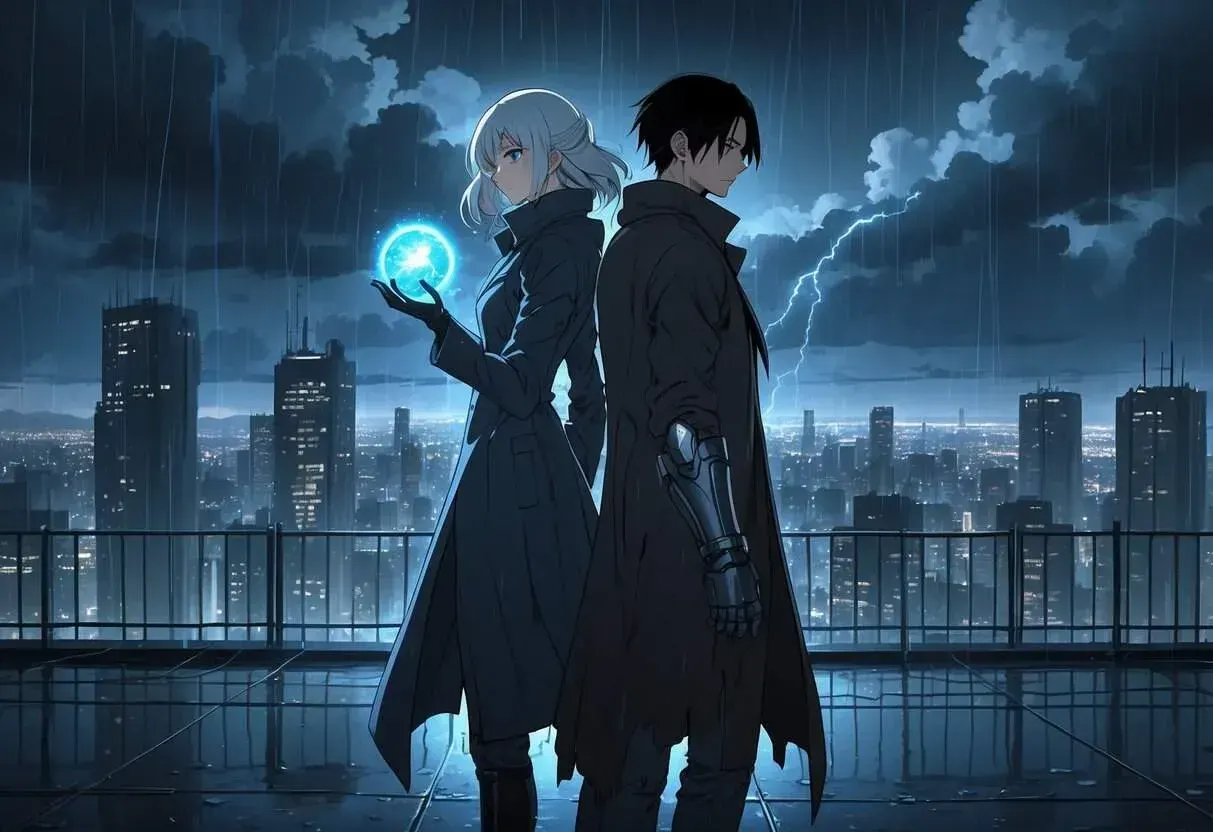
The Complexity of Good and Evil in Anime
In Western superhero narratives, morality often presents itself in binary terms: there are heroes who uphold justice and villains who threaten it. Japanese animation, however, has a long tradition of subverting this formula. Instead of clear-cut righteousness, you encounter characters whose noble intentions become entangled with destructive actions, forcing you to reexamine what you label as “good” and “evil.” This narrative approach owes much to cultural storytelling roots where spirits, demons, and warriors frequently occupy ambiguous moral territory, but it also reflects a modern appetite for psychological depth.
When an anime antagonist articulates a grievance that resonates—like condemning a corrupt government, questioning an oppressive social system, or exposing the hypocrisy of revered institutions—you can’t easily dismiss them. The story then becomes a test of your own ethical boundaries. You might find yourself rooting for a character you intellectually oppose, or feeling conflicted about the hero’s response. That discomfort is deliberate; it’s the engine that drives genuinely thought-provoking fiction.
Why Moral Ambiguity Makes Stories Stronger
Stories that refuse to hand you easy answers mirror real life more accurately. None of us exist purely on one end of the moral spectrum, and anime that leans into this truth creates narratives you can’t forget. Instead of simply waiting for the bad guy to be defeated, you become invested in why they act as they do. You start to trace the psychological and sociological threads that led them there, which deepens your engagement with the material. This complexity also opens the door to more unpredictable plot developments—villains might switch sides, reveal hidden loyalties, or force heroes to confront their own ethical failures.
Industry analysis has noted that morally gray characters consistently rank among the most popular figures in anime, a phenomenon explored in several pieces including one by MyAnimeList, which highlights how audiences are drawn to characters who challenge moral absolutes. The emotional resonance of a well-crafted anti-villain often outlasts that of a pure-hearted hero because their struggles feel more authentic—they wrestle with the same doubts, regrets, and conflicting loyalties that we do, only pushed to tragic extremes.
Iconic Villains Who Shattered Black-and-White Morality
To fully appreciate how anime challenges your ethical framework, it helps to examine specific antagonists whose actions, when examined closely, aren’t as indefensible as they first appear. These characters aren’t mere criminals or power-hungry tyrants; they are individuals operating from a coherent, if extreme, moral vision. Their stories force you to ask not just “What makes a villain?” but “What makes a hero in a broken world?”
Light Yagami: Justice or Tyranny?
Light Yagami, the protagonist-turned-villain of Death Note, remains one of the most debated figures in anime history. Initially a brilliant but disillusioned student, he stumbles upon a supernatural notebook that allows him to kill anyone by writing their name. He quickly rationalizes that by eliminating criminals he can cleanse the world and become a god of a new, peaceful society. On the surface, his goal seems almost noble—who wouldn’t want to live in a world free of murderers and rapists? Yet his slide into megalomania reveals a critical question about the nature of justice: can you truly call it justice when one unaccountable individual wields absolute power over life and death?
From a consequentialist ethical perspective, Light’s actions could be interpreted as maximizing the greater good—fewer crimes, safer streets, a deterrent effect that reshapes society. However, the show meticulously demonstrates how such power corrupts, turning Light into a manipulative killer who eliminates anyone who stands in his way, innocent or not. What makes him a villain “who was right all along” isn’t that his methods are acceptable, but that his critique of a flawed legal system—one where powerful criminals escape punishment—resonates deeply. You are forced to grapple with the uncomfortable truth that your own sense of justice might, under certain conditions, lead you down a similar path.
L: The Blurred Line Between Hero and Antagonist
Opposing Light is L, a detective whose own moral standing is far from spotless. He operates through secrecy, manipulation, and human experimentation, often putting innocents at risk to corner Kira. While he is technically the “good guy,” his tactics mirror the very disregard for individual rights that he claims to fight against. In many ways, L is a counterpoint that proves the hero-villain dichotomy is a matter of perspective. Both characters believe they represent justice, yet both are willing to cross lines that a traditional hero would never approach.
This dynamic underscores a crucial insight: when two sides of a conflict both operate in moral gray zones, the audience is forced to question the entire framework of the struggle. Is L a hero because he opposes a mass murderer, or is he merely a different flavor of authoritarian? By refusing to make L a paragon of virtue, Death Note reminds you that even those who stand against great evil are capable of chilling compromises.
Makishima Shogo: The Free Will Philosopher
While not originally part of the classic quartet, Makishima Shogo from Psycho-Pass epitomizes the theme of a villain who is disturbingly right. In a future where a system called the Sibyl System judges citizens’ mental states and criminal potential before they commit a crime, Makishima is an anomaly: he is criminally asymptomatic, meaning the system cannot read him. He rejects this enforced utopia because he sees it as the annihilation of human free will. His violent actions—orchestrating murders and inciting chaos—are not random; they are a deliberate attempt to expose the system’s fundamental inhumanity.
You may find his methods monstrous, but his critique of the Sibyl System is almost impossible to refute. A society that pre-emptively labels and isolates people based on a probabilistic algorithm sacrifices dignity, autonomy, and genuine rehabilitation for the illusion of safety. Makishima’s rebellion highlights a philosophical truth that resonates far beyond the anime: a perfect, risk-free society might be the greatest prison of all. Articles on the psychology of villainy, such as those on Psychology Today, often point out how characters like Makishima gain audience sympathy because they embody a legitimate protest against dehumanizing systems.
Gato and the Ruthless Pursuit of a Better World
In the lesser-known series Needless, Gato stands out as a villain who envisions a world freed from weakness and suffering—but his path is paved with relentless violence. He adheres to a survival-of-the-fittest philosophy, believing that only by culling the weak can a perfect society emerge. While this line of thinking is extreme, it mirrors a dark current in human history: the lure of utopia built on exclusion and sacrifice. Gato forces you to confront a grim reality: some of the most horrifying ideologies in our own world began with a desire to create a paradise.
His character reminds you that good intentions alone cannot justify any means. At the same time, the emotional core of his motivation—the pain of witnessing perpetual suffering—is something you can understand even as you recoil from his solution. This tension between empathetic origin and monstrous execution makes Gato a fascinating study in how utopian dreams can curdle into nightmares.
Rei and the Primacy of Emotion in Villainy
Not all complex villains are driven by grand philosophies or social critiques. Some, like Rei (from various iconic anime iterations), are propelled by raw, unprocessed emotion—loss, betrayal, loneliness—that calcifies into a destructive worldview. When you examine her backstory, you see a character whose moral compass wasn’t skewed by ambition but shattered by personal tragedy. Her actions may be condemnable, but they spring from a deeply human place that invites pity rather than pure hatred.
This emotional depth challenges the notion that evil must be born of malice. Rei’s path illustrates how untreated pain and isolation can warp a person’s sense of right and wrong, creating a villain who is simultaneously terrifying and heartbreaking. Her presence in a story acts as a mirror for the audience: how many of us, under similar sustained emotional trauma, would cling to our own moral clarity unscathed?
The Relationships and Tragedies That Forge Villains
Villains rarely emerge from a vacuum. Their choices are almost always a tangled product of interpersonal dynamics—rivalries, failed loves, betrayals by those they trusted—and the specific worlds they inhabit. Understanding these connections does not excuse their wrongdoing, but it does strip away the cartoonish simplicity of “born evil” and replaces it with something far more unsettling: the realization that, given the right circumstances, anyone might crack.
Rivalry, Love, and the Weight of Personal History
Intense rivalries often serve as the crucible in which a villain’s ideology is forged. A bitter defeat or a perceived betrayal by a friend can twist an otherwise decent person into a force of vengeance. You see this in characters who once stood on the same side as the hero but fell into darkness because the relationship soured, leaving scars that no moral lecture can heal. Love, too, can be a catalyst for villainy—either through its absence or its corruption. A villain who acts to protect a loved one, or who lashes out after losing everything, turns abstract evil into relatable, if tragic, human behavior.
When you piece together a villain’s personal timeline, you often find a cascade of losses and broken connections. That context doesn’t make their later crimes acceptable, but it makes them legible. You begin to see the villain as a cautionary tale about the importance of emotional support and the danger of letting grief curdle into rage.
World-Building and the Logic of “Necessary” Evil
The setting of an anime profoundly influences the moral calculus of its antagonists. In a world ravaged by war, class oppression, or supernatural disaster, extreme actions can seem like the only rational response. For instance, a villain who seeks to topple a dystopian regime may use tactics that mirror the regime’s own brutality, arguing that the ends justify the means in the absence of any peaceful avenue for change. Characters like Squealer in Shinsekai Yori (From the New World) or various antagonists in mecha series exemplify this logic—they fight against a status quo so deeply unjust that their rebellion, however destructive, carries a kernel of undeniable righteousness.
When you consider the environmental pressures shaping a villain’s world, the line between villainy and desperate heroism blurs. The world-building thus becomes a silent argument on behalf of the antagonist, challenging you to imagine what you would do if you were born into a system stacked against you.
The Enduring Legacy of Morally Gray Antagonists
Villains who make a disturbingly good point don’t just elevate a single series; they change the landscape of anime storytelling. They set a new bar for character depth, influence the design of later antagonists, and create a lasting cultural conversation about the nature of justice, authority, and redemption.
In action and mystery genres, these morally complex villains push writers to craft conflicts that can’t be resolved with a simple fight scene. The climax isn’t just about who is stronger, but whose ideology survives. This trend has spilled over into light novel adaptations and even Western media, where antiheroes and sympathetic villains have become standard. From Wonder Woman’s nuanced take on Ares to Watchmen’s Ozymandias, the influence of morally ambiguous anime antagonists is unmistakable.
For fans, returning to a series like Cowboy Bebop or Sailor Moon decades later, the villains now feel more vital than ever. They’ve become cultural touchstones that invite each new generation to reexamine what they believe. Nostalgia blends with a deeper appreciation for how these characters were never just obstacles, but reflections of the heroes’—and our own—inner turmoil. Their designs, often coded with symbols of brokenness or duality, reinforce the idea that the most dangerous enemies are the ones who force you to doubt your own righteousness.
Cultural Impact and the Evolution of Shonen Tropes
Shonen anime, once dominated by straightforward clashes between good and evil, has increasingly embraced morally layered antagonists. Modern hits like Attack on Titan essentially strip away the entire concept of a villain, presenting a cycle of violence where every side believes it is justified. That narrative shift owes a debt to earlier anime that dared to ask, “What if the bad guy has a point?” The ongoing dialogue among fans, critics, and creators ensures that the archetype will continue to evolve, pushing anime into ever more mature and thought-provoking territory.
Ultimately, anime villains who were right all along don’t give you the comfort of easy answers. They remind you that the world is messy, that systems fail, and that heroic certainty can be its own form of blindness. By holding up a dark mirror, these characters expand your understanding of what stories can achieve—and they refuse to let you leave the screen unquestioning.