Table of Contents
Memory loss functions as one of the most potent narrative devices in anime, peeling away the layers of a character’s known world and forcing them—and the audience—to ask what truly remains when the past dissolves. When a protagonist’s recollections vanish, the story shifts from a straightforward journey to a psychological excavation of selfhood, relationships, and the very nature of existence. This framing has given rise to some of the medium’s most emotionally resonant arcs, where the search for lost memories becomes synonymous with the search for identity.
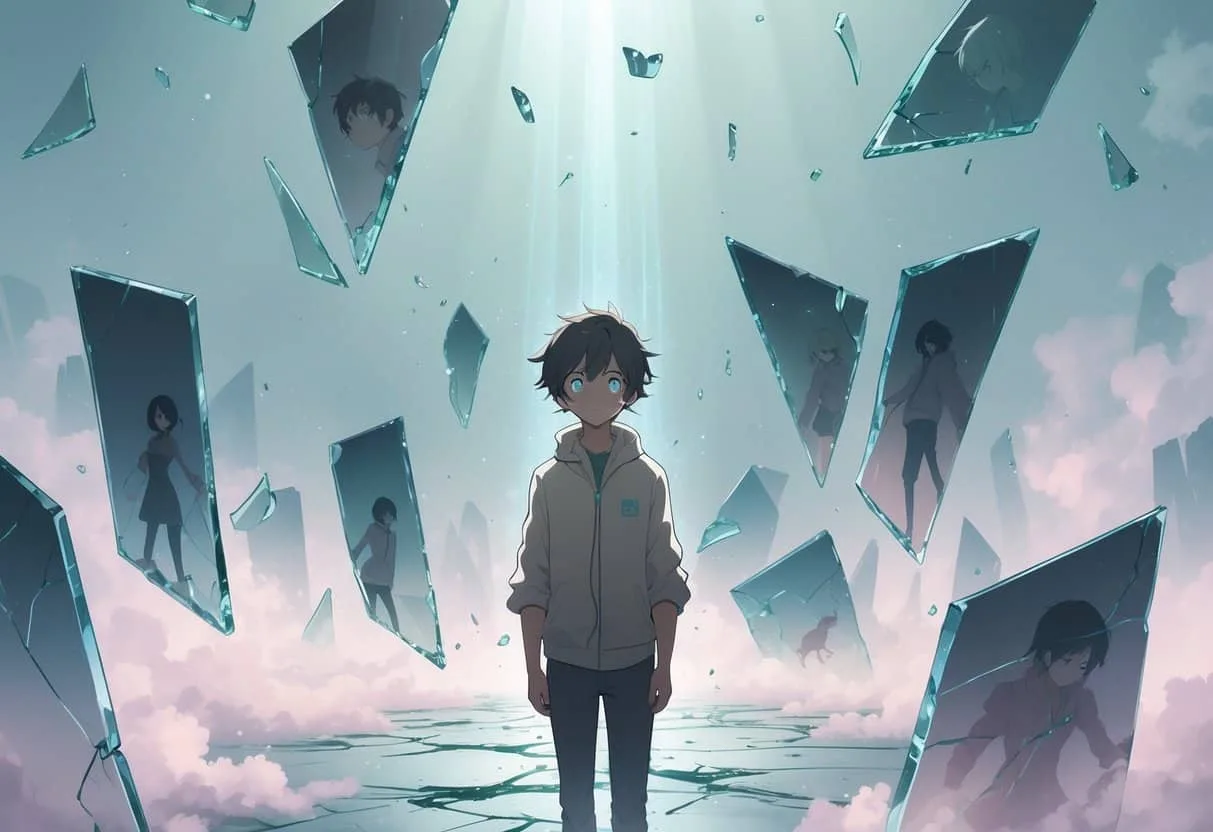
At its core, the amnesia trope in anime accomplishes far more than generating mystery. It isolates the essence of a person from their history, asking if you are still you without the experiences that sculpted your personality. This obsession with fractured remembrance has spawned a rich subgenre that crosses science fiction, romance, psychological drama, and slice-of-life, each using the blank slate of a forgotten life to examine fragile concepts of self. In the following exploration, we uncover how anime uses memory loss to drive character growth, shape storytelling, and mirror deeper cultural anxieties about connection and impermanence.
Memory as the Foundation of Identity
When an anime character loses their memories, the narrative immediately strips them of the markers that define a person: family ties, life lessons, moral convictions, and even basic habits. This sudden erasure compels you, as a viewer, to watch the reconstruction of an identity from the ground up. The process reveals that identity is not a single immutable core but a layered architecture built from both conscious recall and instinctive emotional response. In many series, the amnesiac protagonist initially embodies a purer, less burdened version of themselves, only to discover that their forgotten past holds darker secrets or profound pain. The resulting tension between who they were and who they are becoming is the engine of character development.
This blank-slate state does not render the character empty, however. Subtle traits often remain—a knack for combat, a gentle disposition, a lingering aversion to certain situations—hinting at the persistence of the self beneath the level of explicit memory. This aligns with psychological concepts of implicit memory, and anime cleverly leverages this ambiguity to keep viewers guessing about what is innate versus learned. You see this in shows where a character instinctively protects someone they do not consciously recognize, suggesting that emotional bonds transcend the recall of names or shared experiences. The tension between the cognitive void and the visceral self makes the journey toward self-understanding more poignant.
Anime also uses the fragmentation of memory to suggest that personal history is itself a constructed narrative. When a character’s past is revealed to be fabricated, implanted, or manipulated—as in some cyberpunk or psychological thrillers—the very foundation of reality crumbles. This turns the story into a philosophical inquiry about autonomy and the reliability of the mind. The struggle to reclaim a genuine past is often depicted as a fight against external systems that seek to control individuals by controlling their memories. The philosophical questions raised in Ghost in the Shell about the “ghost” and artificial memory show how the medium can use amnesia to question the nature of consciousness itself, a theme that resonates far beyond entertainment.
Emotional Currents in Relationships
The relational fallout of memory loss provides some of the most heart-wrenching scenes in anime. When a character forgets a loved one, the dynamic instantly tilts; the one who remembers becomes a stranger carrying the unbearable weight of a shared history that the other cannot access. This one-sided intimacy creates a vacuum that writers fill with longing, patience, or sometimes desperation. You might watch a character gently reintroduce themselves day after day, knowing the progress could be wiped clean, or you might see the painful choice to let go and allow the amnesiac to form a new identity free of old burdens.
These narratives emphasize that love and friendship are not merely stored data—they are living forces that can, in some cases, reignite even without direct recollection. Anime often portrays the body or the heart “remembering” what the mind has lost, an idea that taps into a deeply romantic and humanistic hope. This is especially powerful when the memory loss is used to test the authenticity of bonds formed under false pretenses. If a character falls in love with someone they later learn they had already loved before the amnesia, the story asks whether the second love is real or merely an echo. By dwelling on these questions, anime highlights the dynamic, continually renegotiated nature of identity within relationships.
Conversely, memory loss can expose the fragility of social roles. A character who forgets their status, rivalries, or grudges may suddenly see others plainly, revealing truths that social conditioning had obscured. This device allows for the resetting of antagonistic relationships and the healing of old wounds. The amnesiac becomes an unintentional mediator, their absence of history clearing space for forgiveness or authentic connection. In this way, the loss of memory is not just a personal tragedy but a catalyst for communal transformation, reminding you that identity is partly co-authored by the people around us.
Anime Masterpieces That Define the Trope
Spirited Away and the Recovery of Self
Hayao Miyazaki’s Spirited Away uses memory not as a dramatic reveal but as a quiet anchor for identity in a world of constant transformation. When Chihiro’s parents are turned into pigs and she enters the bathhouse realm, Yubaba takes her name—Sen—as a means of control. The loss of her name is a symbolic erasure of her history and personhood, making her vulnerable to permanent servitude. Her gradual reclaiming of her true name parallels her growing courage and compassion, and the scraps of memory from her childhood—like the recollection of the Kohaku River—become the keys to freeing others as well.
The film treats memory as a thread connecting Chihiro to her authentic self and her capacity for love. The famous scene where Haku remembers his real name after Chihiro recalls the river of his origin is a cathartic restoration of wholeness. This arc suggests that memory, even buried deep, can be awakened through empathy and that forgetting is not always an enemy—it can also shield us until we are strong enough to face the truth. The visual imagery of water, floating fragments, and the persistent glow of a hairband tie the theme together without a single word of exposition.
Fullmetal Alchemist: Brotherhood and the Weight of the Past
In Fullmetal Alchemist: Brotherhood, memory loss is not a central gimmick but a recurring consequence of trauma, sacrifice, and the alchemical law of equivalent exchange. The Elric brothers carry the unforgettable memory of their failed human transmutation, etched literally onto their bodies. Their quest for the Philosopher’s Stone is driven by the hope of undoing that memory’s physical scars. For other characters, however, lost memories serve as protective barriers or as ammunition in ideological warfare. Scar’s journey exemplifies how suppressed memories of genocide and loss fuel a cycle of vengeance, and his eventual recovery of compassion mirrors the reclaiming of a buried identity.
The series also examines institutional memory loss. The deliberate rewriting of history by the Amestrian government demonstrates how forgetting can be weaponized on a societal scale. Characters who uncover the truth face the daunting task of reconstructing a reality that has been meticulously erased. This layered approach elevates the trope from individual angst to a commentary on truth, justice, and the moral imperative to remember. Brotherhood insists that a complete identity cannot exist without an honest reckoning with the past, however painful that process may be.
Plastic Memories and the Preciousness of Impermanence
The 2015 series Plastic Memories builds its entire emotional architecture around a fixed, inevitable memory expiration. In a near-future world, humanoid Giftia androids live and work alongside humans, but they have a precise operational lifespan of roughly nine years. As the expiration date nears, their memories degrade and their personalities fragment, eventually requiring retrieval before they become dangerous. The protagonist, Tsukasa, partners with Isla, a Giftia nearing her own expiration, and their developing romance unfolds under the shadow of her approaching dissolution.
The series turns memory loss into a meditation on the value of transience. Knowing that every shared moment will be erased does not make those moments meaningless; instead, it infuses them with acute tenderness. Isla’s gradual decline is not portrayed as horror but as a quiet tragedy that forces both characters to cherish the present. The emotional climax, where Tsukasa must say goodbye to Isla even as her memories are slipping away, reinforces the idea that love persists beyond recollection. Plastic Memories argues that identity is not diminished by its inevitable end; rather, the limit is what makes the identity luminous and irreplaceable.
The show’s ability to merge soft moe aesthetics with profound existential sorrow has cemented its place as a key text in memory-loss anime.
Erased and the Rescue of the Past
Although Erased is known for its time-travel mechanic, the core of the story revolves around the recovery and protection of memory. Satoru Fujinuma’s involuntary leaps back to his childhood are triggered by a desperate need to piece together a forgotten chain of events surrounding a series of kidnappings and murders. His adult consciousness inhabiting his younger body allows him to act on memories that the child Satoru had suppressed or never understood. The narrative thus becomes a race to reconstruct a coherent memory of the past before it is lost to tragedy again.
The series underscores the unreliability of childhood memory and the way trauma can bury crucial truths. Satoru’s mission is not merely to save a single person but to restore an entire network of relationships that had been shattered by false narratives. Each recovered detail reshapes his identity from a passive, regretful adult into an active, heroic figure. Erased demonstrates that memory recovery is an act of resistance against a predetermined fate, and it urges the viewer to question what they themselves might have forgotten that could change everything.
Visual and Acoustic Signatures of Amnesia
Anime’s capacity to visualize mental states grants the memory-loss trope a unique aesthetic vocabulary. When a character struggles to recall, the screen might fracture into shards, dissolve into monochrome, or blur around the edges. Directors use these distortions not as gimmicks but as extensions of the character’s internal disorientation. In Spirited Away, the flickering, translucent figures that haunt Chihiro’s peripheral vision embody the fragility of her eroding connection to the real world. Similarly, series like Hyouka or March Comes in Like a Lion use abstract imagery to represent intrusive thoughts and suppressed memories, inviting you to inhabit the character’s cognitive landscape.
Sound design and score amplify this immersion. Composers often employ minimalist piano motifs or reversed audio loops to evoke the sensation of reaching for something just out of grasp. In Plastic Memories, the delicate, melancholic soundtrack mirrors Isla’s fading echoes, while sudden silences often precede the painful moment of a memory glitching away. The contrast between a full orchestral swell at a moment of recovered memory and the hollow ambient drone of the forgotten state creates an emotional pendulum that keeps the viewer deeply engaged. Voice acting also shifts subtly: characters with amnesia may speak with a flatter affect or a questioning lilt, reflecting the uncertainty of a self unmoored from its history.
The influence of landmark works like Akira and Studio Ghibli productions is unmistakable. Akira’s explosive, body-horror depictions of psychic fragmentation illustrated early on how memory and identity could be visually assaulted and reconstituted. Ghibli’s mastery of quiet, character-driven animation, where a single glance or the way a character holds an object can communicate volumes, taught the industry that the most profound identity crises often play out in the smallest gestures. Modern series continue to draw on these visual languages, combining them with digital effects to create ever more intricate representations of the mind in flux.
Genre Fusion and Cultural Reflections
Memory loss in anime refuses to be confined to a single genre. Science fiction settings lend themselves to neural implants and hacked recall, as seen in Ghost in the Shell or the dystopian web of Psycho-Pass. Romance and slice-of-life narratives use amnesia to renegotiate intimacy from zero, often with a bittersweet undercurrent. Even action-heavy shonen series deploy the trope to give a relentless warrior a moment of vulnerability, as when Goku’s memory of his Saiyan heritage surfaces and reshapes his identity in Dragon Ball Z. This generic flexibility ensures that the theme remains fresh, each new context illuminating a different facet of the human condition.
Japanese cultural concepts of impermanence—mono no aware—deeply inform these stories. The transient nature of memory echoes the awareness of life’s ephemerality that pervades much of Japanese art and literature. When an anime character’s memories fade, the narrative becomes an exploration of how to find meaning in what will inevitably vanish. This is not portrayed as defeat but as a poignant beauty. The presence of moe elements, with their emphasis on protective affection toward vulnerable characters, creates a soft buffer that makes the existential gravity more accessible.
The juxtaposition of a cute, innocent character grappling with disappearing memories can heighten the emotional impact without feeling exploitative.
Conspiracy-driven plots, where memories are stolen by shadowy organizations or governmental agencies, reflect broader cultural anxieties about surveillance, control, and the loss of personal history in an increasingly digital age. When a protagonist discovers that their entire life has been a constructed lie, the viewer confronts the unsettling possibility that identity is a fragile consensus rather than a stable fact. These stories, layered with thriller pacing and moral ambiguity, keep audiences on the edge of their seats while probing deep philosophical terrain. The growing accessibility of such titles on streaming platforms has brought these complex narratives to a global audience, fueling international conversations about memory, data, and the right to one’s own story.
The Lasting Resonance of Forgetting
Anime that employs memory loss as a central theme does more than entertain; it holds a mirror to the fragile, reconstructed nature of human identity. Every time a character wakes without a past, you are invited to consider which parts of yourself would endure if your own memories were stripped away. This narrative device transforms the personal into the universal, reminding us that identity is not a static archive but a living, dynamic process forged through choice, connection, and the courage to face what has been lost.
From the quiet, restorative magic of Spirited Away to the technologically induced amnesia of cyberpunk classics, these stories refuse easy answers. They suggest that forgetting can be a protective mercy, a weapon of oppression, or a blank canvas for growth—sometimes all at once. The emotional truths they uncover resonate because they tap into a shared fear and a shared hope: that even when memory fails, something essential remains, something capable of love, action, and renewal. In watching these characters piece themselves back together, you may find a deeper appreciation for the memories that shape your own ever-evolving story.