Table of Contents
Anime worlds linger in the mind long after the credits roll, and often it’s the architecture—the narrow alleys, soaring towers, or decaying ruins—that anchors those memories. More than painted backdrops, the spaces characters inhabit become silent narrators, shaping mood and meaning with every line and shadow. Anime leans on architecture to build atmosphere and deepen a story’s sense of place, using design to evoke emotions that dialogue alone cannot.
Architectural design in anime sets the tone, highlights themes, and builds immersive atmospheres that transcend simple scenery. Whether evoking the claustrophobia of a futuristic megacity or the peace of a countryside shrine, every beam, window, and skyline matters. By paying attention to these constructed environments, viewers discover new layers of storytelling that elevate entire series.
The Language of Space: How Architecture Shapes Anime Mood
Buildings in anime function as more than static backgrounds. They guide the eye, suggest emotional undercurrents, and chart the cultural coordinates of a story. From the first wide establishing shot to the smallest ornamental detail, architectural choices communicate volumes before any character speaks.
Beyond Backdrops: Architectural Storytelling Fundamentals
Anime architecture covers every built form on screen—homes, temples, industrial plants, entire city grids. Some are faithful replicas of real-world styles; others defy physics altogether. The function is never merely decorative. A crumbling warehouse can telegraph decay or forgotten history, while a minimalist glass tower might signal efficiency, emotional distance, or corporate ambition. The visual language of these spaces aligns with the narrative’s deeper concerns, and repeated motifs—spiraling staircases, endless corridors—embed themselves in the viewer’s subconscious.
Attention to structural detail also establishes temporal setting. A feudal village uses timber frames and thatched roofs to situate a story in a pre-modern past, whereas a hyperconnected smart city with holographic billboards suggests near-future anxiety. Anime often merges these extremes, juxtaposing traditional wooden houses beneath neon skyscrapers, a choice that speaks to Japan’s own layered urban identity and the tension between heritage and innovation.
Establishing Shots and Visual Economy
Before any action unfolds, anime frequently pauses on a wide establishing shot. These compositions concentrate on architecture to root the audience in a specific emotional and geographic location. A slow pan across misty temple grounds can instill reverence; a rapid tracking shot through congested highways and blinking billboards can create sensory overload. Such visuals are a form of silent exposition. They tell you the scale of a community, its weather, its wealth, and its mood—all without a line of dialogue.
Camera movement through architecture also controls pacing. A long, steady glide along a traditional wooden corridor may signal contemplation, whereas abrupt cuts between clashing architectural styles—say, a teahouse next to a cybernetics lab—create deliberate disorientation. Changes in the built environment often mirror plot shifts. A city that glitters with promise in the first act might reappear as a shadowed maze of locked doors once the stakes escalate, reinforcing the story’s turn toward danger or despair.
Symbolic Structures and Thematic Depth
Architecture in anime frequently operates as a visual metaphor. Tall towers can represent isolation, ambition, or cosmic connection. In many narratives, a central tower—whether a corporate headquarters, a castle, or a mysterious spire—embodies the protagonist’s goal or some hidden truth. Broken bridges and fractured walls signal ruptured relationships or impossible divides. Winding staircases may indicate a character’s internal struggle, each step a psychological burden made physical.
These symbols gain power through repetition. Buildings that reappear at key emotional beats—a childhood home glimpsed in flashbacks, a solitary shrine visited in moments of decision—anchor the story in a physical reality that viewers recognize. Because architecture outlasts individual scenes, it gives a story longevity, making the world feel lived-in and grounding abstract themes in something tangible. This anchoring effect is a significant reason why certain anime settings become iconic, discussed and deconstructed long after the series ends.
Iconic Architectural Worlds and Their Atmospheres
Some anime universes are so defined by their architecture that the setting becomes a character in its own right. Examining these environments reveals how deliberate design choices construct not just a backdrop but a complete sensory experience.
Cyberpunk Megacities: Akira and Ghost in the Shell
Akira drops viewers into Neo-Tokyo, a sprawling, chaotic metropolis packed with colossal skyscrapers, tangled expressways, and decaying districts lit by searing neon. The city’s layered design—gleaming towers rising above rubble-strewn streets—mirrors the story’s volatile energy and themes of uncontrollable power. The aesthetic of Neo-Tokyo draws on post-war reconstruction and 1980s fears of unchecked urban expansion, creating a pressure-cooker atmosphere where tension is baked into every concrete pillar and shadowed underpass.
Ghost in the Shell presents a different cyberpunk vision, one more sterile and ordered. The fictional New Port City is a web of reflective glass, elevated walkways, and persistent surveillance drones. Its architecture reinforces questions about identity, consciousness, and the erosion of privacy in a networked society. Cyberpunk settings like these use monumental scale and technological saturation to make individuals feel small, inviting philosophical contemplation alongside aesthetic awe.
Ghibli’s Handcrafted Realms: Tradition and Whimsy
Studio Ghibli’s films, from Spirited Away to My Neighbor Totoro, rely on architecture that feels handmade, organic, and deeply connected to nature. The bathhouse in Spirited Away is a sprawling, multi-tiered structure inspired by traditional Japanese architecture, blending Edo-period design with fantastical ornamentation. Wooden bridges, sliding shoji screens, and steaming pipes create a space that is at once nostalgic and otherworldly.
These environments ground fantasy in tactile detail. Every room looks lived-in, from the kitchen’s stacked dishes to the moss creeping along a forest shrine. Ghibli’s architectural approach leans into warmth and familiarity, even when the geometry becomes surreal. The result is an atmosphere of calm and wonder, where the buildings themselves seem to breathe. This sense of place invites audiences to step into the world rather than simply observe it, a signature of the studio’s lasting emotional impact.
Art Deco and Dystopia: The Legacy of Metropolis
Osamu Tezuka’s Metropolis, later adapted into a 2001 film, reimagines the comic book city through a lens of Art Deco grandeur and retro-futurism. Soaring ziggurats, monumental statues, and intricate geometric patterns create a stratified urban landscape where the wealthy reside in glittering towers while the underclass toils beneath. The architectural contrast becomes a direct commentary on class division and the dehumanizing side of technological “progress.”
The design blends early 20th-century optimism with heavy industrial machinery, resulting in a city that feels both majestic and oppressive. This hybrid style—suggesting a future that has already grown old—adds a layer of melancholy to every scene. The city isn’t just a place; it’s a statement about societal structures and the cost of ambition, echoing themes found in Fritz Lang’s silent era classic that inspired it.
Surreal and Psychological Spaces: Bakemonogatari and Madoka Magica
In Bakemonogatari and Puella Magi Madoka Magica, architecture detaches from realism to reflect internal states. Shaft’s signature visual style in Bakemonogatari fills frames with sharp angles, stark lighting, and rooms that expand or contract disconcertingly. Ordinary Japanese interiors become labyrinths of the mind, where a hallway may stretch impossibly or furniture rearranges itself, externalizing a character’s anxiety or alienation.
Madoka Magica pushes further into the abstract. Witch barriers feature collage-like spaces, patchwork rooms, and floating structures that defy physics, all rendered in mixed-media textures. These environments are less about physical location and more about emotional truth. The surreal architecture amplifies the series’ exploration of despair, hope, and sacrifice, making internal conflicts viscerally palpable. This approach demonstrates how anime can use design to bypass literal representation and connect directly with a viewer’s emotions.
Additional Worlds Where Buildings Breathe
Several other titles use architecture as a core storytelling engine. Makoto Shinkai’s Your Name contrasts the serene, temple-dotted rural town of Itomori with the frenetic verticality of Tokyo, using these architectural dichotomies to underline the characters’ separated lives and the longing that bridges them. In Attack on Titan, the colossal concentric Walls are not just defensive structures but psychological cages, shaping society’s entire worldview and fueling the narrative’s central mysteries.
Tekkonkinkreet paints Treasure Town as a chaotic, multicultural slum where clashing architectural styles—Chinese temples, European fountains, ramshackle housing—mirror the inner turmoil and resilience of its young protagonists. Blame! takes the concept of megastructure to the extreme, trapping characters inside an endless, self-replicating city where architecture has become a hostile, indifferent organism. Each of these examples extends the idea that the built environment is never neutral; it is a dynamic force that shapes behavior, emotion, and fate.
Cultural Roots and Real-World Inspirations
The architectural styles in anime rarely appear in a vacuum. They draw from Japanese history, global cityscapes, and evolving design movements, infusing fictional worlds with layers of cultural meaning.
Traditional Japanese Architecture: Timelessness and Tranquility
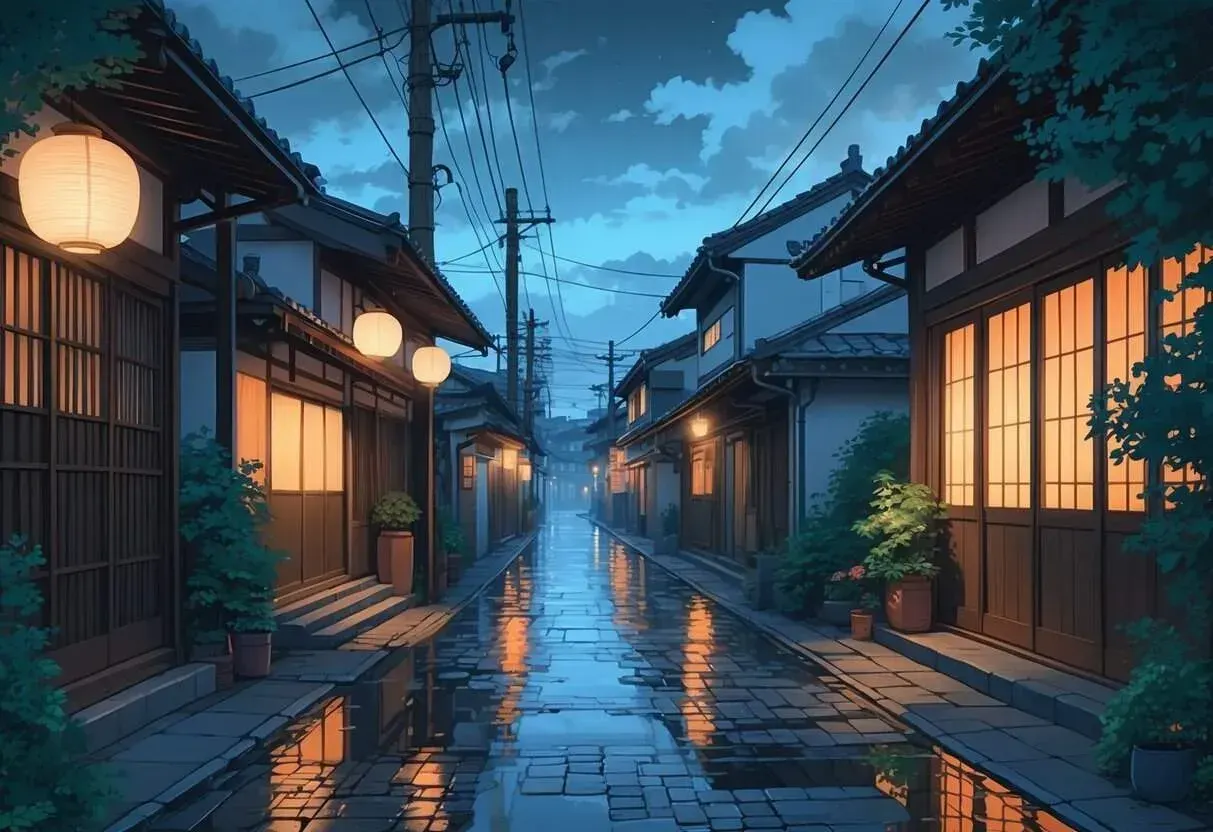
Traditional Japanese elements—wooden temples, tatami rooms, sliding fusuma doors, and engawa verandas—appear across countless anime to evoke a sense of calm, continuity, and spiritual depth. Such spaces connect characters to ancestral traditions and the natural world. Series like Mushishi lean heavily on rural homesteads, Shinto shrines, and misty mountain paths, using architecture to cultivate an atmosphere of gentle mystery and ecological reverence. The simplicity and impermanence of these wooden structures communicate a worldview where humanity and nature coexist harmoniously, even if uneasily.
These traditional designs also serve as a counterweight to modernity. When a character retreats from a bustling city to a family home in the countryside, the architectural shift marks a narrative turn inward—toward self-reflection or confronting the past. The visual contrast between sleek urbanity and weathered timber is a recurring motif in anime that deals with cultural identity and generational change.
Modern Urban Landscapes: Tokyo and Beyond
Tokyo appears in anime not just as a location but as a living, breathing organism of concrete, steel, and neon. Its dense wards, train lines, and vertiginous skyscrapers provide a familiar template that grounds speculative fiction in something recognizable. Shows like Patlabor and Tokyo Godfathers map fantastical or dramatic moments onto real districts, letting the city’s own architecture amplify the narrative’s authenticity. The labyrinthine nature of Tokyo’s backstreets, the hum of its overhead expressways, and the glow of its countless vending machines create a sensory overload that becomes a storytelling asset.
Other Japanese cities, such as Osaka or Sapporo, occasionally feature, but Tokyo’s global recognizability makes it the default archetype for urban Japan. Its blend of ultramodern high-rises next to centuries-old shrines embodies the cultural tension that many anime explore: the friction between rapid technological change and enduring tradition. This architectural duality is not just a backdrop but a thematic engine.
Global Influences: New York and European Cityscapes
When anime ventures beyond Japan, foreign cityscapes bring distinct energies. New York City, with its grid pattern, iconic skyline, and raw diversity, appears in works like Banana Fish and Durarara!! (which models Ikebukuro after an NYC-style melting pot). The verticality and relentless pace of Manhattan often symbolize ambition, danger, or the immigrant experience. European-inspired cities—gothic cathedrals, cobbled streets, half-timbered houses—appear in fantasy series like Attack on Titan’s walled districts or Princess Principal’s steampunk London, injecting a sense of historical weight and cultural otherness.
These global transplantations allow anime to tackle themes of dislocation, cosmopolitanism, and cultural exchange. The architectural vocabulary of another continent becomes a shorthand for a different set of values and social structures, enriching the worldbuilding without lengthy exposition. Even when designs are stylized or exaggerated, they remain anchored to real-world precedents that audiences intuitively understand.
Architectural Elements as Narrative Devices
Beyond sweeping cityscapes, specific architectural features and design details serve as potent narrative tools. The repetition of certain motifs across many series reveals a shared visual grammar that speaks to universal emotions.
Skyscrapers, Towers, and Vertical Hierarchy
Skyscrapers and towers in anime often encode power dynamics. Corporate headquarters that scrape the clouds suggest unchecked capitalism and social stratification; characters who ascend these buildings literally climb toward truth or confrontation. In contrast, underground or street-level dwellings signify marginalization or gritty realism. The Babel-like central tower in Penguindrum or the towering Walls in Attack on Titan become psychological as much as physical structures, defining the boundaries of knowledge and freedom.
Height and verticality also influence mood. A scene atop a high-rise observation deck can evoke isolation or breathtaking possibility, whereas a cramped subterranean bunker generates claustrophobia. Anime directors intentionally play with these spatial dynamics, using architectural scale to externalize a character’s internal state—achievement, despair, or the weight of responsibility.
Transportation Networks: Trains, Bridges, and Pathways
Transportation infrastructure is architectural in its own right and deeply woven into anime storytelling. Trains, in particular, are emblematic. They represent journeys, both literal and emotional, and often serve as liminal spaces where characters reflect or encounter fateful meetings. The iconic train sequence in Spirited Away glides across a flooded landscape, its calm interior contrasting with the surreal exterior, becoming a meditation on transition and memory.
Bridges connect disparate worlds—sometimes figuratively, like the rainbow bridge in Your Name linking rural and urban, past and present. Overpasses and elevated walkways in cyberpunk anime emphasize the separation of social strata or the labyrinthine nature of the modern city. Even mundane elements like subway stations or bus stops root a scene in a recognizable reality, adding texture and credibility to the fantastical. These networks map the emotional geography of the story.
Color Palettes, Design Motifs, and Typography
Color is an immediate architectural mood-setter. Warm ambers, ochres, and wood tones signal comfort, tradition, or nostalgia. Cold blues, grays, and clinical whites push toward isolation, sterility, or high-tech detachment. Neon pinks, purples, and electric greens electrify a scene with urban energy or latent danger. The palette often shifts within a series to mirror plot developments: a once-bright hometown may return in desaturated hues after tragedy strikes.
Design motifs—circular windows, repeating geometric grids, ornate latticework—carry symbolic connotations. Circular patterns might imply cycles, unity, or infinity, while sharp, angular designs suggest fragmentation or conflict. Signage and typography further enrich architectural verisimilitude. Kanji, katakana, and English text on shopfronts, billboards, and vending machines not only ground a location in a specific culture but also broadcast subtle information about the world’s history and the mood of its inhabitants. Together, these elements form a cohesive sensory package that guides interpretation on a subconscious level.
The Lasting Impact of Architectural Design in Anime
Architecture in anime does far more than fill empty space. It constructs the emotional and psychological framework of a story, offering viewers an unspoken language of shapes, textures, and spatial relationships. By noticing how a director frames a skyline or lingers on a cracked wall, audiences gain access to a deeper layer of narrative intent.
The strongest anime settings leave a permanent imprint, inspiring fan art, academic analysis, and even real-world architectural tourism. They remind us that space is never neutral—it carries memory, ideology, and feeling. As anime continues to evolve, the creative interplay between drawing and design will remain a cornerstone of its power to move and immerse.