Table of Contents
The Symbiotic Relationship Between Anime and Video Games
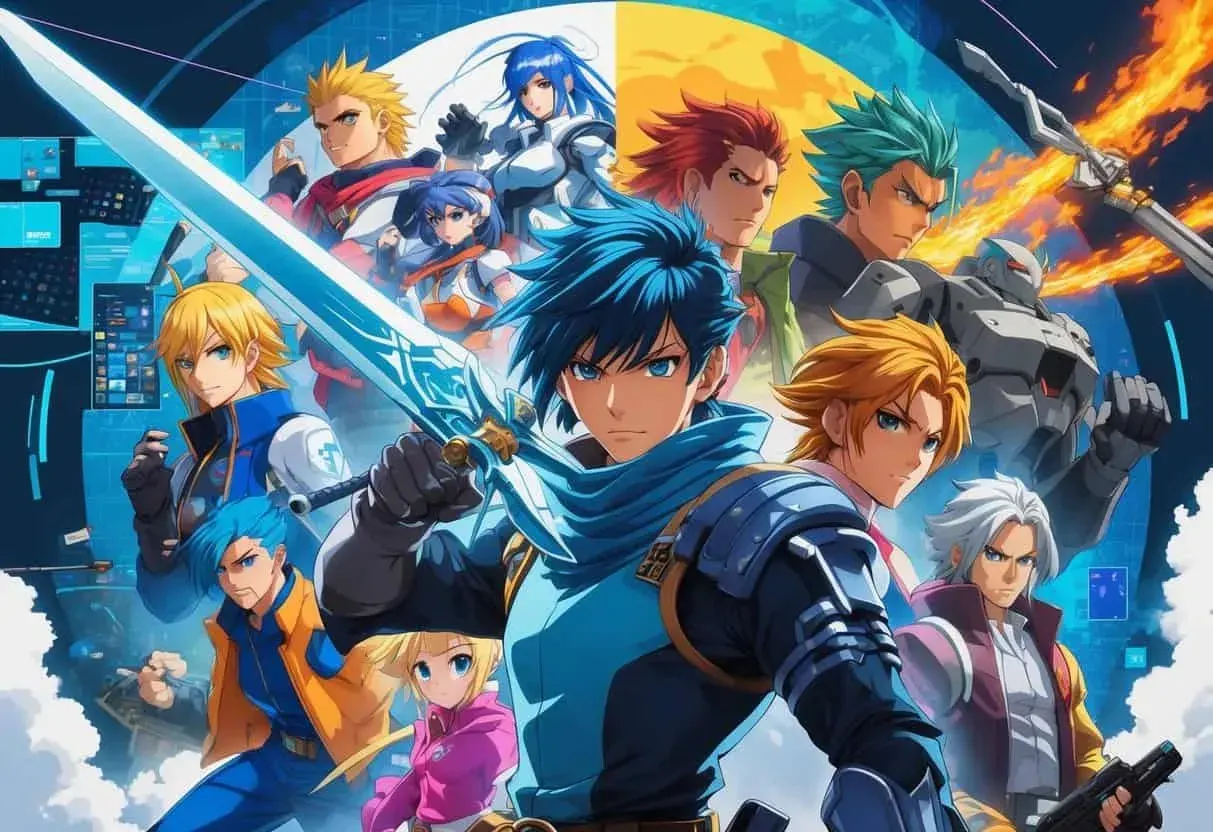
Anime and video games share a creative pulse that has been beating in tandem for decades. It is not a simple case of one medium borrowing from the other; rather, they form a dynamic feedback loop where stylistic choices, narrative structures, and character archetypes flow freely across screens. The Japanese entertainment industry, in particular, has cultivated a deep interconnectedness that allows a hit manga to transform into a beloved anime and then leap into an interactive gaming experience, or vice versa. This cross-pollination has enriched global pop culture, producing franchises that feel simultaneously cinematic and playable.
When you look closely at the design language of many iconic titles—the exaggerated expressions, the dramatic camera angles during battle sequences, the emotional weight carried by silent moments—you recognize the unmistakable signature of anime direction. Game developers have long studied the pacing of weekly television series, the visual grammar of OVAs, and the immersive world-building of feature films. In turn, animation studios have adopted game-like story branching, stat-driven character progression, and even visual novel elements to keep viewers engaged. Understanding this synergy not only deepens appreciation for both art forms but also reveals why certain franchises manage to capture such loyal, cross-generational audiences.
Anime has fundamentally shaped the aesthetic, narrative, and emotional language of modern video games, and the reverse is equally true.
Historical Roots: How Early Anime Set the Stage for Interactive Worlds
Before polygons could render expressive eyes and flowing hair, anime had already perfected the art of conveying personality through minimal lines and bold colors. The limited animation techniques pioneered by studios like Toei Animation and later Mushi Production introduced a visual economy that game developers would later emulate due to hardware constraints. Early 8-bit and 16-bit titles borrowed heavily from anime’s character design philosophy: big heads, large eyes, and simplified body proportions that read clearly on small CRT screens. This is not merely a technical adaptation; it is a stylistic kinship that made characters like Mega Man, Link, and later Cloud Strife feel like they stepped out of a Saturday morning cartoon.
The narrative templates, too, migrated directly. The hero’s journey, the reluctant warrior, the ensemble cast of misfits—these shonen and shojo tropes became the default storytelling mode for RPGs and action-adventure games. The Ys series, for example, wore its anime influences proudly from its 1987 debut, with illustrated cutscenes and a red-haired protagonist who could have auditioned for a fantasy OVA. By the time the PlayStation era arrived, full-motion video anime sequences became a major selling point, bridging the gap between passive viewing and active participation.
Anime’s Fingerprints on Genre-Defining Franchises
Castlevania: Gothic Drama Reimagined Through Animated Darkness
The Castlevania series always carried a gothic horror lineage traceable to classic Universal monsters and Hammer films. But its evolution into a narrative powerhouse owes a great deal to anime sensibilities, especially after the critically acclaimed Netflix adaptation. The animated series, helmed by Warren Ellis and produced by Powerhouse Animation, did not simply adapt the games’ plots; it injected them with a mature, character-driven angst that felt distinctly reminiscent of dark fantasy anime like Berserk or Vampire Hunter D. The relationship between Trevor Belmont, Sypha Belnades, and Alucard unfolded with the slow-burn tension and explosive payoffs typical of a well-paced anime season. The Netflix adaptation proved that game lore could be deepened rather than diluted through animation, inspiring subsequent game entries like Castlevania: Grimoire of Souls to adopt a more cinematic, dialogue-rich approach.
What makes this influence profound is how the anime’s artistic choices fed back into the game’s identity. The fluid, weighty combat choreography of the show echoed in later action titles, and the morally ambiguous villains—Dracula’s tragic backstory in particular—gave writers permission to move beyond simple “kill the monster” plots. The haunting architecture, often warping and shifting, mirrors the environmental storytelling found in anime where the setting itself becomes a character.
Dragon Quest: The Shonen Spine of Classic JRPGs
To understand Dragon Quest is to understand the blueprint of shonen anime. Akira Toriyama’s character designs weren’t just a marketing hook; they embedded the series with an instantly recognizable warmth and humor that distinguished it from more self-serious competitors. Toriyama, famed for Dragon Ball, brought his round, friendly slimes and spiky-haired heroes into a game world that felt cheerful even in peril. The episodic structure of Dragon Quest games—arriving at a new town, uncovering a local problem, defeating a monster, and growing closer to your party—mirrors the arc-based storytelling of long-running anime series. Each quest feels like a standalone episode while contributing to an overarching saga.
Moreover, the emotional payoffs in Dragon Quest rely on anime-style beats: a silent pause before a character’s sacrifice, a swelling musical cue as the hero stands back up, a comic relief interjection that defuses tension before the final act. The voice acting in modern installments, often cast with veteran seiyuu, further cements the interactive anime experience. The franchise’s enduring success highlights how adopting anime’s narrative tools—clarity of motivation, emotional directness, and visual charm—can create a timeless appeal that transcends cultural boundaries.
Sonic the Hedgehog: Blue Blur, Anime Heart
Sonic’s very existence is a product of character design principles distilled from anime. Sega’s internal competition to create a mascot that could rival Mario led to a spiky, impatient hedgehog whose look drew from the dynamic poses and exaggerated attitude of 1990s anime heroes. His cocky smirk, impatient foot-tapping idle animation, and the speed lines that follow his every movement are techniques directly imported from Japanese animation. The 1996 OVA, Sonic the Hedgehog: The Movie, solidified this connection by placing Sonic in a high-stakes sci-fi plot with moody visuals, further influencing the tone of titles like Sonic CD and the anime-inspired cinematics of Sonic Adventure.
The narrative arc of the games, with Sonic as the free-spirited hero opposing the mechanized tyranny of Dr. Eggman, echoes the nature-versus-technology themes prevalent in anime films like Nausicaä of the Valley of the Wind. While later games experimented with darker stories, the core appeal remains that of a colorful, high-speed anime in interactive form. Sonic’s enduring popularity proves that a strong, anime-rooted character design can carry a franchise through decades of industry shifts.
Design Language and Visual Storytelling: Borrowing Beyond the Surface
Anime’s influence extends well beyond character sheets. Cinematography in games often mimics the distinctive directional style of anime: cut-in reaction shots, speed-line backgrounds during charge attacks, and dramatic chiaroscuro lighting during confrontations. Games like Okami pushed this further by emulating the sumi-e ink wash aesthetic of traditional Japanese art, filtered through an anime lens of fluid motion and mythic storytelling. The result is a playable artwork that feels like an interactive Studio Ghibli short.
Even UI elements borrow from anime. Health bars styled as energy auras, menu typography that mimics stylized katakana, and victory screens that pause on dynamic group poses all create a sense of playing through a television episode. The Tales of series institutionalized this with its “Linear Motion Battle System,” which presents real-time combat framed almost as a 2D anime brawler, complete with mid-battle quips and animated spell cut-ins. These design choices are not superficial; they immerse the player in a coherent aesthetic universe that rewards fans of the medium.
Pokémon: When an Anime Shapes a Global Phenomenon
Though Pokémon began as a Game Boy title, the anime series transformed those 151 pocket monsters into a worldwide cultural juggernaut. The television show, now spanning over two decades, provided a template for how the games could emotionally engage players. Ash Ketchum’s perpetual optimism, the tearful goodbyes to released Pokémon, and the nail-biting tension of gym battles gave players a narrative vocabulary to project their own in-game journeys. The anime’s art style, polished by character designer Sayuri Ichiishi, established the definitive look for Pikachu and friends—softer, cuter, and more expressive than the original Game Freak sprites, and the games gradually aligned with this vision.
The interplay between anime and game went both ways. Pokémon that starred in the show often received event distributions in the games, and the concept of “shiny” Pokémon was highlighted in the anime before becoming a collector’s obsession in the games. This cross-media synergy cultivated a sense of a unified world where watching and playing were complementary acts. Even the competitive battling scene has been shaped by anime-inspired ideals of friendship and trust, which influence how players train and bond with their teams. The official Pokémon website continues to showcase how the anime and games evolve in lockstep, each season bringing new regions and mechanics to both formats.
Persona: High School Drama Meets Jungian Psychology Through an Anime Lens
The Persona series embodies anime’s most compelling storytelling mode: the juxtaposition of mundane high school life with supernatural intrigue. From Persona 3 onward, the games have adopted a striking visual identity that fuses Shigenori Soejima’s character art with anime cutscenes produced by studios like Production I.G. The result is a game that looks, sounds, and feels like a premium anime series you can control. The “Social Link” system, which deepens your relationships with party members, mirrors the slice-of-life pacing of shows like Clannad or Toradora!, offering intimate moments that make the high-stakes battles more emotionally resonant.
The metanarrative elements—the Velvet Room, the collective unconscious, the tarot motifs—would feel pretentious in less anime-skilled hands, but here they echo the philosophical underpinnings found in classics like Neon Genesis Evangelion. The voice acting cast includes prolific anime seiyuu, further blurring the line. Atlus has masterfully synchronized anime adaptations, manga spin-offs, and concert events to create a multimedia ecosystem where the games act as the core canon, enriched by the anime’s ability to expand side stories and character backstories. Atlus’s own portal often highlights how anime and game releases are coordinated to deepen this narrative universe.
Anime Studios Directly Crafting Game Worlds
Ni no Kuni: When Studio Ghibli Builds a Playable Fairy Tale
Rarely has the union of anime and gaming been as seamless as in Ni no Kuni: Wrath of the White Witch. Studio Ghibli, the venerated animation house behind Spirited Away and My Neighbor Totoro, did not merely provide character designs; they infused the entire project with a Ghibli-esque sensibility. The hand-drawn animated sequences, directed by Yoshiyuki Momose, flow naturally into the gameplay segments, creating a living storybook. Joe Hisaishi’s sweeping score elevates every moment, ensuring that even grinding battles feel emotionally significant. The game’s protagonist, Oliver, embarks on a journey that mirrors the coming-of-age themes of Ghibli films, complete with a fairy sidekick and a whimsical yet melancholy parallel world.
The collaboration, backed by Level-5 and supported by Sony’s publishing muscle, demonstrated that anime’s greatest studio could bring its entire aesthetic toolkit to an interactive medium without compromise. The sequel, Ni no Kuni II: Revenant Kingdom, continued this tradition, albeit with a slightly different art direction, still deeply rooted in anime visual grammar. This partnership remains a benchmark for how anime and games can merge to produce something that feels like a lost Ghibli film you can explore.
Fate/Stay Night: The Visual Novel as an Anime-Game Nexus
The Fate franchise exemplifies the fluidity of modern storytelling across media. Starting as a visual novel by Type-Moon, it evolved into multiple anime adaptations by studios like Ufotable, and spawned a vast ecosystem of fighting games, RPGs, and mobile titles, most notably Fate/Grand Order. The visual novel format itself is an anime-adjacent medium, using static sprites, text boxes, and soundtracks to simulate animated storytelling on minimal hardware. When Ufotable adapted Fate/Zero and Fate/Stay Night: Unlimited Blade Works, their signature blending of 2D and 3D animation set a new standard that directly influenced subsequent game cinematics and mobile game attack animations.
The games, particularly Fate/Grand Order, replicate the branching, character-driven narrative of the visual novel while integrating gacha mechanics. Players who come from the anime find familiar Servants rendered in gorgeous live-2D animation, and the story events often run parallel to anime broadcasts. Crunchyroll’s involvement in streaming these adaptations ensures that fans can seamlessly move from watching a Holy Grail War to commanding Servants in battle. Crunchyroll’s Fate hub is the natural bridge between the two experiences, showcasing how a single story world can thrive in both serialized and interactive formats.
Action-Adventure Expansions: Anime Energy in Playable Form
One Piece: Sailing the Grand Line in Video Games
The One Piece anime, with its record-breaking episode count and globe-spanning adventure, presents a natural template for open-world and action-adventure games. Titles like One Piece: Pirate Warriors (by Omega Force) channel the chaotic, large-scale brawls of the anime into musou-style gameplay, letting you decimate waves of Marines with Luffy’s Gum-Gum abilities. Meanwhile, One Piece Odyssey takes a turn-based RPG approach, crafting an original story that feels like a filler arc from the anime—complete with Eiichiro Oda’s character designs and a new soundtrack that evokes the series’ emotional highs.
The games remain faithful to the source material’s core tenets: the unbreakable bonds between the Straw Hat crew, the goofy humor even in dire situations, and the explosive, visually inventive combat. Many games release updated content aligned with the anime’s current arcs, so players can relive fresh episodes in an interactive format. This near-simultaneous storytelling creates a powerful engagement loop; you watch the anime on Sunday and play the game on Monday, both experiences enriching the other. The cross-media strategy keeps the One Piece phenomenon alive across generations, proving that a strong anime foundation can sustain a diverse lineup of video game adaptations.
Beyond Adaptation: How Anime Philosophy Transforms Game Mechanics
It’s not just about cutscenes or art. Anime’s narrative philosophy—the manner in which it builds tension, releases it, and uses filler episodes to develop character relationships—has reshaped game pacing. Open-world titles increasingly adopt the “episodic quest” model, where main story missions are punctuated by character-focused side quests that resemble anime OVAs. The Yakuza series, while live-action in many respects, is structurally anime: melodramatic main plots intercut with absurdly comedic substories, complete with dramatic freeze-frames and text introductions for characters.
Even gameplay systems borrow from anime tropes. Limit breaks and special attacks are often framed as characters tapping into hidden power—a motif straight from shonen anime—while friendship mechanics quantify the “power of bonds” that anime preaches. Games like Fire Emblem: Three Houses literally split time between tactical battles and anime-style academy life, allowing you to deepen relationships that directly impact combat synergy. This holistic integration of anime’s emotional logic makes the mechanics feel meaningful rather than arbitrary.
The Enduring Legacy and Future Crossovers
Looking ahead, the convergence of anime and gaming is set to deepen. Technologies like real-time cel-shading engines, AI-assisted lip-sync for multiple languages, and virtual production techniques developed by anime studios will make the gap between the two media almost imperceptible. Projects like Cyberpunk: Edgerunners demonstrated how an anime series could revitalize a game’s popularity, and the upcoming entries in franchises like Dragon Ball and Naruto continue to push the envelope in making you feel like you’re inside the show.
What remains constant is the mutual respect for storytelling craft. Game creators study anime for its emotional directness and visual flair; anime creators look to games for interactivity and world-building depth. For the audience, the reward is a rich, cross-media landscape where one love fuels another. The franchises explored here are but a few branches on a massive, intertwining tree. Each new release, be it a game or a series, adds another layer to this creative symbiosis, ensuring that anime-inspired video games will continue to capture imaginations for decades to come.