Table of Contents
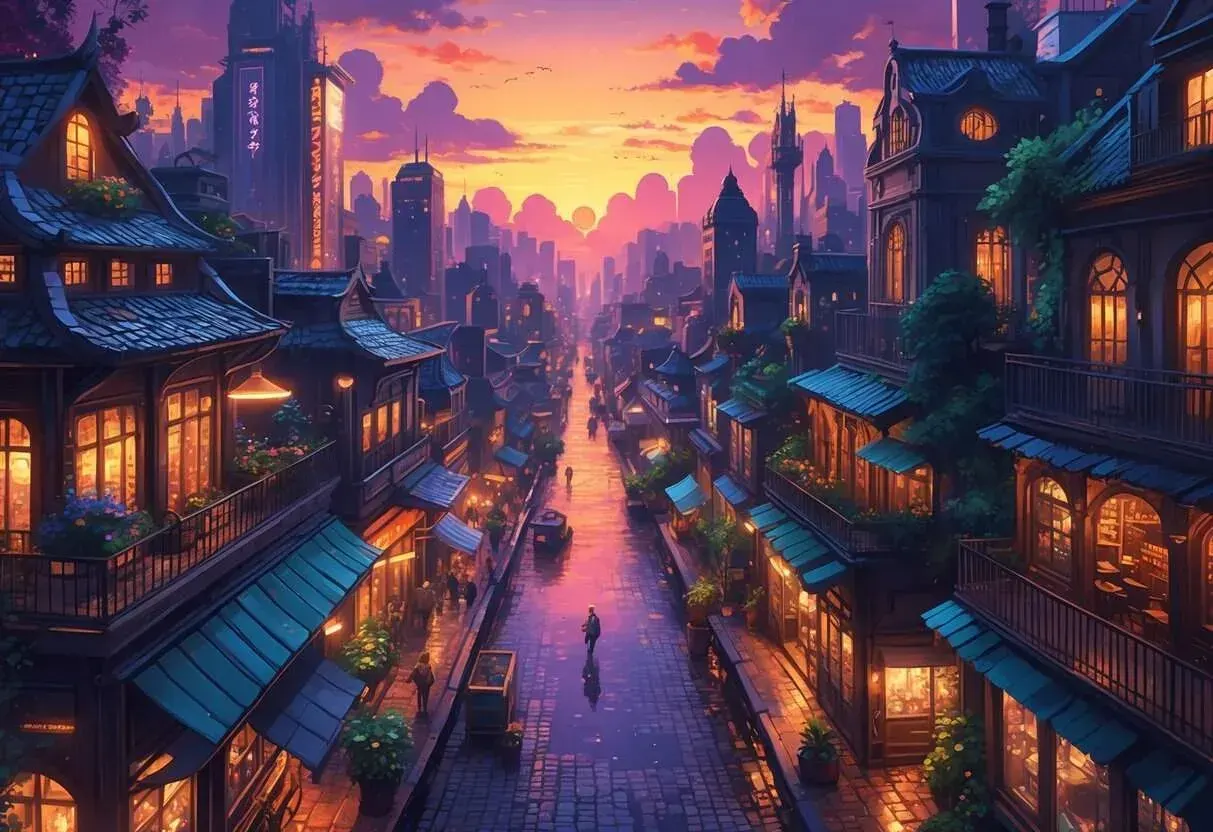
Some anime series transcend traditional storytelling by elevating their backdrop into a narrative force that rivals any protagonist. In these exceptional works, the environment isn't merely a painted scrim for action but a dynamic organism that propels the plot, sculpts character psychology, and embodies the thematic core. From sprawling space frontiers to claustrophobic cities, the setting becomes a silent sage, an unforgiving adversary, or a comforting embrace.
When the environment claims the spotlight, it transforms passive viewing into an immersive, symbiotic experience. The contours of the world dictate the rhythm of life within it, turning every shadow, color, and sound into a deliberate narrative choice. You stop observing a story and start inhabiting a place that breathes, decays, and influences desire and dread with startling intimacy.
Key Takeaways
- The setting can function as a central agent that molds narrative structure and character fates.
- A richly defined environment adds profound emotional texture and symbolic weight to the series.
- Setting-driven anime explores cultural, existential, and technological themes through the lens of physical space.
- Masterful use of visual and auditory design allows the world to communicate complex feelings without dialogue.
Defining the Setting as a Main Character in Anime
Traditional storytelling often segregates the world from its inhabitants, treating the former as inert. However, in some anime, the boundary dissolves. The setting becomes a sentient vessel of influence, shaping decisions, forcing conflict, and evolving in tandem with the plot. Recognizing this shift helps you appreciate the intricate craftsmanship behind these visceral experiences. The world is no longer a passive recipient of action but a generator of it, possessing an identity as intricate as any flesh-and-blood lead.
What Makes a Setting Central to the Narrative
A setting transitions from background to main character when it actively possesses agency. It does not simply contain events; it originates them. A labyrinthine space station with failing life support isn't just a location—it’s a ticking clock that dictates character adrenaline and morality. A cursed village isolated by mist isn't just scenery—it’s the enemy that demands psychological acknowledgment. Such settings possess memory, intention, and a form of sentience that dictates narrative law.
Look for these distinct markers of a setting that commands a story:
- It imposes a unique set of physical or metaphysical rules that characters must negotiate.
- It exhibits change over time, often mirroring or driving the internal arcs of the protagonists.
- Its atmosphere and tone are so pervasive that they become synonymous with the series' identity.
- Plot beats are inextricably tied to specific geographical or environmental phenomena.
When you immerse yourself in such a series, you soon realize that the most critical dialogue isn't always between people—it’s between the individual and the space that defines their existence. This adds a layer of complexity to character development, where growth is measured by adaptation to a sentient environment.
Contrast with Traditional Character-Driven Stories
In classic character-driven anime, the inner world of the protagonist serves as the plot’s engine. Emotional turmoil, relationship dynamics, and personal ambition trigger the sequence of events. The setting, while detailed, remains supportive: a high school in a slice-of-life or a generic fantasy kingdom for a hero’s journey. If you swapped the castle for a spaceship, the core psychological drama could remain intact.
When the setting itself takes the lead, this dynamic inverts. The plot often unravels from environmental determinism rather than individual will. Characters emerge organically from the soil of their world, acting as embodiments of its culture, decay, or wonder. For example, in a series where a sentient forest slowly encroaches on civilization, the protagonist’s arc isn't just about personal revenge; it’s a direct mediation with the land’s aggression. Here, conflict stems not from personality clashes but from ecological or urban pressure.
Understanding the environment’s rules becomes synonymous with understanding the narrative, forcing you to learn the "personality" of a place rather than just the psychology of a person.
Iconic Anime Worlds That Function as Protagonists
Certain anime have mastered the art of turning geography into biography. In these narratives, you don’t just watch characters live in a world—you watch the world live through the characters. Each location functions as a distinct character study in isolation, freedom, or memory, reshaping genre expectations. Streaming platforms offer vast libraries where these immersive worlds become palpable sensory experiences.
The Frontier of Space as a Living World
In Cowboy Bebop, the solar system is a melancholic jazz piece rendered in physical form. The series does not treat space as an empty void but as a sprawling, weather-beaten frontier town. You drift through terraformed asteroids and rust-bucket colonies, where the rampant commercialization of planets reflects a profound spiritual emptiness. The setting of Tharsis or Callisto isn't futuristic for the sake of spectacle; it’s a patchwork of collapsed dreams. The environment actively reinforces the theme of existential drift—bounty hunters chained to the past, navigating a universe that itself feels stuck in a decaying orbit.
The music, particularly Yoko Kanno’s score, isn't just sound; it’s the voice of this setting, turning space into a lonely, humming entity.
Tokyo as a Living Organism in Urban Narratives
Often rendered in panoramic shots of telephone wires and vending machine glow, Tokyo operates as a psychological mirror in urban anime. This is not the tourist-friendly district of guidebooks; it’s a breathing, claustrophobic maze where anonymity and intimacy violently coexist. In shows like Tokyo Ghoul or Durarara!!, the city’s layered infrastructure—underground passageways, towering high-rises, shadowed alleys—mirrors the hidden identities of its residents. The setting dictates a social entropy where monsters hide in plain sight and legends walk in daylight. You aren’t seeing a city; you’re seeing a network of sensory stimuli that shapes morality.
The train stations become liminal spaces of transit and transition, affecting pacing and character fate with the impersonality of a massive machine. Anime analysis hubs frequently dissect how these urban backdrops create a narrative velocity impossible to divorce from the metropolitan landscape itself.
Limbo’s Role Beyond the Cast
Angel Beats offers a masterclass in metaphysical architecture. The high school afterlife is a setting riddled with contradiction: a place of learning that teaches nothing academic but everything emotional. The geography of this purgatorial campus is a character that enforces the rules of unjust death and rebellion. You observe how the environment serves as a safety net and a cage simultaneously. The baseball diamond, the trap-laden Guild, the sun-dappled classrooms—these aren’t static textures.
They are psychic projections of unresolved trauma. The setting actively resists change until the characters confront their past, making the world a strict guardian of narrative progress. It physically alters only when a soul finds peace, tying the health of the environment directly to the emotional catharsis of the ensemble.
The Abyss as Adversary and Allegory
In Made in Abyss, the titular chasm is perhaps the most formidable protagonist of recent anime memory. It isn't a mere hole in the ground; it is a vertical ecosystem of escalating curses and wonder. The setting drives exploration with an almost predatory sentience, punishing ascent with physical corruption. You witness how the Abyss dictates the show’s entire aesthetic, from the deceptively cute surface to the warped, primal Deep Layers. The environment serves as a grim allegory for obsession and the irreversible nature of trauma.
The deeper the characters descend, the more the setting strips away their humanity, making the world a relentless engine of transformation and body horror. Every layer is a psychological gauntlet that defines the stakes more than any villain ever could.
Nature as a Spiritual Entity
Mushishi posits that the natural world is a character of profound, indifferent wisdom. The setting is an ancient, untouched Japan where mountains and rivers pulse with "mushi"—primitive life forces invisible to most. Here, the environment doesn't just influence the story; it is the story. Ginko, the wanderer, is merely an interpreter of the land’s will. You find that conflict rarely comes from malice but from the friction between human habitation and the ecosystem’s immutable rules.
The setting’s temperament fluctuates between serene generosity and chilling dispassion, teaching those who listen that nature operates on a logic far older than human morality. This transforms the anime into a quiet meditation where the rustling of leaves carries the weight of a soliloquy.
The Mechanics of Setting-Driven Storytelling
A world that functions as a character mediates every aspect of the visual and narrative methodology. It determines not just what happens, but the tempo and emotional inflection with which events unfold. The setting becomes a director, orchestrating the dance of animation cells, lighting, and sound design to speak a language beyond words. By dissecting these mechanics, you gain insight into why certain locations feel more alive than the characters traversing them.
Crafting Atmosphere and Texture
The sensory texture of a setting directly controls your suspension of disbelief. This goes beyond "detailed backgrounds" and enters the realm of tactile reality. In a post-apocalyptic wasteland like that of Girls' Last Tour, the setting’s profound emptiness creates an eerie acoustic resonance. The animation focuses on rust, concrete dust, and the weight of silence, making the world feel like a dying organism gasping for breath. This stark realism anchors the weightless philosophy of the characters.
Conversely, a hyper-saturated fantasy market creates a form of visual noise that induces a trance-like immersion, where the smell of spices and the heat of bodies almost bleed through the screen. This crafted atmosphere dictates your emotional distance—whether you are a cold observer or an intimate participant in the decay or glimmer of a location.
Technology, Power, and Societal Blueprints
Settings often serve as petri dishes for examining the sociology of power through spatial design. Take the retro-futuristic engineering of Metropolis or the stratified districts of Psycho-Pass. The architecture of control—whether it’s a bio-mechanical mainframe or towering ziggurats separating the elite from the masses—shapes the social contract. You see how the placement of walls, scanners, and transport systems dictates class mobility and psychological freedom. The setting becomes a physical manifestation of the panopticon, where technology is embedded in the very cement.
Conflict erupts not because a villain decrees it, but because the geometry of the city makes rebellion a mathematical necessity. The environment thus acts as a political treatise, exposing the tension between organic life and the cold logic of urban planning.
Conflict Engines and Spatial Catalysts
In setting-driven anime, the location often functions as a conflict generator. The sheer verticality of the Abyss or the circular imprisonment of a school in Angel Beats aren't passive backdrops—they are the root of all struggle. A setting-created obstacle, like a tectonic shift in Japan Sinks or the shifting walls of a dungeon, challenges characters to adapt physically, demanding a visualization of survival. This kind of environmental conflict is often more primal and less solvable than a villain who can be defeated. It forces a negotiation with eternity and physical law.
When resources are scarce and the landscape is hostile, the setting becomes a visual documentary on survival mechanics, stripping behavior down to its biological roots and testing the threshold of despair without a single spoken threat.
Emotional Landscapes: Where Psychology Meets Place
The most profound settings communicate through a form of non-verbal emotional transmission. They reflect the internal chaos of the mind, using weather, color theory, and spatial composition to externalize what cannot be spoken. This symbiosis turns the surrounding geography into a barometer for the soul’s pressure systems. Moments of love, loss, and revelation are not just framed by the environment—they are authored by it.
Forging Bonds, Hope, and Mourning
Settings serve as the crucible for interpersonal chemistry. A lighthouse overlooking a turbulent sea doesn't just host a confession; the sea’s roar validates the vulnerability of the moment. You can see how a sun-drenched meadow saturated in golden light makes hope feel physically tangible, pushing characters toward optimism against their nature. For instance, the quiet, snow-blanketed villages in Kanon function as a resonating chamber for grief and eventual healing. The cold isolates, but the softness of the snow cradles those who mourn.
Conversely, a location steeped in memory can anchor a character to sorrow, the physical space becoming a shrine to a past self. The setting erects walls of nostalgia, forcing you to witness characters interact not just with each other, but with the ambient memory of a place soaked in tears or laughter.
The Symphony of Sound and Visual Poetry
The auditory and visual language of a setting is its native tongue. A delicate piano motif drifting over a minimalist, empty apartment in a series like March Comes in Like a Lion turns the mundane into a character portrait of loneliness. The hollow reverberation of the room speaks louder than dialogue. You perceive emotional weight through colorist choices: a shift into overexposed whites for disassociation, or deep cyan shadows for stoic grief. The animation of non-human elements—such as rain streaking down a windowpane or dust motes dancing in a single beam of light—functions as the setting’s soliloquy.
This synesthetic harmony doesn't just present information; it provokes a somatic response, making your heart race or ache in sympatico with the world’s pulse. The setting’s atmosphere directly conducts the subconscious rhythm of your viewing experience, proving that in these stories, the air is thick with unuttered meaning.