Table of Contents
Anime’s Grip on Indonesian Youth Culture
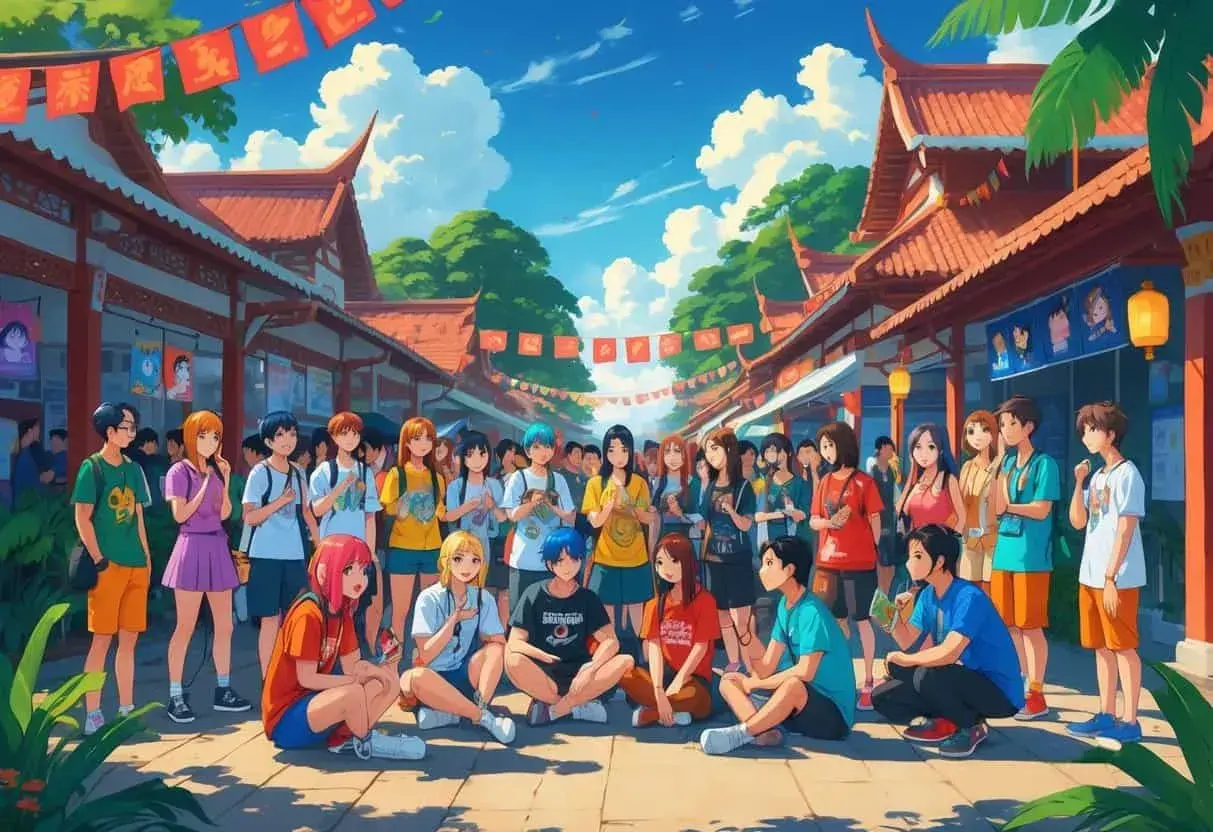
Across the sprawling archipelago of Indonesia, anime has evolved from a niche import into a defining pillar of youth identity. It's not simply about watching shows; the medium now shapes fashion, vernacular, creative output, and social interaction for millions. The explosive growth of anime and manga fandom in Indonesia is a testament to a deeply engaged otaku community that thrives in both digital spaces and physical gatherings. This cultural phenomenon has woven Japanese pop culture into the everyday lives of Indonesian teenagers and young adults, creating a vibrant subculture that feels both distinctly global and uniquely local.
The annual calendar is dotted with fan-organized meetups, sprawling conventions, and cosplay competitions. On any given weekend in Jakarta, Bandung, or Surabaya, you’ll find young people congregating in themed cafes, sketching fan art, or trading rare collectibles. This organic adoption of anime culture reflects a broader regional trend: Southeast Asia, and Indonesia in particular, has become one of the most fertile grounds for Japanese soft power expansion outside of East Asia. The blend of accessible streaming, nostalgic programming from the 1990s, and a young, digitally-native population has supercharged this movement, driving not only cultural engagement but also significant economic activity.
Big events like the Anime Festival Asia (AFA) and local conventions such as Comifuro act as catalysts, bringing together artists, cosplayers, and voice actors. These gatherings are microcosms of a larger, booming market where local creators reinterpret Japanese aesthetics through an Indonesian lens, designing batik-patterned anime merchandise or crafting cosplay armor from traditional materials. The result is an otaku ecosystem that is uniquely Southeast Asian, deeply intertwined with local identity while remaining fiercely loyal to its Japanese roots.
The Rise of Anime in Indonesia
The journey of anime in Indonesia is a story of technological shifts, nostalgic triggers, and the maturation of a generation raised on Japanese narratives. From grainy television broadcasts to high-definition streams, the way Indonesians consume anime has transformed dramatically, yet the emotional core remains remarkably consistent.
Historical Roots and Television Piracy
Anime first entered Indonesian homes through terrestrial television in the 1980s and 1990s. Shows like Doraemon, Dragon Ball, Sailor Moon, and Captain Tsubasa were dubbed into Indonesian and aired during prime children’s slots. These series became cultural touchstones, with their theme songs known by heart across generational lines. The programming was often distributed via informal networks and pirated VCDs, which, paradoxically, accelerated the spread of anime to smaller towns well before the internet became widespread. Early adopters remember lining up at rental stores to borrow laserdiscs or swapping hard drives filled with fan-subbed episodes.
This shared, semi-underground experience forged a tight-knit community that predated the modern otaku scene.
Toei Animation and Studio Pierrot dominated the airwaves, but the broadcast landscape was fragmented. Some stations adhered to strict religious content guidelines, leading to occasional censorship or abrupt show cancellations—a theme that still resonates today. Nonetheless, the exposure ignited a fascination with Japanese language, food, and social customs that would later crystallize into full-blown otaku identity. The legacy of those early broadcasts is palpable: many current Indonesian anime creators and comic artists cite these childhood experiences as their primary inspiration.
Key Influences and the Millennial Nostalgia Boom
Manga accompanied anime’s ascent, with publishers like Elex Media Komputindo and Level Comics localizing mainstream titles such as Naruto, One Piece, and Detective Conan. The storytelling, character archetypes, and visual language resonated deeply with Indonesians born in the 1990s and early 2000s—a demographic now with disposable income to spend on merchandise. Nostalgia acts as a powerful retention mechanism. Many fans in their mid-20s to early 30s actively seek out vintage merchandise, remastered series, and reboots, enabling a thriving secondary market for retro items.
Social media platforms like TikTok, Instagram, and X (formerly Twitter) function as real-time fanzines. Indonesian fans participate in global trends—sharing anime edits, reaction videos, and “waifu” debates—while also injecting local humor and references. This digital participation has blurred the line between passive viewer and active participant. Video games, from Genshin Impact (a Chinese title with heavily anime-inspired aesthetics) to long-running series like Final Fantasy, further cement the otaku lifestyle. Indonesian indie musicians have even started producing anime-influenced pop-punk and J-rock, performing at cosplay events.
The result is a self-sustaining ecosystem where consumption drives creation.
Impact of Modern Media: Streaming and the On-Demand Era
The advent of legal streaming platforms was a watershed moment. Services like Crunchyroll, Netflix, iQIYI, and regional powerhouse Bilibili now simulcast episodes with Indonesian subtitles within hours of Japanese broadcast. This near-instant access has eliminated the long waits and dodgy torrents that defined earlier fandom. Data shows Indonesia is often among the top five countries for subscriber growth on these platforms, particularly for shonen and isekai genres. A recent Statista report highlighted the meteoric rise of anime streaming revenue in emerging markets, with Indonesia singled out for its volume of mobile consumption.
The medium has also diversified beyond television. Movies like Demon Slayer: Mugen Train and Jujutsu Kaisen 0 have broken box office records in Indonesian cinemas, proving that anime can pull audiences away from Hollywood blockbusters. This commercial success has encouraged local distributors to invest in theatrical releases and fan screenings, complete with exclusive merchandise. The fusion of streaming convenience and big-screen spectacle has transformed anime from a niche hobby into a mainstream entertainment pillar for Indonesian youth.
Dynamics of Indonesian Otaku Culture
Indonesian otaku culture is not monolithic; it’s a dynamic interplay of tight-knit digital tribes, performance art, and spectacular physical gatherings. Its diversity is shaped by local socio-economic factors, linguistic creativity, and an appetite for blending Japanese influence with indigenous pop culture.
Anime Fandom Communities: Digital Native Collectives
Fandom in Indonesia is highly organized. Platforms like Discord, Line, and WhatsApp host hundreds of server-based communities dedicated to specific series, ships, or genres like mecha, slice-of-life, and tokusatsu. These groups are not merely chat rooms; they function as support networks, language exchange hubs, and educational spaces where members dissect animation techniques and narrative structures. The use of Japanese honorifics and catchphrases is common, a phenomenon linguist specialists have linked to a form of aspirational cultural capital in Southeast Asia.
Many Indonesian fans also produce their own light novels and webcomics (komik web) heavily inspired by manga, distributed through platforms like Webtoon or Line Manga. This democratization of creation has allowed individuals from smaller cities to gain followings, creating a pipeline for talented artists to enter the professional sphere. These communities often transcend borders within ASEAN; Singaporean, Malaysian, and Filipino fans regularly interact in the same online spaces, fostering a pan-Southeast Asian otaku identity that coexists with national pride.
Cosplay and Performance Arts: From Mimicry to Mastery
Cosplay (costume play) is arguably the most visible expression of Indonesian otaku culture. It’s not simply about wearing a costume; it’s a holistic performance that demands craftsmanship in sewing, prop-making, makeup, and acting. Indonesian cosplayers have gained international recognition, with figures like Clive Lee and Lia competing in world championships by meticulously recreating armor from series like Genshin Impact and Final Fantasy. Local conventions feature competitive cosplay shows with substantial cash prizes, driving innovation.
The scene also embraces “crossplay” (cross-gender cosplay) and body-positive portrayals, which gently challenge traditional gender norms. Workshops on worbla molding, LED integration, and special effects makeup have proliferated, often led by veteran cosplayers who have turned their hobby into small businesses. Performances have evolved to include elaborate skits and dance covers, with K-pop-inspired choreography now merging with anime opening recreations. The Indonesian twist often incorporates local materials—like daun lontar for ornamental details—and traditional batik motifs on character redesigns, creating a hybrid aesthetic that celebrates both sources.
Conventions and Events: The Economic Engine of Fandom
The convention circuit is the lifeblood of the Indonesian otaku economy. Major events like Comifuro (Comic Frontier), Gelaran Indonesia Bertutur, and AFA Indonesia attract tens of thousands of attendees over two or three days. These gatherings feature not only artist alleys and merchandise booths but also panel discussions with illustrators, game developers, and even Japanese guests. The floor is a riot of noise: chants of “wibu” (a reclaimed local term for weeb) and the clicking of cameras.
“When I first attended AFA in 2019, I was stunned by the sheer scale. The cosplay quality rivals any convention in the world, and the appetite for exclusive merchandise is insatiable. It’s where you realize Indonesia is no longer just a consumer; it’s a trendsetter in Southeast Asian pop culture,” said Raditya, a long-time convention organizer from Jakarta.
These events are also vital for the local economy. Hundreds of small and medium enterprises (SMEs) specializing in fan art, acrylic stands, enamel pins, and doujinshi (self-published comics) generate significant income during convention weekends. The synergy between offline events and online sales platforms like Tokopedia and Shopee has created a frictionless market for fan-made goods, further entrenching otaku culture as a legitimate and profitable creative industry.
Transnational and Economic Impact: Soft Power and Business Bridges
Anime is a prime vehicle for Japanese soft power, but in Indonesia, it functions as more than cultural diplomacy; it’s a bilateral economic driver. The relationship between Japan’s animation industry and Indonesian stakeholders is deepening, encompassing co-production, outsourcing, and marketing synergies that benefit both nations.
Role of the Japanese Animation Industry
Japan’s animation studios, from giants like MAPPA and Ufotable to boutique houses, feed a global pipeline that Indonesia eagerly consumes. The quality standards set by these studios have raised audience expectations, creating demand for high-caliber local content. This has led to interesting partnerships: Japanese intellectual property (IP) holders now actively market their characters through Indonesian convenience stores, fast food chains, and even banking services. The collaboration between Attack on Titan and local brands exemplifies how deeply anime has penetrated the Indonesian consumer landscape.
Streaming royalties and licensing deals have become a reliable revenue stream for Japanese rights holders, with Indonesia frequently cited in quarterly earnings calls as a growth market. This economic incentive encourages distributors to invest in localized Indonesian subtitles, rather than relying on English only, improving accessibility for thousands of fans who prefer their native language. The robust copyright enforcement by platforms has also reduced—but not eliminated—the rampant piracy that marked the early years.
Soft Power and Cultural Diplomacy
The Japanese government explicitly recognizes anime as a tool of cultural diplomacy through its “Cool Japan” initiative. In Indonesia, this translates into sponsorship of art exhibitions, anime film festivals, and educational exchanges. Japanese cultural centers in Jakarta, Surabaya, and Makassar regularly host language classes and calligraphy workshops, with anime serving as the primary recruitment hook. The Japan Foundation has documented how Indonesian university applications for Japanese language courses spike in correlation with the popularity of specific series.
This cultural flow is not one-directional. Indonesian values and aesthetics begin to appear in niche Japanese media, a subtle but notable shift. The soft power dynamic fosters goodwill between the two nations, smoothing over historical tensions and creating a receptive audience for other Japanese exports, from food to technology. A policy paper from Japan’s Ministry of Foreign Affairs notes that Southeast Asia, and Indonesia in particular, remains a top priority for cultural exchange programs because of the foundational role anime plays in building long-term affinity.
Indonesian-Japanese Collaboration and Outsourcing
Beyond consumption, a growing number of Indonesian animators and studios are contributing directly to Japanese productions. Indonesian studios like Kampret Animation and freelancers scattered across Java have been outsourced for in-between animation, digital painting, and 3D modeling work on popular anime titles. These arrangements allow Japanese studios to manage costs while Indonesian artists gain invaluable experience with industry-standard workflows. Training programs sponsored by the likes of Wacom and Toei Animation have popped up in Jakarta to upskill local talent, forming a de facto animation pipeline.
Collaborations also extend to gaming. Indonesian game developers create mobile titles that combine anime art styles with local mythology, finding audiences in both Japan and the domestic market. This cross-pollination is expected to accelerate as the global anime market matures and Japan seeks to co-opt creative talent from neighboring regions. The symbiotic relationship benefits both sides: Japan retains its production capacity, and Indonesia builds a high-value creative industry that can one day produce original IPs of equal caliber.
Societal and Cultural Contexts: Navigating Identity and Norms
Anime’s deep integration into Indonesian society brings with it a complex set of sociological, religious, and media-driven debates. The otaku phenomenon must negotiate local values around gender, race, religion, and public perception, creating a fascinating tension between globalized pop culture and traditional norms.
Sociology and Human Development
For many Indonesian adolescents, anime fandom acts as a psychosocial shelter. In a society that often prizes collectivism over individualism, online otaku communities provide a space to explore personal identity, confront mental health issues, and form friendships free from immediate parental oversight. Ethnographic studies conducted in Yogyakarta and Bandung indicate that cosplay and fan art serve as identity rehearsal spaces, where young people can temporarily adopt different personas and safely navigate their emerging selves.
However, access remains unequal. Middle-class youth in urban centers enjoy high-speed internet, convention tickets, and disposable income for collectibles, while their counterparts in rural eastern Indonesia often rely on pirated DVDs and intermittent Free Wi-Fi. This digital and economic divide shapes the experience of fandom: urban fans might debate the political undertones of Attack on Titan, while rural fans more commonly engage with long-running shonen through linear television reruns. The contrast highlights how anime can both democratize cultural participation and mirror existing societal inequalities.
Gender, Race, and Representation Friction
Anime’s presentation of gender and race has sparked considerable discussion within Indonesian fandom. Female characters with agency and complex narratives have attracted a strong female fanbase, who often use these figures to push back against rigid patriarchal expectations. Yet, the medium’s frequent reliance on hypersexualized female designs and “loli” tropes has drawn sharp criticism from feminist and conservative voices alike. This dualism creates a constant negotiation: female fans curate their feeds, create transformative works that fix problematic narratives, and advocate for better representation within cosplay judging criteria.
Additionally, the depiction of non-Japanese characters in anime can be reductive, occasionally resorting to outdated racial stereotypes. Indonesian fans of Chinese webcomics or Korean manhwa sometimes find more relatable Asian diversity, leading to a diversification of fan interests. These conversations have spurred local artists to create original characters that feature Indonesian physical features, settings inspired by local myths, and narratives rooted in Nusantara history. The push for inclusive representation is gradually shifting the center of gravity from pure imitation to authentic expression.
Religion, Censorship, and Urban Pressures
As the world’s largest Muslim-majority nation, Indonesia’s religious context inevitably shapes anime consumption. Content featuring polytheistic themes, overly revealing costumes, or overtly LGBTQ+ subtext (whether intentional or read-in by fans) often clashes with conservative Islamic values. The Indonesian Broadcasting Commission (KPI) has issued warnings and mandated edits for certain television broadcasts, while local manga publishers sometimes redraw sexually suggestive scenes. This environment creates a culture of self-censorship among fan communities; public cosplay appearances often adjust costumes to be more modest, and fan works distributed at conventions typically carry trigger warnings.
Urban cities like Jakarta, Surabaya, and Bandung provide a more permissive atmosphere because of their cosmopolitan, globally-exposed populations. Here, anime-themed sake bars, maid cafes, and itasha (cars decorated with anime characters) meetups thrive. In contrast, more conservative regions may view otaku gatherings with suspicion, leading organizers to seek approval from local religious leaders and community heads. The push and pull between religious norms and subcultural freedom is ongoing, and it defines the character of Indonesian anime fandom as inherently adaptive and harmonizing.
Media, Journalism, and Evolving Public Perception
Indonesian mainstream media has played a conflicted role in shaping public perception. Early 2000s newspaper columns often painted anime enthusiasts as socially maladjusted, obsessed, and unable to distinguish fiction from reality. Television reportage occasionally ran sensationalist pieces connecting anime to moral decay or even demonic influence, contributing to a stigma that forced many fans into secrecy. However, the narrative has shifted markedly over the past decade.
Today, outlets like The Jakarta Post and Kumparan regularly run features on cosplay as an art form, the economic potential of creative industries, and the mental health benefits of fandom communities. Documentary projects showcase the lives of professional cosplayers and indie comic artists, humanizing the otaku and celebrating their craftsmanship. Social media has massively accelerated this change; Indonesian netizens quickly mobilize to defend their community against negative press, using trending hashtags and coordinated rebuttals. The public perception is now more nuanced: anime fandom is increasingly seen as a legitimate, albeit quirky, passion that fuels entrepreneurship, art, and cross-cultural connection. This evolving understanding suggests that otaku culture is not just a passing trend but a lasting structural feature of Indonesian youth identity.
The interdependence between streaming platforms, Japanese IP holders, and the grassroots Indonesian community has created a self-reinforcing cycle. As more young Indonesians pour their creativity into cosplay, comics, and community-building, they simultaneously become more voracious consumers of anime and manga. This boom is not just about entertainment; it’s about belonging, economic opportunity, and the ongoing reshaping of what it means to be a modern Indonesian youth in a hyper-connected world.