Table of Contents
The Evolving Role of Anime Games in Canonical Storytelling
Anime-based games have long served as digital souvenirs for fans, but the landscape has shifted dramatically. The most impactful titles no longer simply retread familiar arcs—they weave original storylines, introduce characters who feel as essential as the source cast, and answer lingering questions the anime left behind. These games expand the canon and lore by forging narrative branches that fit seamlessly into the established universe, turning playtime into a legitimate extension of the world you love.
For players, the reward is profound: a deeper grasp of character motivations, a front-row seat to untold histories, and the chance to shape events that the original anime only hinted at. This isn’t about filler content; it’s about enrichment that respects the core material while daring to add new dimensions. Across consoles, PC, and mobile platforms, a dedicated lineup of titles proves that the most faithful adaptations are often those that dare to write their own chapters.
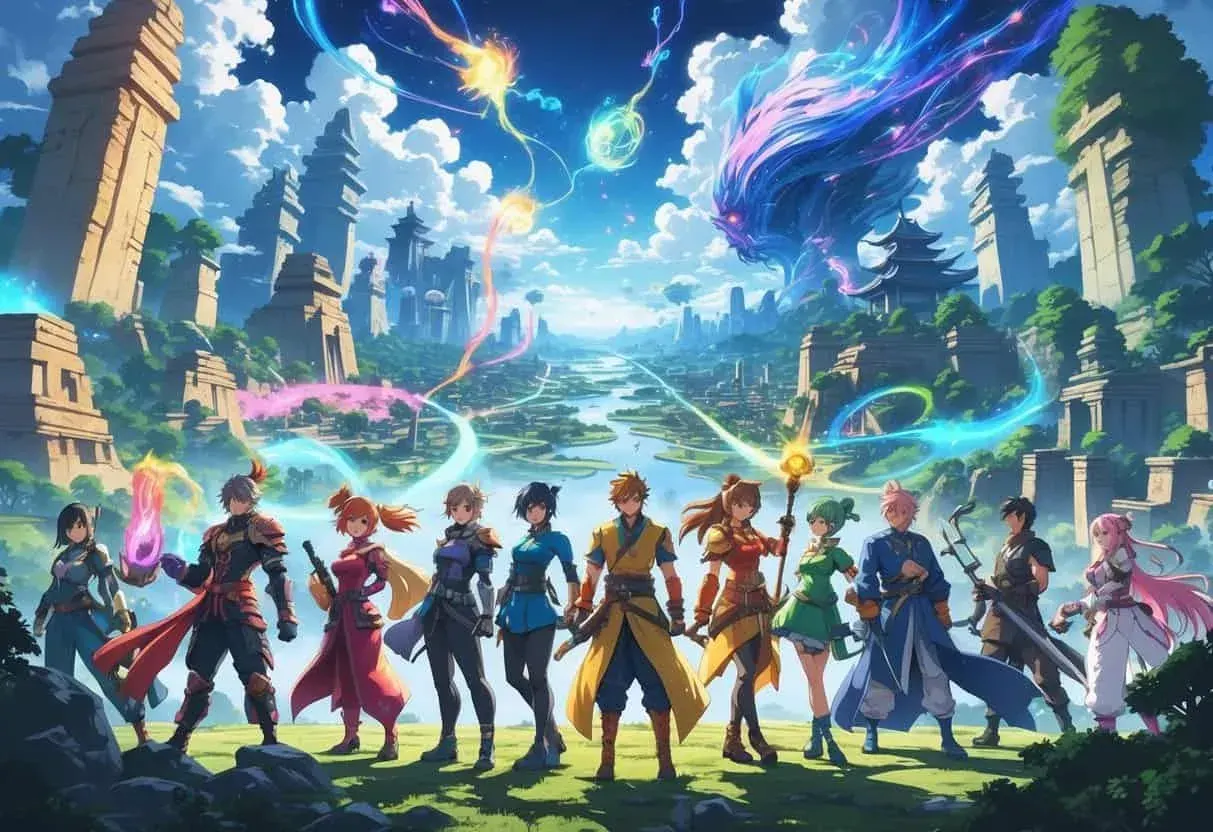
How Anime Games Build Upon Established Universes
Filling Narrative Gaps That the Anime Overlooked
Anime series, constrained by episode counts and broadcast schedules, often compress time between major events or leave secondary characters underdeveloped. Games step in to bridge those spaces with vivid detail. They explore the months of training that a protagonist undertakes off-screen, the secret meetings that set a rebellion in motion, or the quiet moments that cement a rivalry into genuine friendship.
In many titles, you are invited to walk through side stories that feel as vital as any televised arc. A well-crafted narrative expansion will supply context—why a character suddenly changed allegiances, what motivated a villain’s early cruelty, or how a kingdom rebuilt after a climactic battle. This connective tissue turns an episodic adventure into a cohesive chronicle. The effect is a smoother, richer story that rewards your investment with a fuller understanding of the world.
Introducing Original Characters and Side Stories That Stick
Perhaps the greatest gift these games offer is a roster of original characters designed not as disposable extras, but as integral threads in the tapestry of the franchise. These new faces often carry relationships, grudges, and ambitions that intersect meaningfully with existing heroes and villains. When executed with care, an original character can feel so embedded in the canon that you find yourself checking whether they appeared in a manga one-shot or drama CD.
Such additions work because they operate within the established timeline without contradicting known events. They may uncover a hidden faction that always existed in the lore, or they might serve as a mirror that reflects new facets of a protagonist’s personality. By interacting with these characters, you experience the anime universe from angles the television screen could never provide, deepening your emotional connection to the setting.
Expanding World-Building Through Interactive Exploration
Games possess a unique advantage over passive media: they let you inhabit spaces. Walking through a faithfully recreated Hidden Leaf Village or piloting a ship across the Grand Line transforms lore from something you simply watch into something you actively touch. Environments brim with details—shop signs written in the anime’s language, discarded mementos that hint at past quests, and NPCs who share local gossip—that collectively thicken the texture of the world.
Gameplay itself becomes a vessel for expansion. Exploration quests might reveal the origin of a legendary weapon, crafting systems can show how everyday items support a hero’s journey, and dialogue choices often unlock alternative perspectives on key events. Even “what-if” scenarios and alternate timeline paths, when handled carefully, reinforce the main canon by showing how fragile pivotal moments truly are. These layers reward curiosity and make every corner of the universe feel lived-in.
Landmark Titles That Shaped Franchise Lore
Dragon Ball Xenoverse and the Time Patrol’s Canonical Interventions
The Dragon Ball Xenoverse series, particularly Dragon Ball Xenoverse 2, takes the radical step of making you a Time Patroller tasked with restoring history after distortions threaten the timeline. This framing device is no mere nod to fan service; it actively expands the mythos. You witness altered versions of iconic battles, meet characters trapped in paradoxes, and uncover the influence of demonic forces that had only been whispered about in the source material.
The game introduces the Supreme Kai of Time and her entourage as fully canonized elements that later appeared in official spin-offs. By allowing you to create a custom warrior who learns from Goku’s spirit and intervenes across eras, Xenoverse weaves the player’s journey into the fabric of Dragon Ball history. This approach turns each mission into a miniature lore capsule, adding depth to the entire saga without overwriting its cherished moments.
Digimon Story Cyber Sleuth: Hackers, Eaters, and the Digital World’s Hidden Layers
The Digimon Story Cyber Sleuth duology—Digimon Story Cyber Sleuth Complete Edition—plunges into a side of the Digital World rarely explored in the anime. Set in a near-future Tokyo where EDEN Syndrome blurs the line between cyberspace and reality, the games introduce the concept of Eaters: amorphous, data-devouring entities that twist memories and threaten both worlds. This original antagonist type adds a psychological horror layer to the franchise’s digital mythology.
The narrative follows hackers like Aiba and Keisuke, and later the protagonist of Hacker’s Memory, as they navigate conspiracies, digital erosion, and the moral weight of their actions. The games enrich Digimon lore by showing how hackers operate in society, how the Digital World can physically bleed into reality, and how even background Digimon possess histories that affect the larger conflict. Characters such as Hiro emerge as pivotal figures whose stories complement—and sometimes redefine—what you thought you knew about the Royal Knights and parallel dimensions. The result is a complex, mature expansion that feels like a lost season of the anime.
Naruto to Boruto: Shinobi Striker and the Evolution of the Next Generation
While many Naruto games faithfully reenact the saga, Naruto to Boruto: Shinobi Striker forges new ground by centering on a custom ninja who joins the world’s most iconic teams. Through VR-style ninjutsu training missions, you glimpse how the shinobi world has changed in the Boruto era—new technologies, shifting village politics, and the lasting legacy of the Fourth Great Ninja War. The game’s original missions often expand on the roles of secondary characters, showing how they mentor the next generation.
By letting you create an avatar who fights alongside Naruto Uzumaki’s grown-up peers, Shinobi Striker fleshes out the connective tissue between the classic series and its sequel. You learn how rivalries softened, how alliances were forged, and how the concept of the ninja evolved from hired blade to guardian of peace. These narrative touches don’t replace the anime; they reinforce the passing of the torch as a living, breathing process that you get to influence.
Transmedia Expansion: OVAs, Manga, and the Symbiotic Loop
Games don’t exist in a vacuum. The most ambitious anime-based titles seed their original storylines into other media, creating a feedback loop that validates the game’s content as essential canon. OVAs often adapt a game’s exclusive scenario, giving characters like the time-traveling protagonist of Dragon Ball Xenoverse an animated presence. Manga chapters delve into a conflict only alluded to in the game, such as the backstory of a secret Akatsuki member introduced in a Naruto title.
These cross-media extensions serve a dual purpose. They reward players who invest time in the game with a richer multimedia tapestry, and they grant anime-only fans a reason to revisit the franchise through a new lens. When a manga volume depicts a hacker’s struggle against an Eater before the events of Cyber Sleuth, it validates that story as a canonical prequel. This synergy elevates the game from side content to foundational lore, making the entire franchise feel more cohesive and intentionally crafted.
Platform Accessibility and the Democratization of Lore Exploration
Console Powerhouses: PlayStation, Xbox, and High-Fidelity Storytelling
PlayStation 4 and PlayStation 5 remain premier destinations for anime games that expand lore with cinematic flair. Titles like Dragon Ball Z: Kakarot add hours of original sub-quests and everyday life moments that fill out the Z-warriors’ years between battles, while leveraging the system’s hardware to deliver seamless transitions from cutscene to combat. Exclusive DLC often introduces new story arcs—further developing characters like Trunks or Android 21—that tie directly into the expanded mythos.
Xbox, despite a smaller anime game library, still offers console-quality lore expansions through titles such as Sword Art Online: Fatal Bullet and the Naruto Storm legacy collections. With subscription services like Game Pass occasionally spotlighting these games, even fans who primarily use Microsoft’s ecosystem can access canon-rich narratives without compromise.
The Switch Factor and PC Modding Communities
The Nintendo Switch brings portability to the equation, allowing you to explore expanded anime worlds during a commute or in a quiet evening. Games like One Piece: Pirate Warriors 4 and Attack on Titan 2 on Switch deliver full-fledged original stories—such as the “Territory Recovery Mode” that inserts your custom character into the Survey Corps—while touch-screen input and local co-op make connecting with friends a tactile experience. Exclusive add-ons sometimes deepen the lore in ways the other versions only hint at.
On PC, modding communities take expansion into their own hands. Dragon Ball Xenoverse 2 and Naruto Storm 4 benefit from user-created characters, movesets, and even mini-story quests that have unofficially extended the games’ lifespans by years. While not always official, these mods demonstrate the profound hunger for more lore and the willingness of fans to craft it themselves. Official updates and Steam Workshop support further blur the line between developer and community storyteller.
Cross-Platform Continuity and Cloud-Synced Sagas
Increasingly, anime games support cross-platform progression or at least cloud saves, which means your lore-rich journey never stays locked to a single device. Genshin Impact’s model, while not strictly anime-based in the traditional sense, has influenced how anime-style titles handle saves across PlayStation, PC, and mobile. More directly, Jump Force and upcoming Bandai Namco titles experiment with shared multiplayer lobbies and account-linked DLC, ensuring that the canon-expanding content you unlock follows you everywhere.
This continuity fosters a seamless relationship with the lore. You might start a mission that reveals the origin of a character’s scar on console, then complete its follow-up quest on your Switch during lunch, and finally access the lore book on your phone via a companion app. The narrative becomes a persistent thread woven into your daily life, reinforcing your investment in the expanded universe.
The Lasting Impact on Canon: How Games Reshape the Original Narrative
From Hackers to Eater: Interconnected Plot Threads in Digimon’s Digital World
In Digimon Story Cyber Sleuth and its sequel, the journey from ordinary hacker to someone who confronts the eldritch nature of the Eaters redefines how fans perceive the Digital World. The narrative doesn’t just add a villain; it recontextualizes entire aspects of Digimon evolution and network security. Hackers are shown as a spectrum—some merely thrill-seekers, others moral architects—and the Eater phenomenon emerges as an existential threat born from data consumption, tying into real-world fears of digital amnesia.
By placing a character like Hiro, a young hacker grappling with loss and identity, at the heart of a crisis that spans parallel worlds, the game demonstrates how personal stakes can reverberate through a universe. His choices affect not only his Digimon partner but the balance between two dimensions. These narrative threads feed back into official timelines and spark discussions about the nature of Digimon as digital life forms, deepening the franchise’s philosophical underpinnings.
Combat Rhythm as an Emotional Conduit
While beat mechanics are often viewed as pure gameplay flair, in narrative-driven anime games they become a conduit for emotional arc. Consider Attack on Titan 2: the omni-directional mobility gear requires precise timing to latch onto a Titan’s nape, mirroring the split-second decisions that define the scouts’ mortality. The game’s storyline, which places your created soldier amid the series’ most harrowing battles, uses this rhythmic combat to heighten the desperation and camaraderie of the original anime.
Similarly, in Scarlet Nexus—an anime-styled title that spawned its own animated series—combat beats sync with the protagonist’s psycho-kinetic talents, reflecting their mental state and relationship with allies. While not an existing anime license, it illustrates how rhythm-based action can reinforce story themes. Licensed games that adopt this approach, from Dragon Ball FighterZ’s dramatic finishes to Persona 5 Strikers’ musou-inspired flow, channel the source material’s emotional tempo directly into your fingertips. This fusion makes every perfectly timed strike feel like a narrative payoff, turning action sequences into story beats you physically enact.
Hiro and the Unsung Heroes Who Anchor Expanded Universes
Original protagonists like Hiro in Digimon Story Cyber Sleuth: Hacker’s Memory prove that a new face can become indispensable to a decades-old franchise. Hiro begins as a reluctant hacker driven by personal tragedy and slowly transforms into a figure whose decisions influence the fate of the entire Digital World. His arc fills a crucial gap—showing the human cost of the cyber-terrorism that the main game’s protagonist only glimpses from a distance.
Such characters stand alongside other notable additions: Shallot in Dragon Ball Legends, whose amnesia-laced journey unveils a new ancient Saiyan history; or the custom pilots in Mobile Suit Gundam Battle Operation 2, whose logged experiences become part of the Universal Century’s expanding archive. These unsung heroes don’t overshadow the icons; they ground them, revealing that every legendary saga contains countless ordinary souls whose stories are just as vital to the universe’s tapestry. By immersing yourself in their struggles, you come to realize that canon isn’t a fixed monolith—it’s a living chronicle that grows with every new voice.