Table of Contents
The Creative Genius Behind Mob Psycho 100 and One Punch Man
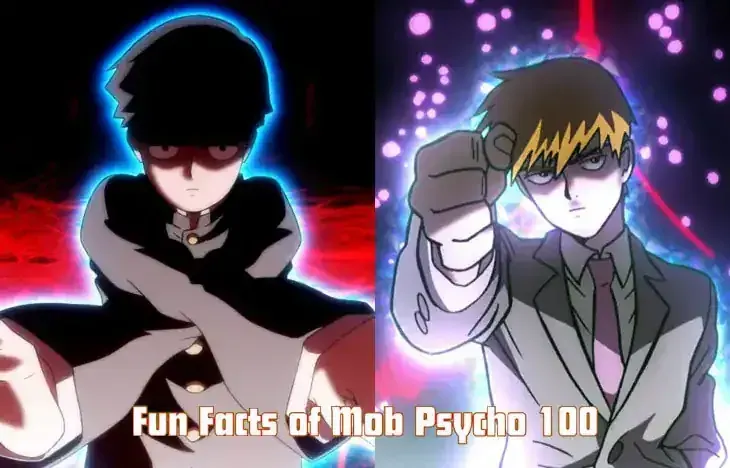
ONE, the pseudonymous manga artist, occupies a rare position in the industry—he created not one but two massively successful series that redefined their respective genres. While One Punch Man became a global phenomenon through Yusuke Murata's stunning redraw, Mob Psycho 100 stands as ONE's more personal work, retaining his original rough-hewn art style throughout its publication. The contrast between the two series reveals ONE's remarkable range. Saitama exists at the end of his journey, bored with omnipotence, while Shigeo "Mob" Kageyama sits at the beginning of his, grappling with adolescence and emotional suppression. Both protagonists are absurdly powerful, but where Saitama's conflict is existential ennui, Mob's struggle is deeply human—learning to express feelings, form genuine connections, and accept that psychic abilities do not make someone inherently superior.
This philosophical divergence makes Mob Psycho 100 resonate with audiences on an emotional level that pure action series rarely achieve. ONE originally published the webcomic version on his personal site before it was picked up for serialization in Weekly Shōnen Sunday and later adapted by Studio Bones into the acclaimed anime.
The Live-Action Adaptation That Surprised Fans
Adapting an anime renowned for its explosive visual creativity into live-action seems almost impossible, yet a Japanese television drama attempted exactly that in 2018. The 12-episode series aired on TV Tokyo and later became available internationally through Hulu, starring Tatsuomi Hamada as Mob. The production took an appropriately theatrical approach to psychic combat, using practical effects, wire work, and stylized choreography to approximate the anime's kinetic energy. Hamada's deadpan delivery captures Mob's emotional flatness without making him wooden, and the makeup department's rendering of characters like Dimple demonstrates how practical effects can honor the source material. Arata Yamanaka's portrayal of Reigen Arataka deserves special mention—he embodies the character's fast-talking con man charisma while hinting at the genuine care Reigen harbors for his young protégé. While no live-action can fully replicate the anime's kaleidoscopic visual language, this adaptation works because it understands that the show's heart lies in its character dynamics, not just its spectacle.
The salt punch, Reigen's signature move, translates surprisingly well to live-action physical comedy.
Understanding Mob's Psychic Power Categories
The esper abilities in Mob Psycho 100 follow a defined taxonomy that adds structural clarity to the otherwise chaotic battles. Telekinesis forms the foundation—Mob's default power allows him to manipulate objects, create shockwaves, and defend against attacks through sheer mental force. This broad category encompasses everything from lifting a spoon to redirecting a barrage of projectiles mid-flight. Psychic barriers represent the defensive specialization, creating invisible shields that absorb or deflect incoming damage; Mob's barriers grow proportionally stronger as his emotional percentage climbs. Astral projection enables Mob to separate his consciousness from his physical body, a technique that proves strategically vital during several encounters where physical presence would be a liability.
Levitation grants aerial mobility, though Mob typically uses this sparingly compared to combat-focused espers who prioritize flight as their primary movement. Pyrokinesis rounds out the offensive toolkit, allowing controlled flame generation. Each category reflects an aspect of Mob's developing mastery—he instinctively favors telekinesis because it aligns with his desire for control, while more destructive abilities like pyrokinesis emerge only when his emotional restraint fractures at 100% and beyond.
Hidden References and Easter Eggs Throughout the Series
Sharp-eyed viewers can spot dozens of cross-references woven into the background details of Mob Psycho 100. Reigen's phone wallpaper features Saitama's unmistakable bald head, and during quieter moments Mob can be seen reading physical copies of the One Punch Man manga. Background characters sometimes wear clothing bearing Saitama's image or the Hero Association logo. These nods operate on multiple levels—they acknowledge the shared creative universe while reinforcing the ordinariness of these characters' daily lives. Beyond ONE's own works, the series pays homage to broader anime and manga culture.
The Body Improvement Club's training montages echo classic shōnen conditioning sequences, Teruki Hanazawa's flamboyant poses channel JoJo's Bizarre Adventure, and several antagonist designs reference Dragon Ball villains through their musculature and energy auras. Studio Bones animators reportedly inserted these references collaboratively, treating them as a love letter to the medium that shaped their careers. Unlike some self-referential humor that breaks immersion, these Easter eggs remain unobtrusive—casual viewers miss nothing, while devoted fans gain an extra layer of enjoyment from spotting each hidden tribute during rewatches.
Studio Bones' Groundbreaking Animation Approach
The visual identity of Mob Psycho 100 represents one of the most artistically adventurous productions in modern anime. Director Yuzuru Tachikawa and the team at Studio Bones deliberately rejected the standardized character sheets and clean linework that dominate the industry, instead embracing a multimedia collage approach that honors ONE's original sketchy aesthetic. Individual episodes seamlessly blend pencil-on-paper textures, gouache-painted backgrounds, digital compositing, and even stop-motion elements. The animation quality deliberately fluctuates based on emotional context—quiet conversational scenes maintain loose, expressive linework reminiscent of storyboards, while combat sequences explode into fluid sakuga animation with smears, impact frames, and color shifts that convey raw power beyond what realistic physics could depict. Episode 5 of Season 2, featuring Mob's confrontation with Mogami, deploys crayon-style rendering and surrealist imagery that transforms the psychological battle into a moving art installation.
This philosophy extends to character design: Mob's simplified face contrasts with the grotesque detail lavished on evil spirits, reinforcing the thematic divide between mundane humanity and supernatural excess. No other shōnen adaptation takes such audacious visual risks, and the result earned the series multiple animation awards and a devoted following that celebrates its artistic integrity.
The Opening Theme's Secret Numerical Message
The first season's opening track 99, performed by the specially assembled group MOB CHOIR, contains a linguistic puzzle embedded directly into its lyrics. The song repeatedly counts down and up using Japanese number pronunciations: "3, 2, 1" becomes san, ni, ichi, which phonetically contracts to sa-ni-chi—the Japanese approximation of "psychic" and the root of Mob's name. Similarly, "8, 9, 10, 11" produces ha-ku-to-ju-ichi, sounding out additional syllables that complete the phonetic pattern. This wordplay demonstrates the creative team's attention to detail extending even into the music production. MOB CHOIR itself deserves recognition—the group comprised vocalists and voice actors who were genuine fans of the series before being recruited, and their enthusiasm translates into an energetic performance that captures the show's tonal balance between upbeat comedy and underlying emotional weight.
The second season's opening 99.9 continues this numerical motif while incorporating character leitmotifs and lyrical references to specific story arcs. Both songs achieved chart success in Japan, and the numerical gimmick became a popular piece of trivia shared among international fans learning about Japanese language structure through their anime consumption.
Internet Culture and Digital Age Satire
Beneath its supernatural battles, Mob Psycho 100 functions as sharp social commentary on how digital connectivity shapes modern identity. The LOL Cult arc introduces antagonists who derive psychic power from internet anonymity—they post inflammatory content, incite outrage, and feed on the emotional reactions of strangers. This villain concept predates widespread discussion of online radicalization and echo chambers, making its insight impressively prescient for a 2012 webcomic. Reigen's fake psychic consultation website mirrors real-world digital marketing for pseudoscientific services, complete with search engine optimization tactics and customer review manipulation. The Urban Legend website that various characters browse operates as a stand-in for creepypasta forums and viral horror content, showing how supernatural folklore adapts to internet distribution.
Even minor details, such as characters' phone usage and social media habits, ground the fantastic elements in recognizable contemporary behavior. The series never lectures viewers about screen time or online toxicity—instead, it presents these phenomena matter-of-factly, trusting the audience to recognize the parallels. This thematic layer gives Mob Psycho 100 relevance beyond its genre trappings, positioning it alongside works that examine how technology mediates human connection.
The Sunflower Symbolism in Mob's Journey
The second season's ending sequence lingers on a single sunflower swaying in changing weather, and this botanical choice carries significant narrative weight. Sunflowers track the sun's movement throughout the day, a behavior called heliotropism, which parallels Mob's gradual orientation toward emotional openness and personal growth. Just as a sunflower turns toward light, Mob learns to face his feelings rather than suppressing them. The flower also connects to a major manga storyline involving Mob's relationship with Tsubomi Takane, his childhood friend and crush. In Japanese flower language, sunflowers represent adoration, loyalty, and longevity—qualities that define Mob's unwavering affection despite his inability to express it directly.
The ending animation cycles through seasons, showing the sunflower enduring rain, wind, and darkness, mirroring Mob's resilience through increasingly dangerous confrontations. By the series conclusion, the once-dormant seeds have scattered and new growth has emerged, symbolizing how Mob's personal transformation influences everyone around him. This visual metaphor rewards attentive viewers who notice the recurring sunflower motif in background details, character accessories, and key emotional beats throughout the season.
The Reigen Spin-Off Manga
Reigen Arataka's popularity demanded a dedicated showcase, and ONE delivered with Reigen: The Man with a Spirit Broom, a spin-off manga that places the silver-tongued con artist firmly in the protagonist role. Set during the six-month timeskip between major arcs, the series follows Reigen as he operates his Spirits and Such Consultation Office without Mob's regular assistance. Each chapter presents a new client with a seemingly supernatural problem that Reigen must resolve through a combination of cold reading, psychological insight, and occasional genuine exorcism via the techniques he has absorbed from watching Mob work. The spin-off reveals layers of competence beneath Reigen's fraudulent exterior—his ability to defuse tense situations, read body language, and provide practical life advice makes him genuinely helpful even when no actual spirits are involved. Flashback sequences explore Reigen's pre-Mob history, including his previous failed career attempts and the loneliness that drove him to create his consulting persona.
While maintaining the franchise's comedic tone, the manga deepens appreciation for a character who could have remained a simple joke. English-translated editions have been released through Dark Horse Comics, making this side story accessible to international readers who want more time with one of anime's most unconventional mentor figures.
The Core Message of Everyday Heroism
Many shōnen series preach that determination and friendship can overcome any obstacle, but Mob Psycho 100 inverts the typical power fantasy by arguing that raw strength is irrelevant to genuine heroism. Mob possesses enough psychic force to level cities, yet the narrative consistently celebrates characters who lack any supernatural abilities. The Body Improvement Club members cannot fire energy beams or fly, but their discipline, mutual support, and physical courage make them heroes in every meaningful sense. Reigen possesses zero psychic ability but repeatedly protects Mob through quick thinking, emotional intelligence, and the willingness to put himself in danger for someone he cares about. Tome Kurata, the Telepathy Club president, yearns for psychic contact while demonstrating leadership and creativity that require no paranormal talent.
The series systematically dismantles the assumption that worth correlates with power—antagonists like Toichiro Suzuki, who built an organization on esper supremacy, represent the logical endpoint of that toxic worldview. Mob's ultimate victories come not through overwhelming force but through empathy, communication, and the courage to be vulnerable. This thematic commitment culminates in a finale that affirms ordinary human connection as more valuable than any psychic feat, a message that resonates far beyond the genre conventions it subverts.
Frequently Asked Questions
What makes Mob Psycho 100 different from other shōnen series?
The series distinguishes itself through its unique animation approach, emotionally grounded protagonist, and thematic emphasis on self-improvement over power acquisition. Unlike typical battle shōnen where characters train to become stronger, Mob's journey focuses on emotional intelligence, social skills, and physical fitness—areas where his psychic abilities provide no advantage. The animation from Studio Bones employs experimental techniques including paint-on-glass, scratchboard textures, and fluid style shifts that respond to narrative tone. Additionally, the series subverts expectations by making the protagonist's mentor a powerless con artist whose genuine care for Mob outweighs his fraudulent practices.
Who is the strongest character in Mob Psycho 100?
Shigeo "Mob" Kageyama stands as the undisputed peak of power scaling within the series, capable of feats that dwarf all other espers when his emotional threshold reaches 100%. At his maximum output, Mob can restructure city blocks, neutralize organized esper armies, and even confront metaphysical entities that exist beyond physical reality. Other notable powerhouses include Toichiro Suzuki, the leader of Claw, whose energy manipulation and combat experience make him Mob's most challenging human opponent, and Keiji Mogami, whose accumulated power from absorbing countless spirits pushed Mob to a psychological breaking point. However, the narrative consistently frames power level as secondary to personal growth, making the strongest character designation somewhat beside the point thematically.
Why does Mob suppress his emotions?
Mob's emotional suppression stems from a childhood incident in which he lost control of his psychic powers and accidentally harmed his younger brother Ritsu. This trauma convinced Mob that strong emotions are dangerous—both to himself and to those around him. He developed a mental counting system that tracks emotional buildup as a percentage, consciously restraining himself until reaching a breaking point. The series treats this suppression as a survival mechanism that becomes increasingly unsustainable, and Mob's arc involves learning that emotions are not inherently destructive and that healthy expression is possible without losing control. His friendship with Reigen, the Body Improvement Club, and eventually Tsubomi all contribute to his gradual emotional maturation.
What psychic abilities appear in the series?
The esper abilities in Mob Psycho 100 encompass telekinesis (object manipulation and force projection), pyrokinesis (flame generation and control), psychometry (reading residual energy from objects), astral projection (consciousness separation from the physical body), psychic barriers (defensive energy shields), plant manipulation (accelerated growth and control of vegetation), energy absorption (draining power from other espers), telepathy (thought reading and communication), and spirit exorcism (banishing malevolent entities). Each esper develops a unique combination of these abilities, with some specializing narrowly while others, like Mob, possess broad versatility. The power system's flexibility allows for creative combat scenarios without overwhelming viewers with excessive rules.
Is Mob Psycho 100 completed?
Yes, the original manga by ONE concluded in December 2017 after 101 chapters collected across 16 volumes. The anime adaptation by Studio Bones produced three seasons covering the complete story, with the final season airing in 2022. The anime faithfully adapts the manga's conclusion, providing a complete narrative arc with a satisfying resolution for all major characters. The Reigen spin-off manga remains available as supplementary material for fans wanting additional content set within the same universe.